Overview
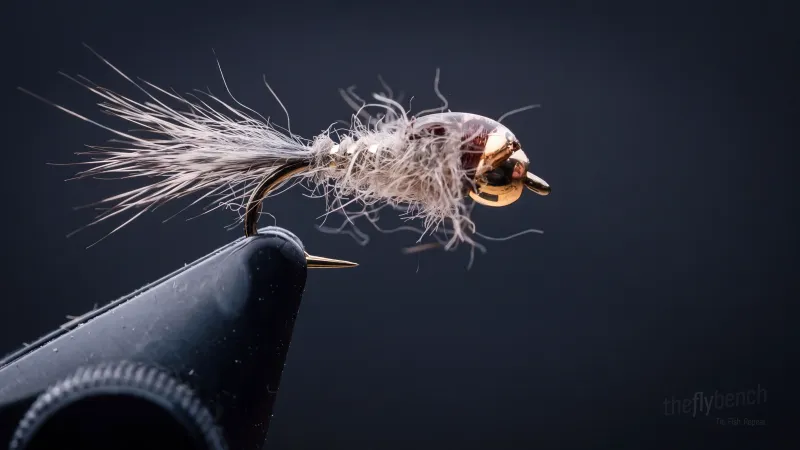
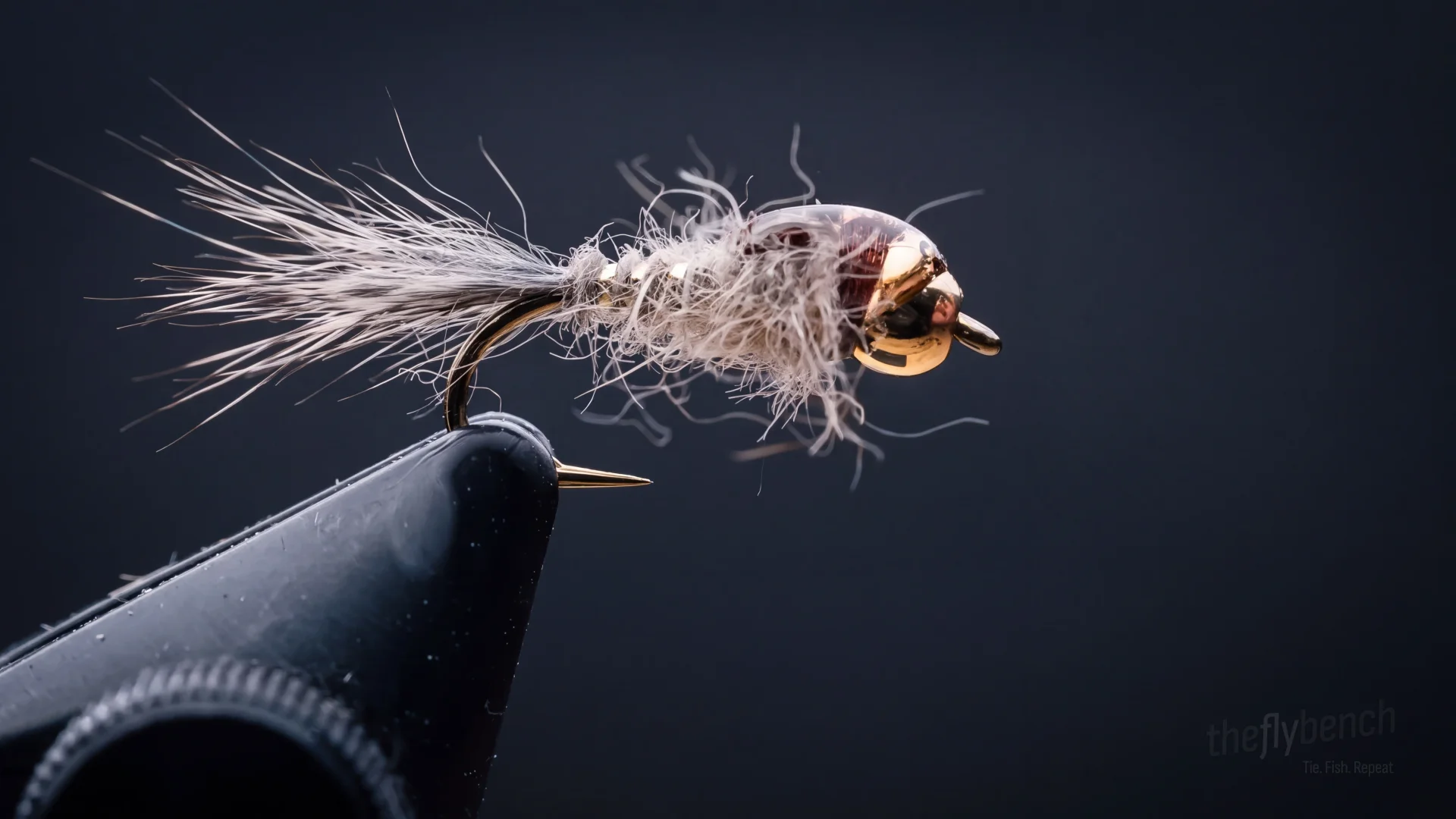
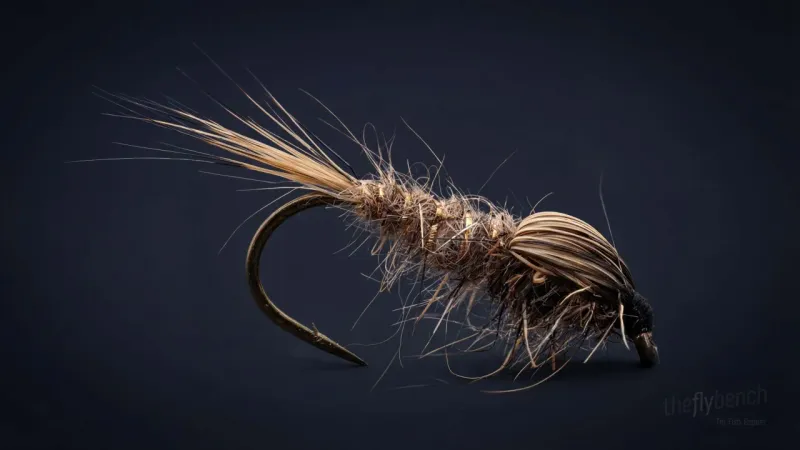
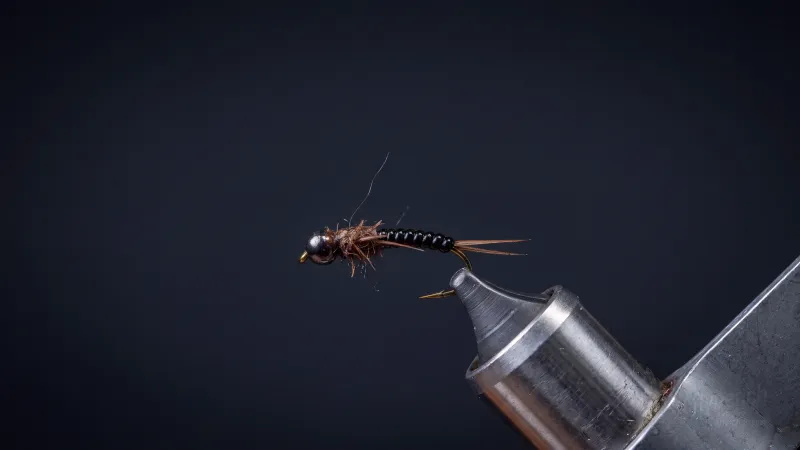
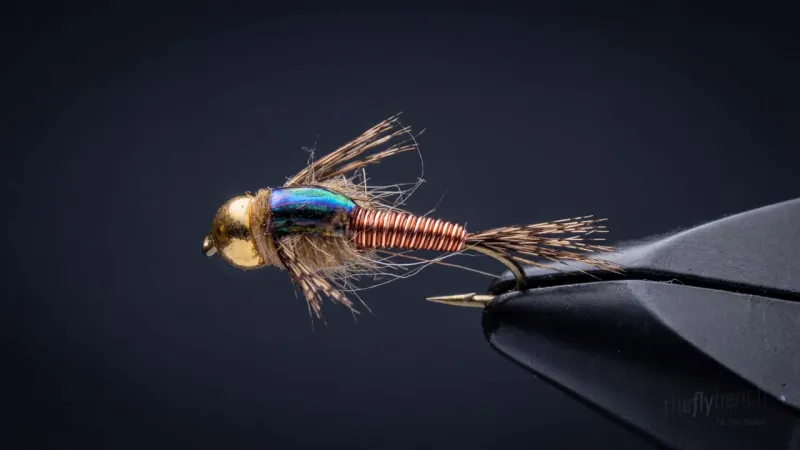
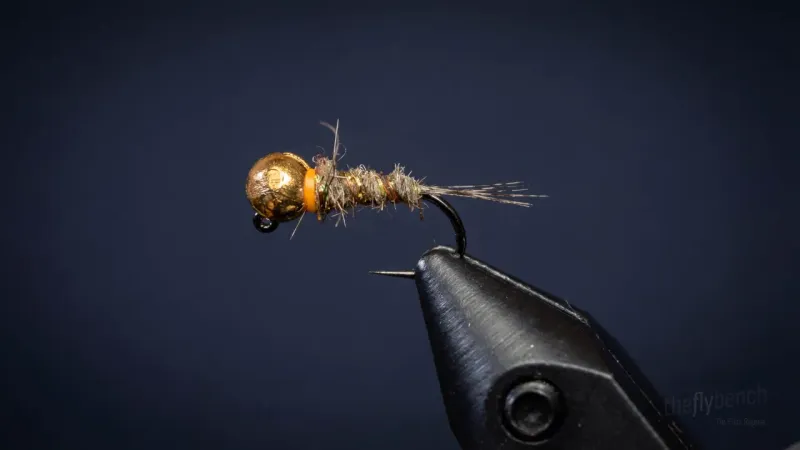
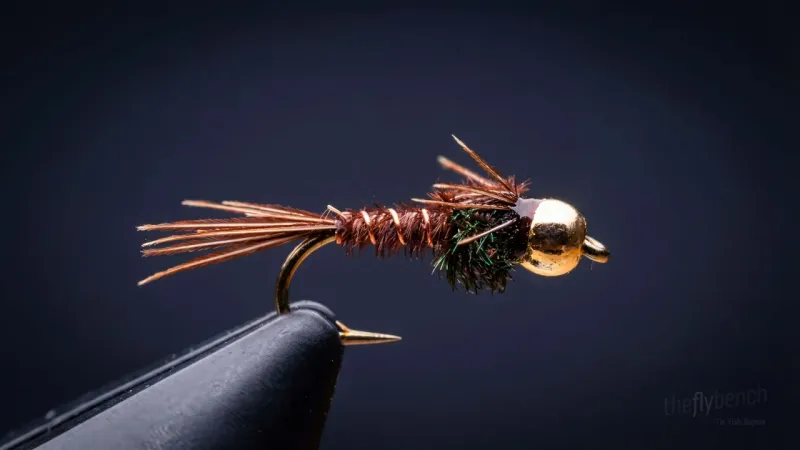
Nobody can say for sure who first tied the Hare's Ear, and gold bead versions became common in the 1990s. This Smitty's Fly Box tie uses grey squirrel for the tail instead of the usual pheasant or guard-hair fibers, which gives it more movement. Pick out the thorax dubbing for legs, and tie it in natural, black or olive to match local nymphs.
Related patterns
Behavior & presentation
- Natural Behavior
- Clinger mayfly nymphs and free-living caddis larvae graze on algae-coated cobble until rising flows or restlessness before a hatch knock them loose. They then roll along the bottom with legs and gills fluttering, unable to swim back to cover.
- Where Trout Eat It
- Trout hold in the bottom foot of the current just below riffles and pick off dislodged nymphs as they tumble into slower water. In lakes, cruisers take them over weedy shoals and along the edge of the shelf.
- How to Fish It
- Dead-drift it as the point fly under an indicator, or hang it 18 to 24 inches below a buoyant dry. The brass bead gets it down in moderate flows without extra split shot, so mend early and let it tick the rocks.
- Best Water
- Riffle drop-offs, current seams beside boulders, pocket water behind midstream rocks, and gravel tail-outs where drifting nymphs collect.
- Strike Type
- The indicator pauses, dips or drifts a few inches sideways as a trout eats the fly near the bottom. On a dry-dropper rig, the dry simply disappears or jerks against the current.
Fishing strategy
- Rigging Suggestions
- Use a 9-foot 4X or 5X leader with fluorocarbon tippet to the fly. Run it under a small indicator set about one and a half times the water depth, or as the dropper below a Stimulator or hopper in summer. Size 14 is the all-round choice, with 12s for high water and 16s to 18s in clear flows.
- Seasonal Timing
- Fishes all year. It is strongest from March through June as mayfly and caddis nymphs grow active before hatching, and again in September and October. In winter, fish it slowly through deep, soft runs.
- Pro Tips
- Rough up the thorax with Velcro so the guard hairs stick out as legs. Carry natural, black and olive in a few sizes, and switch to the darker colors on overcast days or in stained water.
Entomology
Mayfly nymphs crawl and cling among rocks and plant growth on the stream bottom, feeding on algae and detritus. Many lose their grip during high flows or in the restless days before emergence and drift downstream near the bottom, where trout feed on them heavily. A rough, mottled brown nymph matches many species at once, which is why trout take suggestive patterns so readily.
- Order
- Ephemeroptera
- Common name
- Mayfly
- Organism
- insect
- Life stage
- nymph
Pattern details
- Moving Water
- Stillwater
- Worldwide
- dead-drift
- indicator-nymph
- dry-dropper
- hares-ear-family
- classic
- beginner-friendly
- searching-pattern