Overview
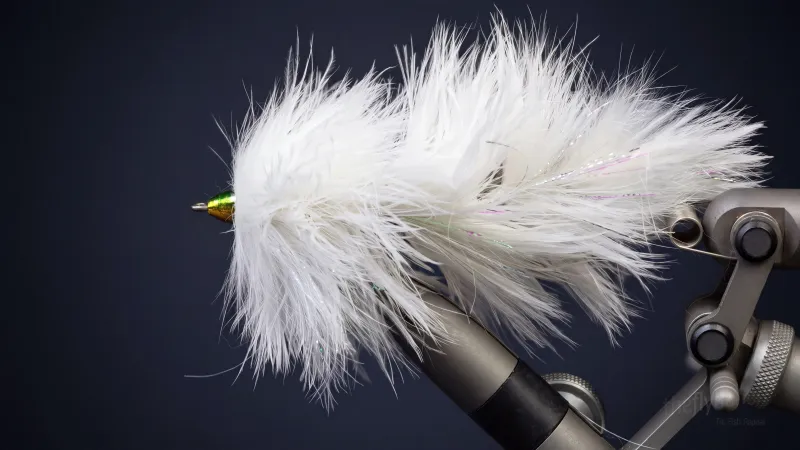
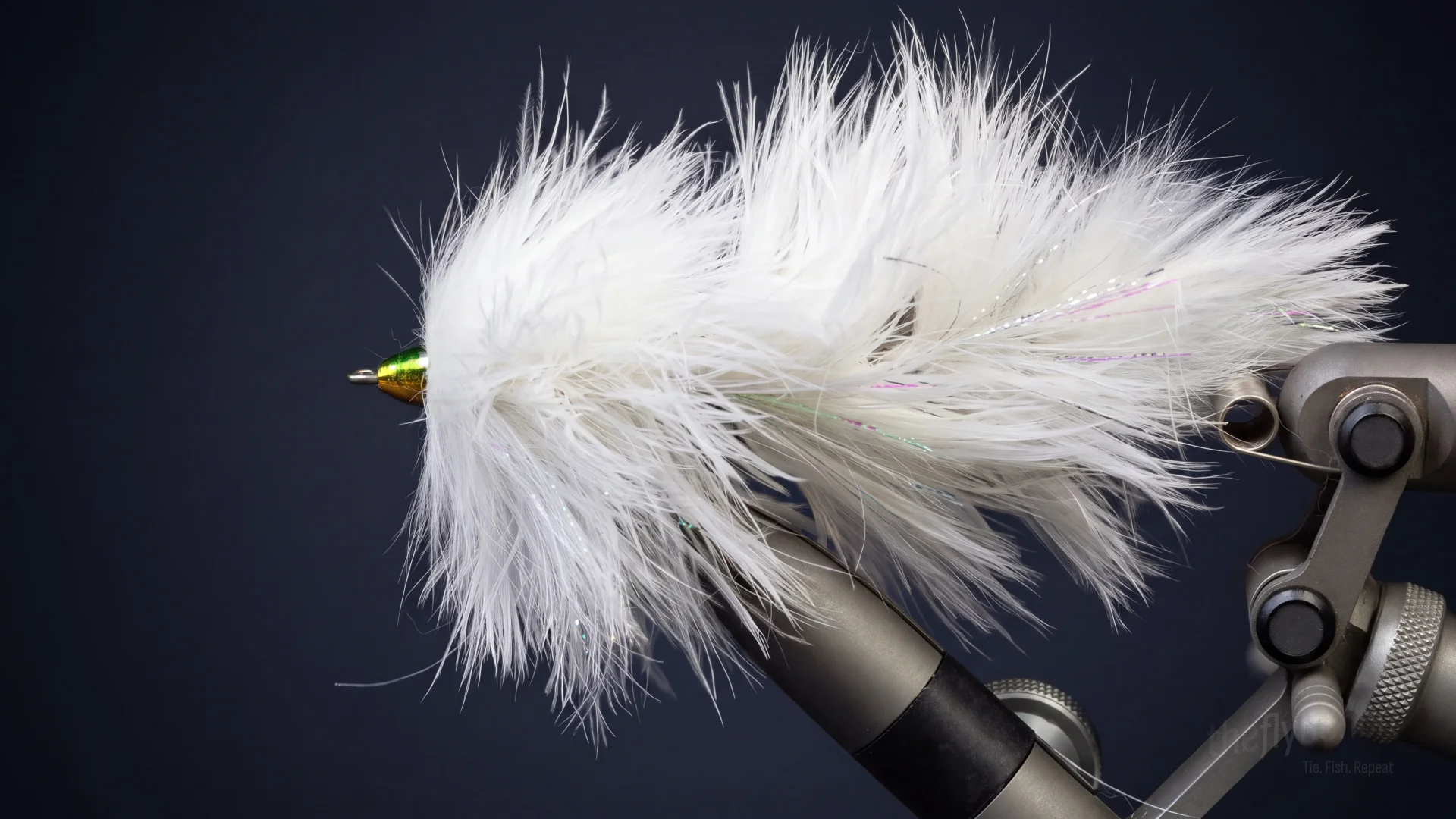
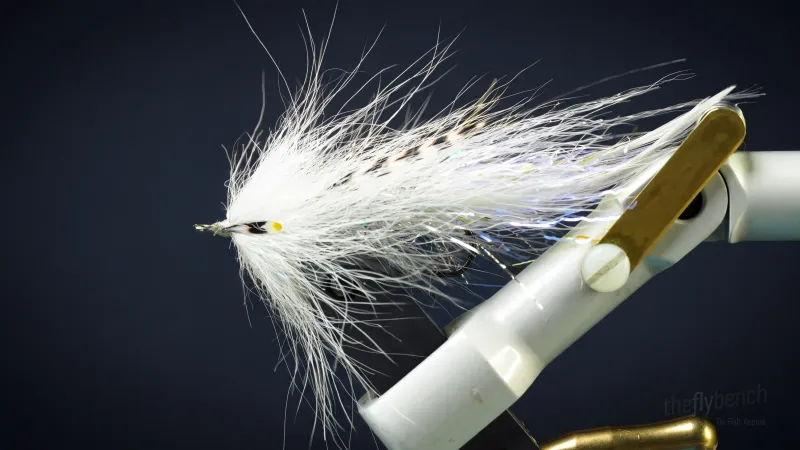
The original Rippin' Rooster came out of Strawberry Reservoir in Utah, built for trout that followed streamers but would not eat. Brig of Fly Fish Food ties this white version on two hooks joined by Fish-Skull shanks and Senyo wire, with schlappen body sections and a pearl flash lateral line. The tie is long, so keep the cone, lead wraps and rabbit collar snug to the front hook.
Related patterns


Behavior & presentation
- Natural Behavior
- A baitfish that senses a predator bolts, stalls and bolts again, its pale flanks flashing each time it turns away from the threat.
- Where Trout Eat It
- Reservoir shelves where shallow flats break into deeper water, plus deep river runs where large trout sit below faster current and wait for stunned forage.
- How to Fish It
- Strip it with an uneven cadence. When a fish follows, stop for a beat so the schlappen and rabbit flare open, then rip one hard strip. In rivers, swing it across deep runs on a sinking tip.
- Best Water
- Shelf edges, weed lines, rocky points, the tail of a deep run and the seam below a riffle, especially when the water is stained or the light is low.
- Strike Type
- Most eats come right after the pause, either as heavy weight on the next strip or a jolt that pulls line through your fingers. Strip-set, never lift the rod.
Fishing strategy
- Rigging Suggestions
- Fish it on an intermediate or sinking line in lakes and a sink tip in rivers, with a short 0X-2X fluorocarbon leader. Tie on with a loop knot so the two sections can swim freely.
- Seasonal Timing
- Best from ice-off through June and again from September into November, when big trout cruise shallow shelves after baitfish. Early and late in the day, and on overcast or windy days, the white shows up best.
- Pro Tips
- Save this color for off-colored water and dim light, where the high contrast and pearl flash let fish find it from farther away. If fish keep following without eating, make the pause longer before the next hard strip.
Entomology
Small fish in lakes and rivers gather along weed edges and drop-offs, where they feed but stay close to cover. When a predator closes in they scatter in short, frantic bursts, flaring their fins and showing their pale sides as they turn. A fish that falters or stops in the open becomes the easiest target, and large trout key on that hesitation.
- Common name
- Baitfish
- Organism
- baitfish
- Life stage
- general
Pattern details
- Stillwater
- Moving Water
- Rocky Mountain
- modern
- active-retrieve
- strip-retrieve
- swing
- searching-pattern
- high-water