

Overview
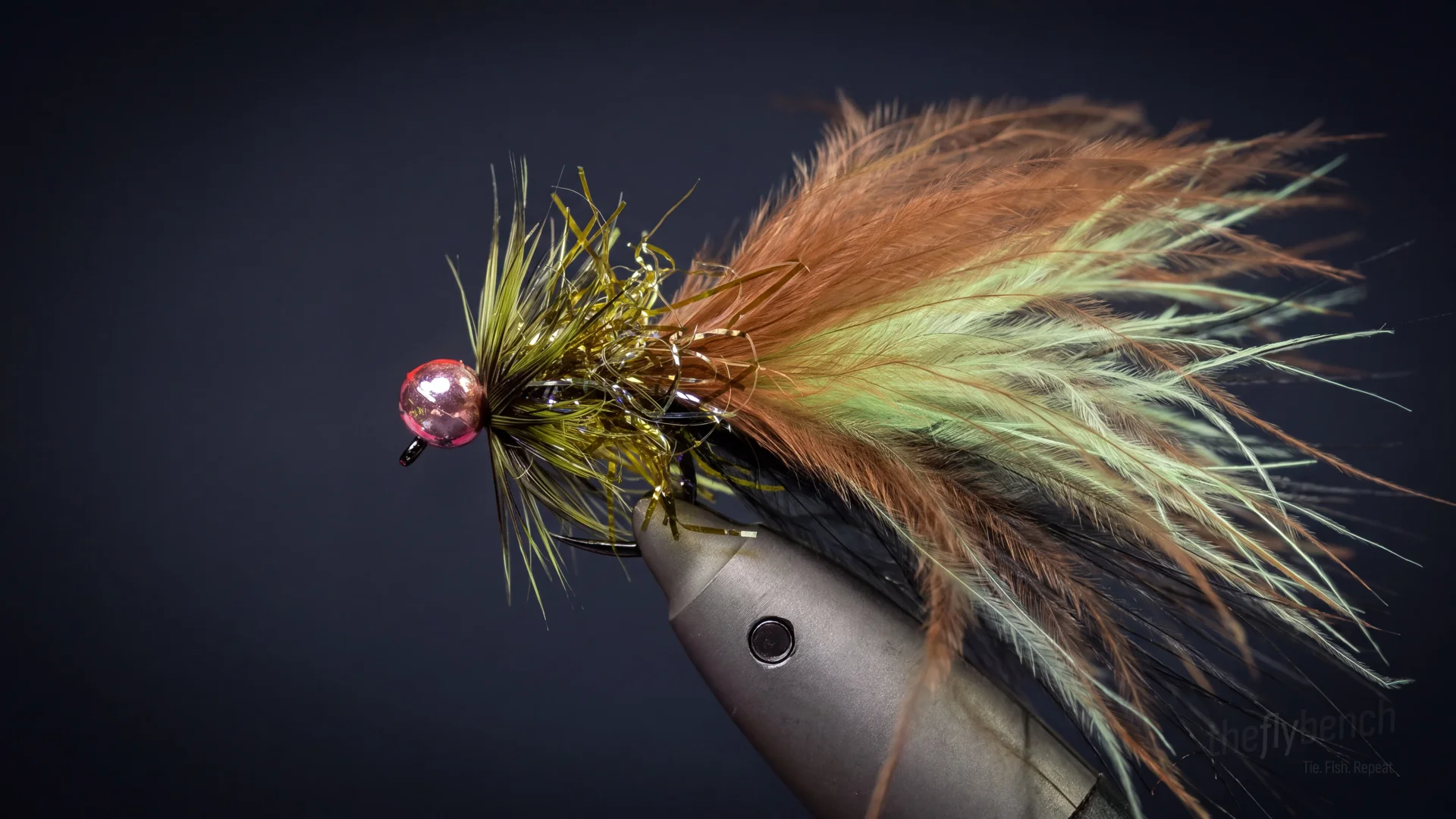
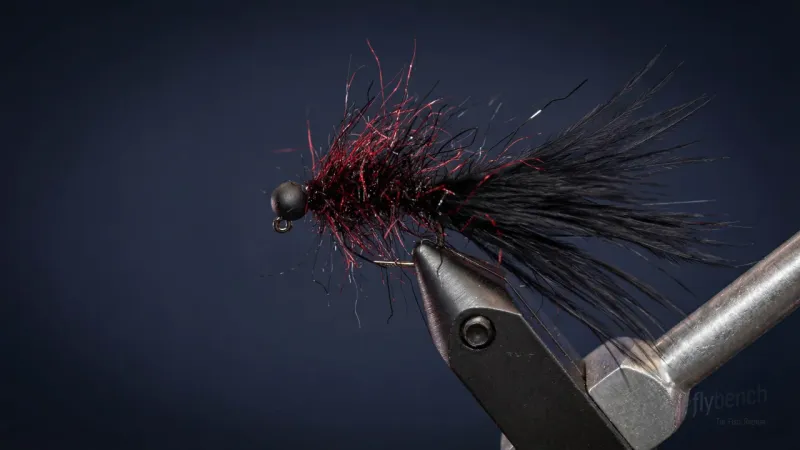
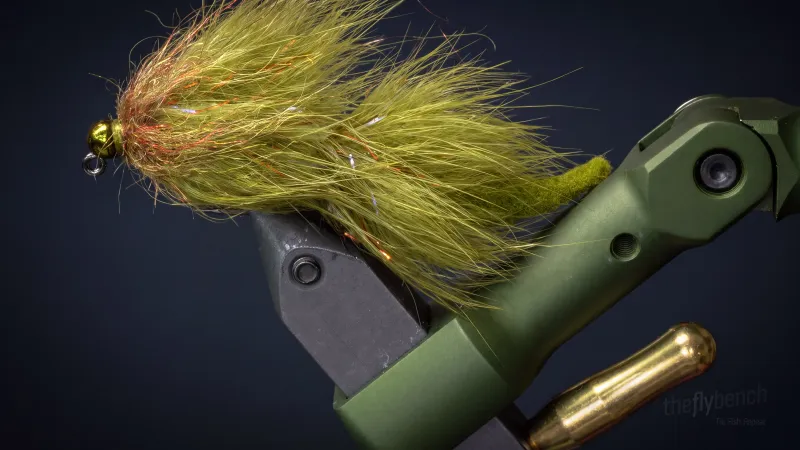
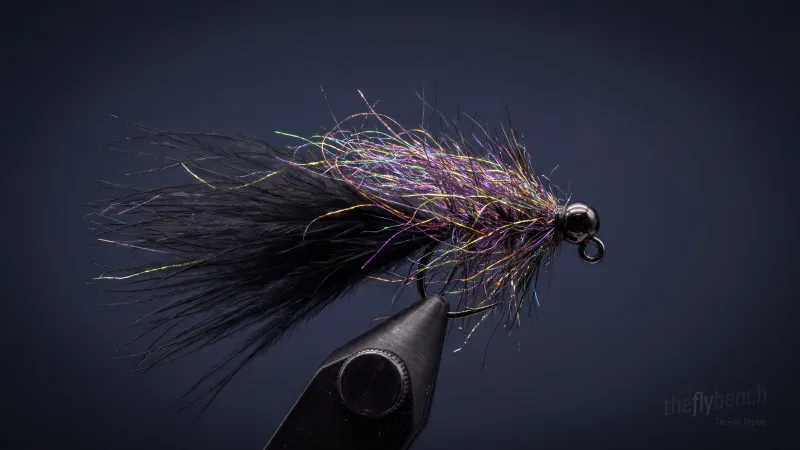
Brig of Fly Fish Food presents this as his version of a classic jig streamer, not a new invention. He added a slotted tungsten bead with lead wire behind it, a hackle collar, and a tail that follows the Thin Mint: black, fluorescent melon and brown marabou stacked together, which moves better and looks more natural than one solid color. The hook rides point-up, so it bounces through deep holes with fewer snags. A size 4 Fulling Mill Stealth Jig works for a bigger version.
Related patterns

Behavior & presentation
- Natural Behavior
- Leeches and small forage fish hug the streambed in deep water, moving in short bursts and then settling back toward the rocks, where a dropping, nose-down motion gives them away.
- Where Trout Eat It
- Trout hold low in deep holes and the bottoms of plunge pools, taking food that drops or tumbles past them near the rocks.
- How to Fish It
- Let the heavy head reach bottom, then hop it back with short rod lifts and strips so it rises and falls, giving the marabou tail time to breathe on each drop.
- Best Water
- Deep slots, the heads of pools below a drop-off, slow water beside a seam and rocky bottoms where a point-down hook would snag.
- Strike Type
- Most takes come as the fly falls after a hop: the line stops, ticks or goes heavy, so treat any change as a fish and strip-set.
Fishing strategy
- Rigging Suggestions
- Fish it on a floating line with a 7 to 9 foot leader and 3X or 4X fluorocarbon so the fly controls the depth. It also works tight-line style on a long leader in deep pocket water, or under an indicator with short twitches.
- Seasonal Timing
- Useful all year. In winter and early spring, when trout sit deep and won't move far, the fast sink rate makes it especially handy, and it stays useful through summer and fall in rivers with deep holes.
- Pro Tips
- Tie it in a few weights so you can match the depth and speed of each run. Keep the marabou sparse so the three colors stay separate and the tail keeps moving when you pause.
Entomology
Leeches live among rocks, weed and debris on river bottoms, swimming with a slow, rippling undulation when they leave cover. Higher flows and disturbance knock them loose into the current, where they drift low and are easy prey. Small baitfish share the same bottom water and dart between rocks, so a dark, pulsing fly near the streambed works as either food item.
- Common name
- Leech
- Organism
- leech
- Life stage
- general
Pattern details
- Moving Water
- Rocky Mountain
- jigging
- modern
- searching-pattern
- active-retrieve
- strip-retrieve