Overview
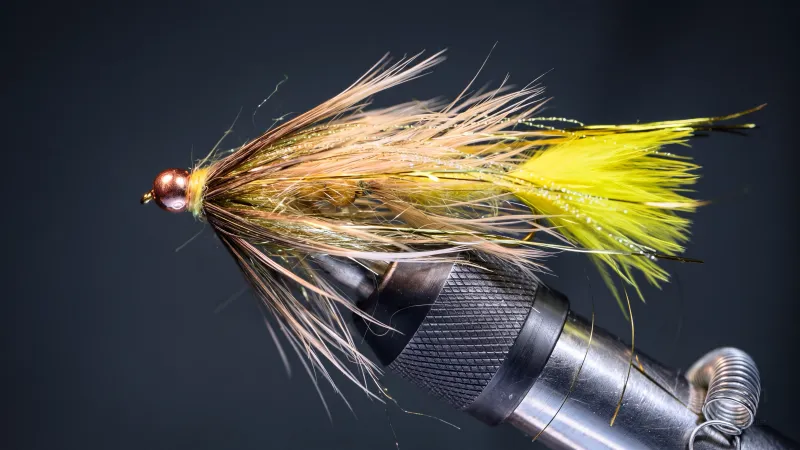
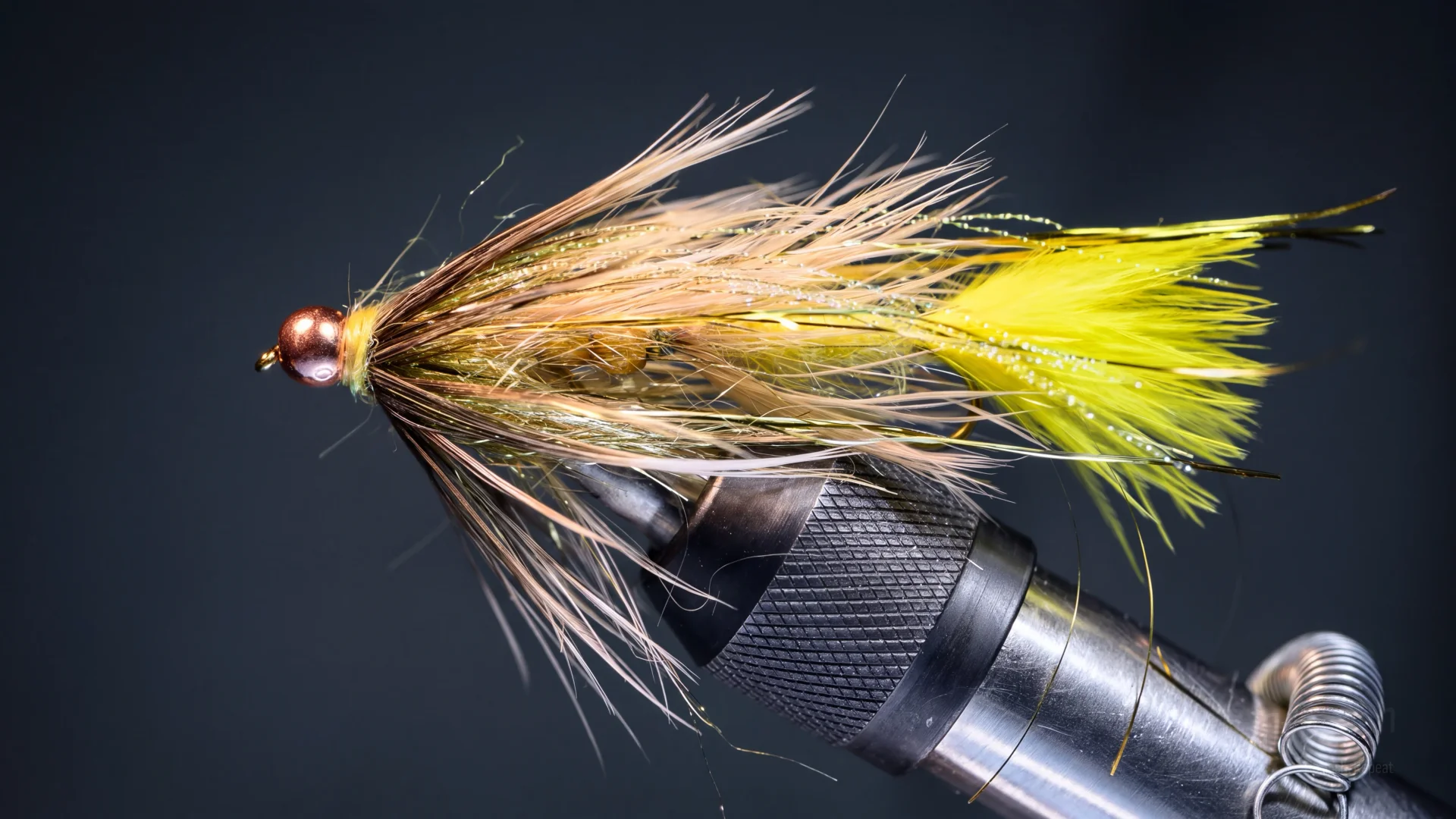
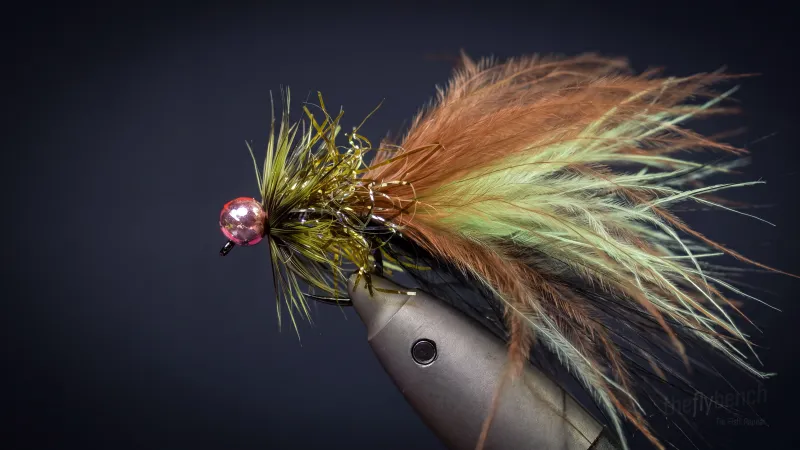
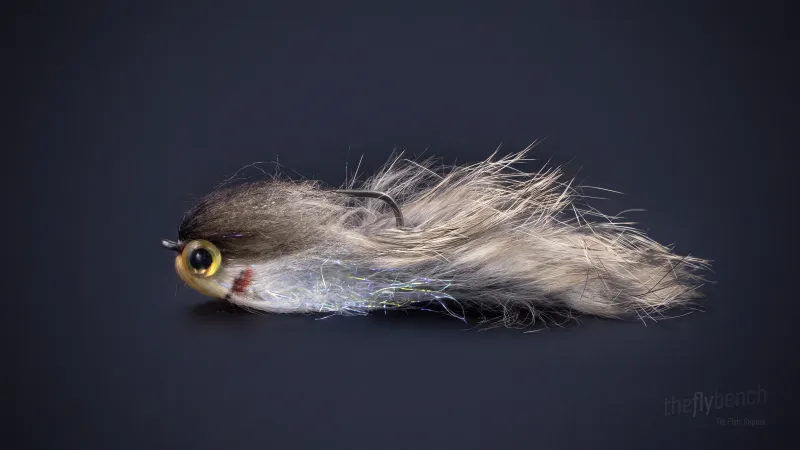
Sam Wright built the Wild Lady as the one streamer he could tie on for whatever a Colorado day threw at him, aiming for a fly that casts easily, sinks quickly and fishes in any condition. Two TMC 5262 hooks are joined with Spider Wire and a pair of 3D beads. The rear hook carries the marabou tail, Ice Dub and a tan saddle collar. The front gets a copper bead, lead wire, a gold Ice Dub loop, flash and badger saddle collars. Umpqua's video shows a purple and black version as well.
Related patterns
Behavior & presentation
- Natural Behavior
- Small trout, dace and sculpins hold tight to cover and dart out in short bursts, then stall and drift for a moment as they reorient in the current.
- Where Trout Eat It
- Larger brown and rainbow trout sit in deep slots and along banks with overhead cover, moving out to grab a small fish that strays into open water.
- How to Fish It
- Cast tight to structure, let the weighted front hook pull the fly down, then strip in short twitches with pauses so the hinged rear section and marabou kick on each stop.
- Best Water
- Undercut banks, deep seams below riffles, boulder pockets, log jams and the drop-off where a run tips into a pool.
- Strike Type
- Takes usually come on the pause or the first strip after it, felt as a sharp thump or the line simply going heavy. Strip-set rather than lifting the rod.
Fishing strategy
- Rigging Suggestions
- Fish it on a short 0X to 2X fluorocarbon leader of 4 to 6 feet with a loop knot so the articulated body can swing freely. A floating line works in shallow water, while a sink-tip gets it down in deeper runs and faster flows.
- Seasonal Timing
- Most productive from spring through fall, especially on cloudy days, in the low light of early morning and evening, and when rising or slightly off-color water pushes trout toward the banks.
- Pro Tips
- Carry the yellow and tan version for clear water and the purple and black version for low light or stained water. If you are snagging, swap the lead wraps for a lighter bead rather than shortening your casts.
Entomology
Juvenile trout, dace and sculpins live close to the bottom and the edges of cover, moving in quick darts and short glides between hiding spots. When one gets caught in faster current or loses its footing, its stalled, wobbling movement singles it out to bigger fish waiting nearby. Because a single small fish is worth many insects in calories, large trout will move a long way to take one.
- Common name
- Baitfish
- Organism
- baitfish
- Life stage
- general
Pattern details
- Moving Water
- Rocky Mountain
- active-retrieve
- strip-retrieve
- searching-pattern
- modern
- freestone