


Overview
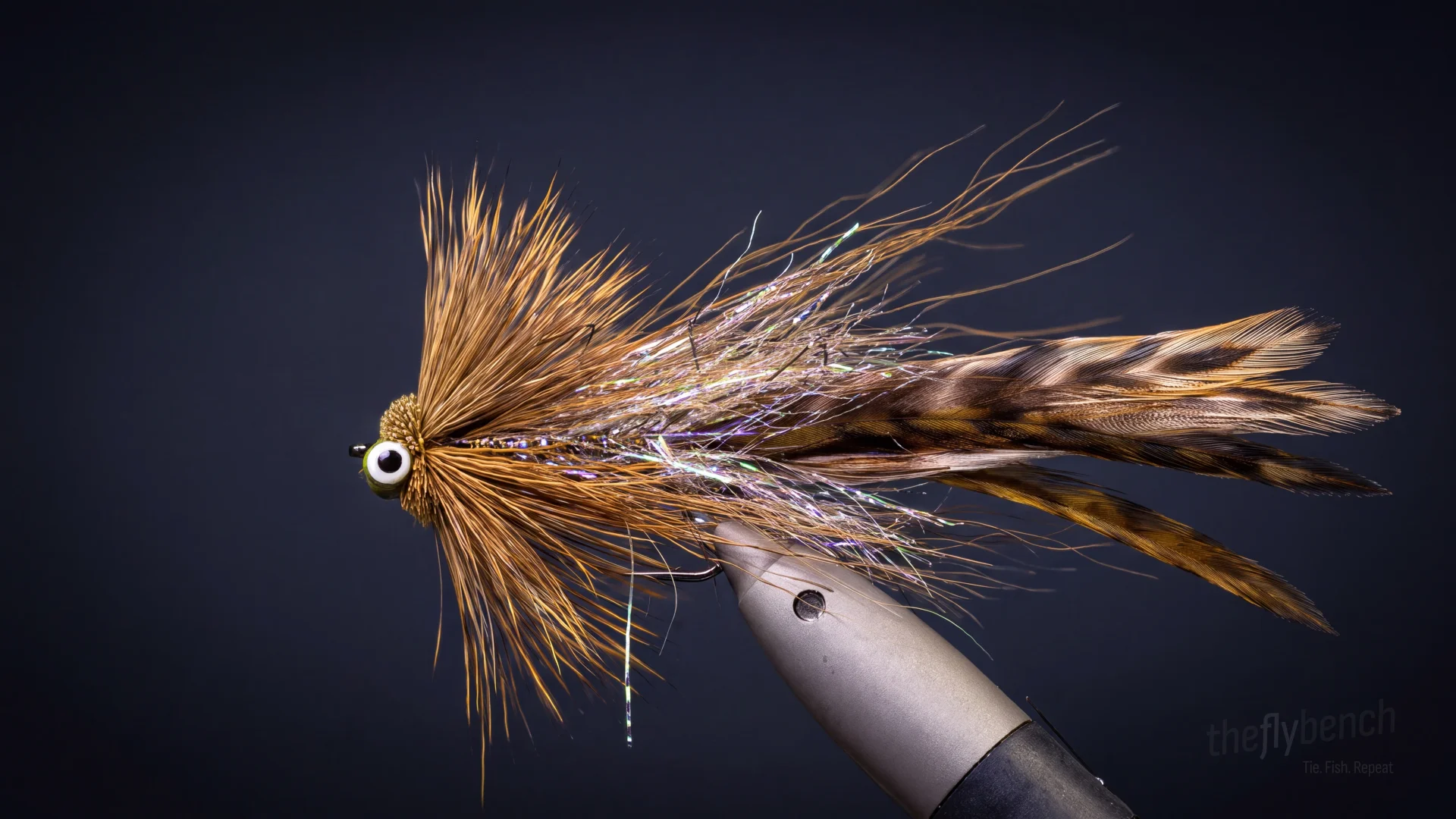
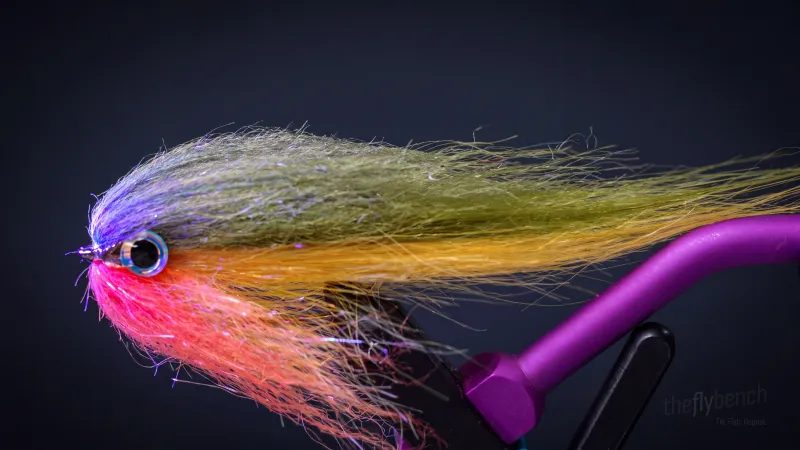
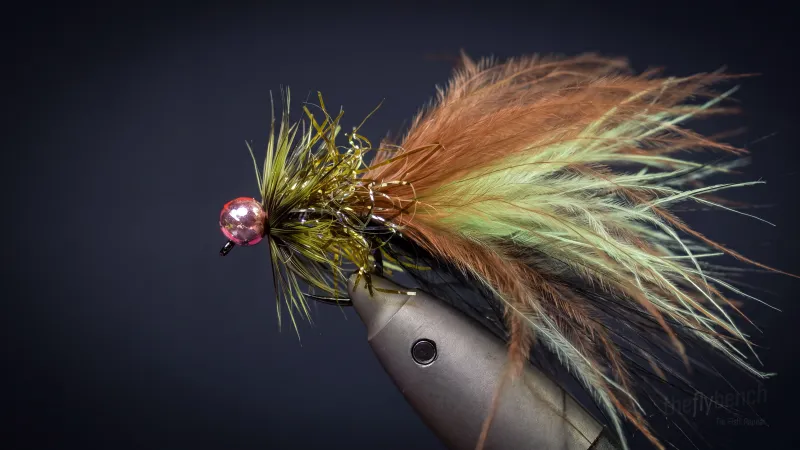
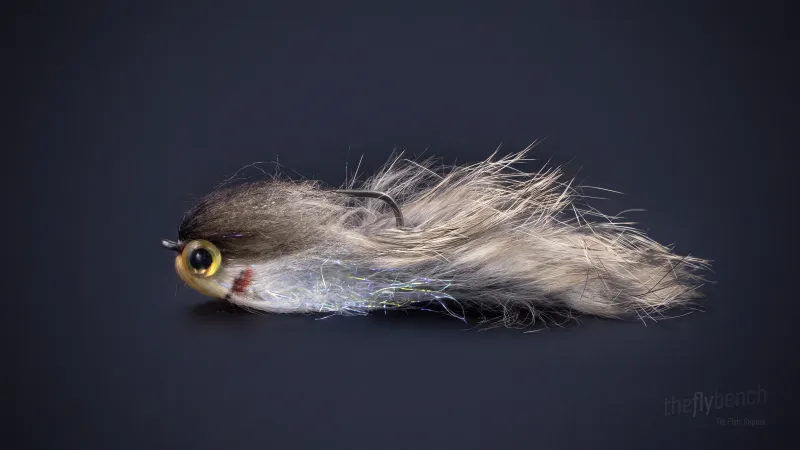
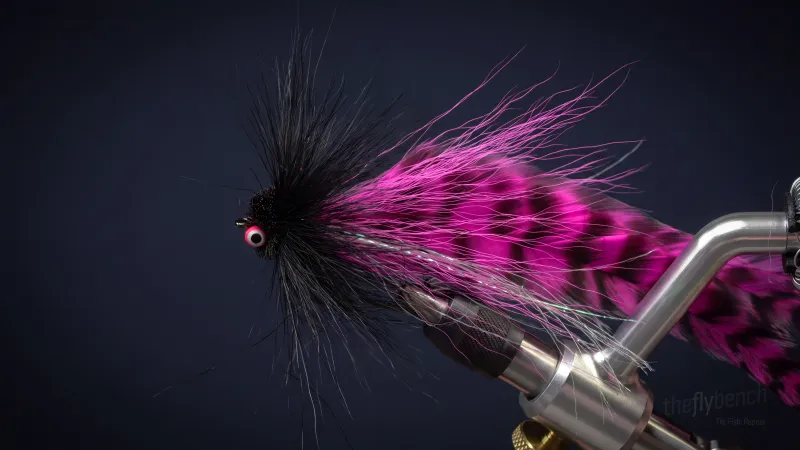
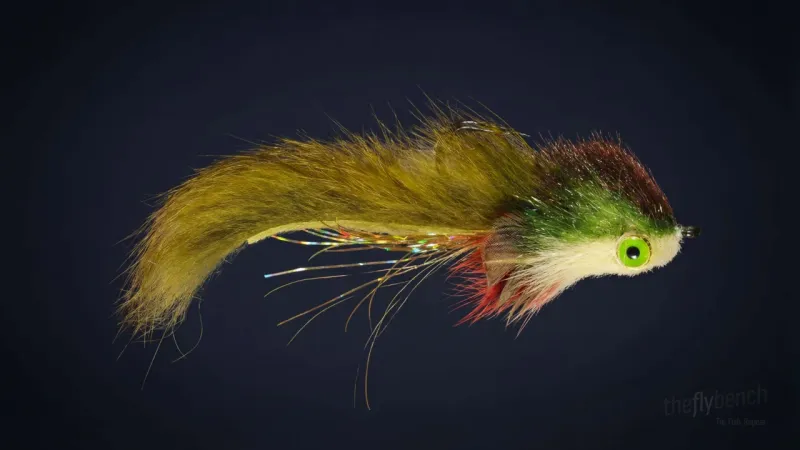
Cheech of Fly Fish Food tied this trout version of the Andino Deceiver, a dorado fly from the Argentine province where the tyer lived as a teenager, keeping the original's profile and movement on a smaller hook. A mono dam keeps the lead eyes and hair riding upright, and the two-tone head is spun and trimmed into a muddler-style wedge. Swap colors to match local baitfish.
Related patterns


Behavior & presentation
- Natural Behavior
- Small forage fish like dace, chubs and juvenile trout hold tight to cover and bolt in short, jerky bursts when flushed, often diving back toward the bottom rather than running in open water.
- Where Trout Eat It
- Larger trout ambush these fish from deeper lies beside current breaks, charging out when a baitfish strays from the edge of cover or gets swept into faster water.
- How to Fish It
- Cast tight to the bank, let the lead eyes pull it down a beat, then work it back with sharp strips and short pauses so the deer hair head pushes water and the fly darts side to side.
- Best Water
- Undercut banks, log jams, deep outside bends, the soft seam below a riffle, and boulder pockets where a big fish can hold out of the current.
- Strike Type
- Expect a hard yank or sudden dead weight mid-strip, and keep stripping through a follow, since many fish hit as the fly drops on the pause.
Fishing strategy
- Rigging Suggestions
- Fish it on a 6- or 7-weight with a sink tip or intermediate line and a short 3- to 5-foot leader of 1X-2X fluorocarbon; a floating line works in shallow banks since the lead eyes add depth.
- Seasonal Timing
- Best from April through October, with peaks after spring runoff clears and in September and October when big trout feed hard before winter. Overcast days and low light are prime.
- Pro Tips
- Trim the head flat on the bottom and wide at the cheeks so it digs and kicks on the strip. Tie copper over golden olive for a natural look, or try darker heads in stained water.
Entomology
Small river baitfish spend most of their time tucked against rocks, wood and weed edges, darting out to feed and ducking back when threatened. A fish that gets pushed off cover or flees in a burst of erratic movement draws the attention of big trout, which eat baitfish whenever they can for the large calorie payoff.
- Common name
- Baitfish
- Organism
- baitfish
- Life stage
- general
Pattern details
- Moving Water
- South America
- strip-retrieve
- active-retrieve
- modern
- searching-pattern
- freestone