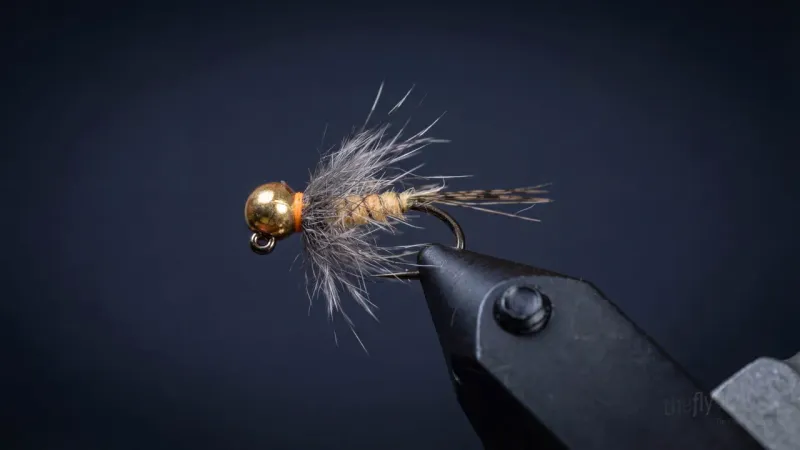
Euro NymphsSoft Hackle Jig John
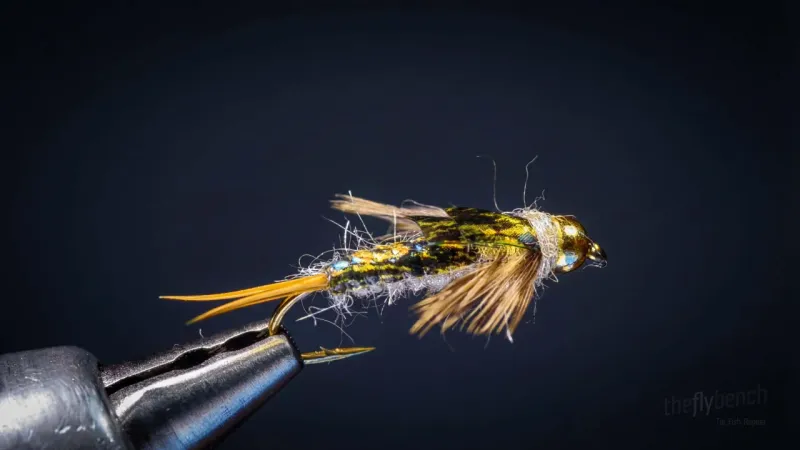
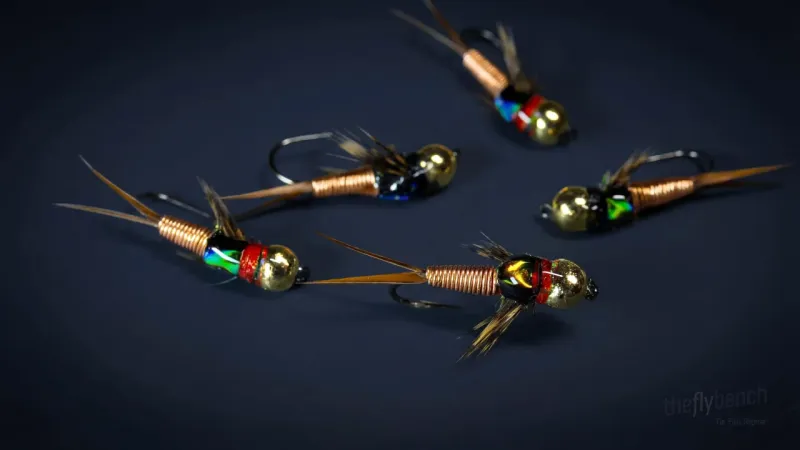
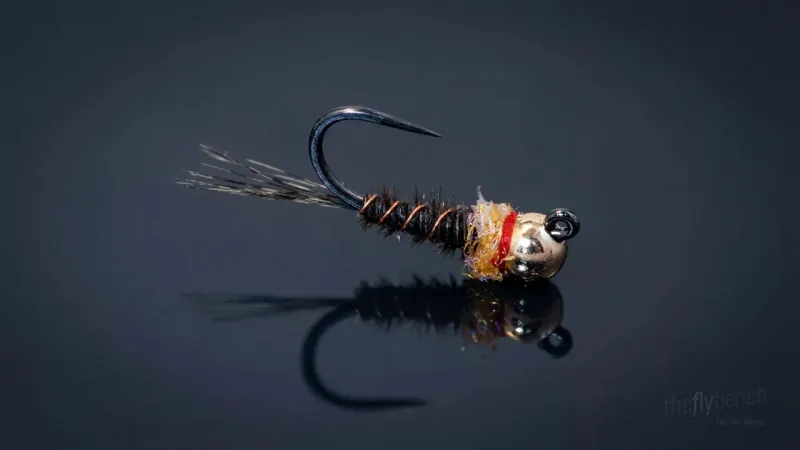
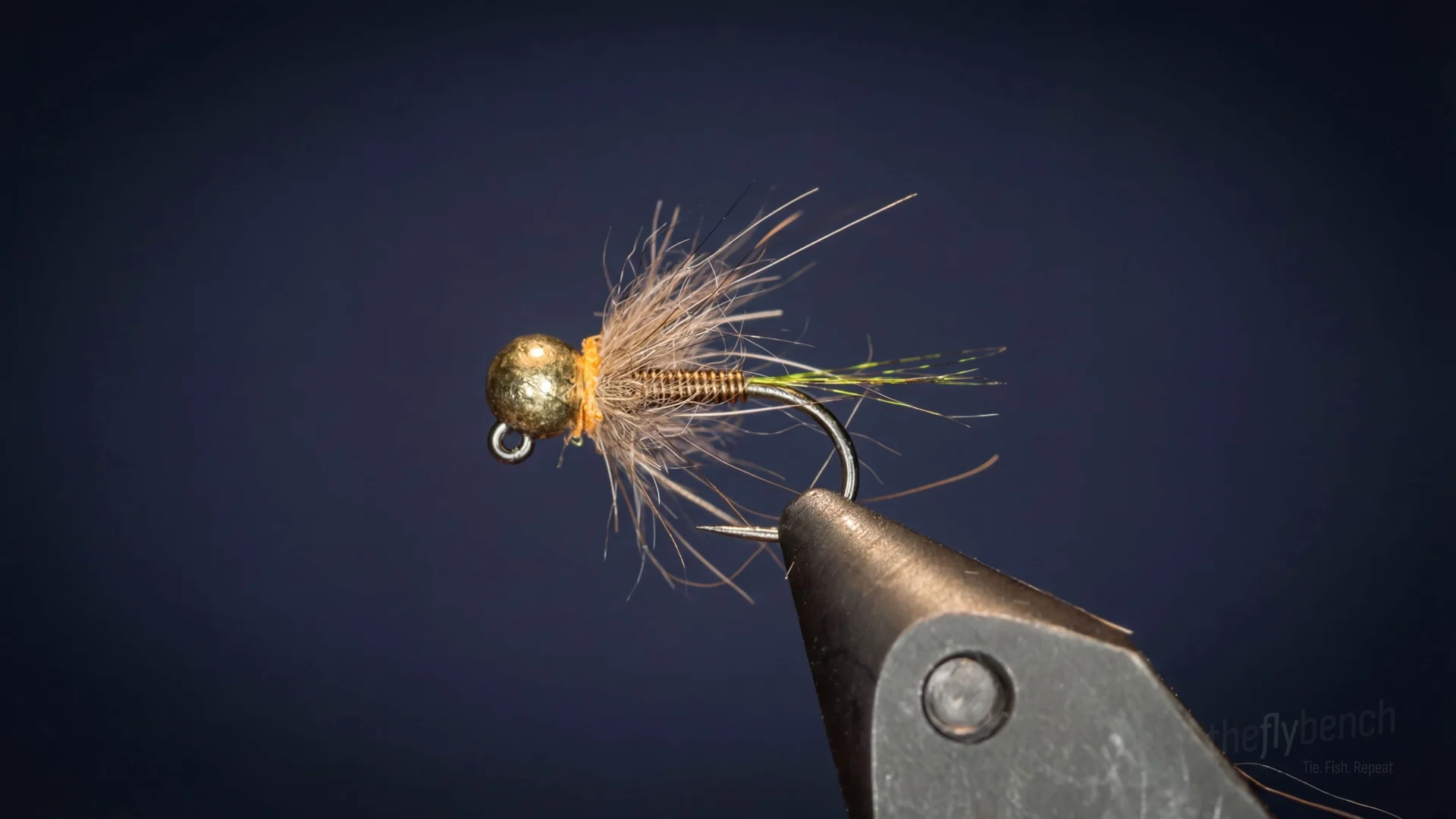
A soft hackle variation of the classic Copper John in jig format. The partridge soft hackle adds natural movement and breathing action while maintaining the proven copper body and peacock thorax that made the original famous. The jig hook design ensures proper orientation and reduces snags in rocky water.
Year Round
Intermediate
Trout
Dec 2025
Overview
Developed by Fly Fish Food as a modern twist on John Barr's Copper John, this variation combines euro nymphing jig hook advantages with the soft hackle style popularized by competition anglers. The partridge collar provides more movement than standard materials while the copper ribbing adds flash and durability. Can be tied in multiple colors to match different water conditions, with red thread showing through for added attraction.
Materials
Hook: Fulling Mill 5045 Jig Force Barbless, size #14
Bead: Hareline Slotted Tungsten, copper, 7/64" (2.8mm)
Thread: UTC Ultrathread 70 Denier, red
Tail: Goose biots, brown
Body: Pheasant tail fibers
Ribbing: UTC Ultra Wire, copper, small
Thorax: Peacock herl
Soft Hackle: Partridge feather
Behavior & Presentation
Natural Behavior: Larger nymphs crawl along substrate or tumble when dislodged, their segmented bodies and active movement making them priority prey.
Where Trout Eat It: Fish hold in feeding lanes 3-5 feet deep near bottom, intercepting tumbling nymphs in pocket water and channel swings.
How to Fish It: Dead drift with euro techniques while soft hackle pulses naturally. Jig hook rides point-up through rocky terrain, reducing snags.
Best Water: Target pocket water with boulders, seams along current breaks, and riffle edges where nymphs concentrate in feeding zones.
Strike Type: Tick or sudden stop. Soft hackle movement triggers visual strikes detected through tight-line contact.
Fishing Strategy
Rigging Suggestions: Fish on 10-12 foot leader with 4X-5X fluorocarbon tippet in euro nymphing setup. Use as point fly with lighter nymph as dropper 12-18 inches above.
Seasonal Timing: in freestone streams and tailwaters. Particularly productive during spring and fall when mayflies and stoneflies are most active.
Pro Tips: Sinks quickly with the copper tungsten bead, reaching depths of 3-5 feet efficiently. The slim body cuts through current with minimal resistance.
Entomology
Stonefly nymphs are primarily nocturnal crawlers that spend daylight hours wedged deep in substrate interstices, emerging to forage on benthic algae and detritus. Their multi-year life cycles result in overlapping year classes that provide consistent availability, and their substantial biomass (large species exceed 40mm) makes them high-value targets during spring emergence migrations when nymphs crawl toward shorelines.
- Order
- Plecoptera
- Common Name
- Stonefly
- Organism Type
- insect
- Life Stage
- nymph