Euro NymphsPat's Rubber Leg Stone Variation
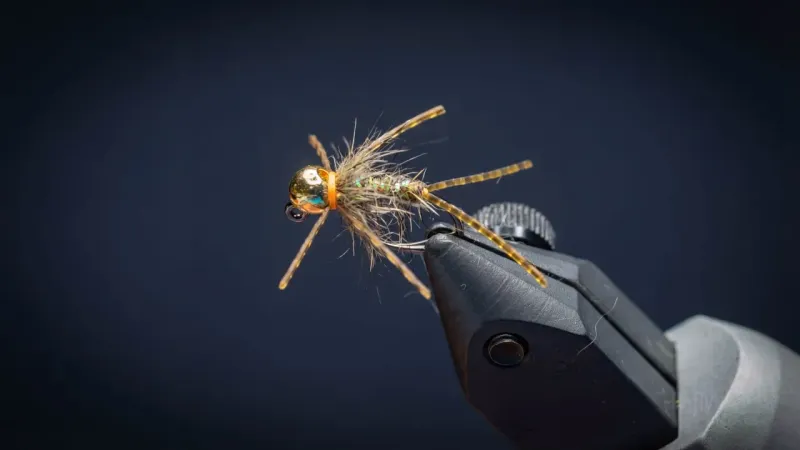
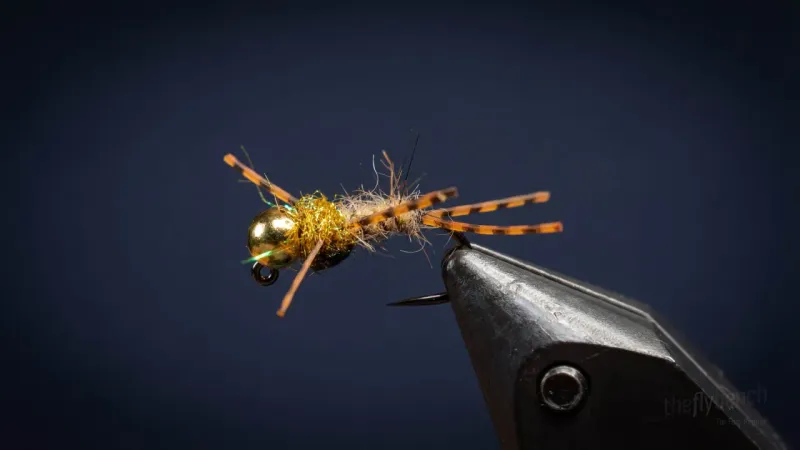
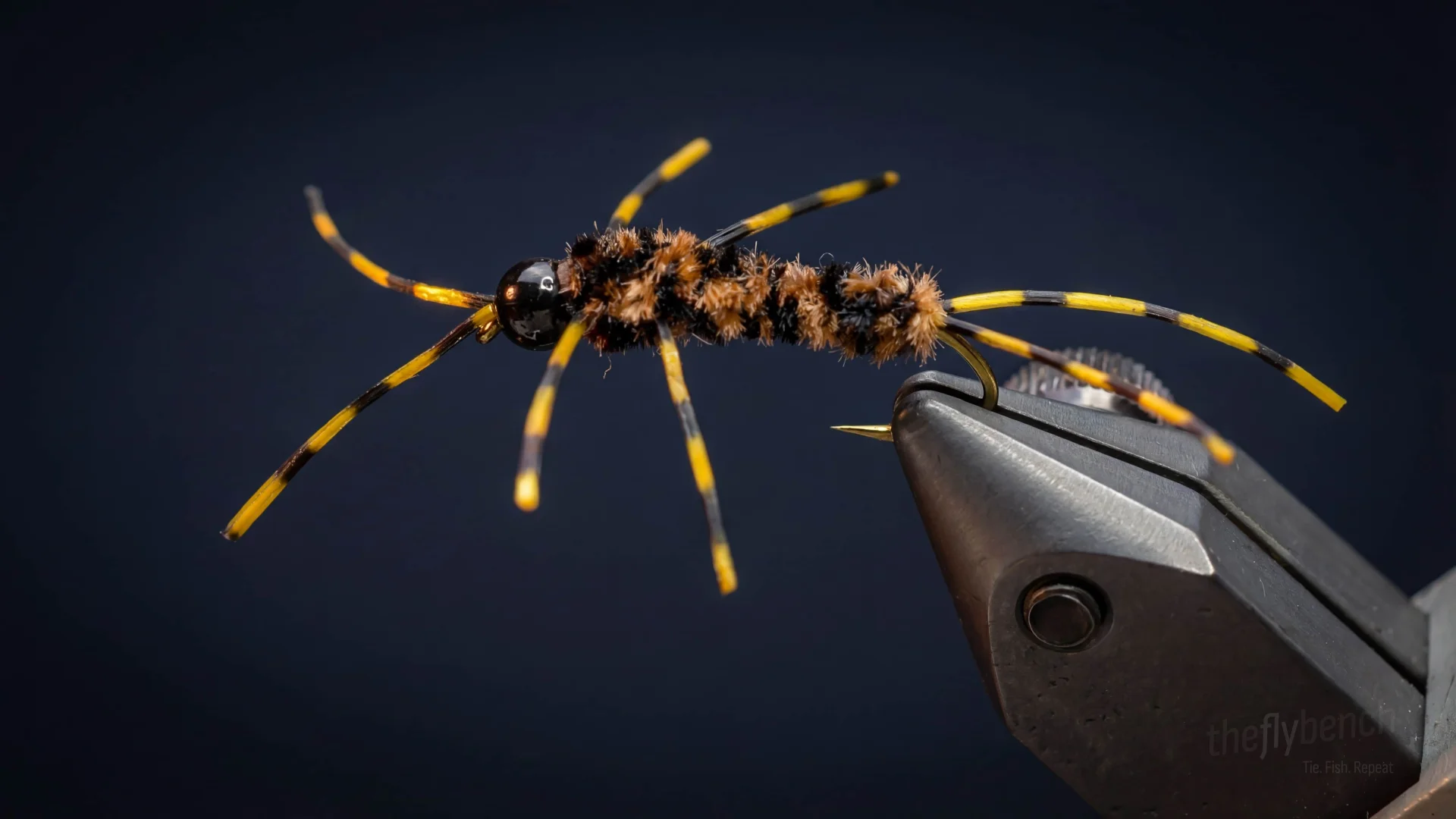
A jig hook variation of the legendary Pat's Rubber Legs stonefly pattern designed for Euro nymphing techniques. This modern adaptation maintains the classic rubber leg action while adding the benefits of a tungsten bead and jig hook presentation for better hook-up ratios and reduced snags. The variegated chenille body and rubber legs create an irresistible pulsing action that attracts aggressive trout.
Spring, Summer, Fall
Beginner
Trout
Dec 2025
Overview
This Euro-friendly variation adapts the iconic Pat's Rubber Legs pattern created by Pat Bennett for competition-style fishing. The jig hook design provides superior hook sets while the tungsten bead gets the fly down quickly in fast water. The simplified material list makes it a fast tie at the vise, allowing anglers to produce multiple flies in various colors. The rubber legs provide remarkable motion even in subtle currents, triggering strikes from reluctant fish.
Materials
Hook: Hanak H 400 BL Jig Hook, #10
Thread: UTC Ultrathread 140 Denier, Brown
Bead: Hanak Round+ Slotted Tungsten Beads, 4.0mm, Black Nickel
Tail: Round Rubber Legs, Brown/Black
Body: Variegated Chenille, Brown/Black
Legs: Round Rubber Legs, Brown/Black
Thorax: Peacock Ice Dub
Behavior & Presentation
Natural Behavior: Large stonefly nymphs crawl actively along bottom, migrating toward shore prior to emergence. Their deliberate movement across open substrate makes them visible targets.
Where Trout Eat It: Fish hold in boulder fields and deep pocket water 3-6 feet deep, intercepting migrating stoneflies near bottom structure.
How to Fish It: Dead drift with euro techniques, occasionally twitching to animate rubber legs. Jig hook rides point-up through rocky bottom terrain.
Best Water: Target pocket water behind boulders, seams along fast current, and channel swings where stoneflies migrate through predictable zones.
Strike Type: Tick or sudden stop in sighter. Weighted bead provides excellent contact for detecting subtle takes on tight line.
Fishing Strategy
Rigging Suggestions: Use as point fly in Euro rigs with 10-12ft leader and 3X-4X fluorocarbon. Can pair with lighter dropper 12-18 inches above. In traditional indicator setups, position 18-24 inches below with split shot. Add split shot in deeper water (4-6ft) or heavy current.
Seasonal Timing: Most productive during stonefly season spring and early summer (March-July), particularly during golden stonefly and salmonfly hatches. Also works well in fall when trout feed heavily before winter. Best during active hatches when nymphs migrate to shore because migrations concentrate prey in predictable zones.
Pro Tips: 4.0mm tungsten bead sinks fast, reaching 3-5ft depths quickly in moderate current. Jig hook causes fly to ride upright, keeping point away from snags. Rubber legs pulse with every current variation. Black nickel bead provides subtle flash without spooking wary fish.
Entomology
Stonefly nymphs are powerful crawlers that actively hunt other aquatic insects or graze on algae depending on species, with large species taking 2-4 years to mature in cold mountain streams. Their migrations from deep water toward streambanks prior to emergence create concentrated foraging opportunities as nymphs crawl across open substrate during daylight hours. The combination of large size, high protein content, and predictable migratory behavior makes them priority prey items when available, though their strong swimming and substrate-clinging abilities allow them to resist drift better than mayflies.
- Order
- Plecoptera
- Common Name
- Stonefly
- Organism Type
- insect
- Life Stage
- nymph