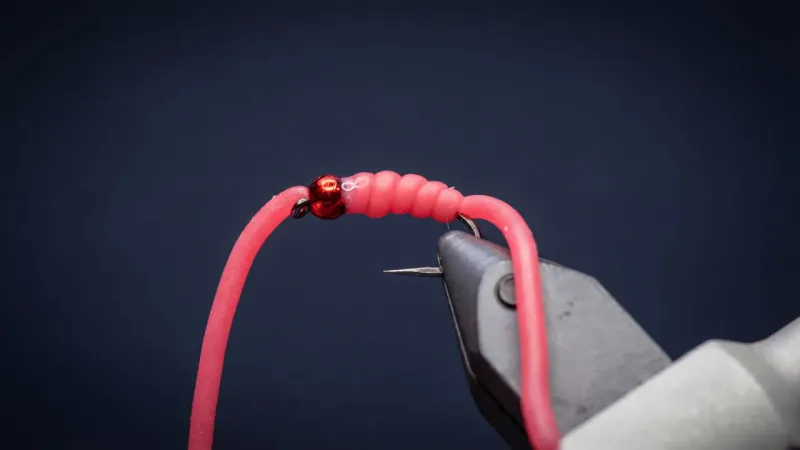
NymphSan Juan Worm
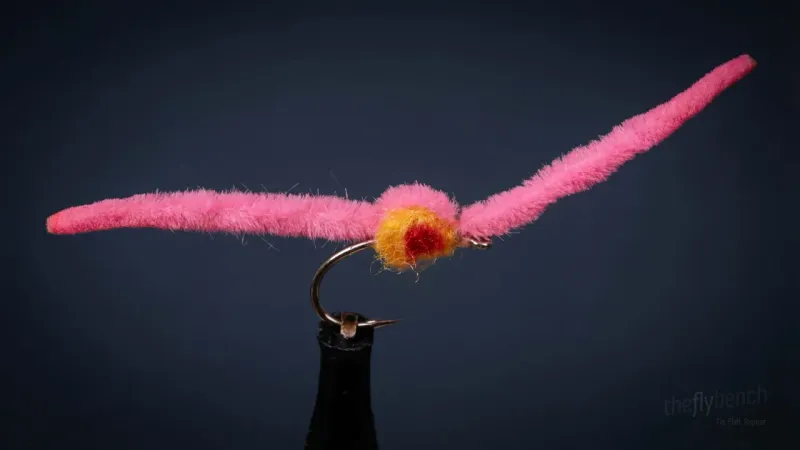
The San Juan Worm is a simple yet highly effective pattern that imitates aquatic worms, a favorite meal for trout. This fly can be effective in high, off-color water after rain or snowmelt washes worms into the river.
Year Round
Beginner
Trout
Apr 2025
Overview
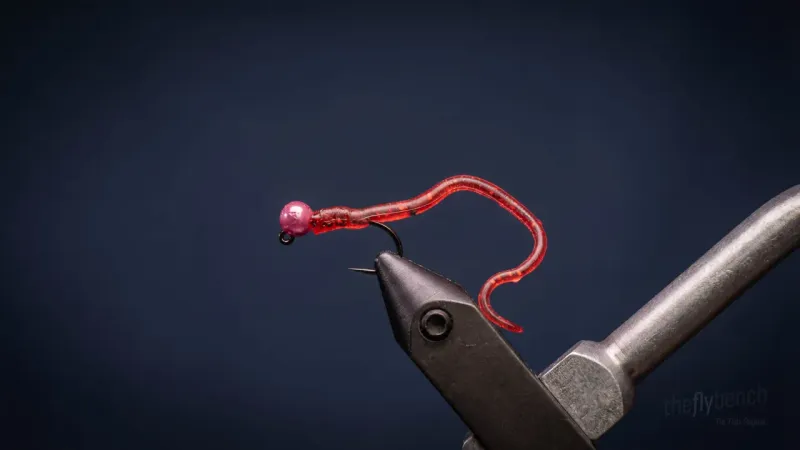
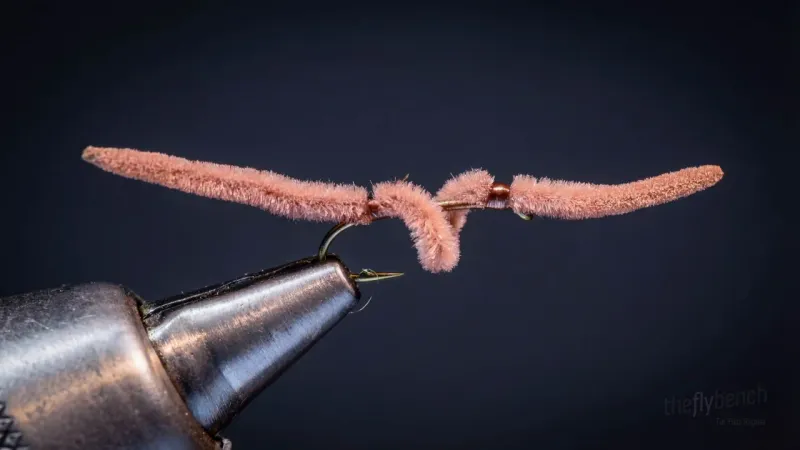
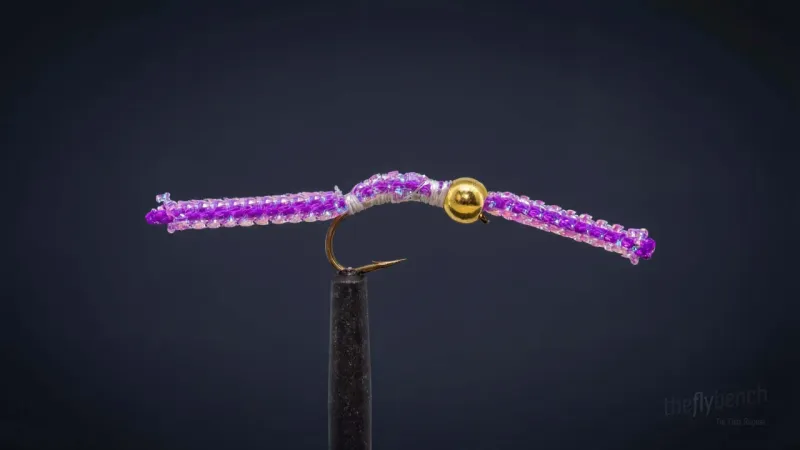
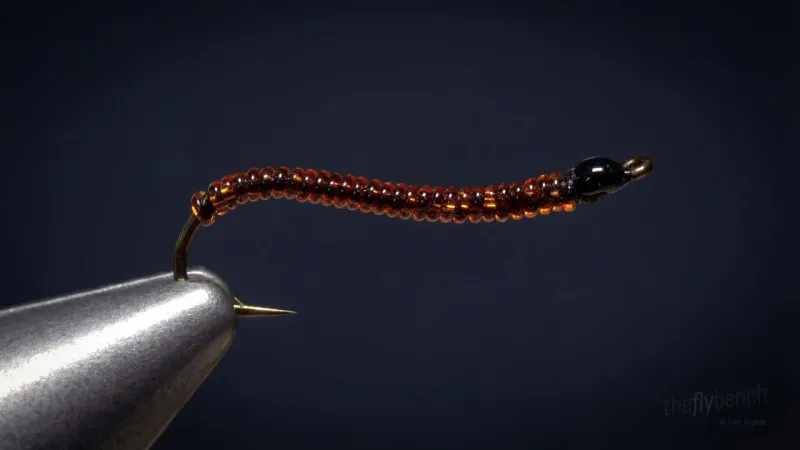
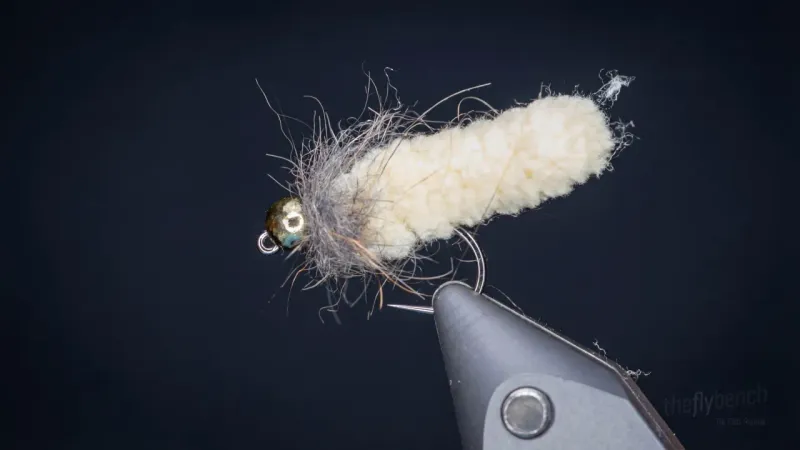
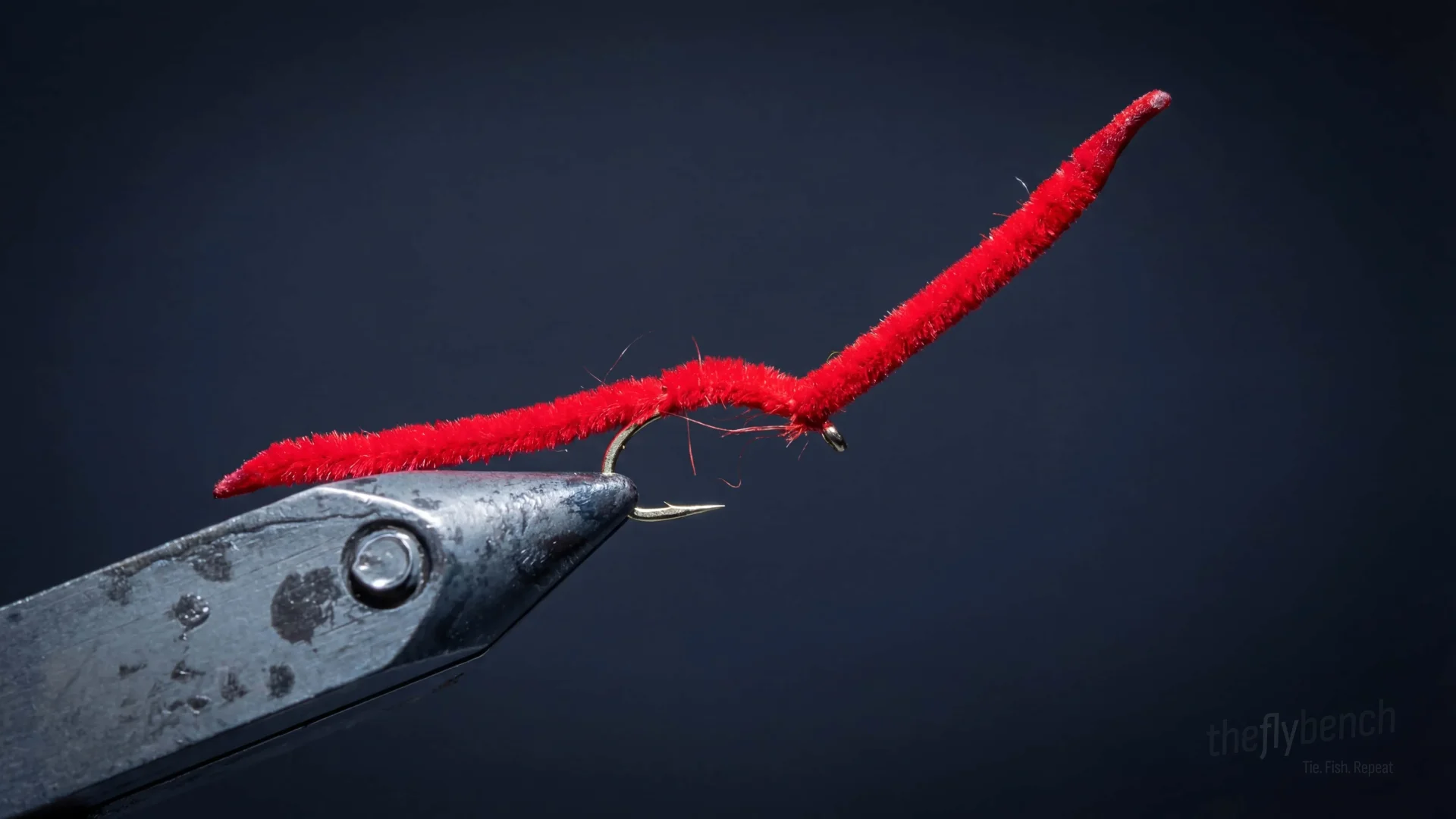
One of the simplest and most effective flies — just a short length of Ultra Chenille or vernille tied to a curved nymph hook, sometimes with a bead. Variants include weighted versions or those with contrasting tails. Tied in red, pink, brown, and tan.
Where to Buy This Fly
We only link to fly shops we trust. Some links are referral links, which may earn us a commission at no extra cost to you.
Materials
- Hook:
- Tiemco 3761, sizes #12–#14
- Thread:
- Pink UNI 6/0
- Body:
- Brown Ultra Chenille
- Glue:
- Head Cement
Behavior & Presentation
Natural Behavior: Aquatic worms tumble helplessly through current after floods scour them from substrate, drifting completely vulnerable with no swimming ability. Their bright coloration and erratic tumbling make them easy targets during high-water events.
Where Trout Eat It: Fish feed opportunistically at all depths, intercepting drifting worms in tailwaters and rivers below dams, especially in slower runs and deep pools.
How to Fish It: Dead drift near bottom, allowing current to tumble the worm naturally through feeding zones without manipulation.
Best Water: Focus on tail-outs, seams, and pockets below riffles. Undercuts and drop-offs produce during high flows.
Strike Type: Feel sudden weight or watch indicator dip as fish intercept the drifting worm.
Fishing Strategy
Rigging Suggestions: Fish on 9ft 4X-5X fluorocarbon leader with strike indicator positioned 1.5-2x water depth. Add split shot 12-18 inches above fly for bottom contact. Effective solo or as anchor fly above smaller nymph pattern.
Seasonal Timing: Year-round productivity with exceptional results during March-June runoff periods and October-November precipitation events when aquatic worms become dislodged and drift freely because high water scours substrate. Effective following any rain or flow fluctuation event throughout the calendar. Most productive in water temperatures from 38-60°F when trout feed opportunistically on drifting protein sources. Deploy after rain events, during snowmelt, or following dam releases when water visibility drops to 12-30 inches and flows increase.
Pro Tips: Red and pink variations work universally, but tan and brown match natural aquatic worms in some watersheds. Size 8-12 patterns match typical worm dimensions. This pattern originated on New Mexico's San Juan River and remains productive when traditional patterns fail.
Entomology
Pink and red annelid worms colonize muddy stream bottoms and gravel interstices, becoming available to trout when spring floods or dam releases scour substrate and flush them into the water column. Fish feed on these worms opportunistically during high-water periods, often establishing feeding lanes to intercept tumbling worms as they drift downstream in the roiled current.
- Organism Type
- worm
- Life Stage
- general