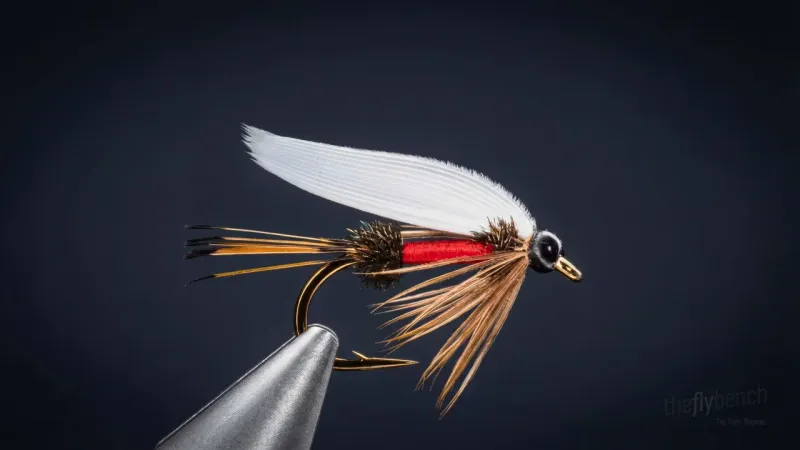
Dry FliesRoyal Wulff
A classic dry fly pattern with a high visibility post, perfect for fishing in fast, turbulent water. Its bright colors and bushy profile make it a great attractor pattern.
Spring, Summer, Fall
Intermediate
Trout
Apr 2025
Overview
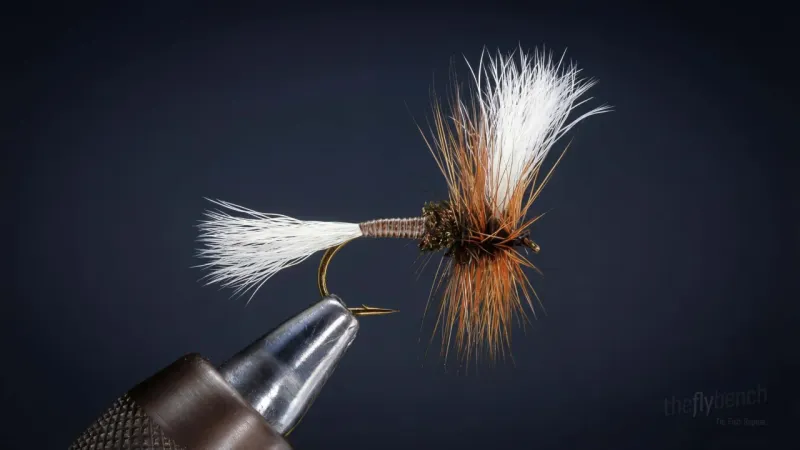
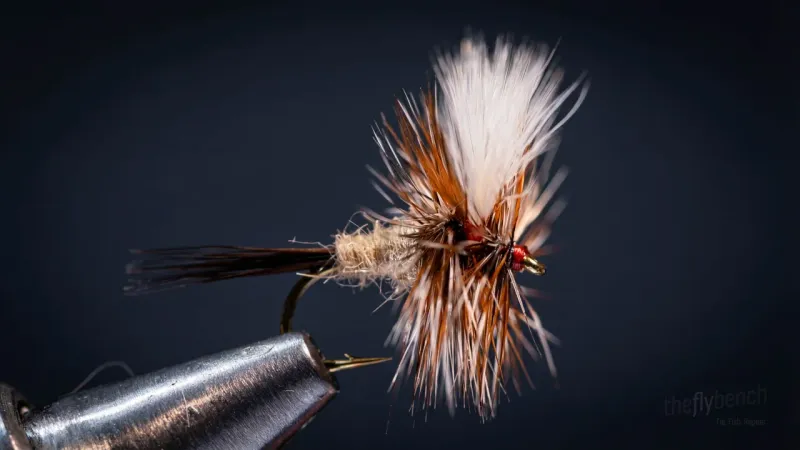
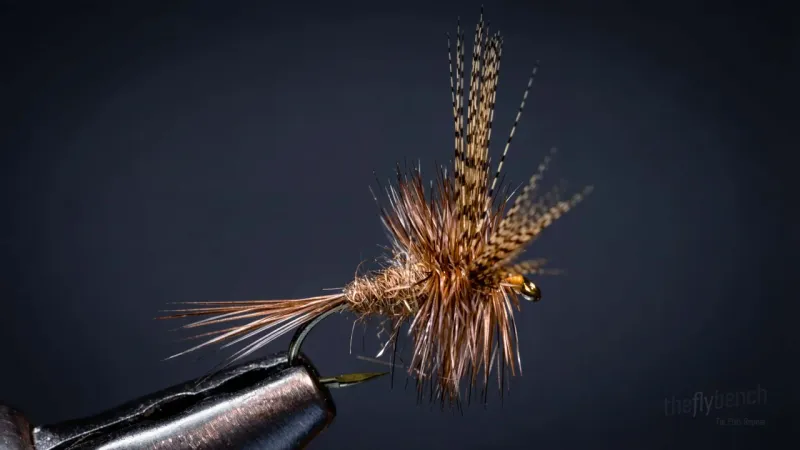
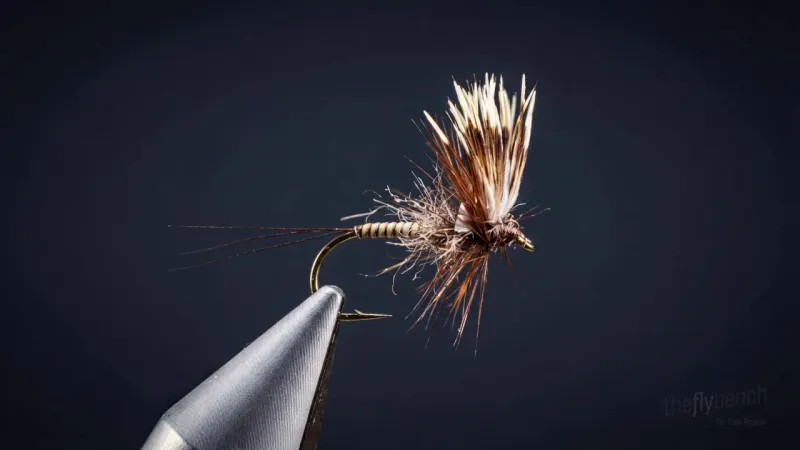
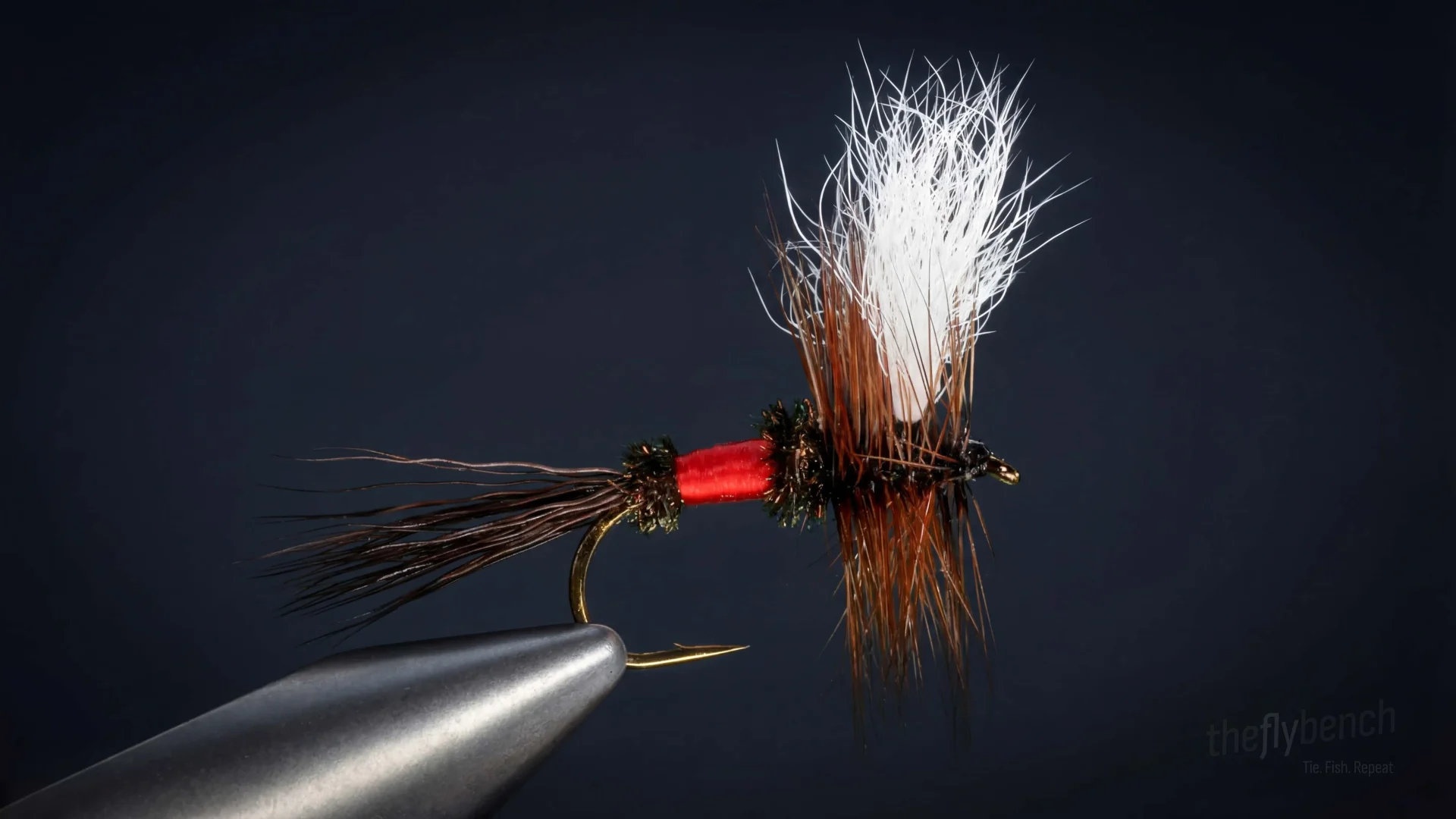
A Wulff-style variation of the Royal Coachman with a more buoyant build — using calf tail wings, peacock herl body segments, and bushy brown and grizzly hackle. The split tail and upright wing offer great visibility and floatation. A favorite attractor in rough water.
Where to Buy This Fly
We only link to fly shops we trust. Some links are referral links, which may earn us a commission at no extra cost to you.
Materials
- Hook:
- Tiemco 100, sizes #10-#18
- Thread:
- 8/0 or 70 Denier, black
- Wing:
- White calf body hair, cleaned and stacked
- Tail:
- Natural moose body hair
- Body:
- Peacock herl
- Hackle:
- Coachman brown
- Head:
- Black tying thread and head cement
- Body accent:
- Red tying thread and head cement
Behavior & Presentation
Natural Behavior: The attractor profile suggests various larger insects struggling on the surface, creating disturbances that draw opportunistic strikes. The high-floating silhouette imitates grasshoppers, stoneflies, or other substantial terrestrials and aquatics that create visible surface activity.
Where Trout Eat It: Trout rise aggressively to the large attractor in the surface film along foam lines and current breaks, particularly in pocket water and riffles.
How to Fish It: Fish with drag-free drifts through pocket water and riffles, using the buoyant design to maintain visibility in turbulent currents.
Best Water: Target pocket water and riffle edges in fast to moderate flows, focusing on foam lines and current breaks that concentrate surface insects.
Strike Type: Expect aggressive, confident rises as trout react to the substantial, highly visible profile.
Fishing Strategy
Rigging Suggestions: This fly can be fished alone, or as a dropper behind a larger dry fly.
Seasonal Timing: The Royal Wulff is a great choice from late through early .
Pro Tips: The Royal Wulff is highly visible due to its bright colors and bushy profile. It floats well due to the calf hair and hackle used in its construction.
Entomology
Mayfly adults drift serenely on the current with wings held in a characteristic upright position, their bodies occasionally twitching as they prepare for flight or recover from emergence. The high-floating profile and substantial size of these duns make them visible targets that trout can track from distance, inspiring confident rises during both hatch situations and general prospecting.
- Order
- Ephemeroptera
- Common Name
- Mayfly
- Organism Type
- insect
- Life Stage
- adult