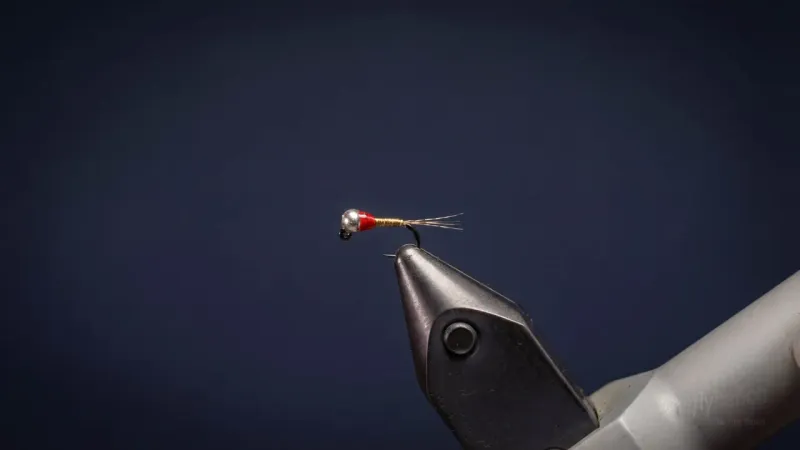
Euro NymphsPerdi-BOMB Soft Hackle Nymph
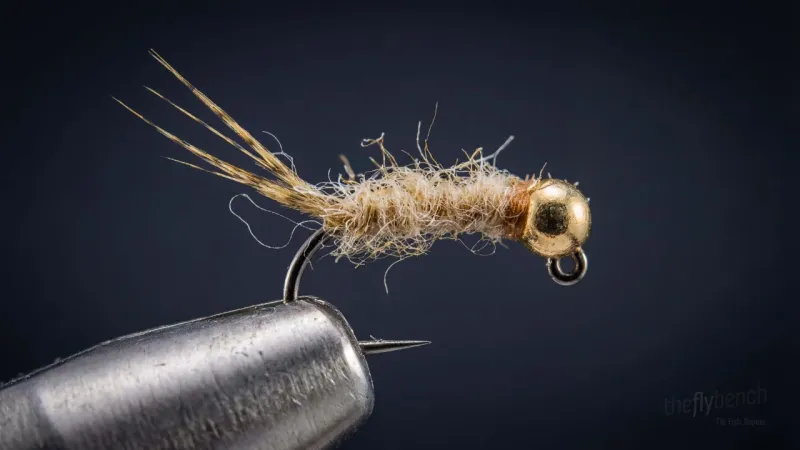
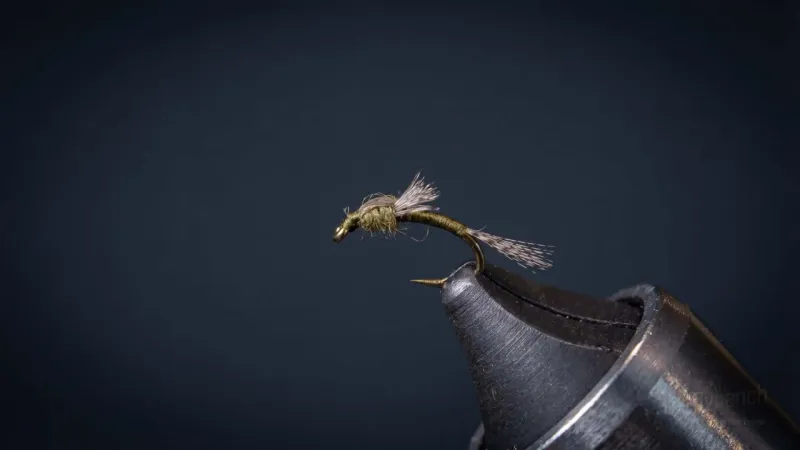
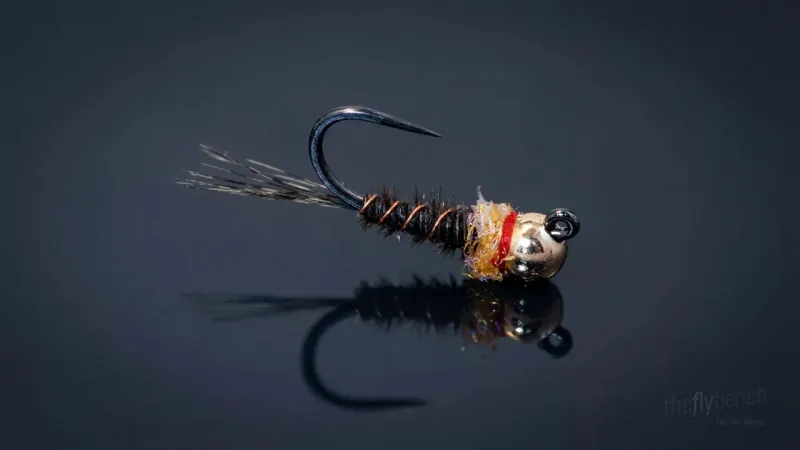
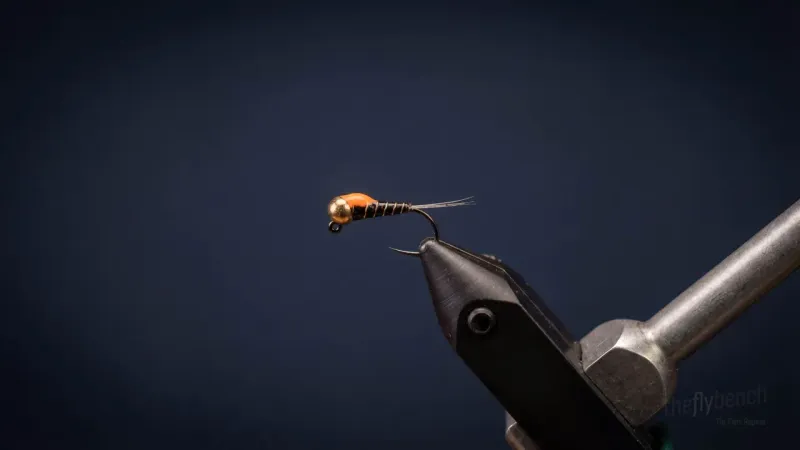
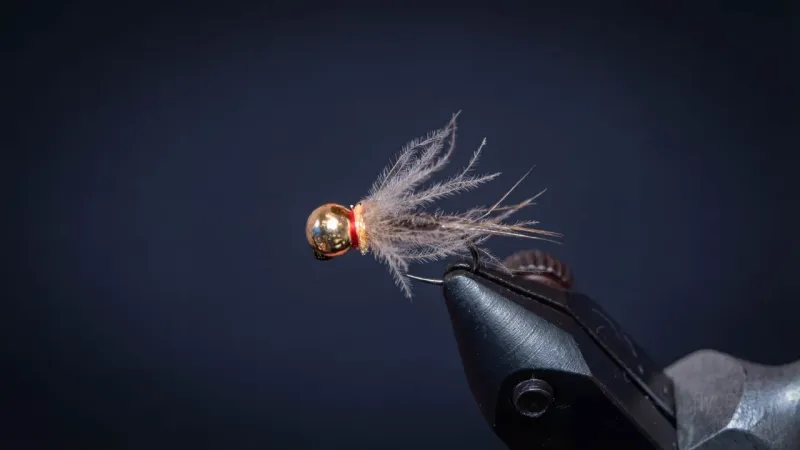
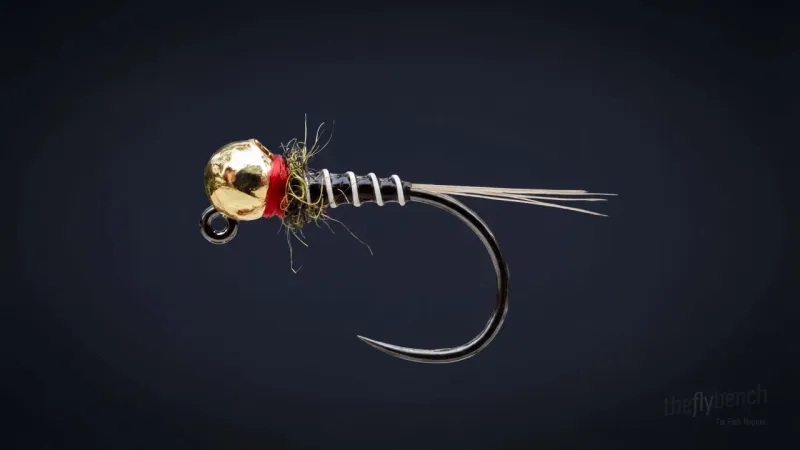
A hybrid pattern combining the heavy, quick-sinking properties of a perdigon with the lifelike movement of a traditional soft hackle. The flash back body and Ice Dub thorax create an attractor profile, while the soft hackle adds subtle motion during the drift. Designed by Curtis for euro nymphing presentations with excellent depth and versatility.
Year Round
Intermediate
Trout
Dec 2025
Overview
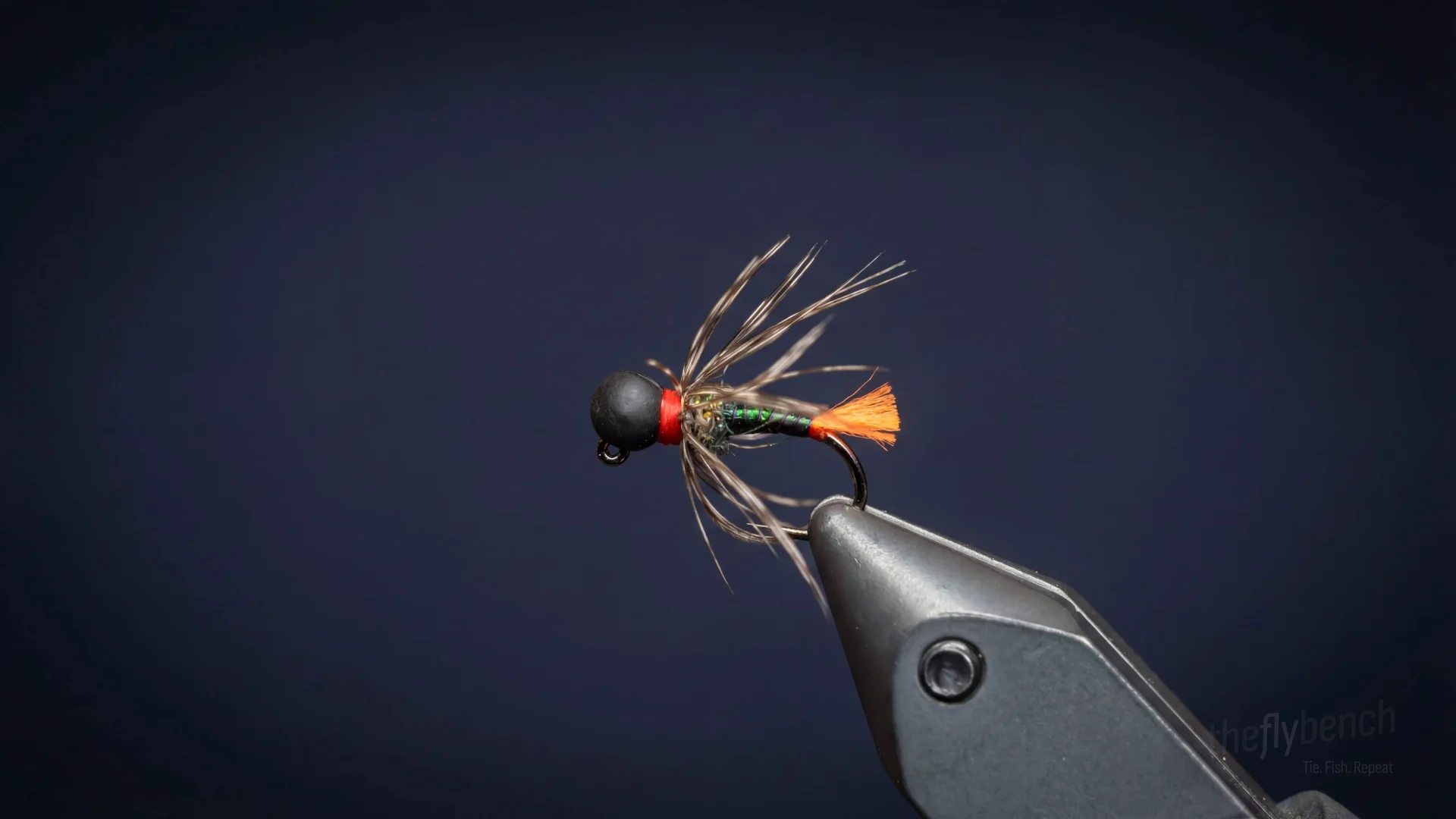
Developed by Curtis in August 2021 as a competition-style euro nymph that combines the best features of perdigon and soft hackle patterns. The matte black tungsten bead and lead wire ensure rapid descent to the feeding zone, while the soft hackle creates movement that triggers strikes. The fluorescent orange tail provides a subtle hot spot attractor. Curtis's design bridges traditional soft hackle techniques with modern perdigon efficiency for technical presentations.
Materials
Hook: Umpqua XC400BL-BN, #12 (or Hanak H 400 BL Jig Hook, Fulling Mill 5045 Jig Force Barbless Hook)
Thread: UTC Ultrathread 70 denier, red (or 8/0 UNI-Thread Waxed Midge, red)
Bead: Firehole Stones matte slotted tungsten bead, black, 4.0mm (5/32") (Super Bomb: 4.5mm)
Weight: Lead wire, 0.02 diameter
Tail: Glo-Brite floss, fluorescent orange #7
Body: Perdigonmania flash back strips, black peacock (or Holographic Flashabou black, Perdigones pearl body black)
Thorax: Ice Dub, peacock
Hackle: Whiting Brahma wing soft hackle (or Hebert Miner hen saddle, medium gray dun)
Body Resin: Solarez Bone Dry PLUS, 0.5 fl oz
Behavior & Presentation
Natural Behavior: Ascending emergers swim toward the surface film while their nymphal shuck begins splitting, leaving them suspended and vulnerable mid-column.
Where Trout Eat It: Fish position in feeding lanes 2-4 feet deep, targeting emergers suspended between nymphal and adult stages in the mid-column.
How to Fish It: High-stick euro presentation with jigging motion animates soft hackle. Tight contact throughout drift detects subtle takes during the lift.
Best Water: Target seams where emergers concentrate, pocket water with varied currents, and riffle edges where ascending insects enter feeding lanes.
Strike Type: Tick during jig motion or sudden weight signals fish grabbing suspended emerger. Set quickly on any change.
Fishing Strategy
Rigging Suggestions: Fish on 10-14 foot euro nymphing leader with 4X-5X fluorocarbon tippet. Use as the point fly in a two-fly euro rig, paired with a lighter pattern 12-18 inches above.
Seasonal Timing: in freestone streams and tailwaters. Most productive during spring mayfly hatches (March-May) and fall Baetis emergences (September-November).
Pro Tips: Sinks extremely fast with combined tungsten bead and lead wire underbody, reaching depths of 4-6 feet in seconds. The slim perdigon profile cuts through current with minimal resistance.
Entomology
Mayfly emergers initiate their transformation to winged adults while still underwater, swimming toward the surface while their nymphal shuck begins to split and the emerging dun starts to unfold. This transitional moment leaves them immobilized and defenseless, suspended between two life stages and unable to swim effectively or escape. Trout focus intensely on emergers during hatches because they represent the easiest targets, more vulnerable than nymphs still on the bottom or adults that have successfully taken flight.
- Order
- Ephemeroptera
- Common Name
- Mayfly
- Organism Type
- insect
- Life Stage
- nymph