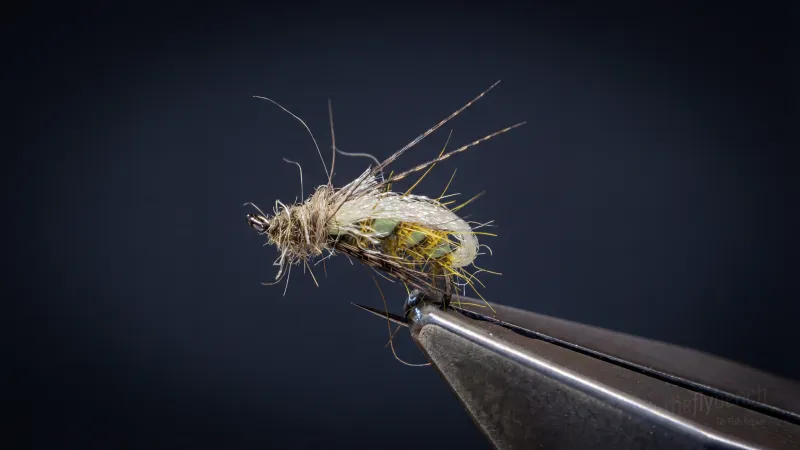
Midge / EmergersTabou Caddis Emerger
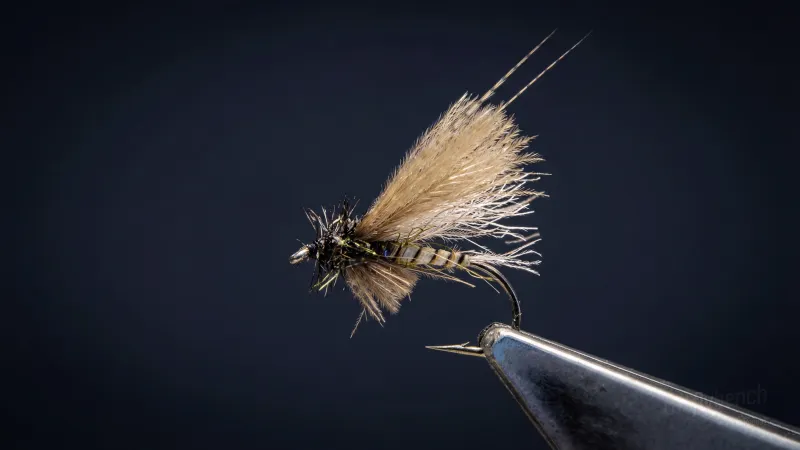
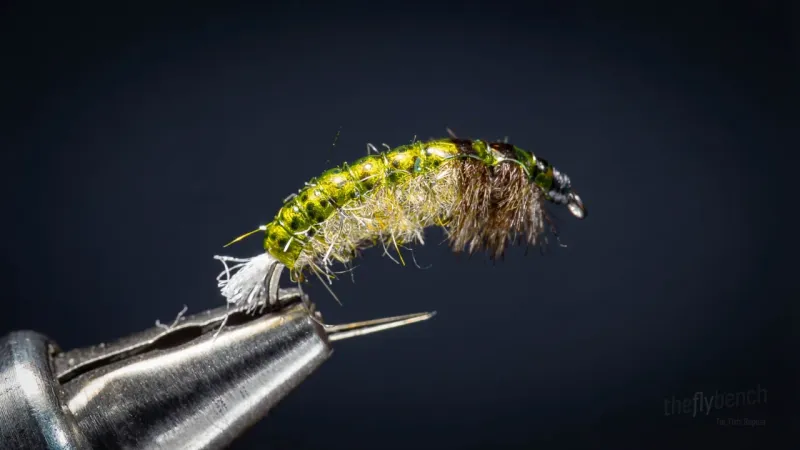
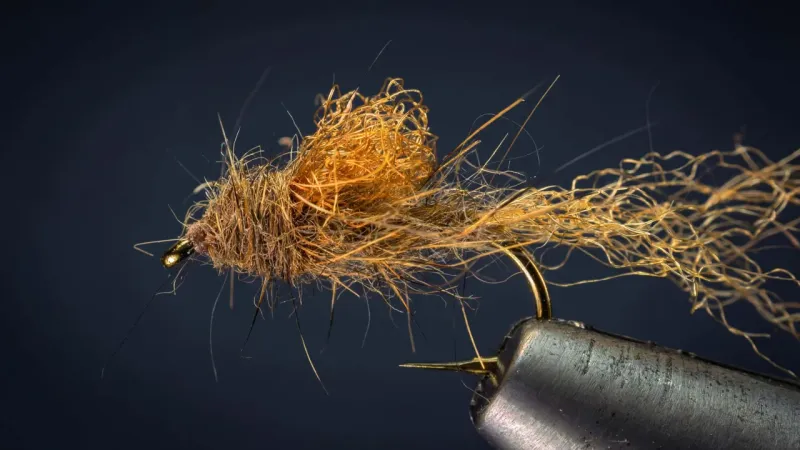
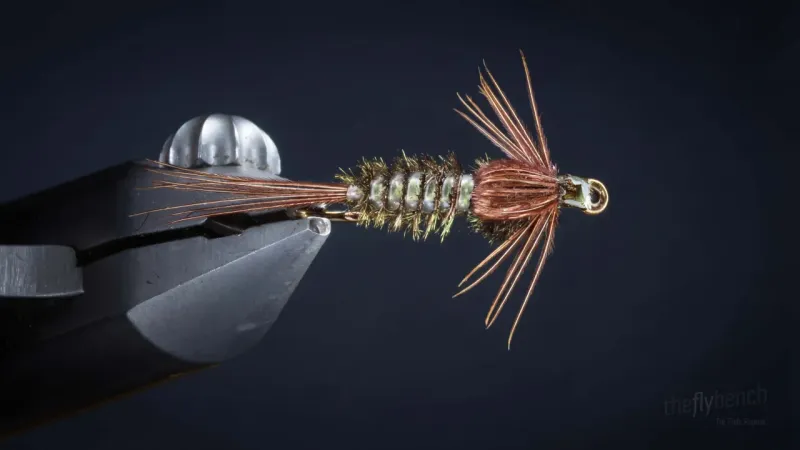
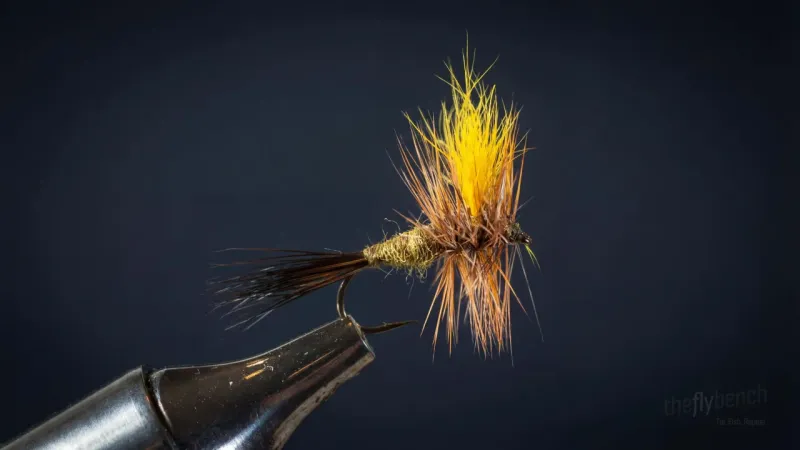
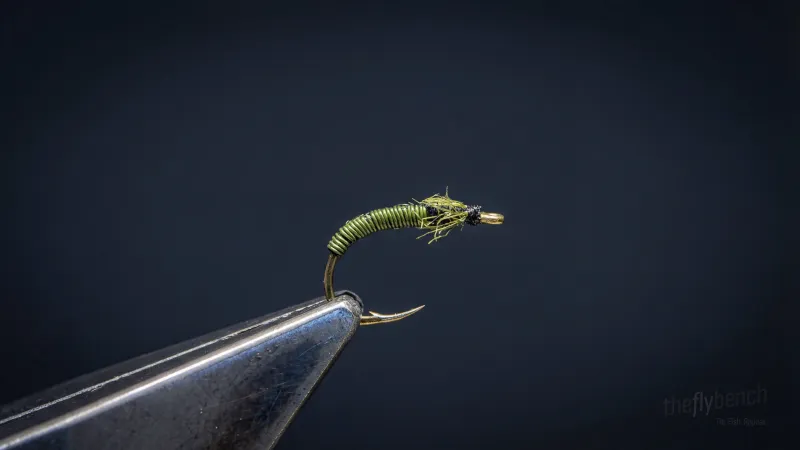
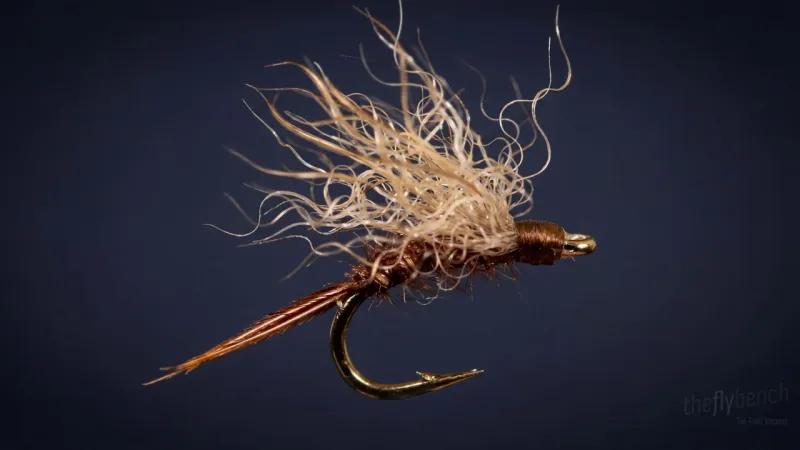
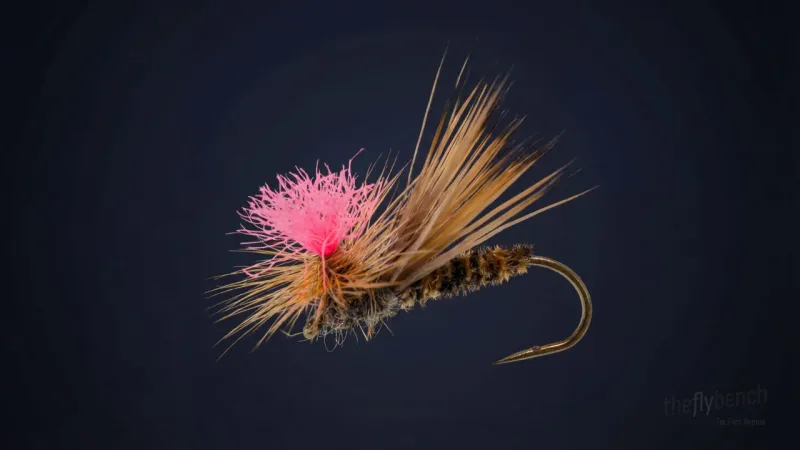
The Tabou Caddis Emerger imitates a caddis pupa breaking free of its shuck just under the surface. A single chickabou feather is wrapped to form the tail, abdomen, and legs in one motion, ribbed with clear stretch round rib for segmentation, while a soft-hackle feather wing and a thorax of soft-hackle "fluffies" give it a webby, translucent profile trout key on during a hatch.
Spring, Summer
Advanced
Trout
Apr 2025
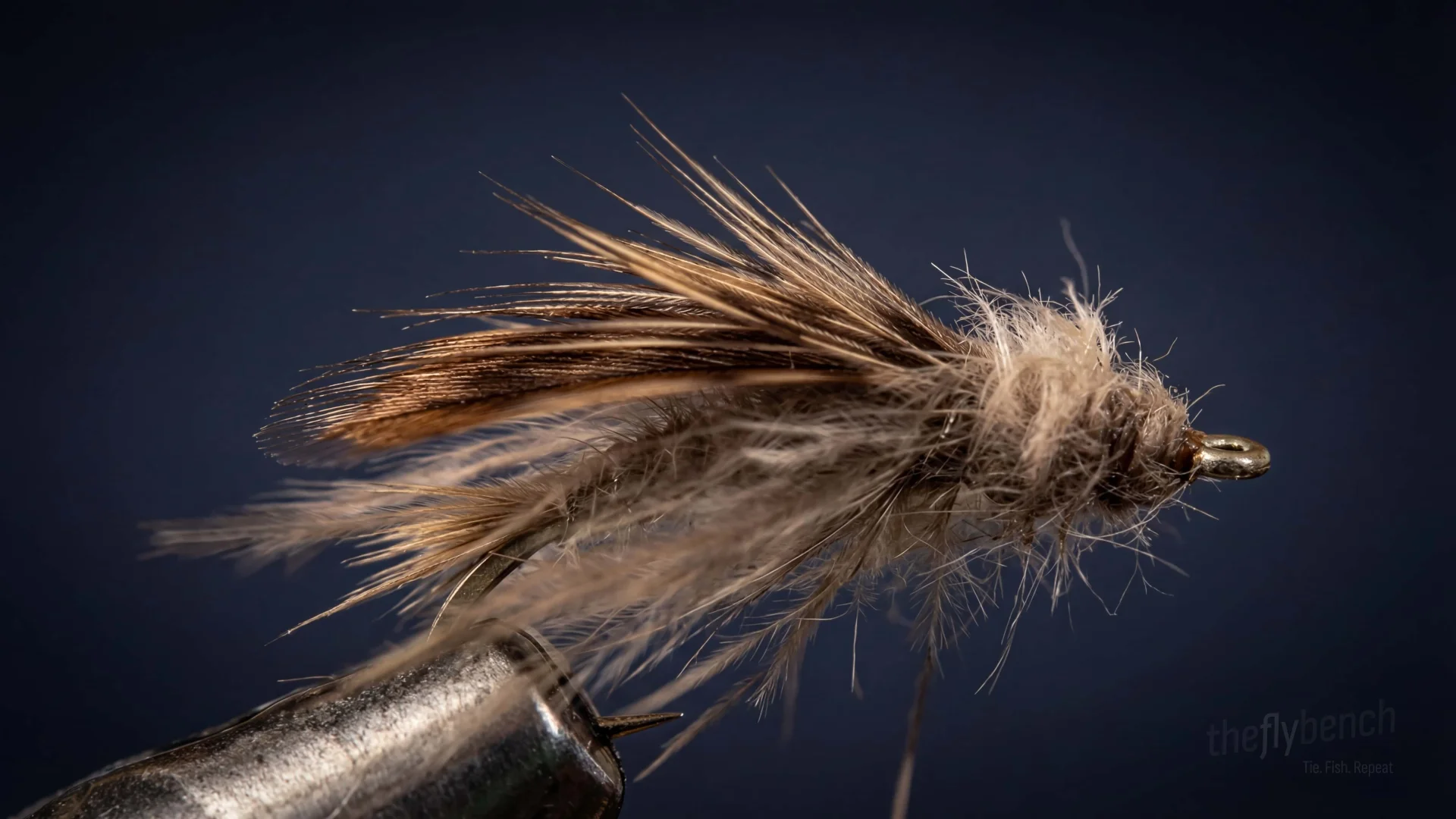
Overview
Winding one chickabou feather up the shank builds the tail, ribbed abdomen, and leg fibers as a single webby unit, so the fly pulses and breathes with the slightest current rather than sitting stiff. Clear stretch round rib segments the abdomen, a soft-hackle feather laid back as a wing suggests emerging wings still folded against the body, and a thorax picked from soft-hackle "fluffies" traps air and light for a translucent, buggy silhouette. Fished just under or in the surface film on a dead drift, it covers the vulnerable moment caddis spend struggling out of the pupal shell during spring and summer emergences on moving water.
Where to Buy This Fly
We only link to fly shops we trust. Some links are referral links, which may earn us a commission at no extra cost to you.
Materials
- Hook:
- Dai-Riki 270, size 14
- Thread:
- 6/0 or 140 Denier, olive
- Rib:
- Clear Stretch Round Rib, small
- Tail/abdomen/legs:
- Chickabou feather
- Wing:
- Soft-hackle feather
- Thorax:
- Soft hack “fluffies”
Behavior & Presentation
Natural Behavior: During emergence, caddis pupae power upward with swimming leg strokes, racing through mid-column depths toward the surface while wings remain trapped in pupal skin. The frantic ascent leaves them disoriented at the film, creating vulnerable feeding windows.
Where Trout Eat It: Fish intercept ascending pupae in riffles, runs with moderate current, and tailrace sections, feeding in the surface film during emergence windows.
How to Fish It: Drag-free drift in surface film allows CDC bubble and elk hair wing to position fly perfectly at the water's surface interface.
Best Water: Riffles, runs with moderate current, and tailrace sections with productive caddis populations in 1-4 feet of water.
Strike Type: Subtle sip in film or slight surface disturbance appearing as rings or barely visible take.
Fishing Strategy
Rigging Suggestions: Fish solo on 5X-6X fluorocarbon with 9-10ft leader during selective feeding. Position below size 14-16 dry caddis on 12-18 inches of 5X-6X tippet, or use in multi-fly rig.
Seasonal Timing: Peak May-June and August when caddis populations surge. Productive throughout day during heavy emergences, consistent during late afternoon hatches. Water temperatures 50-62°F produce optimal hatches because this range triggers emergence cycles.
Pro Tips: Elk hair wing and CDC provide exceptional floatation and realistic profile. Size 14-18 matches most caddis. Tan, olive, brown variations cover regional preferences. Antron shuck triggers strikes from selective trout.
Entomology
Caddis pupae ascend rapidly through the water column in a final dash toward the surface, swimming with powerful leg strokes while their developing wings remain encased in pupal skin. Trout position themselves to intercept these ascending insects in mid-water or just below the film, targeting them because the emergers are temporarily disoriented and highly vulnerable during this critical transformation period.
- Order
- Trichoptera
- Common Name
- Caddisfly
- Organism Type
- insect
- Life Stage
- general