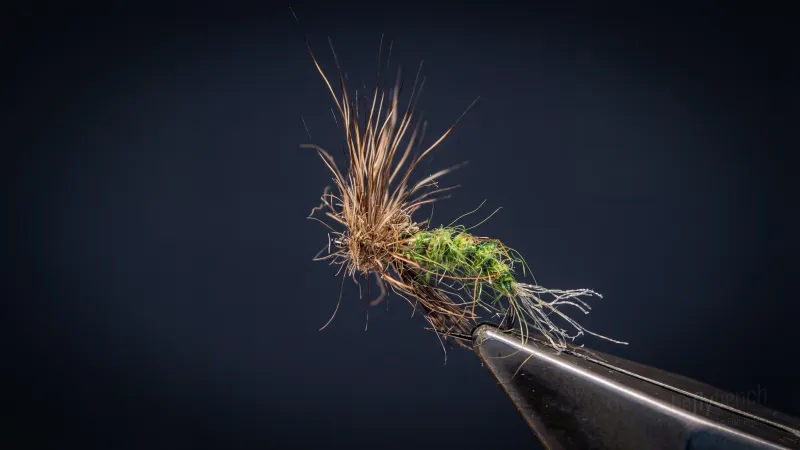
Dry FliesImproved F-Fly
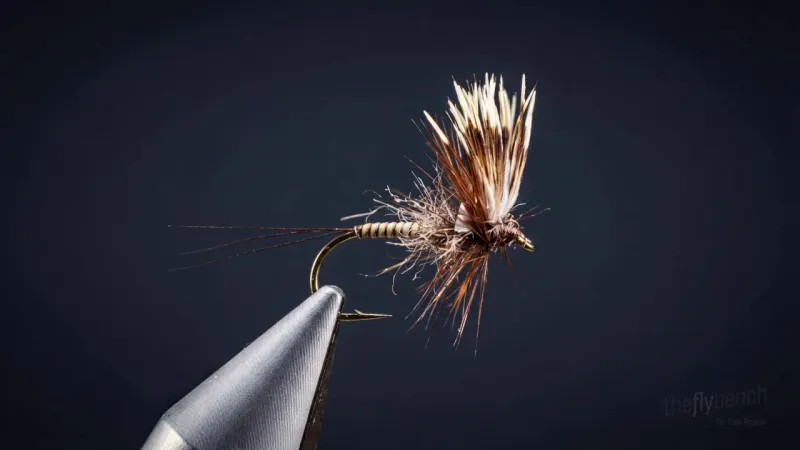
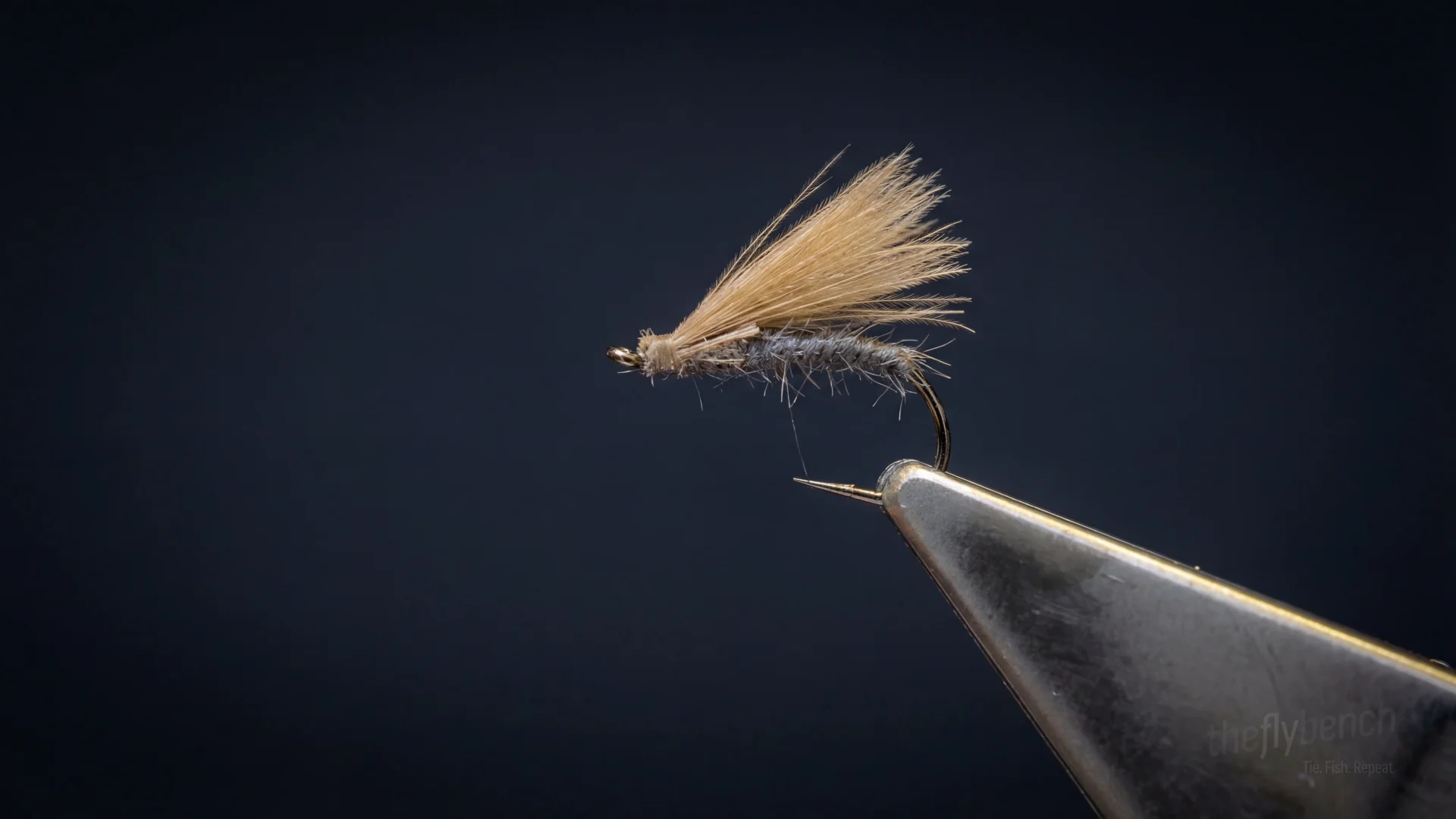
The Improved F Fly strips the pattern down to two materials: a slender natural mole-dubbed body and a natural CDC wing, letting the fibers' own buoyancy and movement imitate a resting mayfly or caddis. Its low profile suits smooth currents and stillwater surfaces where a sparse silhouette outperforms a bushier tie.
Spring, Summer, Fall
Intermediate
Trout
Feb 2026
Overview
Hans Weilenmann built this improved F Fly around just two materials: a slim mole-dubbed body and a single CDC wing, with no hackle to interrupt its low-riding profile. The lack of hackle means the CDC does double duty for flotation and movement, so keeping a couple of dry spares on hand helps through a long hatch. It's a reliable choice whenever fish are looking at flies closely on flat water, from spring Baetis hatches through fall caddis activity.
Where to Buy This Fly
We only link to fly shops we trust. Some links are referral links, which may earn us a commission at no extra cost to you.
Materials
- Hook:
- Grip 14723BL #14
- Thread:
- Benecchi 12/0, grey
- Body:
- Mole, natural - slender
- Wing:
- CDC, natural
Behavior & Presentation
Natural Behavior: Adult caddisflies and stoneflies flutter and tumble onto pocket water surfaces, their bodies bouncing and drifting through broken currents. The dubbed body and upright wing construction create a buggy, buoyant profile that rides high through turbulent water suggesting active or spent adult insects.
Where Trout Eat It: Fish target CDC-winged dry flies in the surface film during mayfly and caddis emergence where the mole fur body and CDC wing imitate multiple species. Effective when trout feed on various aquatic insects in current seams and foam lines worldwide.
How to Fish It: Cast upstream and achieve drag-free drifts through feeding lanes with 4X-5X tippet. The CDC wing breathes with micro-currents and rides naturally in the film using the 'less is more' approach. Versatile pattern works sizes 12-20 for caddis, mayflies, or midges.
Best Water: Tail-outs, riffle edges, pocket water, and runs on spring creeks and freestone rivers worldwide, targeting slower water adjacent to faster currents where surface insects concentrate.
Strike Type: Pocket water strikes are aggressive and explosive; watch for splashy takes and set with authority when you see the fish.
Fishing Strategy
Rigging Suggestions: Fish on 9-12 foot leader with 4X-5X tippet. Can serve as lead fly in dry-dropper rig with improved visibility aiding fly position tracking.
Seasonal Timing: Most effective during hatches April through June and activity July through August when water temperatures range 50-65°F. Morning and evening feeding periods from 6-10 AM and 5-9 PM produce best results.
Pro Tips: Modern synthetic materials provide enhanced durability through multiple fish. The refined proportions create better balance on water surface, requiring less line management than original design.
Entomology
Adult caddis dip and dive to the water surface during ovipositing runs, creating rapid-fire surface contacts that produce distinctive splashes and rings in pocket water and runs. Fish key on these rhythmic surface disturbances because the predictable patterns allow them to time strikes perfectly, intercepting insects during brief moments of surface contact when escape is impossible.
- Order
- Trichoptera
- Common Name
- Caddisfly
- Organism Type
- insect
- Life Stage
- adult