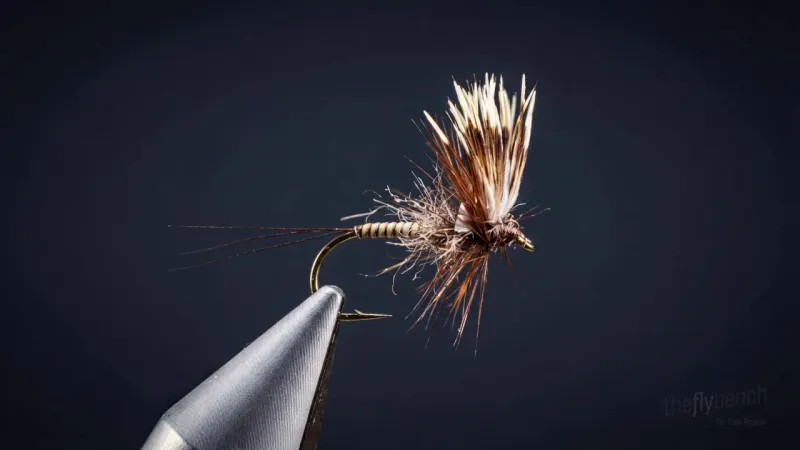
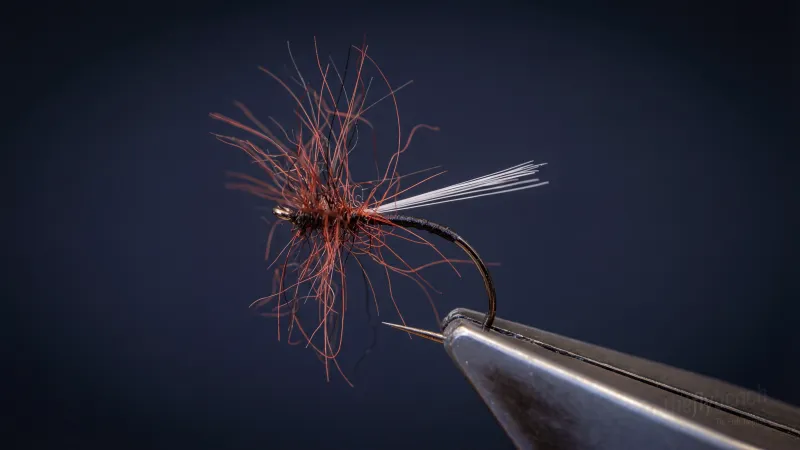
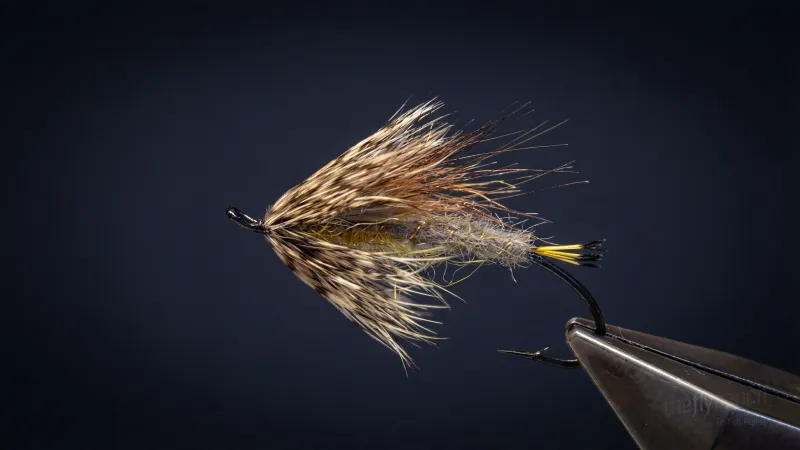
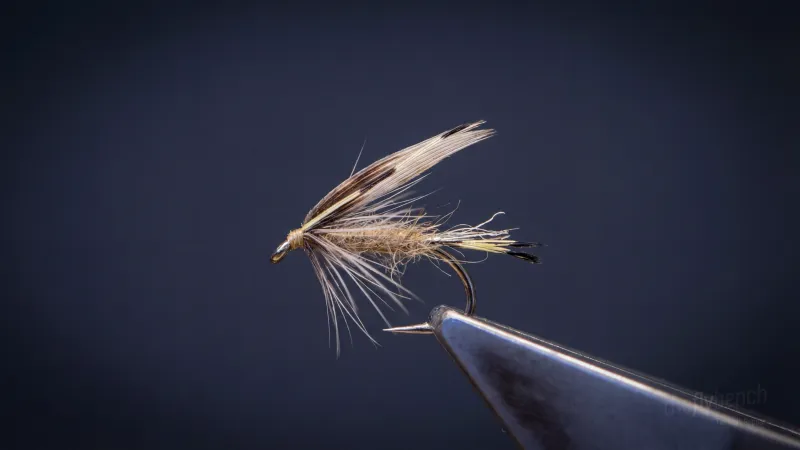
Dry FliesMossback
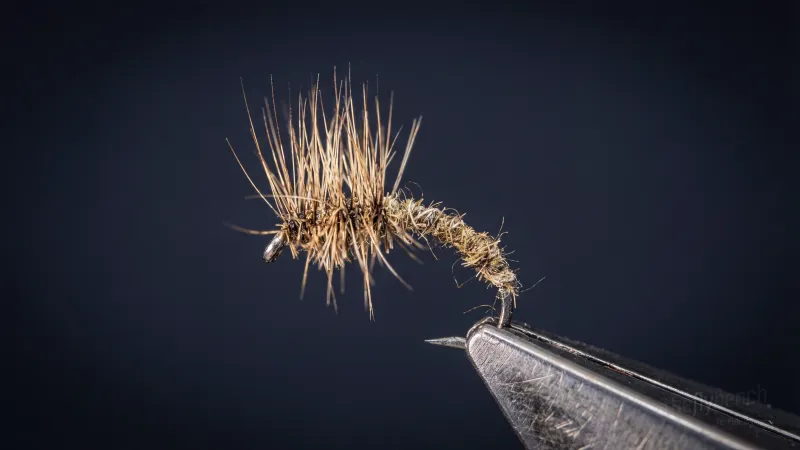
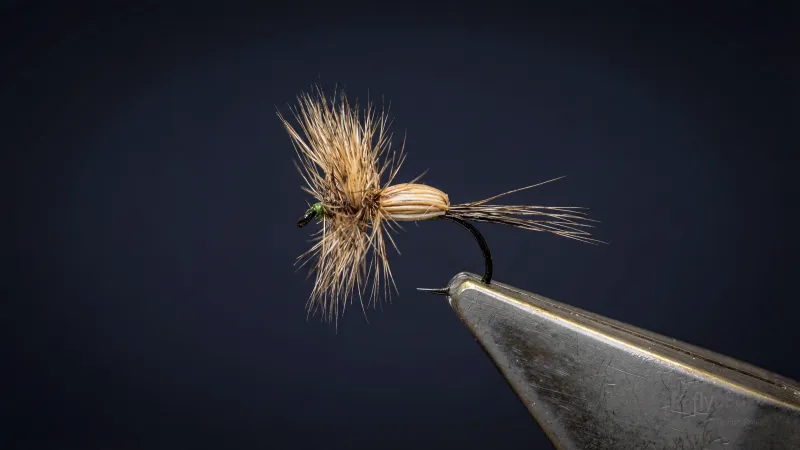
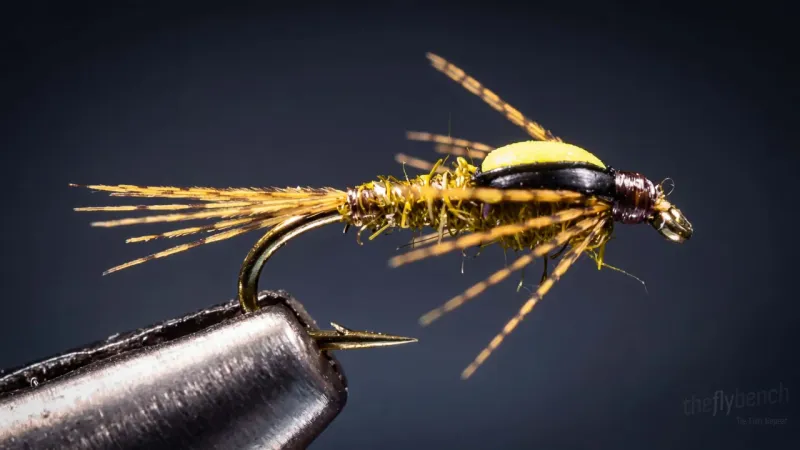
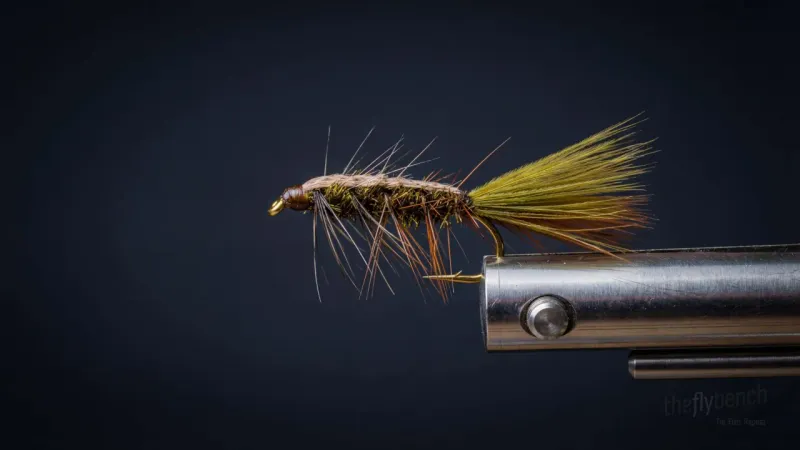
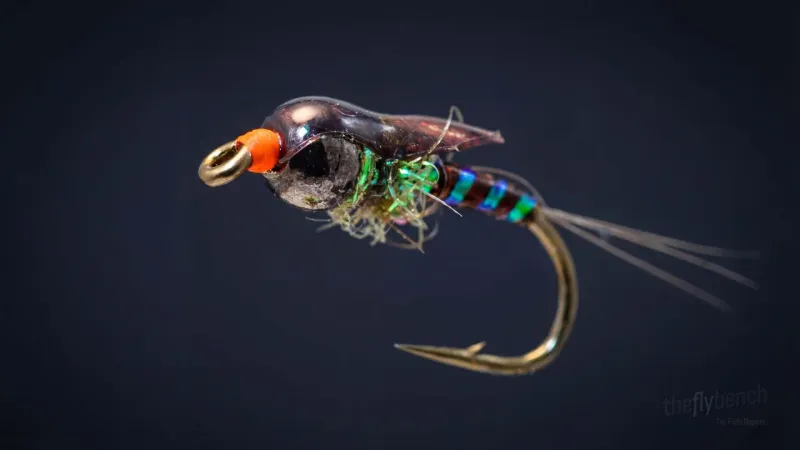
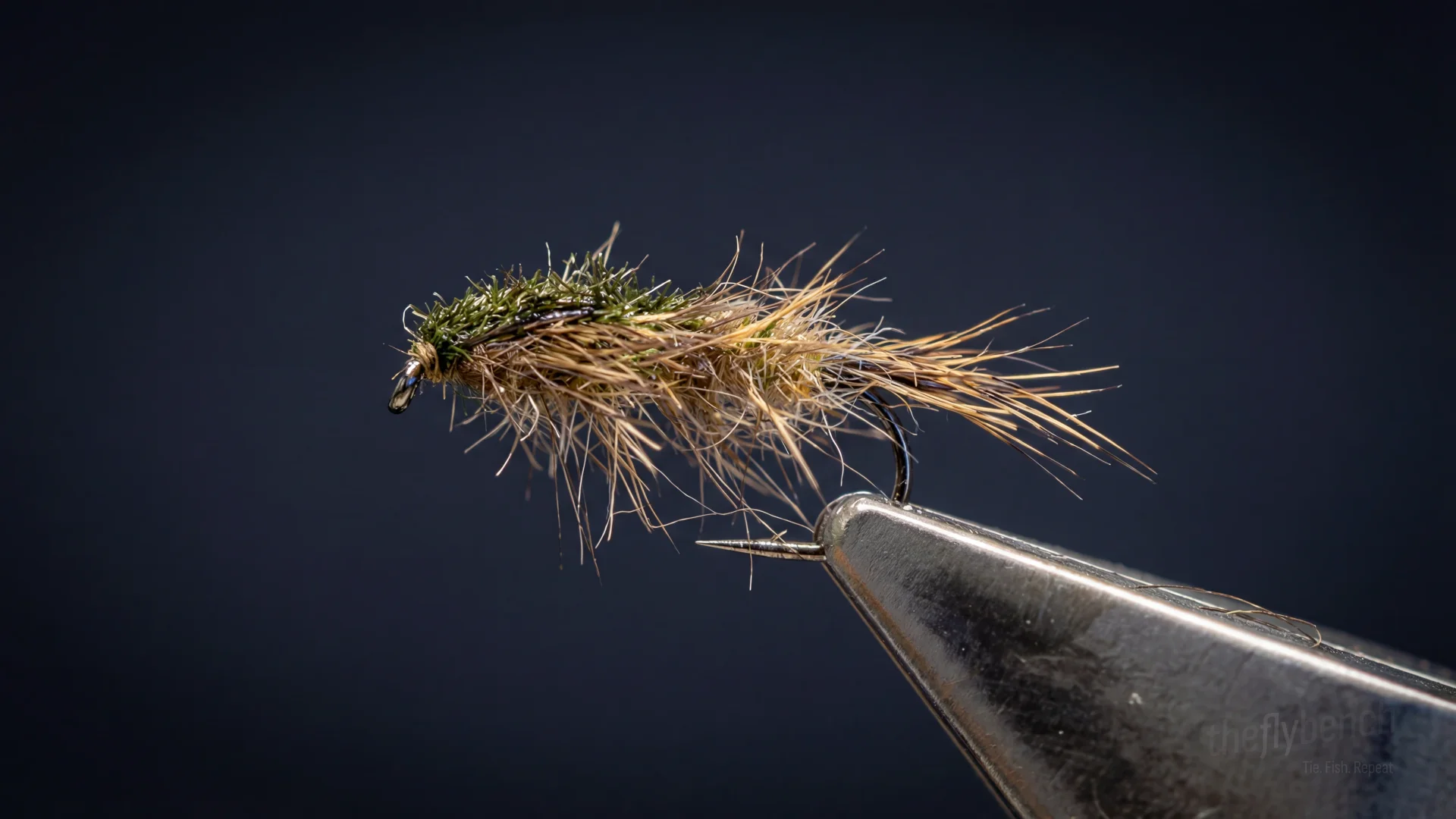
Hans Weilenmann's Mossback is a weighted hare's ear style nymph tied almost entirely from European hare fur worked in a split thread. A peacock herl wingcase and slim copper rib mark the thorax break, and lead wire concentrated there gets the fly down quickly for mayfly and caddis nymph imitation along the bottom.
Spring, Summer, Fall
Intermediate
Trout
Feb 2026
Overview
The tail and abdomen use European hare face fur, guard hairs first for the tail and then the fur itself spun into a split thread for a buggy, translucent abdomen. Hare ear fur, also worked in split thread, builds a coarser thorax behind a simple peacock herl wingcase, and a fine copper wire rib holds the abdomen together. Weight goes only into the thorax, so the fly settles head-down as it drifts, matching the profile of a mayfly or caddis nymph tumbling near the streambed. It works as a general subsurface searching pattern in both rivers and stillwaters through the open-water months.
Where to Buy This Fly
We only link to fly shops we trust. Some links are referral links, which may earn us a commission at no extra cost to you.
Materials
- Hook:
- Partridge Barbless Ideal Nymph #10-16
- Thread:
- Benecchi 12/0, tan
- Weight:
- Lead wire, thorax only
- Rib:
- Copper wire, fine
- Tail:
- European hare face guard hair
- Abdomen:
- European hare face hair - in split thread
- Wingcase:
- Peacock herl
- Thorax:
- European hare ear hair - in split thread
Behavior & Presentation
Natural Behavior: Spent caddis drift downstream after egg-laying, wings splayed and body low in the meniscus, too exhausted to fly again. These dying insects represent effortless calories for opportunistic feeders who prefer vulnerable prey that cannot evade capture.
Where Trout Eat It: Excels in pocket water and runs along weed beds in freestone streams. Particularly effective on spring creeks with heavy aquatic vegetation where naturalistic earth tones succeed.
How to Fish It: Cast upstream and dead drift along weed beds and pockets where dislodged insects concentrate. The textured materials suggest organic debris attached to naturals that trout expect in vegetated areas. Dead drift matches the helpless floating behavior that triggers surface feeds.
Best Water: Focus on pockets, runs where trout hold and actively feed.
Strike Type: Watch for quiet, methodical takes in pockets where fish inhale the low-riding spent caddis. The strike appears as gentle surface disturbance rather than splashy rises.
Fishing Strategy
Rigging Suggestions: Fish on 9-12 foot leader with 4X-5X tippet. Target feeding lanes along weed beds and drop-offs where dislodged insects concentrate and trout hold.
Seasonal Timing: Most effective during terrestrial season June through September when water temperatures range 55-70°F. Peak activity occurs during mid-day periods when terrestrials dislodge from vegetation and drift along weed beds.
Pro Tips: Mottled coloring mimics moss-covered insects that trout regularly encounter along vegetated areas. CDC wings provide reliable flotation while soft hackle adds subtle movement matching dislodged naturals in current.
Entomology
Spent caddis drift downstream after egg-laying, wings splayed and body low in the meniscus, too exhausted to fly again. These dying insects represent effortless calories for opportunistic feeders who prefer vulnerable prey that cannot evade capture.
- Order
- Trichoptera
- Common Name
- Caddisfly
- Organism Type
- insect
- Life Stage
- adult