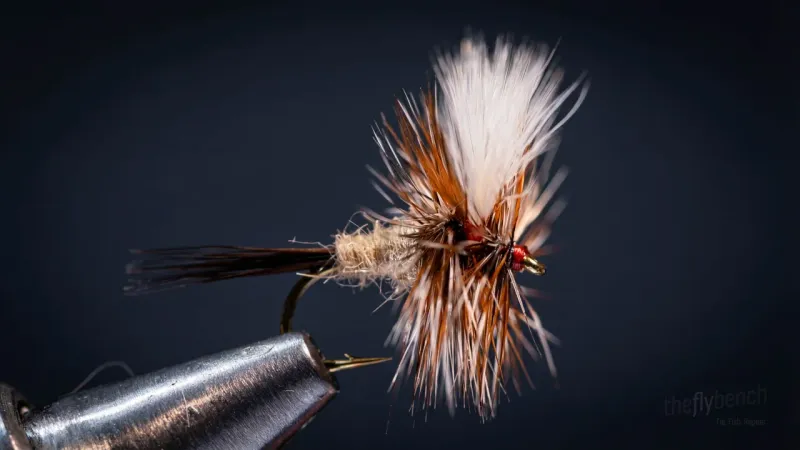
Dry FliesHendrickson Sparkle Dun
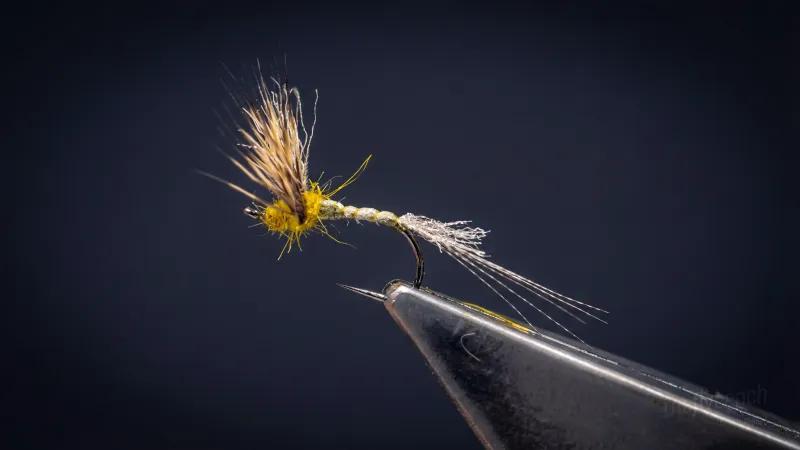
The Hendrickson Sparkle Dun is a modern emerger-style dry fly designed to imitate the Hendrickson mayfly during the critical transition from nymph to adult. Featuring a splayed deer hair wing, trailing Zelon shuck, and a custom-blended dubbing that matches the distinctive coloring of the natural, this pattern rides low in the film where selective trout expect to find struggling emergers.
Spring
Intermediate
Trout
Dec 2025
Overview
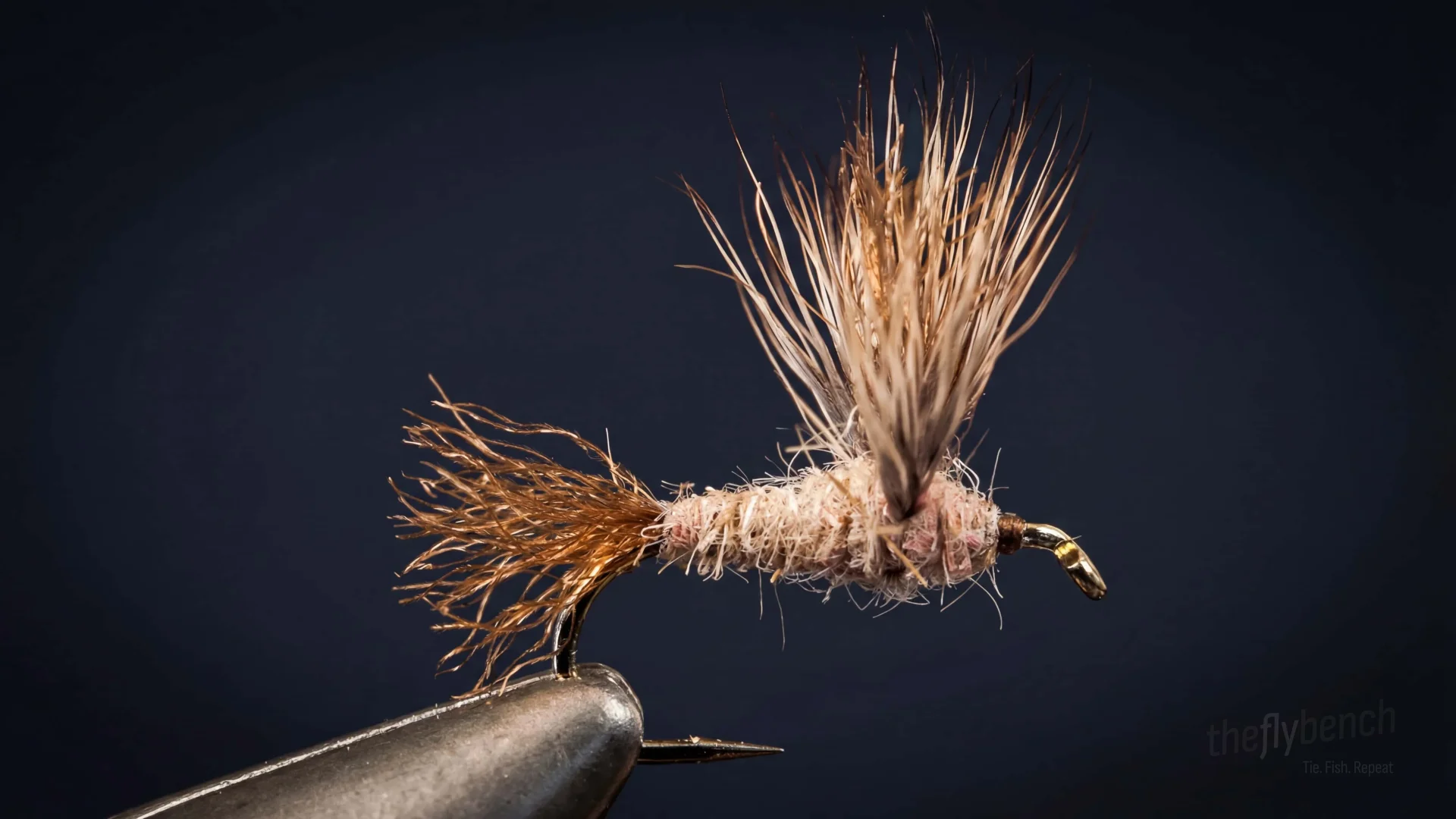
This pattern showcases Matt Grobert's custom dubbing blend of equal parts light tan, gray, and pink rabbit fur, specifically formulated to match the distinctive underside coloring of Hendrickson duns. The brown Zelon serves double duty as both a trailing shuck representing the nymphal case and adding sparkle to the wing. The deer hair wing is splayed rather than upright, creating a more realistic silhouette and helping the fly sit properly in the surface film.
Materials
Hook: Standard dry-fly hook (Dai-Riki 305 or similar), #12–#16
Thread: Olive, 6/0
Wing: Light dun coastal deer hair, stacked and cleaned
Trailing Shuck: Brown Zelon
Abdomen: Blended rabbit fur (equal parts light tan, gray, and pink)
Thorax: Same as abdomen
Behavior & Presentation
Natural Behavior: Hendrickson mayflies emerge during afternoon hours, their large size and slow wing-drying process keeping them exposed on the surface for extended periods. Abundance during hatch peaks creates selective feeding opportunities.
Where Trout Eat It: Fish feed at the surface in pools, flats, and slower runs during Hendrickson emergences on Eastern freestone rivers and tailwaters.
How to Fish It: Cast upstream to rising fish for dead drift through feeding lanes. The low-riding profile targets fish keyed on emergers rather than duns.
Best Water: Target pools, flats, and slower runs of Eastern freestone rivers. Limestone creeks and tailwaters with technical fish are ideal.
Strike Type: Subtle sipping rises with minimal disturbance indicate selective feeding on low-riding emergers in the film.
Fishing Strategy
Rigging Suggestions: Fish on a 10-12 foot leader tapered to 5X or 6X tippet. The low-riding design requires careful attention to drag-free drifts.
Seasonal Timing: Specifically designed for the Hendrickson hatch, which typically occurs in mid-April through early May in the Northeast. This is one of the first major mayfly hatches of the season and often produces exceptional dry fly fishing.
Pro Tips: This fly rides low in the surface film rather than on top of it like traditional dry flies. The Zelon adds subtle flash that can help attract fish from a distance.
Entomology
Hendrickson mayflies emerge during spring afternoons, their large size and slow wing-drying process keeping them exposed on the surface for extended periods. The combination of size, abundance during hatch peaks, and prolonged vulnerability makes these mayflies highly sought by trout who feed selectively on this predictable seasonal emergence.
- Order
- Ephemeroptera
- Family
- Ephemerellidae
- Common Name
- Hendrickson
- Organism Type
- insect
- Life Stage
- adult