Euro NymphsFaded Baetis
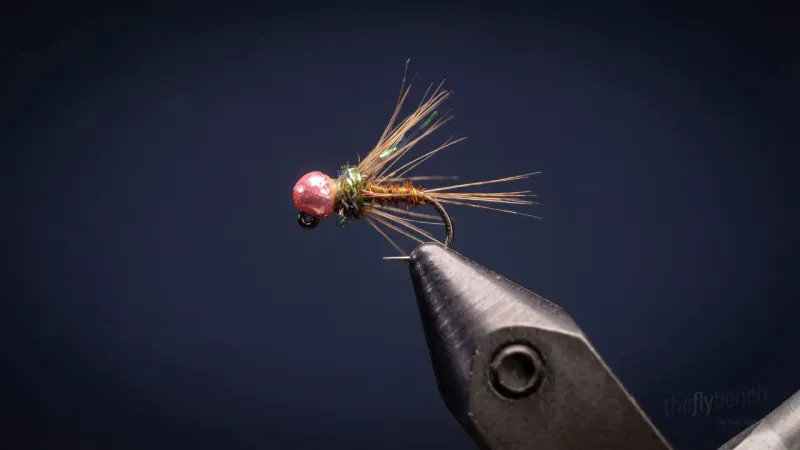
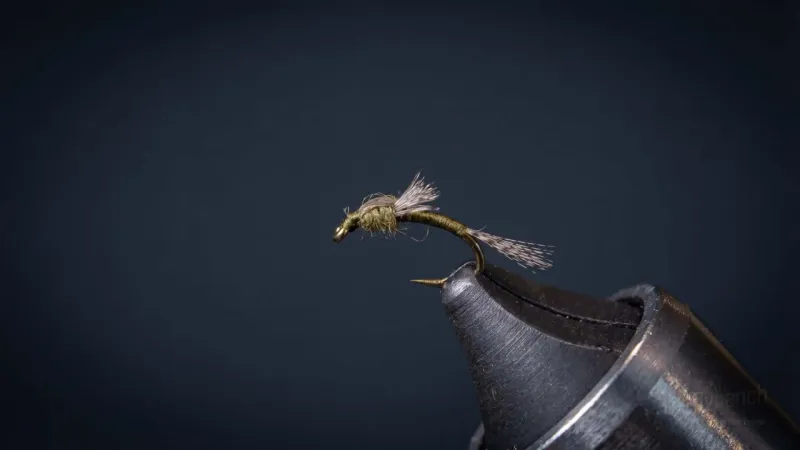
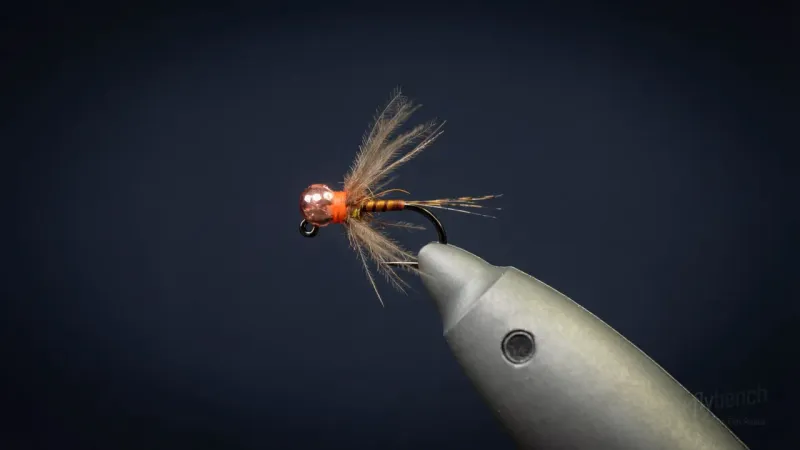
The Faded Baetis is a subtle yet effective Baetis imitation designed for pressured tailwater trout. The unique thread-over-tinsel technique creates a muted flash that entices takes without spooking wary fish. Developed by Cade at Fly Fish Food after extensive testing, this pattern has become a staple for technical euro nymphing situations.
Spring, Fall
Intermediate
Trout
Dec 2025
Overview
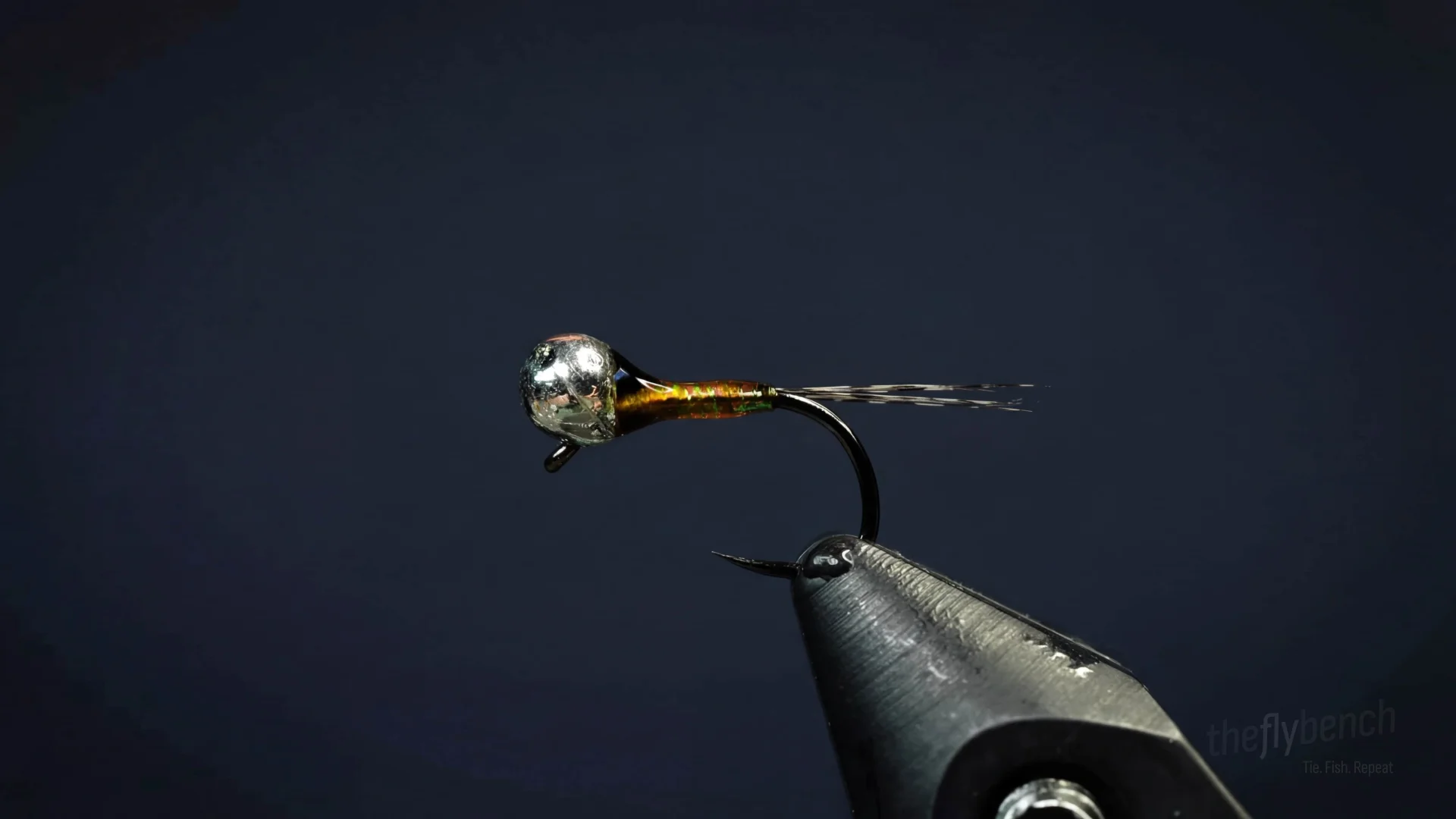
The Faded Baetis uses a clever thread-blending technique where flattened thread is wrapped over a perdigon tinsel body, allowing subtle flash to shine through without overwhelming brightness. This creates the "faded" appearance that picky tailwater trout find irresistible. Cade has tested numerous color combinations with this technique—experiment with different thread and tinsel colors to match local Baetis populations.
Materials
Hook: Umpqua XC210BL-BN Perdi-Jig, size #20 (or Fulling Mill 5125 Jig Force Short Barbless)
Thread: UTC 70 Denier, olive
Bead: Fly Fish Food Anchor Beads, offset, silver, 2.8mm (or Tactical Tungsten Drop Bead 2.5mm)
Tail: Spanish Coq De Leon, pardo
Underbody: Semperfli Perdigon Body, iridescent pink
Overbody: Flattened olive thread wrapped over underbody
Wingcase: Uni POSCA Paint Marker, black
Behavior & Presentation
Natural Behavior: Blue-winged olive nymphs cling to rocks and vegetation in oxygen-rich riffles and runs, darting upward through the water column when emergence begins. They demonstrate explosive synchronized emergence during overcast days and barometric pressure drops.
Where Trout Eat It: Trout target nymphs drifting along the streambed and ascending through mid-column in runs, pools, and tail-outs.
How to Fish It: Fish tight line euro rig or dropper under dry fly, maintaining direct contact to detect subtle takes from educated trout.
Best Water: Focus on runs, pools, and tail-outs where current slows and trout have time to inspect offerings.
Strike Type: Watch for sag, tick, or subtle pause indicating selective takes common with pressured fish.
Fishing Strategy
Rigging Suggestions: Fish in sizes #18-#22 on 5X-6X fluorocarbon tippet. Works excellently as a dropper 12-18 inches below a Baetis dry fly pattern.
Seasonal Timing: and fall Baetis hatches, typically March through May and September through November. Prime during overcast days when Blue-Winged Olives are most active.
Pro Tips: The tungsten bead provides quick sink to get into the feeding zone. The muted flash is visible to fish but not alarming.
Entomology
Blue-winged olive nymphs are agile swimmers that inhabit faster water than most mayfly species, clinging to rocks and vegetation in riffles and runs where dissolved oxygen levels are highest. They demonstrate explosive emergence behavior, particularly on overcast days and during inclement weather when barometric pressure drops trigger synchronized hatches. Fish key on the distinctive swimming motion of these small nymphs as they dart upward through the water column toward the surface to emerge.
- Order
- Ephemeroptera
- Family
- Baetidae
- Common Name
- Blue-Winged Olive
- Organism Type
- insect
- Life Stage
- nymph