


Overview
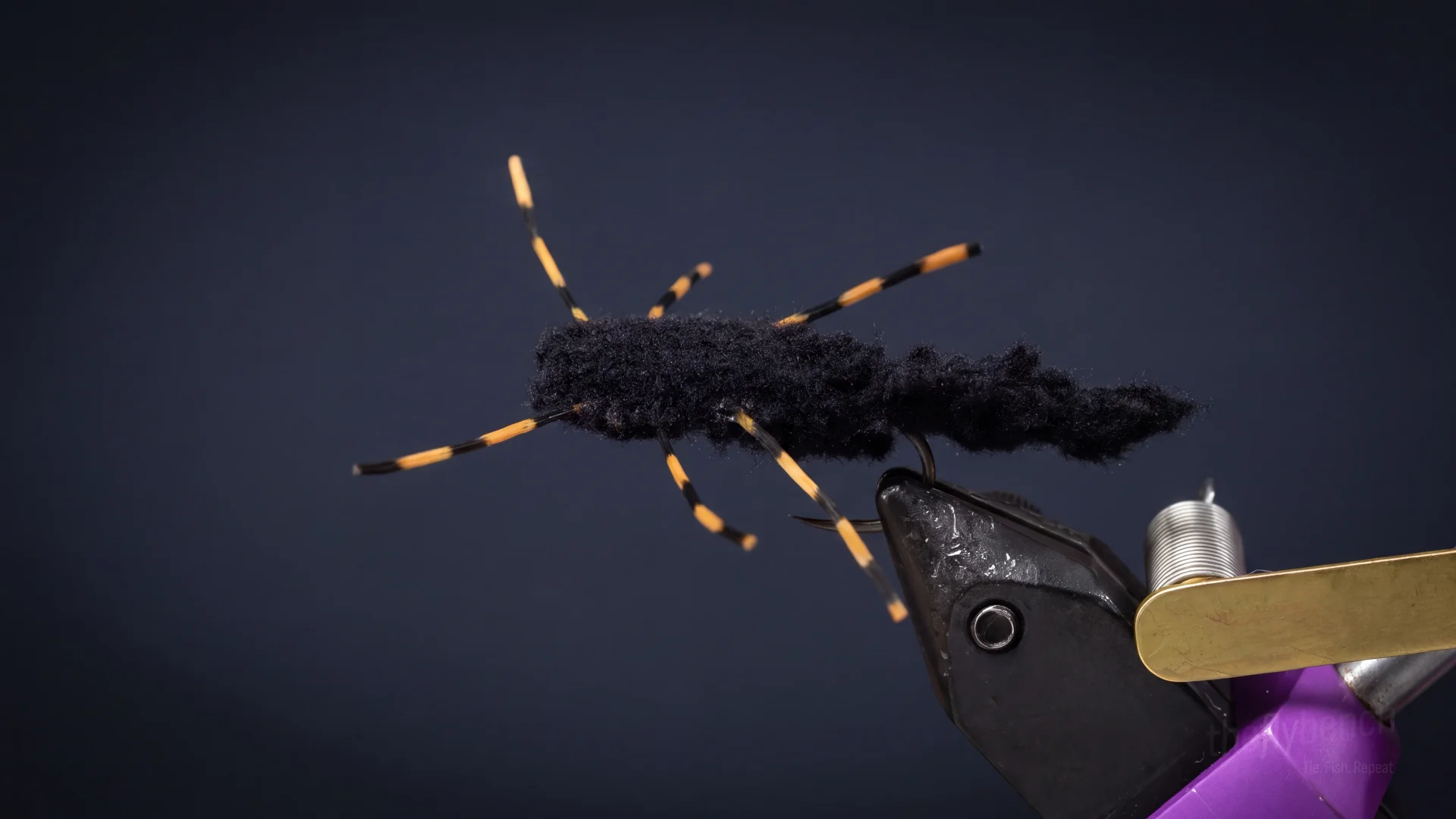
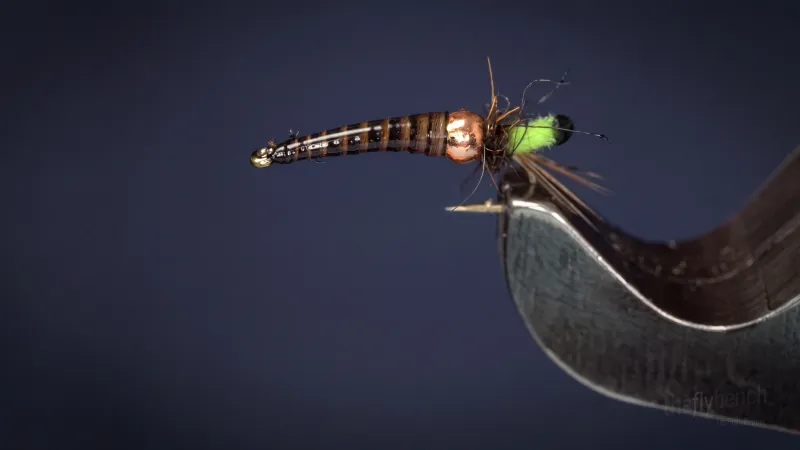
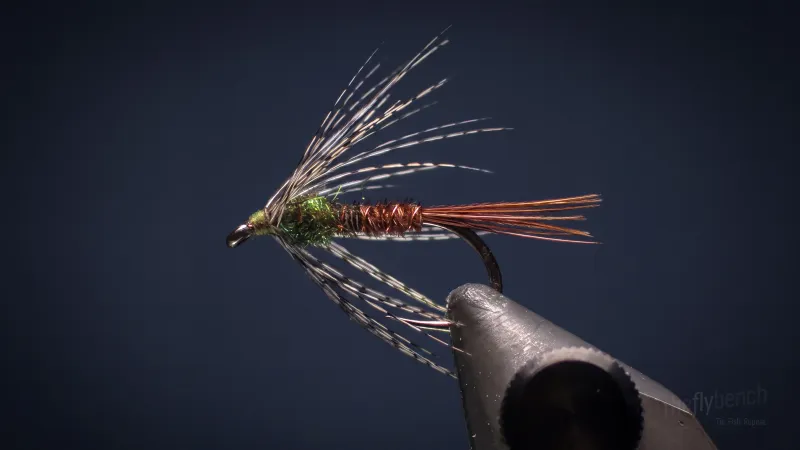
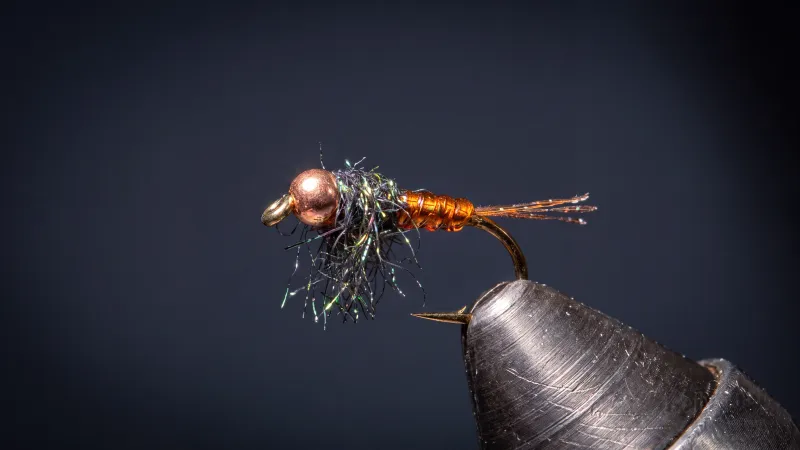
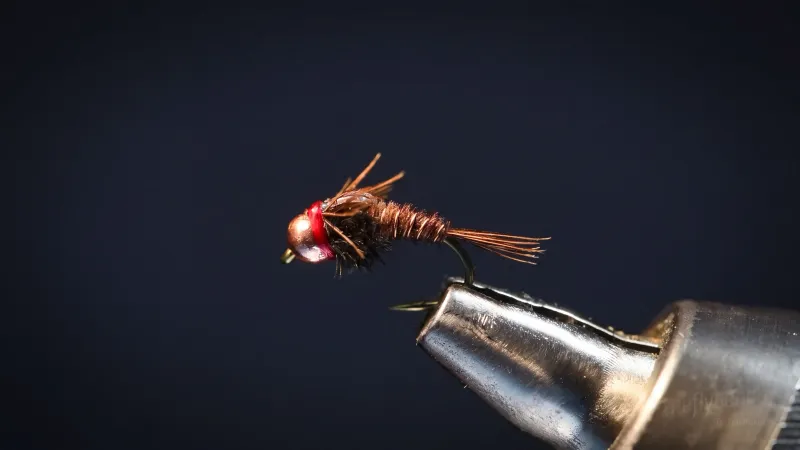
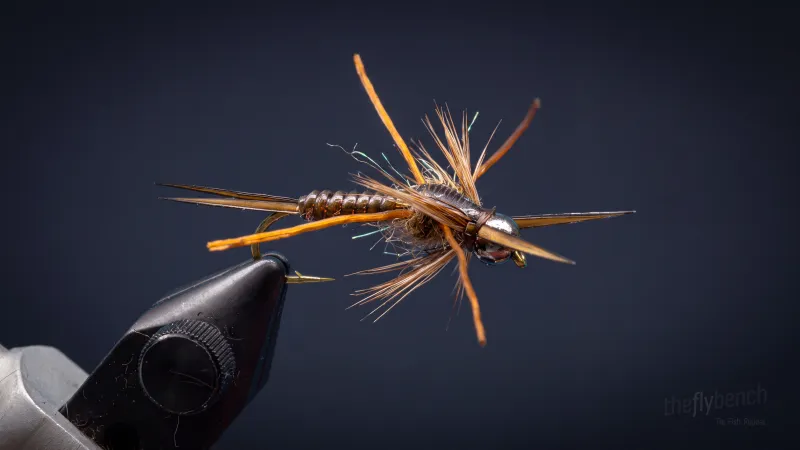
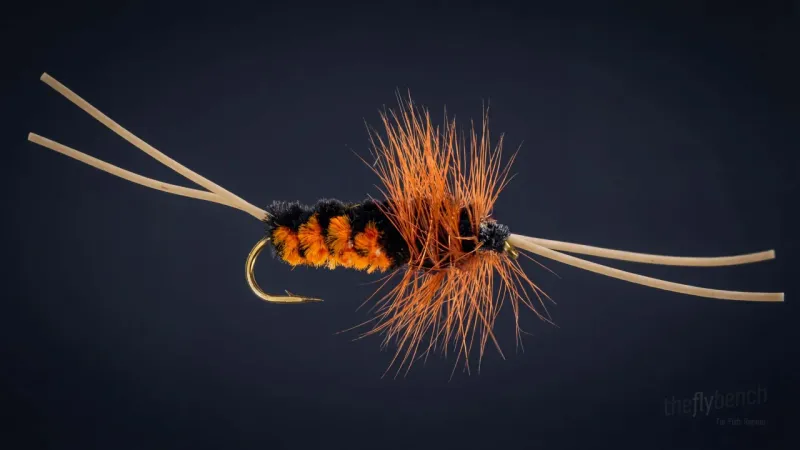
Cheech of Fly Fish Food tied this stonefly in 2026 to show that Eggstasy, a yarn usually saved for egg patterns, can make a buggy nymph body. A lead wire underbody gives it weight and a flat shape, and the black Eggstasy and EZ Egg Yarn form a segmented body that breathes in the water. The tail is furled, and the barred amber and copper brown Sexi Floss legs are adjusted at the end so they splay like a natural's. Tie it on a size 8 black nymph hook when you want a heavy, soft-bodied stone to anchor a nymph rig.
Related patterns
Behavior & presentation
- Natural Behavior
- Big dark stonefly nymphs live for one to three years under cobble, crawling slowly on stout legs. When high flows or a lost grip knock them loose, they tumble along the bottom with their legs splayed, unable to swim back down.
- Where Trout Eat It
- Along the bottom of fast, rocky runs and pocket water, where loose nymphs roll through the slower current next to the rocks.
- How to Fish It
- Dead drift it deep under an indicator or on a tight line, with enough weight to tick the stones, and let the soft body and legs do the work.
- Best Water
- Boulder pockets, the seam where a riffle drops into a deeper run, and the edges of undercut banks where dislodged nymphs collect.
- Strike Type
- Usually a heavy stop that feels like the fly has snagged bottom. Set on every pause, since trout often hold a large, soft nymph a moment before letting go.
Fishing strategy
- Rigging Suggestions
- Fish it as the heavy point fly in a two-nymph rig, with a smaller mayfly or caddis nymph 16-20 inches behind or above it. Use 3X-4X tippet and add split shot in heavy water.
- Seasonal Timing
- Stonefly nymphs are in the river all year, so it works from winter through fall. It is most useful in spring and early summer, when high water knocks nymphs loose and mature nymphs crawl toward the banks before hatching.
- Pro Tips
- Pick at the Eggstasy fibers with a brush to make the body look softer and buggier. Since the fly has no bead, the lead underbody sets its sink rate, so add or drop shot to keep it near the bottom.
Entomology
Large stonefly nymphs spend one to three years crawling among rocks in fast, oxygen-rich water before migrating to shore to hatch. They are poor swimmers, so when current or high water pulls them off the bottom they drift helplessly. Their size and year-round presence make them a reliable meal for trout.
- Order
- Plecoptera
- Common name
- Stonefly
- Organism
- insect
- Life stage
- nymph
Pattern details
- Moving Water
- Rocky Mountain
- dead-drift
- indicator-nymph
- stonefly-hatch
- modern
- freestone
- high-water