Overview
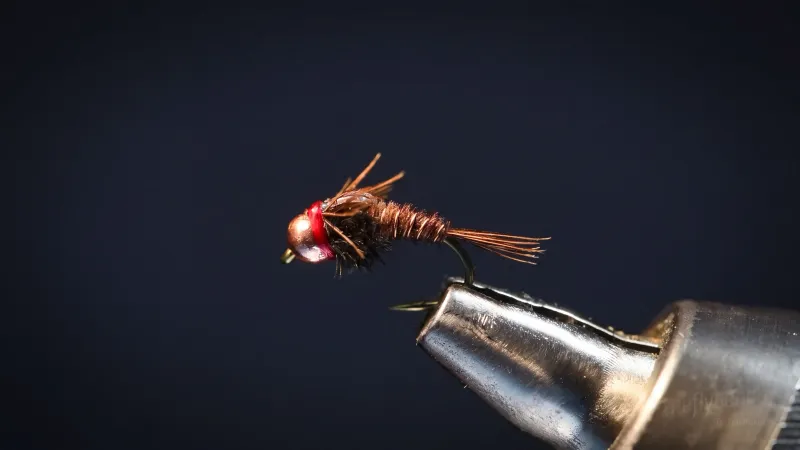
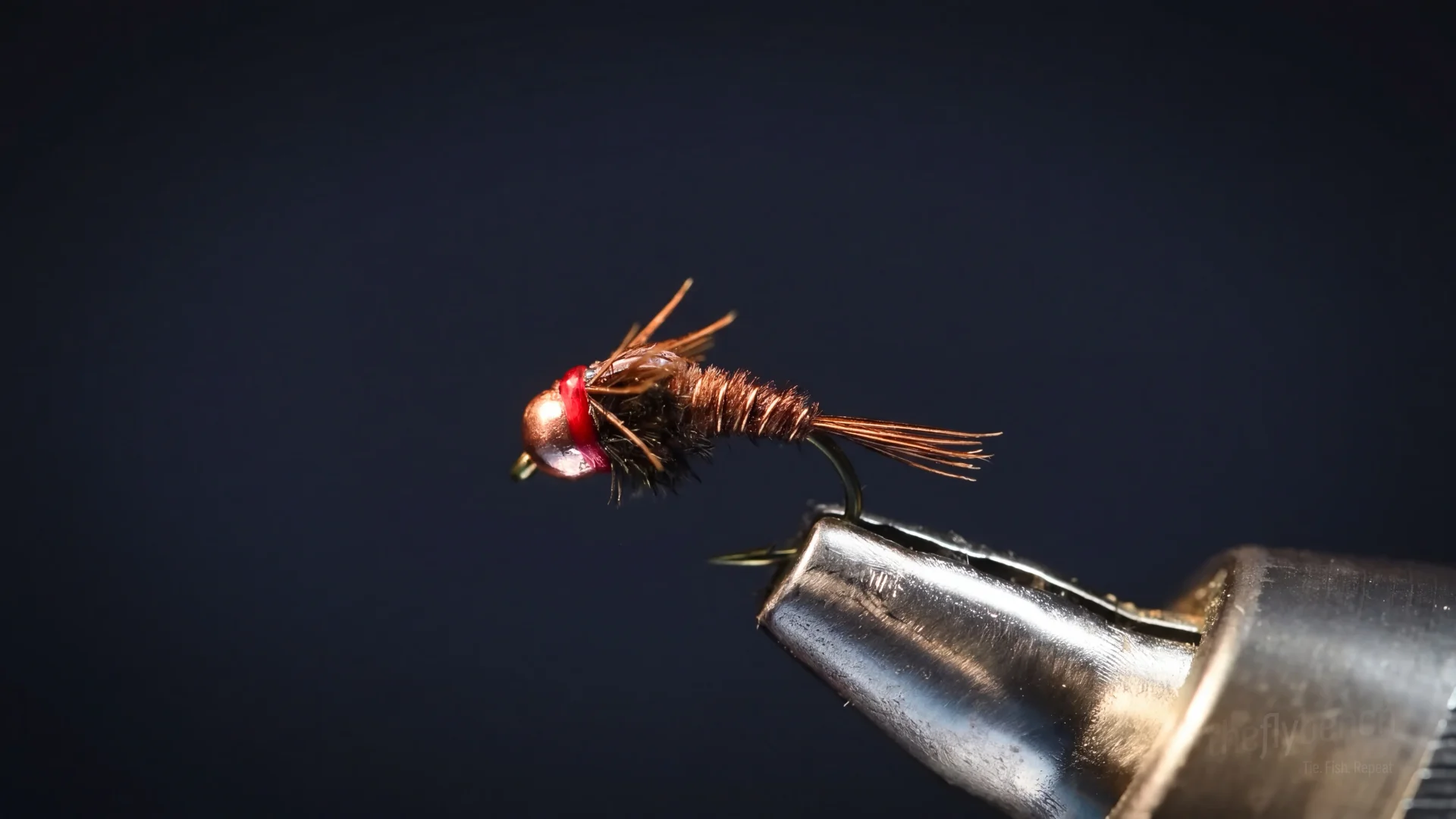
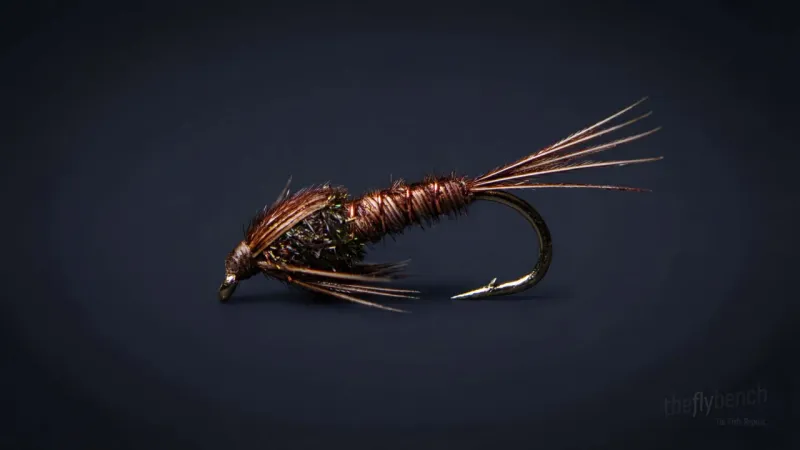
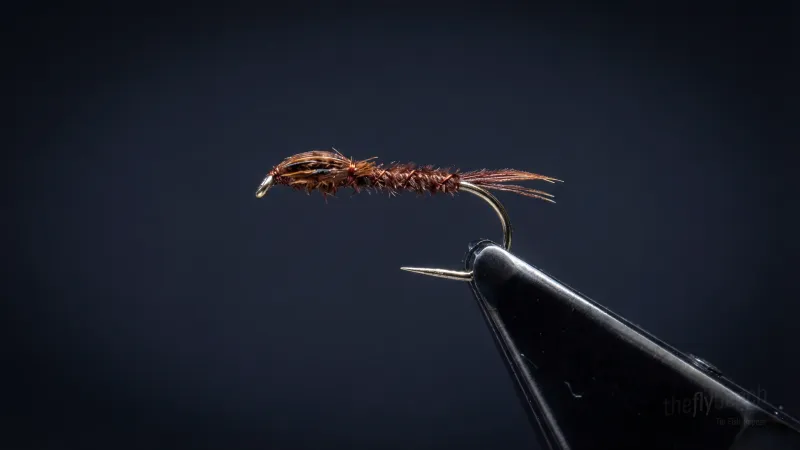
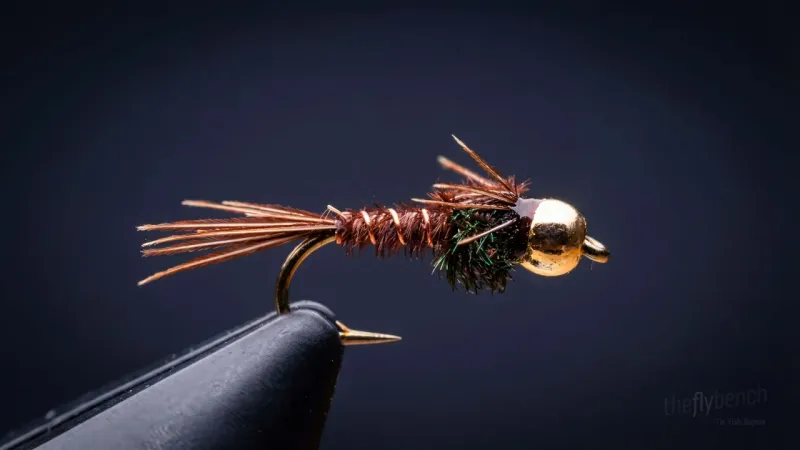
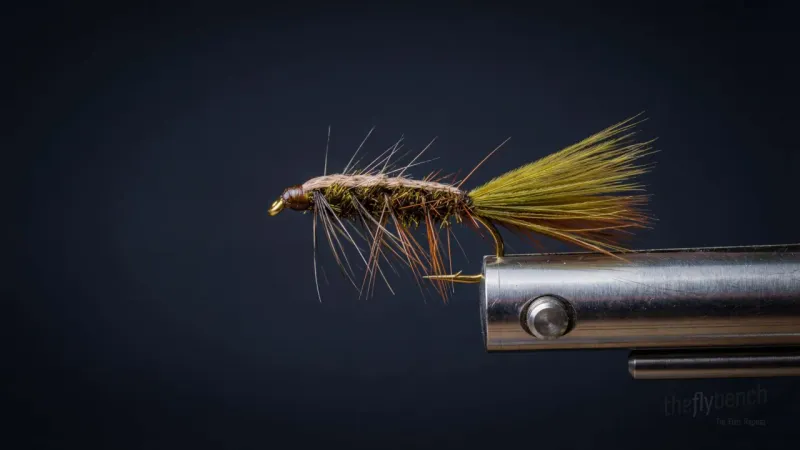
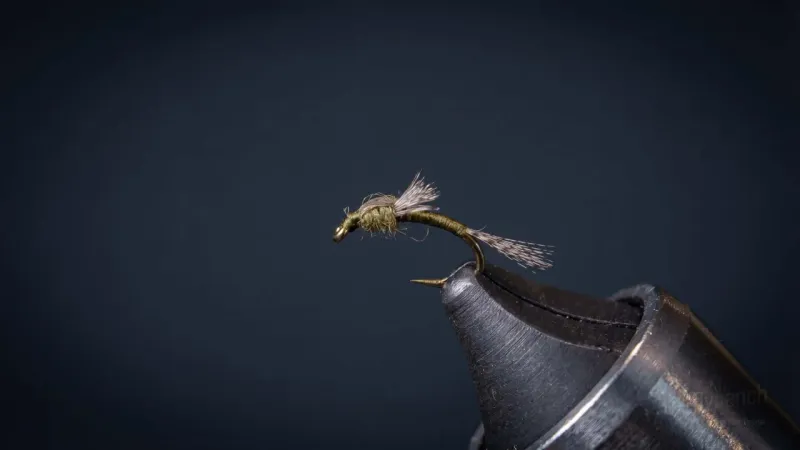
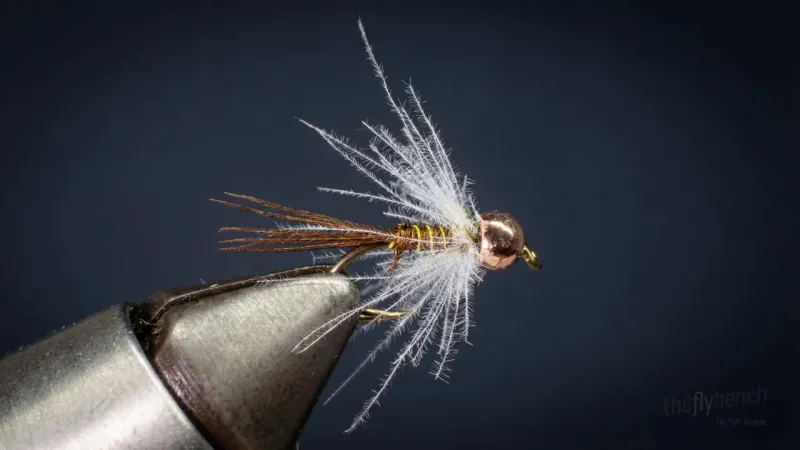
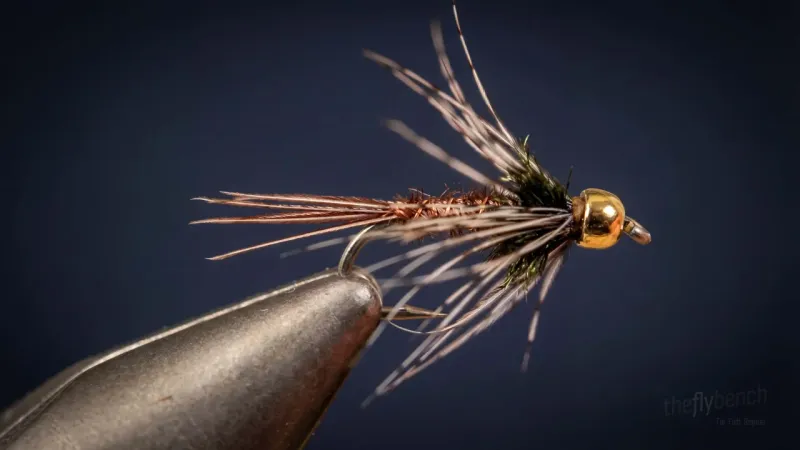
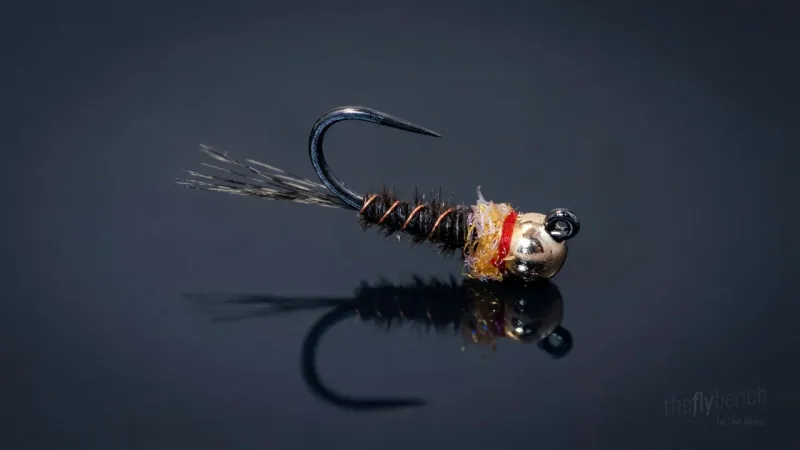
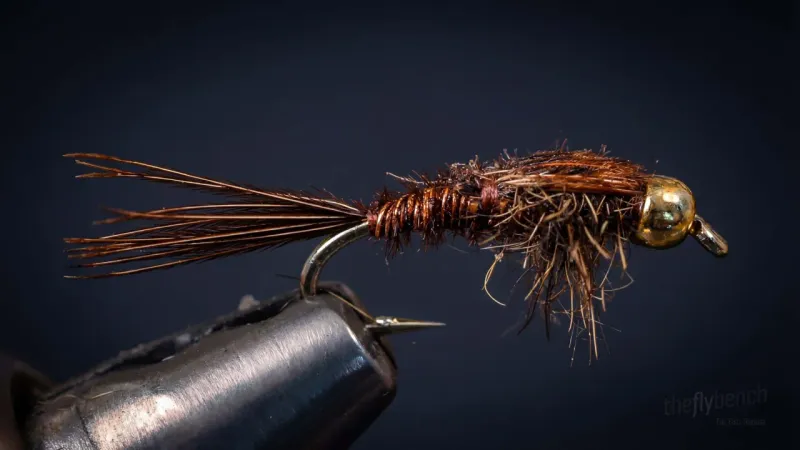
Loon Outdoors presents the Quasimodo as Hogan Brown's go-to version of the Flashback Pheasant Tail, and it is a staple in Northern California. The short-shank curved hook and big bead give it a humped thorax that suggests a nymph swelling with gas before it hatches. Tie it in #14-#20; lead wire under the thorax and a red thread collar behind the bead are common touches.
Related patterns
Behavior & presentation
- Natural Behavior
- Mature mayfly nymphs swell at the wing pads as gas builds under the skin, and they let go of the bottom more often in the hours before a hatch, rising and sinking in the current.
- Where Trout Eat It
- Trout hold low in riffle-fed runs and pick off the hunched, ready-to-hatch nymphs as they lift off the gravel and drift toward the surface.
- How to Fish It
- Dead drift it near the bottom, then let it swing up at the end of the drift to copy a nymph rising to hatch.
- Best Water
- Riffle drop-offs, the soft side of current seams, gravel tail-outs and pocket water behind boulders where nymphs collect before a hatch.
- Strike Type
- The indicator stalls or ticks under during the dead drift; takes on the lift at the end of the drift come as a firm tug.
Fishing strategy
- Rigging Suggestions
- Fish it under an indicator or on a tight line, alone or as the point fly of a two-nymph rig with a smaller midge or Baetis nymph trailing. It also hangs well under a large foam dry. Use 5X fluorocarbon for #16-#20 and 4X for #14.
- Seasonal Timing
- Best from spring through fall, whenever mayfly nymphs are active, and strongest in the hour before Baetis or PMD hatches.
- Pro Tips
- The tungsten bead and lead wire sink it quickly, so it often needs no split shot in medium runs. Drop to #18-#20 on clear, heavily fished water.
Entomology
Mayfly nymphs nearing emergence develop dark, swollen wing pads and a hunched thorax as gas collects beneath the skin. They drift and swim toward the surface more often in the hours before a hatch, which makes them easy targets for trout feeding near the bottom and mid-column.
- Order
- Ephemeroptera
- Common name
- Mayfly
- Organism
- insect
- Life stage
- nymph
Pattern details
- Moving Water
- Pacific Northwest
- dead-drift
- indicator-nymph
- pheasant-tail-family
- baetis-hatch
- modern
- searching-pattern