

Overview
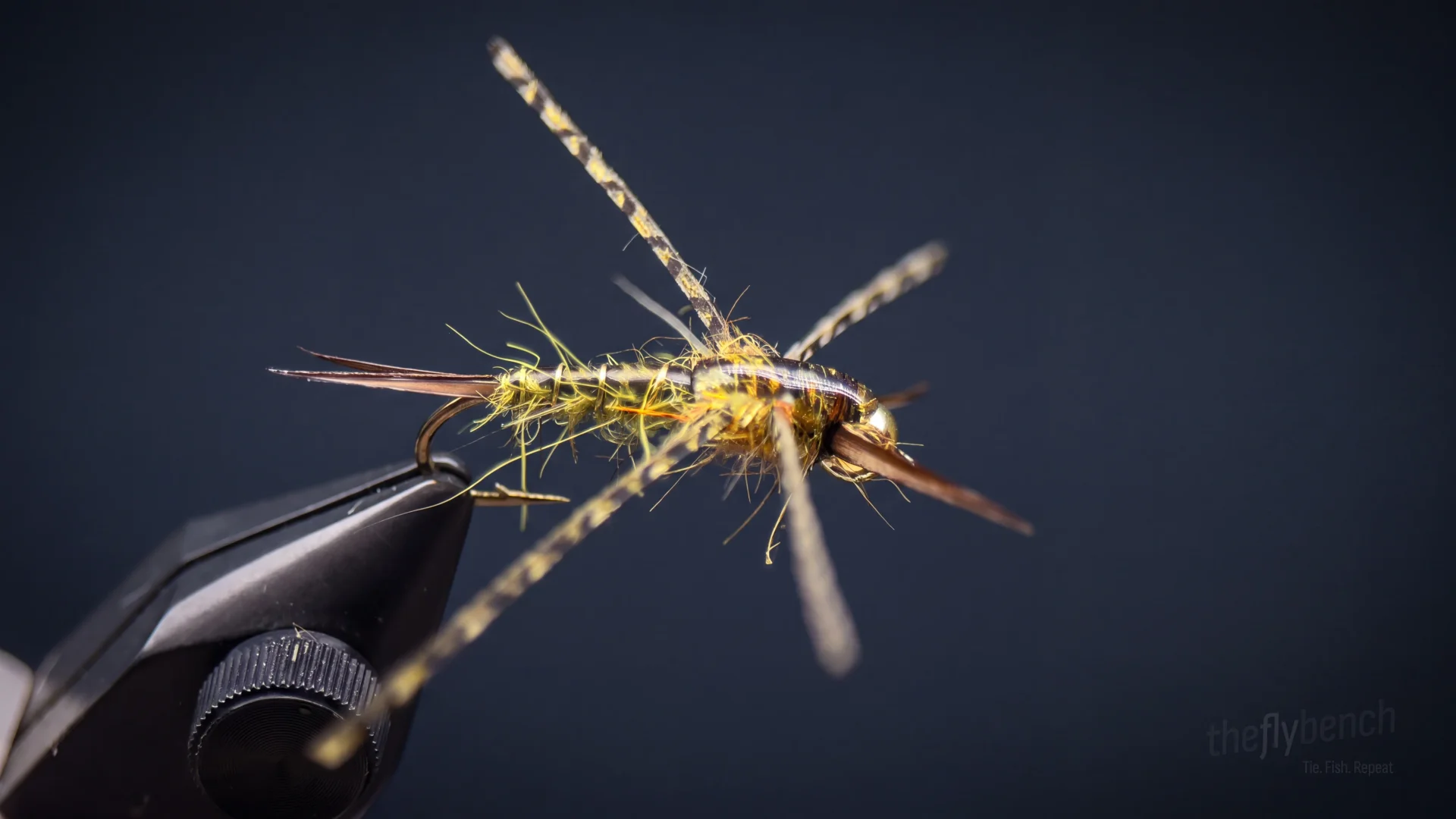
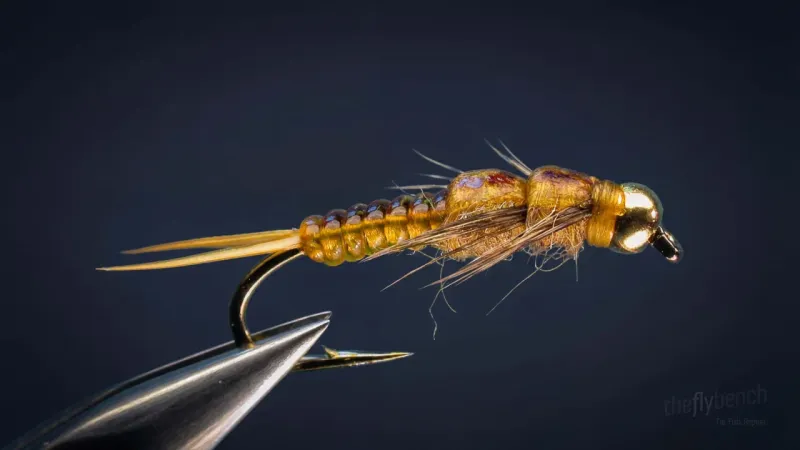
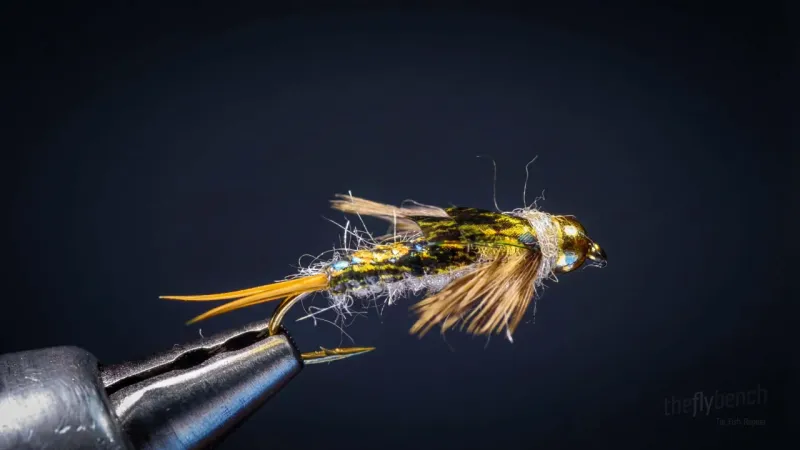
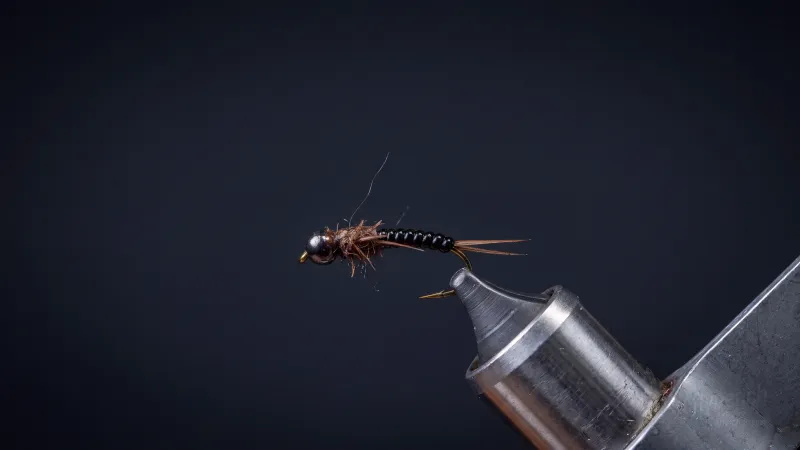
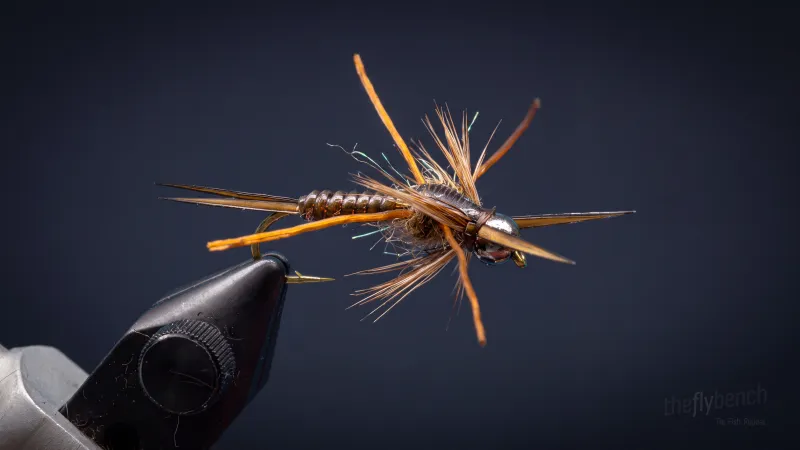
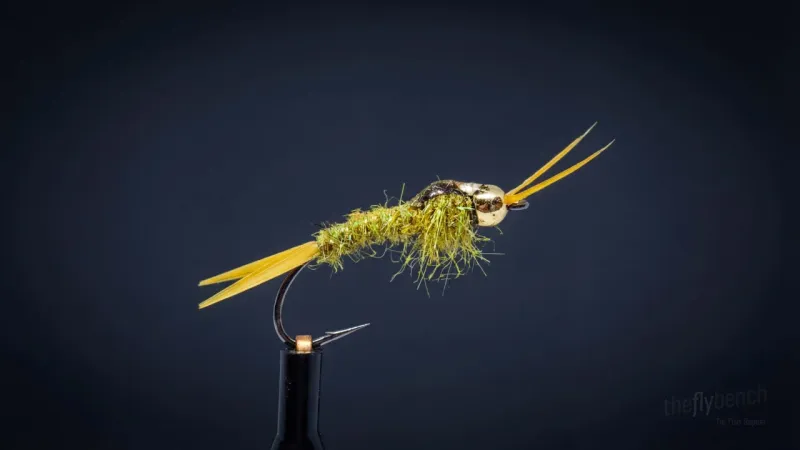
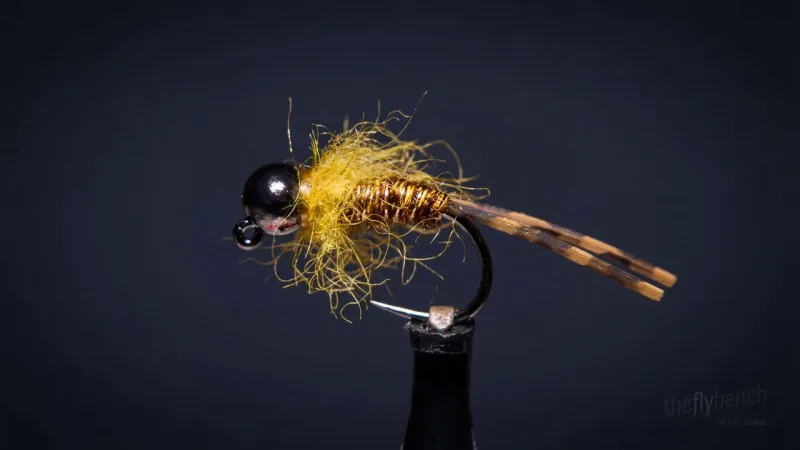
Smitty's Monthly Fly Box ties this one in their intermediate box. It works as a lesson in segmentation and shellbacks. Lead wrapped behind a gold brass bead gets it down. Gold wire pulls Thin Skin over the possum abdomen, and the same strip folds into the wingcase. Tie the thorax in Golden Stone for a single-color bug, then finish with glue and a thin coat of UV resin over the back.
Related patterns

Behavior & presentation
- Natural Behavior
- Golden stone nymphs live for two or three years under cobble in fast, oxygen-rich water. They lose their grip and tumble belly-up with legs spread, then crawl to the banks before they hatch in early summer.
- Where Trout Eat It
- Trout hold tight to the bottom in broken freestone water. They pick off big, dislodged nymphs as they roll past boulders and gravel bars.
- How to Fish It
- Fish it as the heavy anchor fly under an indicator with a small mayfly nymph trailing. Cast upstream and let the lead and bead pin it to the rocks through a dead drift.
- Best Water
- Boulder pockets, the soft seam beside a fast chute, and the cobble edges along the bank where mature nymphs gather before hatching.
- Strike Type
- The indicator stops dead or slides under hard. The weighted fly ticks along the bottom, so treat any pause as a take and not a rock.
Fishing strategy
- Rigging Suggestions
- Use a 9-foot 3X or 4X leader with an indicator set at about one and a half times the water depth. The built-in lead usually reaches bottom on its own. Add a small split shot only in the heaviest runs, and trail a size 16-18 mayfly nymph 16 inches behind.
- Seasonal Timing
- It catches fish all year because golden stones take several seasons to mature. It is best from May through July as nymphs migrate to shore, and again in high spring water that knocks them loose.
- Pro Tips
- Keep the Thin Skin strip no wider than the bead so the back stays slim and sinks fast. During the shoreward migration, shorten the drifts and work the bank edges in knee-deep water before you wade out.
Entomology
Golden stonefly nymphs are large predators that crawl among cobble in cold, fast rivers, maturing over two to three years. They are often dislodged in high water and migrate to shore to emerge in early summer, which puts them in front of trout as a large, high-calorie meal.
- Order
- Plecoptera
- Family
- Perlidae
- Common name
- Golden Stonefly
- Organism
- insect
- Life stage
- nymph
Pattern details
- Moving Water
- Rocky Mountain
- Pacific Northwest
- dead-drift
- indicator-nymph
- stonefly-hatch
- freestone
- high-water