


Overview
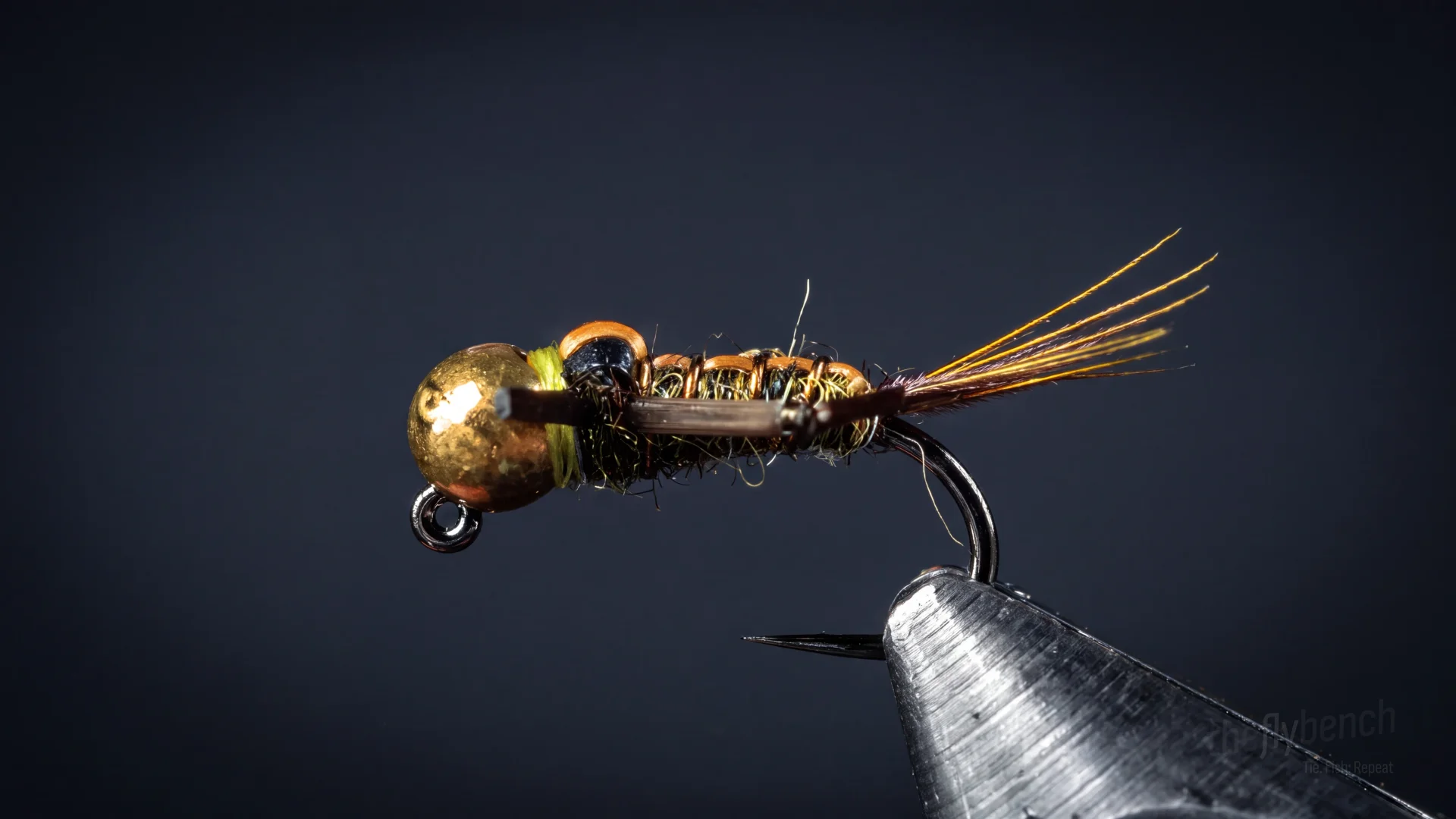
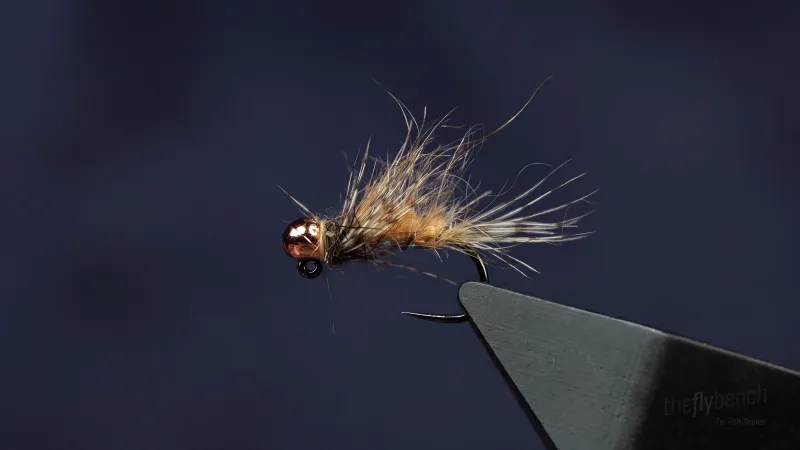
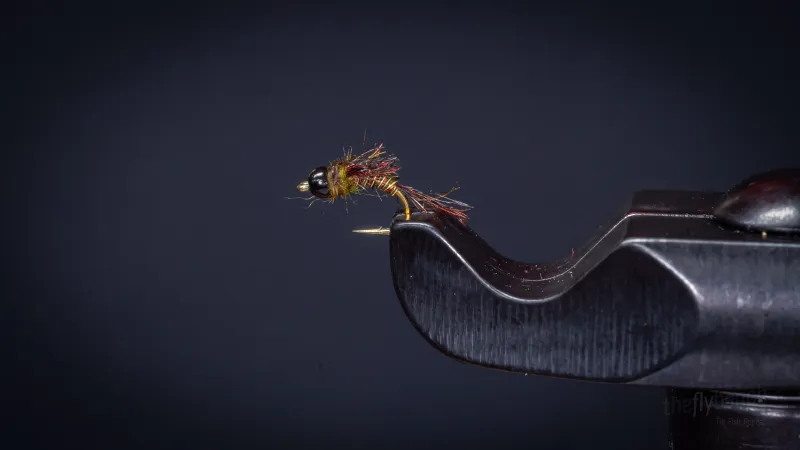
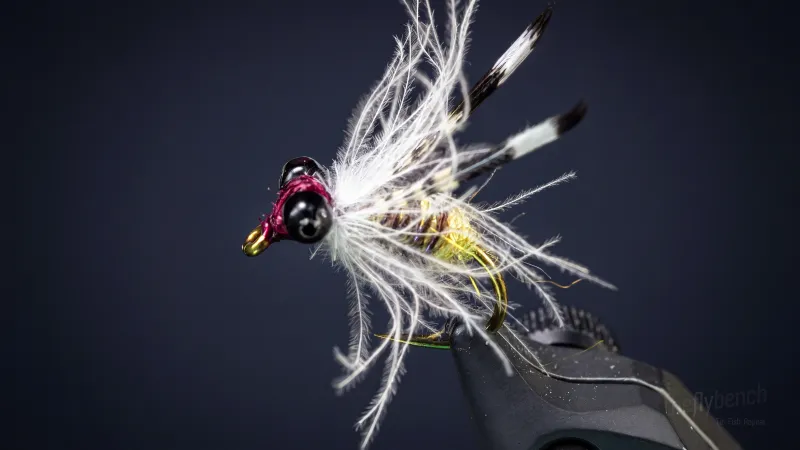
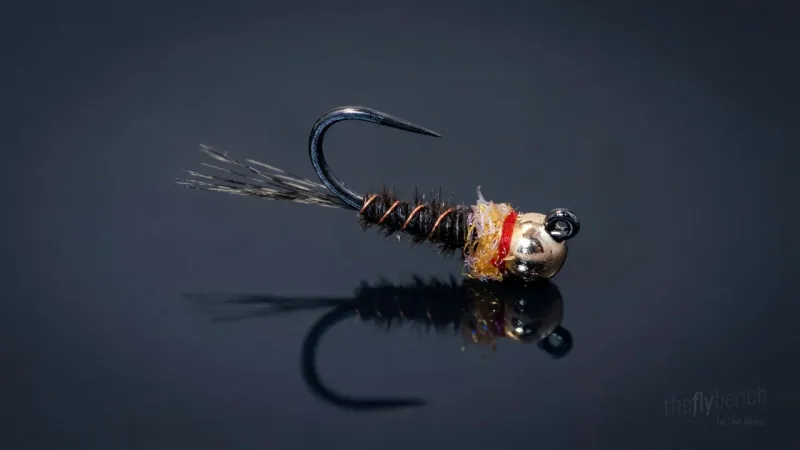
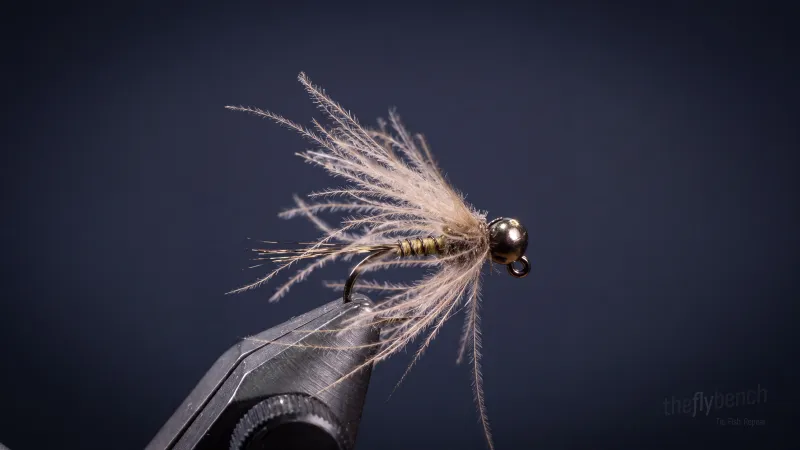
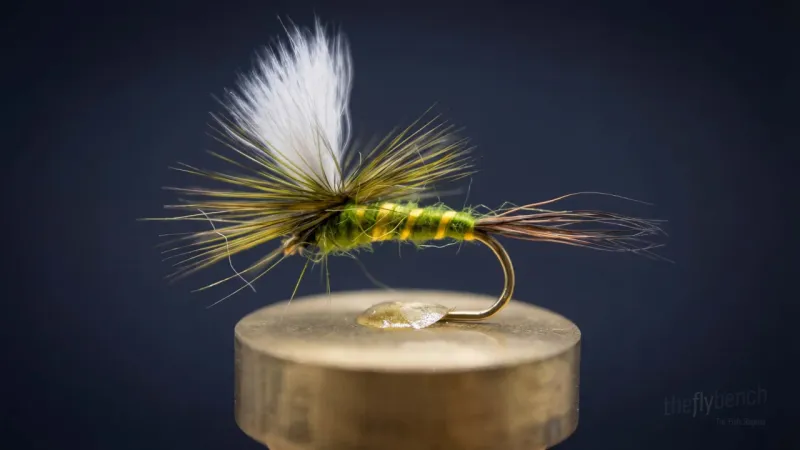
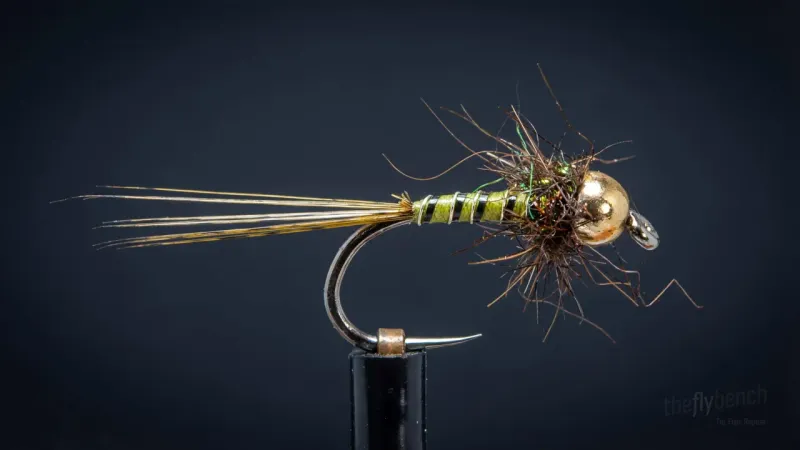
Brig, an Eastern Idaho tyer whose favorite bugs are Green Drakes, first tied this nymph slimmer, then bulked it up after comparing it side by side with naturals. The Dirty Bug Yarn body is ribbed with olive wire, a white Flex-Floss strip marks the ecdysial line, and Flex-Floss legs sit under a brown Scud Skin wing case over a bronze peacock thorax. Tie it in several sizes and shades of olive and brown.
Related patterns

Behavior & presentation
- Natural Behavior
- Green Drake nymphs are thick-bodied crawlers that hug the tops and sides of cobble in quick water, and they lose their grip and tumble downstream when currents rise or as they mature toward emergence.
- Where Trout Eat It
- Along the bottom of broken, rocky runs and pocket water, where dislodged nymphs roll over the stones before finding a new hold.
- How to Fish It
- Dead drift it close to the rocks on a tight line or under an indicator, letting the tungsten bead and jig hook ride point-up through boulder gardens without hanging up.
- Best Water
- Cobble runs, the pocket behind a midstream boulder, the seam where a riffle drops into a deeper slot, and the soft edge along the bank before the hatch.
- Strike Type
- A short stop or tick on the sighter as a trout grabs the nymph off the bottom; set on anything that pauses the drift.
Fishing strategy
- Rigging Suggestions
- Fish it as the anchor fly on a tight-line rig with a smaller mayfly or caddis nymph above, or 3-5 feet under an indicator on 4X-5X fluorocarbon. The tungsten bead usually makes extra split shot unnecessary.
- Seasonal Timing
- Works through the year on any river with a Green Drake population, since the nymphs live in the stones for a full season. It is at its best in the weeks before and during the hatch, which in the Rockies falls in late June and July.
- Pro Tips
- Carry it in more than one size and in olive and brown shades to match the nymphs at different stages of growth. A thin, even coat of resin on the wing case keeps the broad, flat back that makes it read as a Drake rather than a generic nymph.
Entomology
Green Drake nymphs are large, robust crawlers that cling to cobble and gravel in fast, well-oxygenated rivers, growing for about a year before they emerge. As they near hatching they become more active and often lose their hold in the current, giving trout a big, easy meal drifting near the bottom.
- Order
- Ephemeroptera
- Family
- Ephemerellidae
- Common name
- Green Drake
- Organism
- insect
- Life stage
- nymph
Pattern details
- Moving Water
- Rocky Mountain
- dead-drift
- indicator-nymph
- tight-line-nymph
- drake-hatch
- jigging
- modern
- freestone