Overview
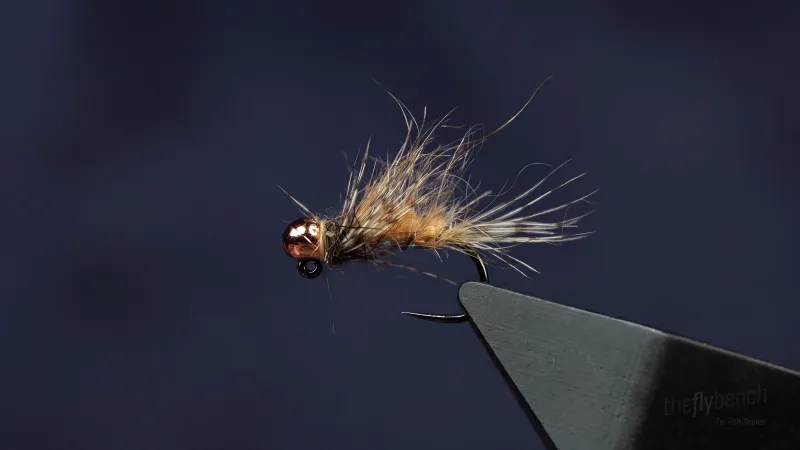
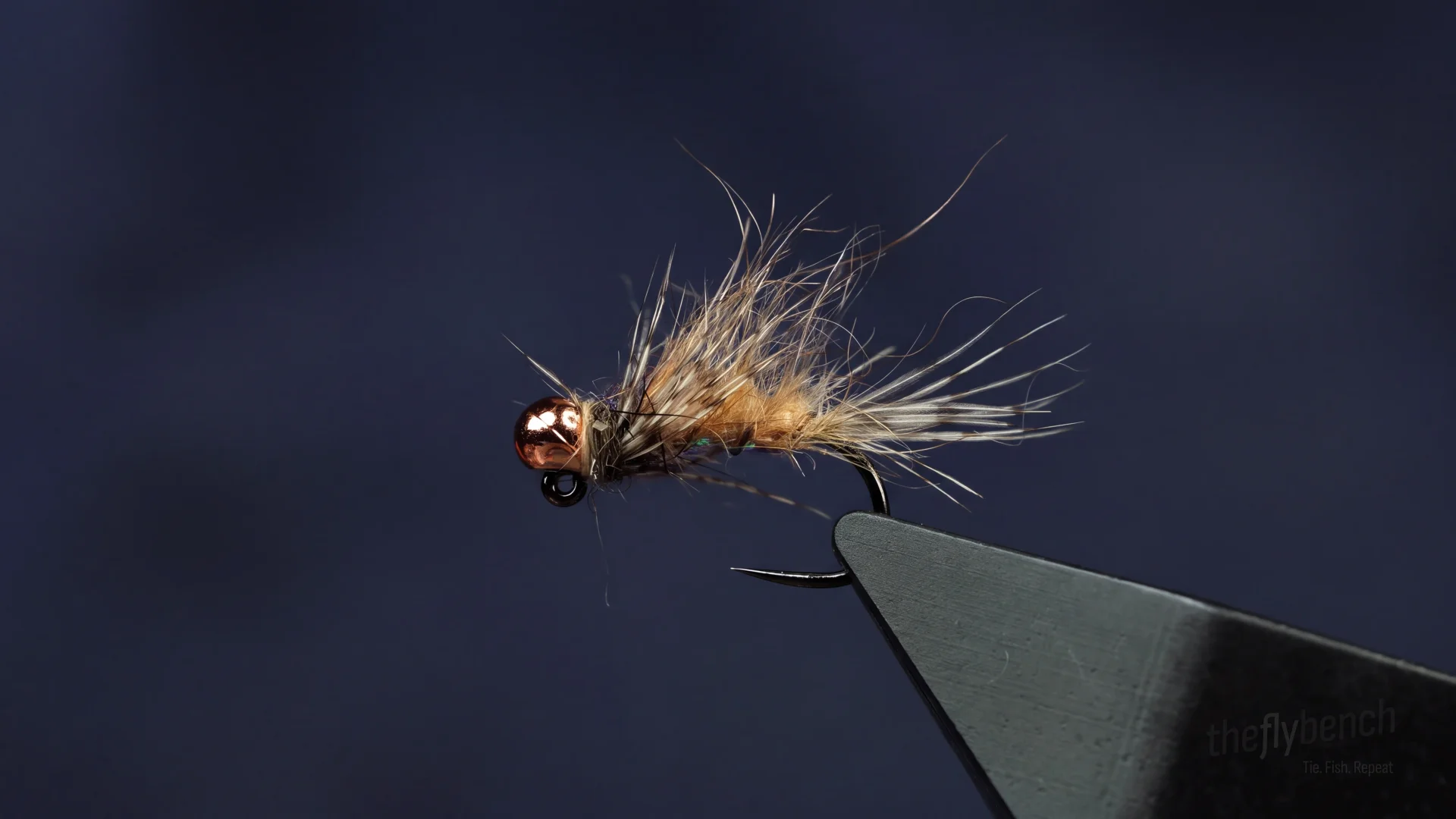
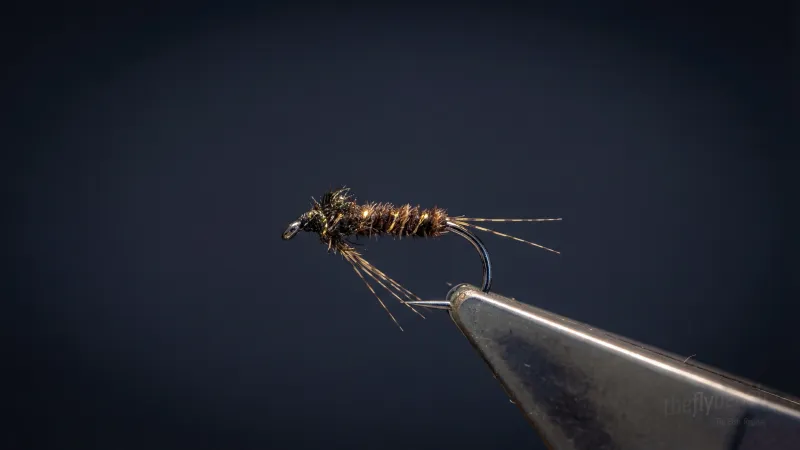
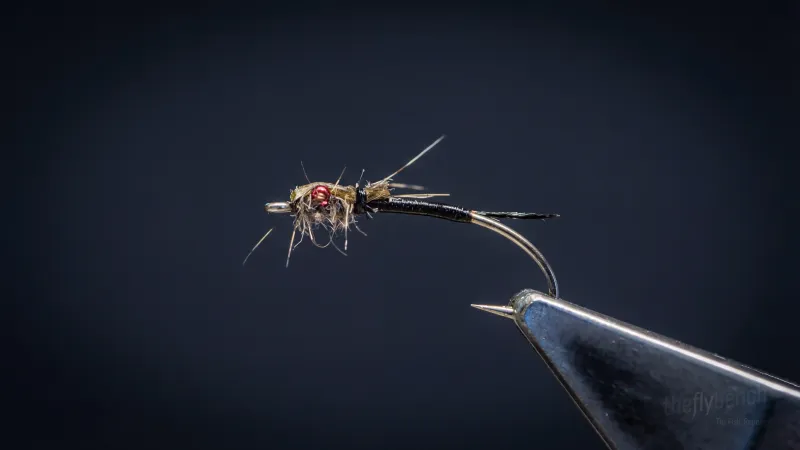
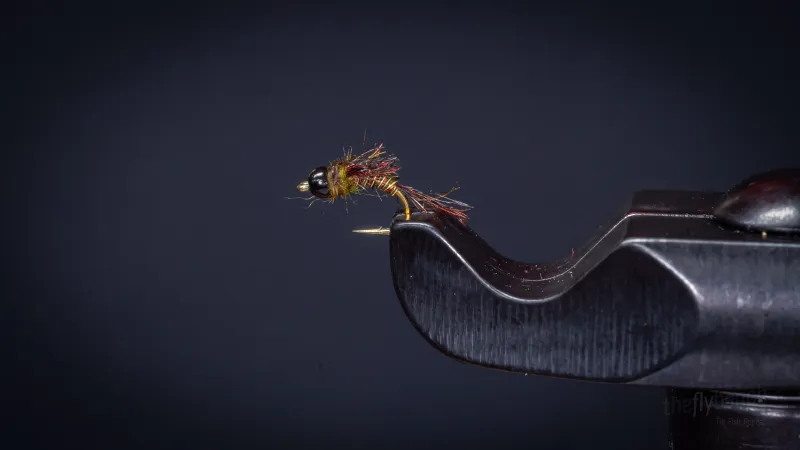
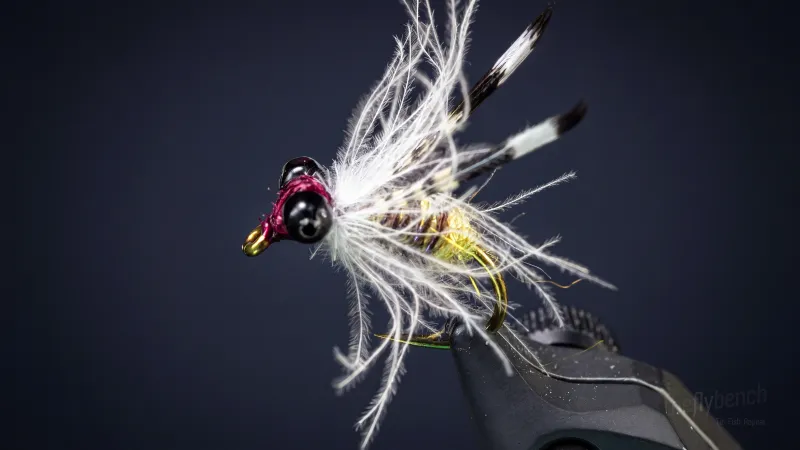
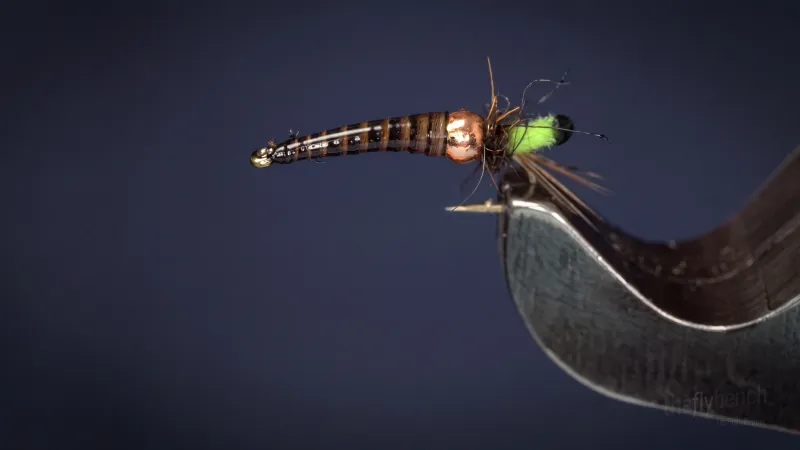
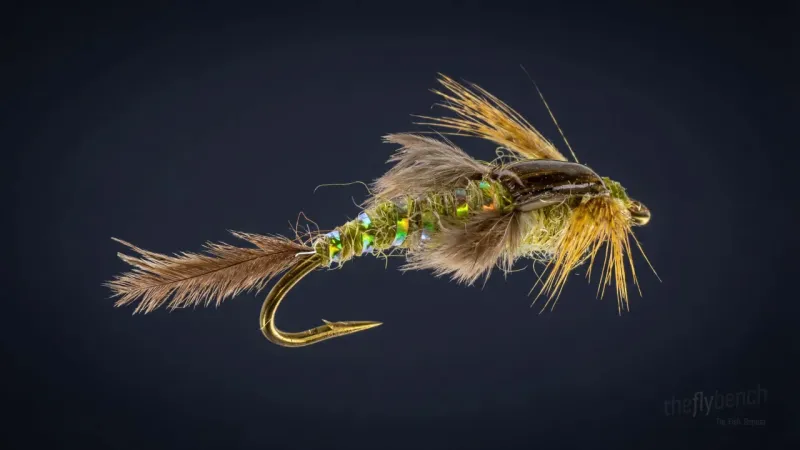
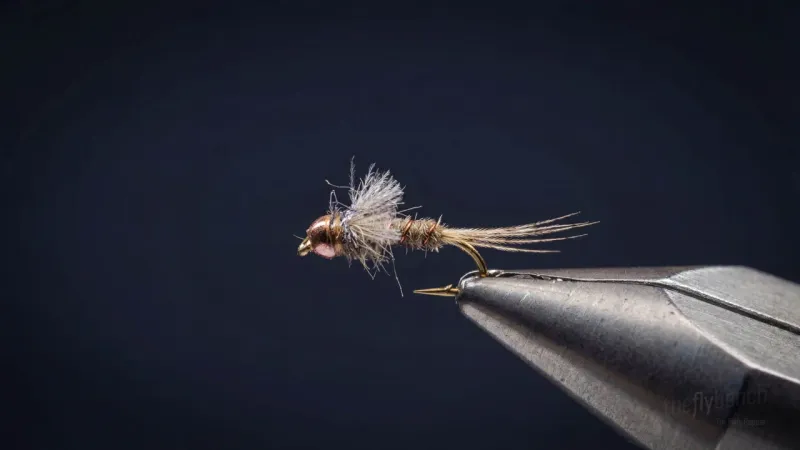
Posted as a Fly Fish Food stillwater tutorial in 2024 and credited on their page to Curtis, this nymph is built to hang horizontally the way a natural Callibaetis nymph swims. It was made to pair with the Fulling Mill drop back Bung indicator. Opal Mirage tinsel coated in UV resin forms a glossy shellback over the tan abdomen, and a March Brown wire rib adds segmentation.
Related patterns
Behavior & presentation
- Natural Behavior
- Speckled-wing nymphs are quick, darting swimmers that hold level in the water as they move between weed stems, then rise in short bursts toward the surface as emergence nears. Their body stays flat rather than nose-down, which a balanced fly copies.
- Where Trout Eat It
- Cruising trout pick off nymphs over shallow weedy shoals and along the edges of weed beds, usually within a few feet of the vegetation tops.
- How to Fish It
- Hang it under an indicator so it sits level just above the weeds, let it rest, then add an occasional slow pull or let a light chop rock the indicator to give the partridge legs movement.
- Best Water
- Weed-bed edges, shoal drop-offs, shallow flats near shore, and channels between weed patches where nymphs gather before a hatch.
- Strike Type
- The indicator slides away, pulls under slowly, or simply stops riding the chop as a cruising trout takes the fly and keeps swimming.
Fishing strategy
- Rigging Suggestions
- Fish it on fluorocarbon tippet under an indicator, setting depth so the fly rides just above the weed tops. Fly Fish Food designed it to pair with the Fulling Mill drop back Bung indicator.
- Seasonal Timing
- Use it from late spring into early fall when Callibaetis nymphs are active in lakes, with the best fishing in the weeks before and during midday hatches.
- Pro Tips
- The copper bead and jig hook only balance the fly if the dubbing and shell stay slim, so keep the abdomen sparse. When trout feed on emergers near the surface, shorten the depth under the indicator to keep pace with the rising nymphs.
Entomology
Callibaetis nymphs live among aquatic weeds in lakes and ponds, swimming in quick darts with a level body posture. Before emerging they become restless and rise toward the surface, making them easy targets for cruising trout over weedy shoals.
- Order
- Ephemeroptera
- Family
- Baetidae
- Common name
- Callibaetis (Speckled-Wing Dun)
- Organism
- insect
- Life stage
- nymph
Pattern details
- Stillwater
- Rocky Mountain
- Pacific Northwest
- indicator-nymph
- dead-drift
- modern
- searching-pattern