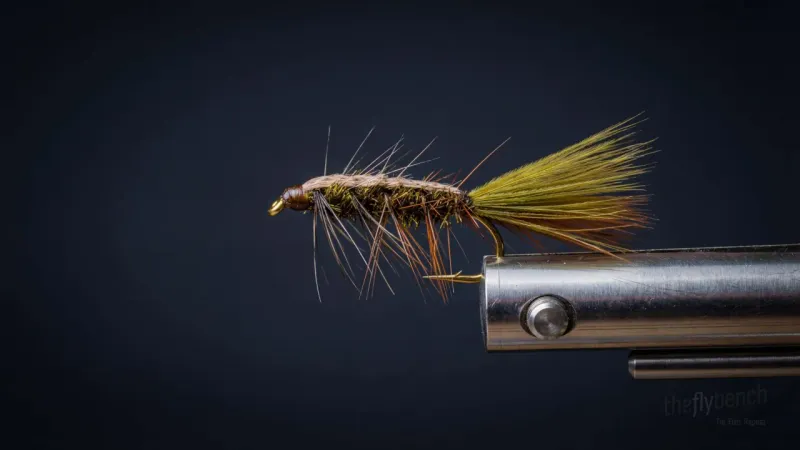
Dry FliesDark Kyl
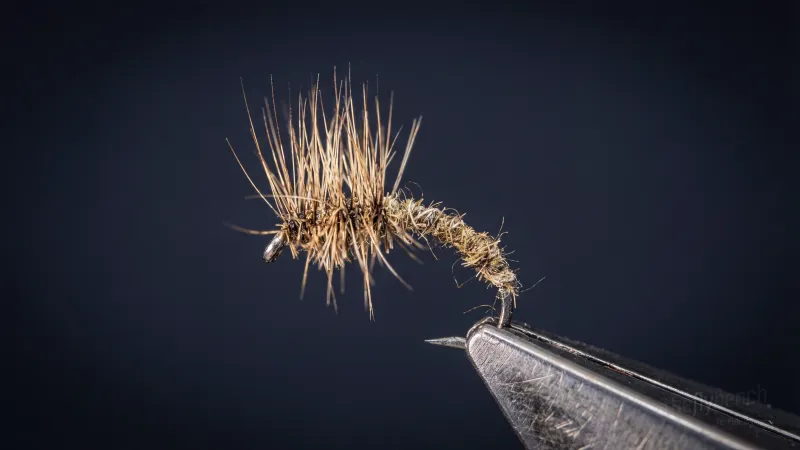
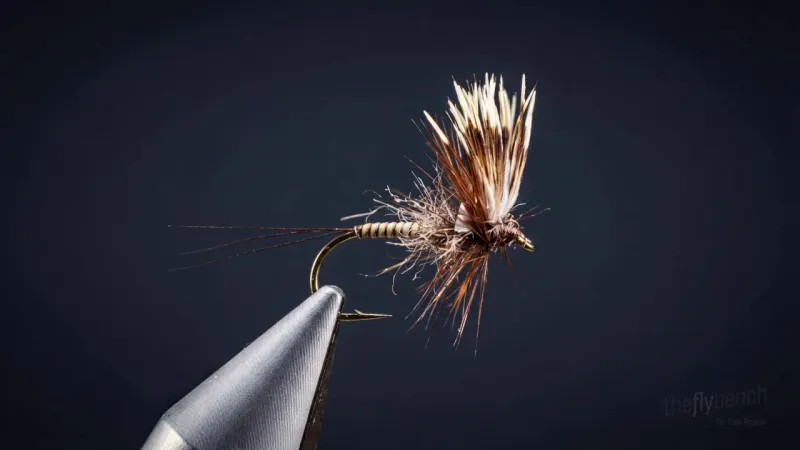
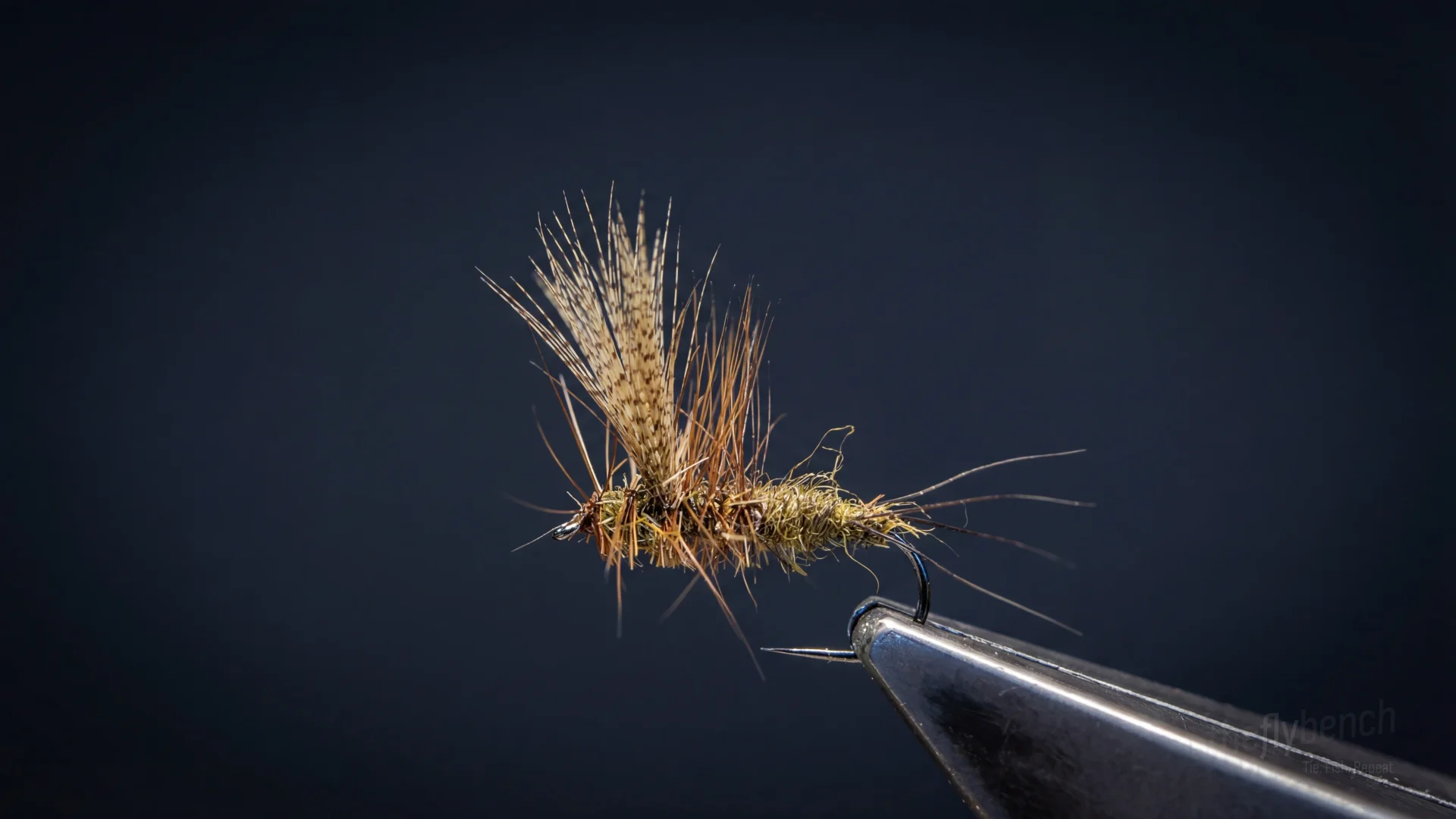
Hans Weilenmann's Dark Kyl pairs a lemon wood duck wing with split moose body hair tails, over a body mixing dark olive-dyed hare's mask and natural fox squirrel. Brown cock hackle finishes a dark, buggy silhouette suited to mixed mayfly and caddis hatches.
Spring, Summer, Fall
Intermediate
Trout
Feb 2026
Overview
Weilenmann mixes two darker dubbings, hare's mask and fox squirrel, in equal parts to get a body color that reads convincingly dark without going flat black. The split moose hair tail and wood duck wing keep the profile traditional and easy to see on the water despite the somber palette. It's a good call in low light or overcast conditions, when trout are keying on darker-bodied insects.
Where to Buy This Fly
We only link to fly shops we trust. Some links are referral links, which may earn us a commission at no extra cost to you.
Materials
- Hook:
- Partridge SUD #12
- Thread:
- Benecchi 12/0, dark brown
- Wing:
- Lemon woodduck barbs
- Tail:
- Moose body hair - split
- Body:
- Hare's mask, dyed dark olive; Fox Squirrel, natural - equal amounts
- Hackle:
- Cock, brown
Behavior & Presentation
Natural Behavior: Dark-bodied mayflies and caddis drift on the surface after emergence, wings held in characteristic positions while exoskeletons harden. Low-light conditions enhance the dark silhouette against the sky.
Where Trout Eat It: Fish patrol feeding lanes in the upper 6 inches, targeting dark adults in slicks and foam lines.
How to Fish It: Dead drift through prime feeding zones with drag-free presentations in low-light periods.
Best Water: Tail-outs, slicks, seams, and flat water produce best during dawn, dusk, or overcast conditions.
Strike Type: Confident rises with visible takes as fish key on the distinct dark silhouette.
Fishing Strategy
Rigging Suggestions: Use a 9-12 foot leader tapering to 5X tippet for delicate presentations. Apply floatant to the body and hackle.
Seasonal Timing: Most effective during peak feeding periods at dawn and dusk. Water temperatures between 45-65°F typically produce best results.
Pro Tips: The darker coloration makes this pattern highly visible to anglers in low light while maintaining an accurate profile for trout. Effective as an indicator fly for dry-dropper rigs in pocket water.
Entomology
In low light conditions, dark-bodied caddisflies become silhouettes against the sky as they hover and dip to the surface, their movements creating delicate rings that radiate outward. Trout rising in the film focus on the subtle surface disruption and distinctive profile of these evening adults.
- Order
- Trichoptera
- Common Name
- Caddisfly
- Organism Type
- insect
- Life Stage
- adult