

Overview
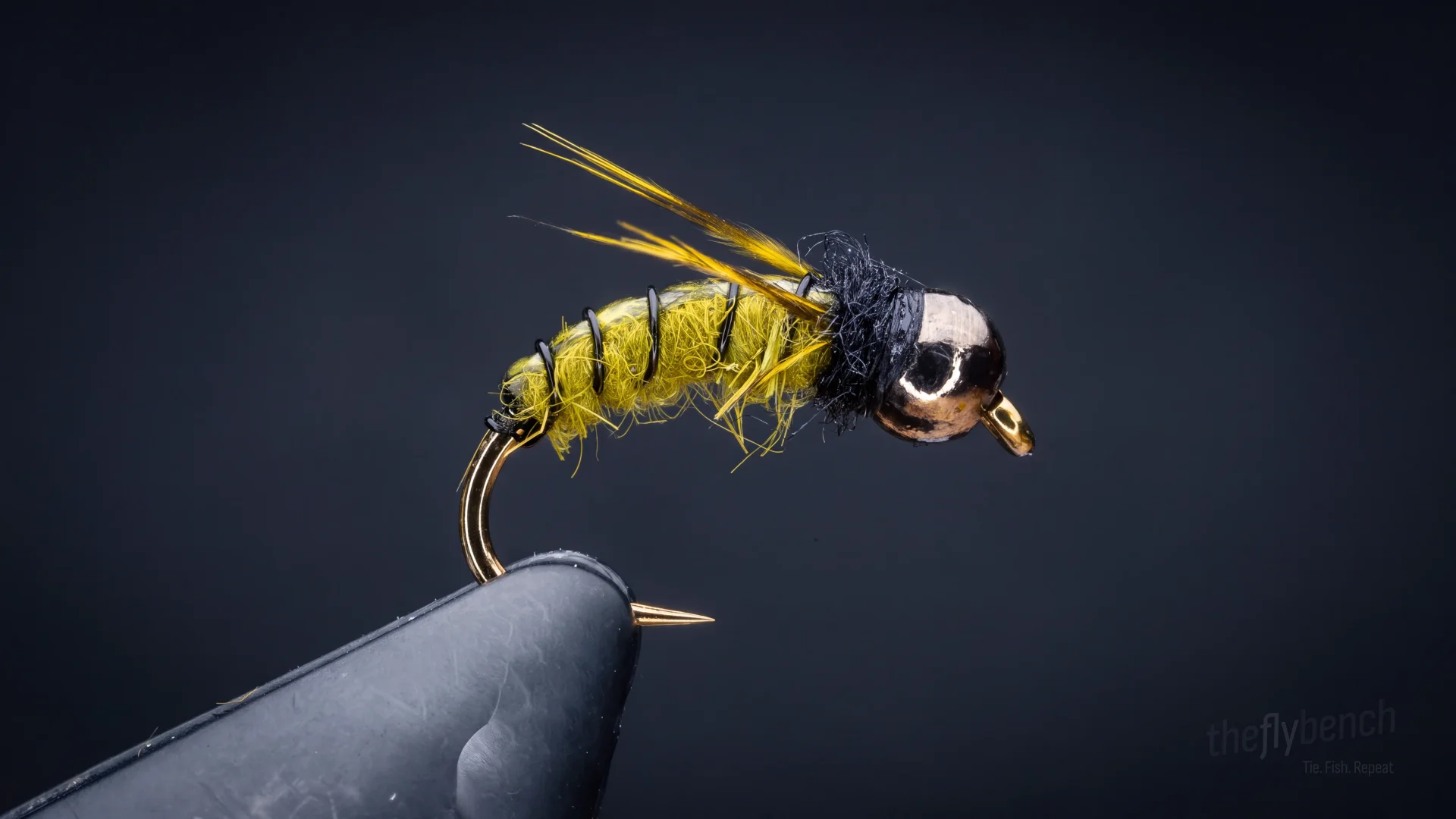
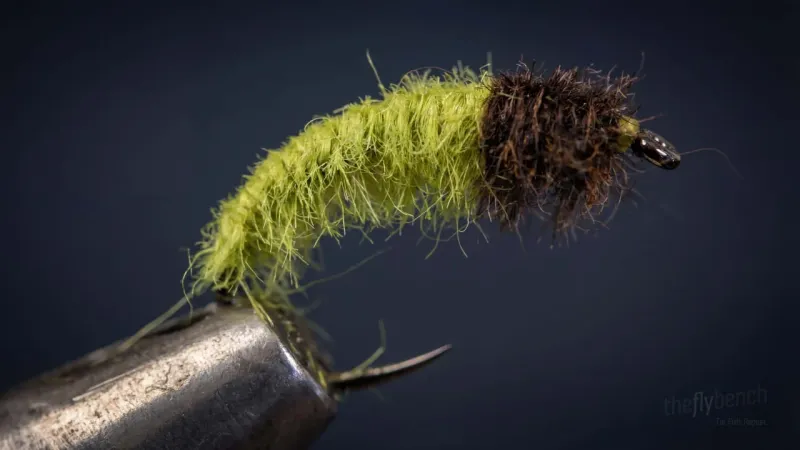
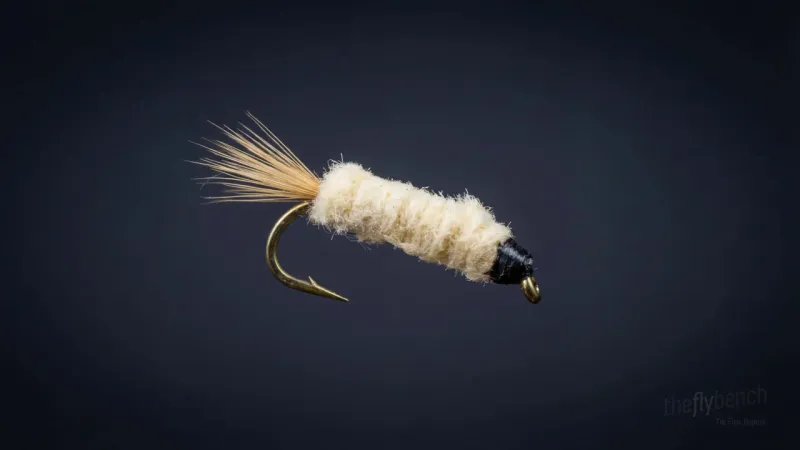
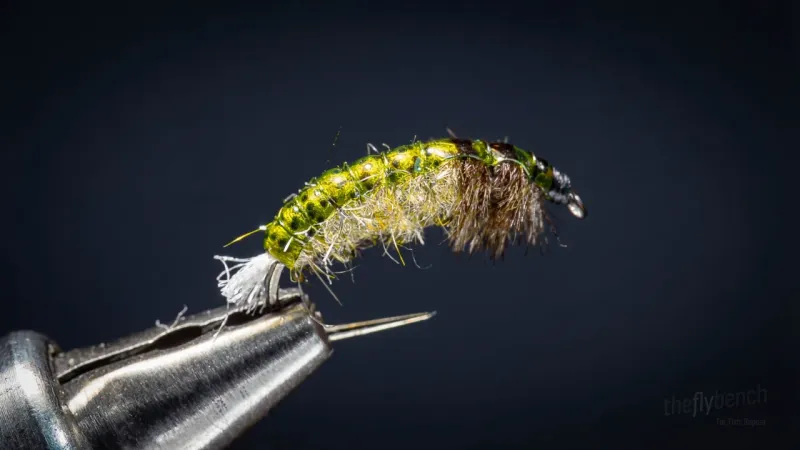
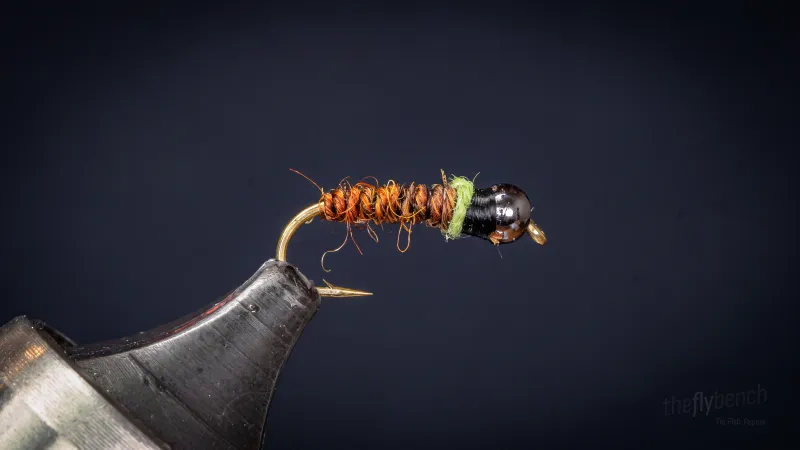
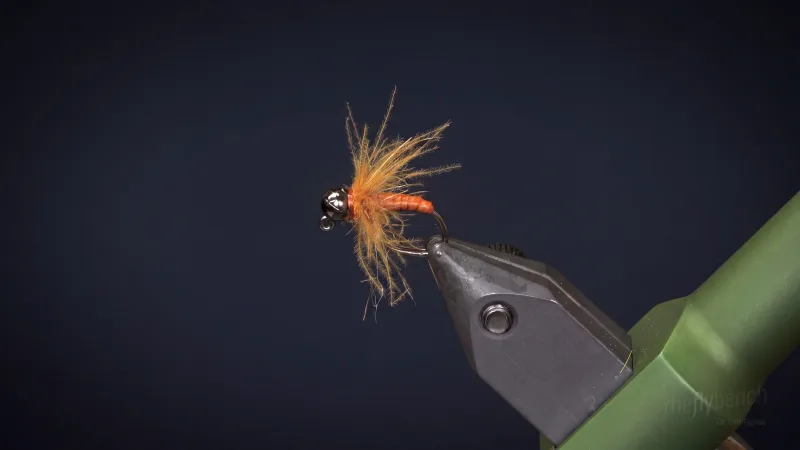
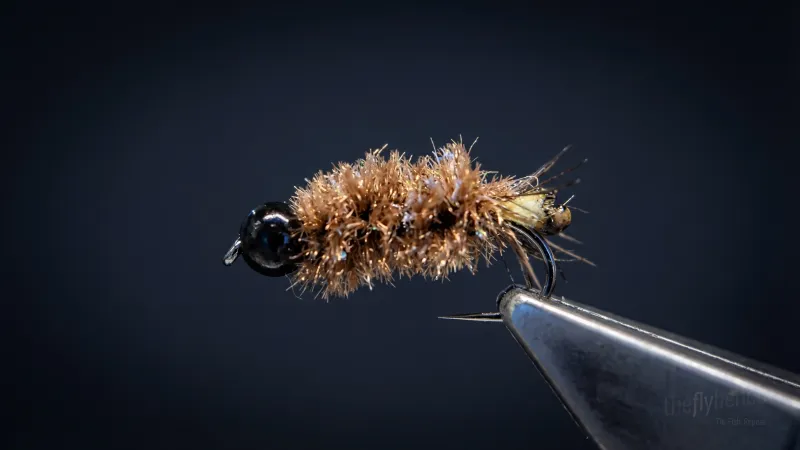
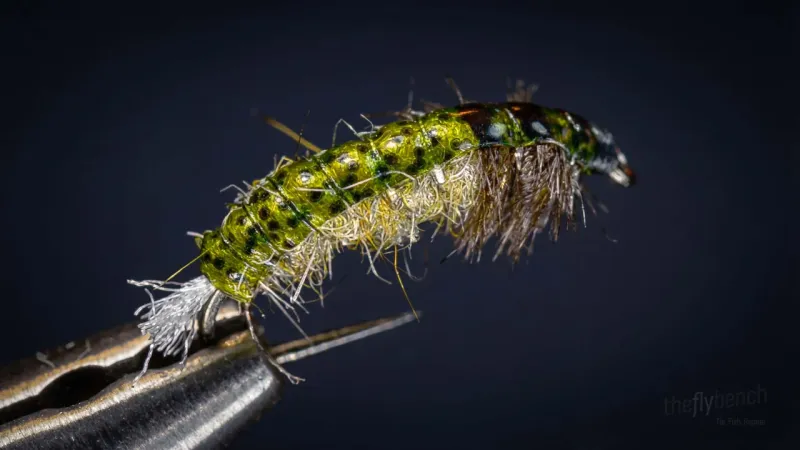
Smitty's Monthly Fly Box shared this pattern as a quick tie in December 2025. The scud hook curls the body like a drifting larva, and the black nickel bead gets it down without much shine. Smitty's also shows rusty, green, chartreuse and pearl versions, so change the body color to match local larvae. Size 14 is standard, and partridge can replace the Brahma hen.
Related patterns
Behavior & presentation
- Natural Behavior
- Free-living green rock worms crawl over cobble without a case and often lose their grip in strong current, drifting curled up close to the streambed until they catch hold again.
- Where Trout Eat It
- Trout hold low in broken riffles and rocky runs and pick off larvae that wash loose from the cobble, especially early in the morning and after flows rise.
- How to Fish It
- Fish it on a dead drift close to the bottom as the dropper below a heavier point fly. Let it tick over the rocks, then let it swing up at the end of the drift.
- Best Water
- Cobble riffles 1–3 feet deep, the seam where a riffle drops into a run, and pocket water behind boulders where loose larvae roll into slower current.
- Strike Type
- Usually a short stop or a slight sideways pull on the indicator or sighter, easy to mistake for bottom contact, so set on anything that looks off.
Fishing strategy
- Rigging Suggestions
- Use a 9-foot 4X–5X leader with an indicator, or a tight-line rig with a sighter. Put the fly 14–18 inches below a heavier stonefly or tungsten nymph, and add split shot in fast or deep runs.
- Seasonal Timing
- Productive from April through October, with the best fishing in late spring and early summer when caddis larvae are at full size before pupating. It still works as a searching fly on fall freestone days.
- Pro Tips
- Pick the body color from the larvae under rocks in the river you're fishing: bright green and chartreuse for Rhyacophila water, tan or rust for net-spinners. Keep the Brahma hen legs sparse so the fly sinks quickly.
Entomology
Free-living caddis larvae crawl over and between rocks in riffles without building a case, hunting smaller insects and grazing. Because they have no case, they get knocked loose often and drift exposed near the bottom, where trout eat them easily.
- Order
- Trichoptera
- Family
- Rhyacophilidae
- Common name
- Green Rock Worm
- Organism
- insect
- Life stage
- larva
Pattern details
- Moving Water
- Worldwide
- dead-drift
- indicator-nymph
- caddis-hatch
- searching-pattern
- freestone