

Overview
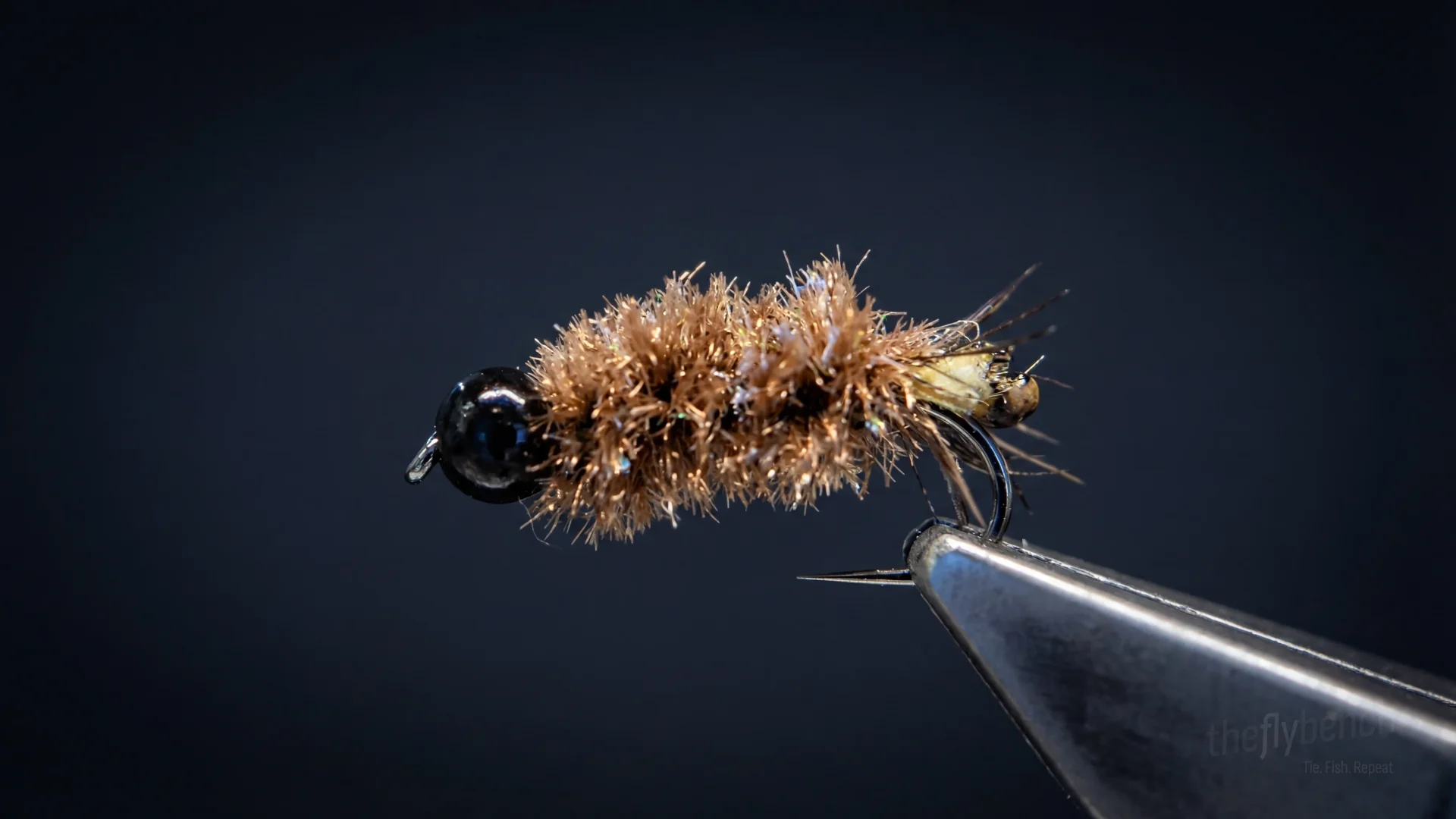
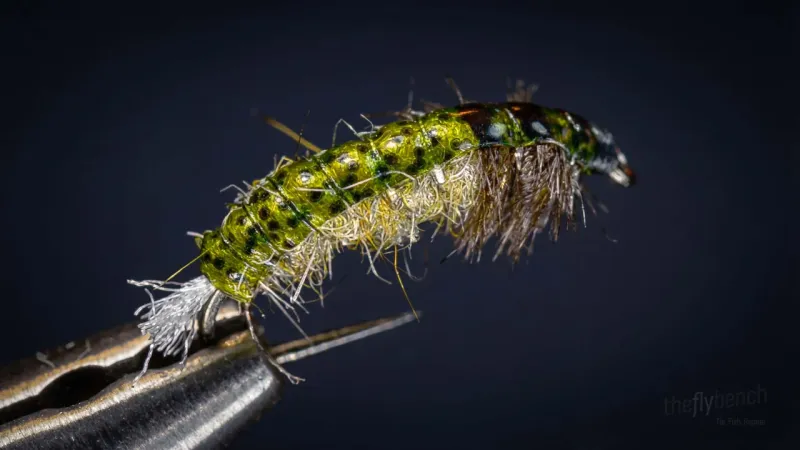
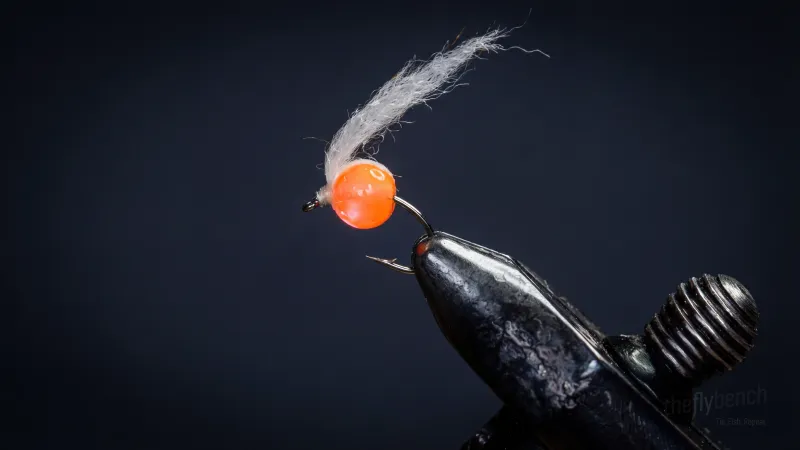
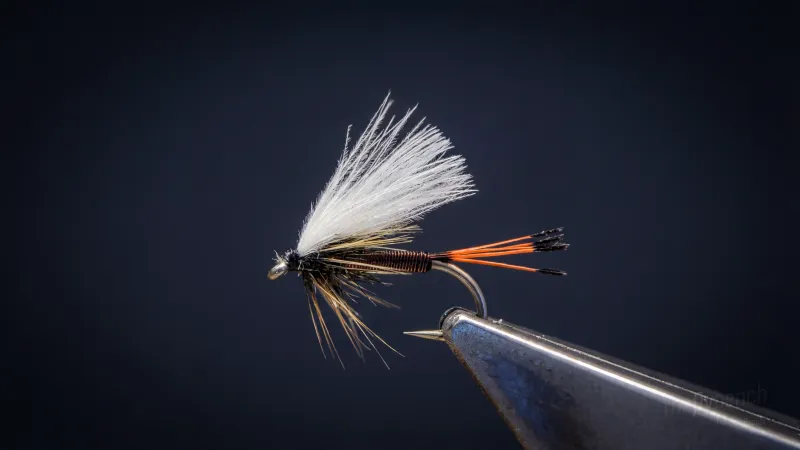
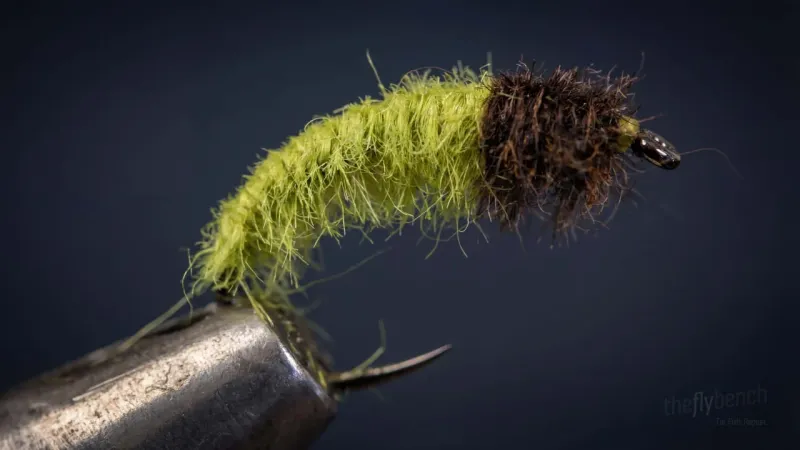
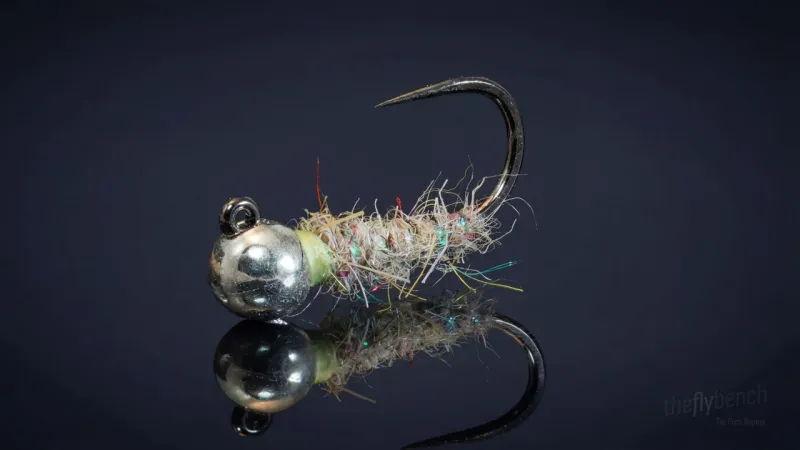
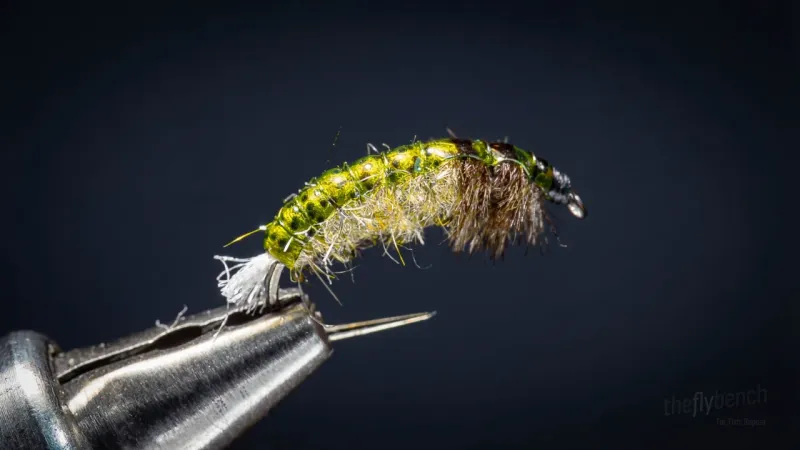
A 3.8mm black tungsten bead sinks the fly quickly toward the bottom, where cased caddis larvae drag debris-covered cases across rocks and gravel. Brown cactus chenille forms that case, a singed ball of pale yellow or cream Glo-bug yarn stands in for the exposed head, and one turn of ringneck pheasant neck feather suggests the legs that poke from the case opening. Fished dead-drift near the bottom, it covers naturals active on rocky, moving water through the warmer months.
Related patterns
Behavior & presentation
- Natural Behavior
- Cased caddis larvae drag their cases across rocks and gravel on the river bed and tumble along the bottom when dislodged. They are present all season and form a large part of a trout's diet.
- Where Trout Eat It
- Trout feed on them right on the bottom, picking larvae off stones and taking them as they roll in the drift.
- How to Fish It
- Dead-drift it tight to the bottom under an indicator or on a tight-line nymphing rig. The tungsten bead gets it down quickly in faster water.
- Best Water
- Rocky riffles, the seam beside a fast run, pocket water behind boulders, and the head of a pool where the bottom drops off.
- Strike Type
- Takes are subtle: the indicator or sighter stops, twitches or moves upstream. Set on anything unusual.
Fishing strategy
- Rigging Suggestions
- Fish on a 9 foot leader with 4X-5X tippet under an indicator, or on a long tight-line leader with a sighter.
- Seasonal Timing
- Works from spring through autumn, and through winter when fish feed close to the bottom.
- Pro Tips
- Keep it bumping the bottom. Fish it as the point fly with a smaller nymph or pupa on a dropper.
Entomology
Cased caddis larvae crawl over rocks and gravel inside cases built from sand, stones or plant bits, and are often knocked loose into the drift. Trout eat them case and all because they are common and slow.
- Order
- Trichoptera
- Common name
- Cased Caddis
- Organism
- insect
- Life stage
- larva
Pattern details
- Moving Water
- Midwest
- indicator-nymph
- tight-line-nymph
- dead-drift
- searching-pattern
- freestone