

Overview
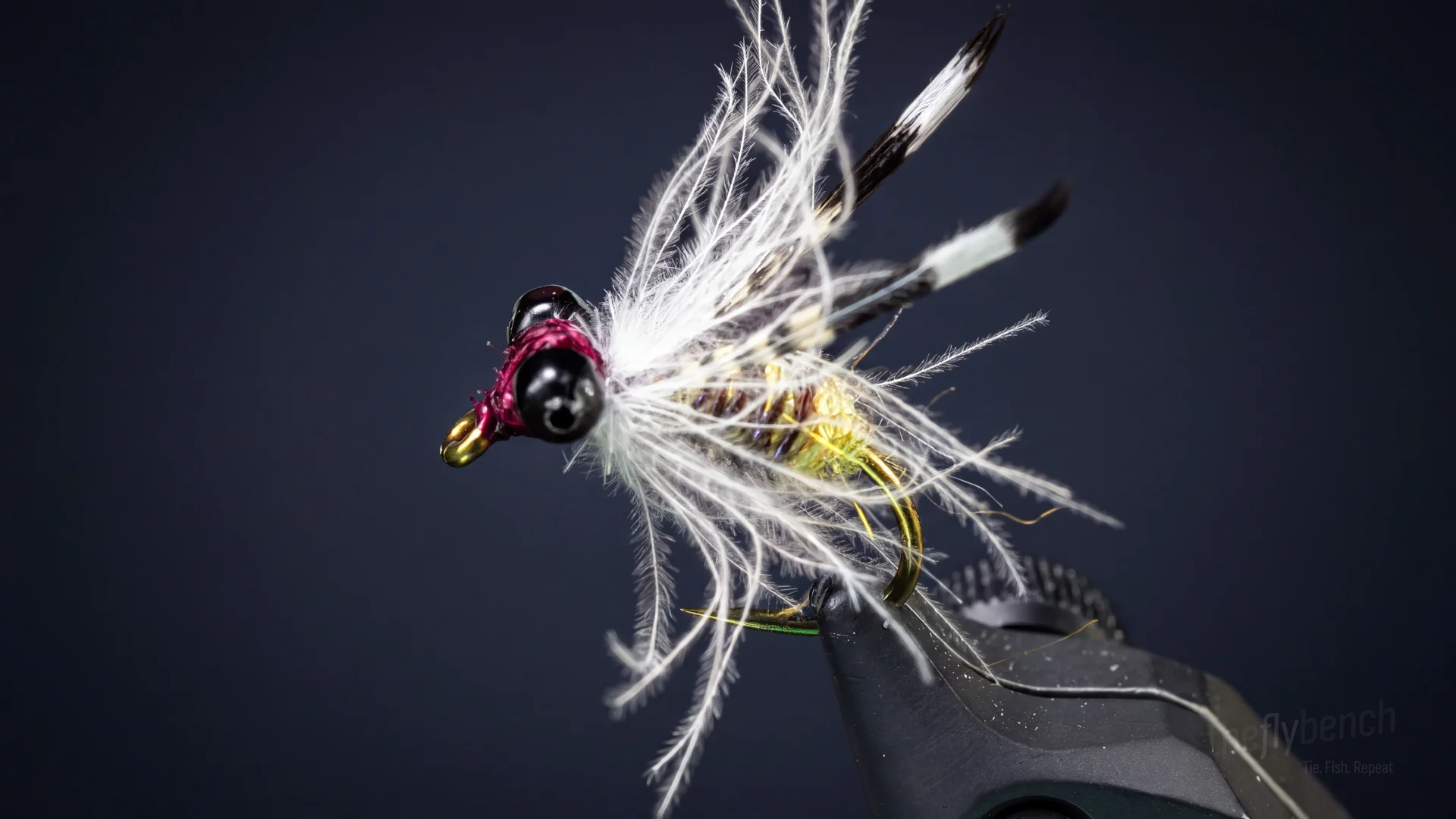
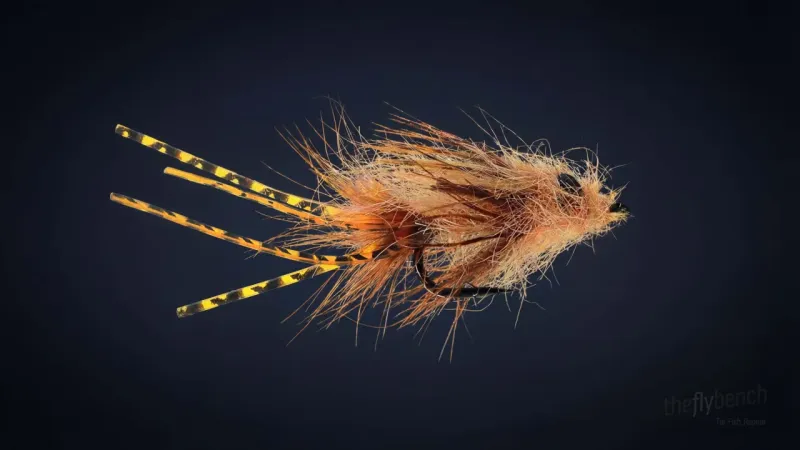
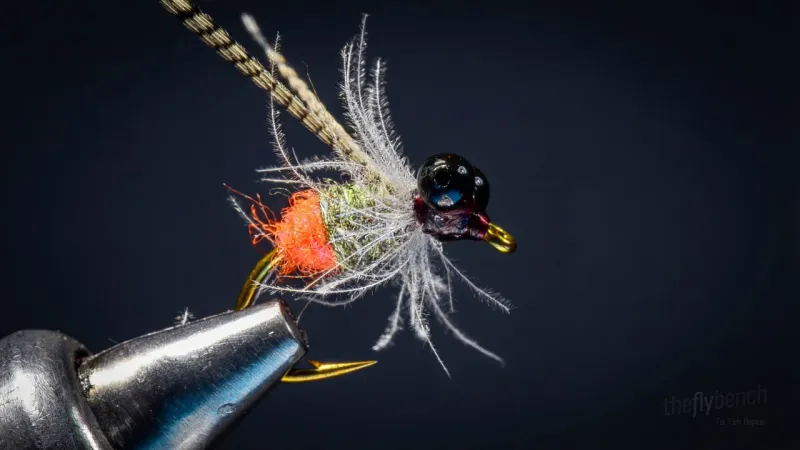
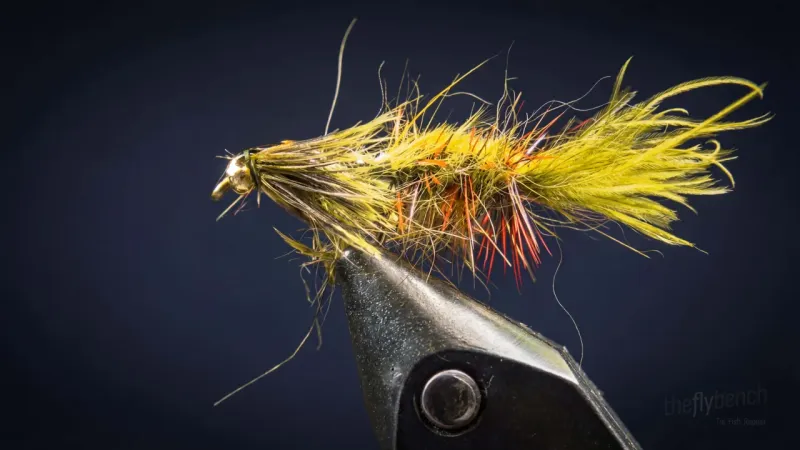
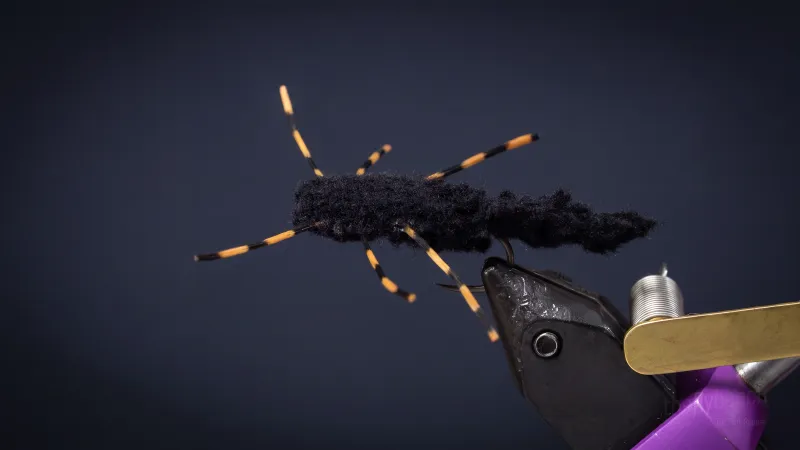
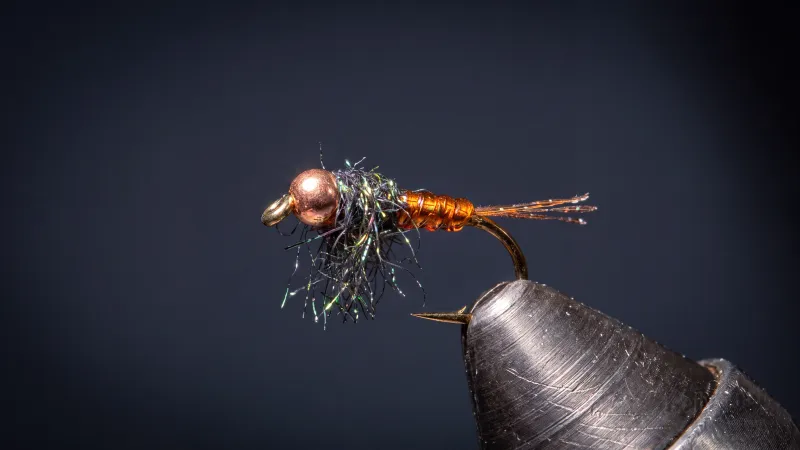
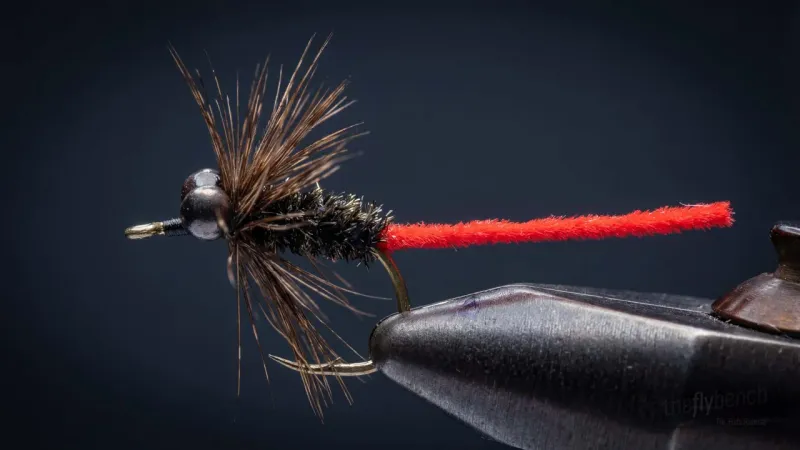
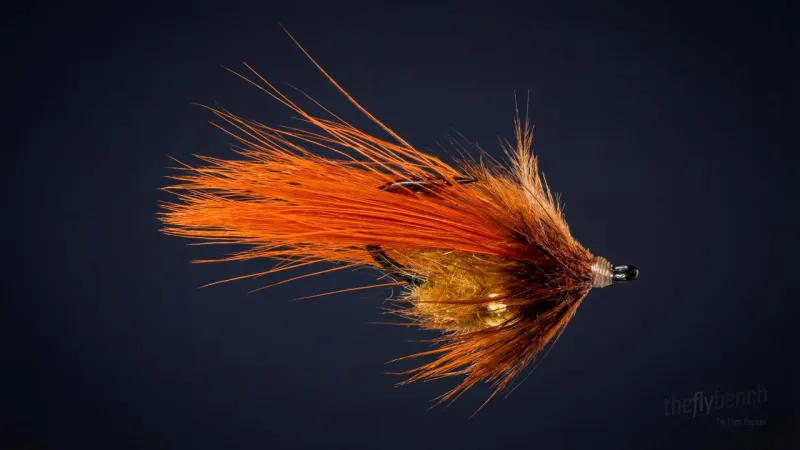
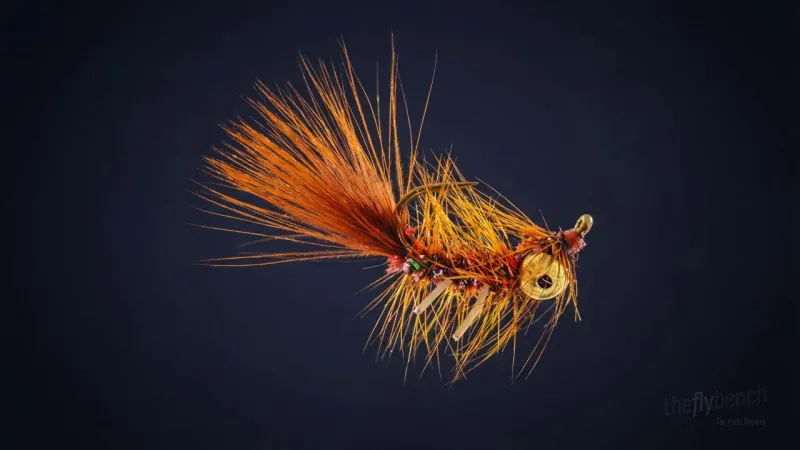
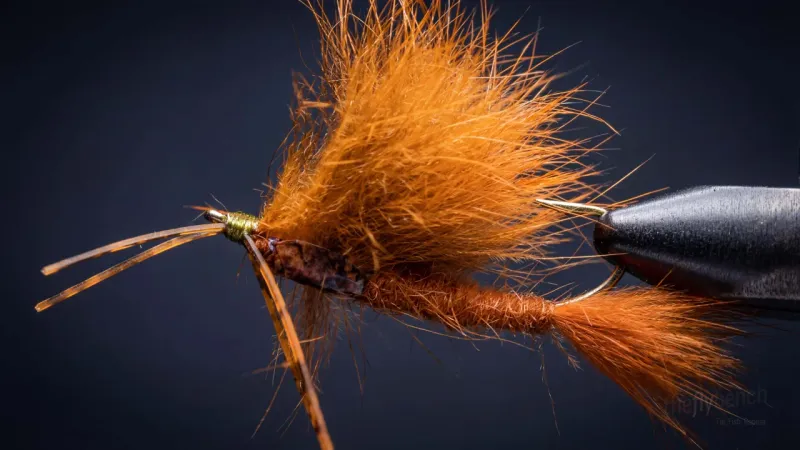
Daryl Eakins, an Umpqua signature tyer, built the Hipster Dufus as an all-purpose carp bug that can be dapped, dragged, dropped or flipped in front of feeding fish. Its key feature is the lift kit: two short lengths of .030 lead wire under the bead chain eyes make the fly top-heavy, so it turns over and rides point up. Keep the abdomen proportions tight, spin thin dubbing ropes for a faux rib, and lock the flank feathers in with an extra wrap. Set the eyes with Z-Ment rather than superglue.
Related patterns
Behavior & presentation
- Natural Behavior
- Carp grub through soft bottoms for nymphs, larvae and small crustaceans, tipping down to root them out of silt and weed. Anything small and buggy that settles slowly in front of a feeding fish gets inspected.
- Where Trout Eat It
- Carp tail and mud in one to three feet of water on shallow bays, river margins and warm backwaters, where tailing or clouding fish give away their position.
- How to Fish It
- Lead a cruising fish by several feet and let the fly settle into its path, or drop it just past a tailing fish and drag it back into view. A slow lift and fall usually beats a fast retrieve.
- Best Water
- Silty flats, weed-bed edges, slow inside bends and drop-offs where muddy plumes show carp feeding on the bottom.
- Strike Type
- The take is rarely felt. Watch for the fish to tip down and stop over the fly, the leader to twitch or slide, or a puff of mud, then strip-set firmly.
Fishing strategy
- Rigging Suggestions
- A 9-10 ft leader ending in 2X-3X fluorocarbon handles weeds and rough bottoms. Use a loop knot so the fly can roll over freely, and skip extra split shot since the lift kit sets the sink rate.
- Seasonal Timing
- Best from late April through October once shallows warm and carp move up to feed. Midsummer mornings on calm flats give the clearest shots at tailing fish.
- Pro Tips
- The point-up ride lets the fly sit on weedy or rocky bottoms without snagging. Carry the yellow-brown version for light sand and gravel and the orange-olive version for darker, muddier bottoms.
Entomology
Carp feed largely on bottom-dwelling invertebrates such as nymphs, larvae, scuds and small crayfish, rooting them out of silt and weed with their downturned mouths. A slowly sinking, buggy profile that lands near a feeding fish matches what it is already digging for.
- Common name
- Aquatic insects and crustaceans
- Organism
- insect
- Life stage
- general
Pattern details
- Stillwater
- Moving Water
- Rocky Mountain
- Midwest
- Great Lakes
- sight-fishing
- warm-water
- modern
- flats
- low-clear-water