NymphDredger
Built for getting down fast in swift water. Inspired by Czech nymphing techniques, this heavy pattern excels in fast-moving pocket water, especially around boulders where trout hold deep. Its weight and slim profile help it cut through the current and stay in the strike zone longer, making it ideal for deep, swift runs.
Spring, Fall, Winter
Intermediate
Trout
Nov 2025
Overview
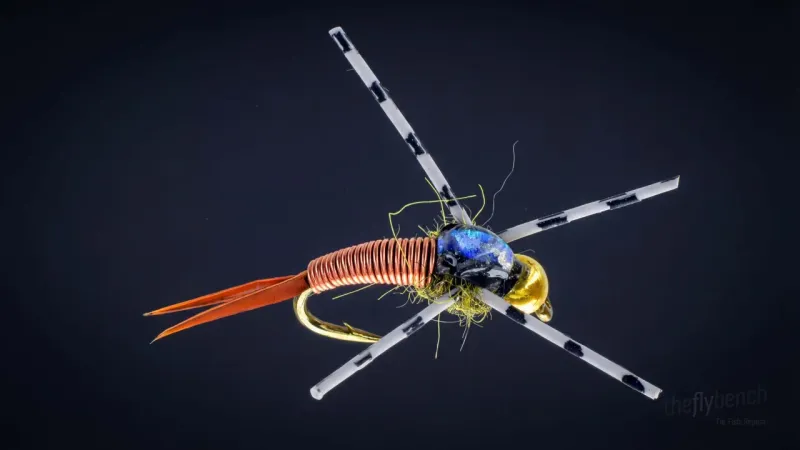
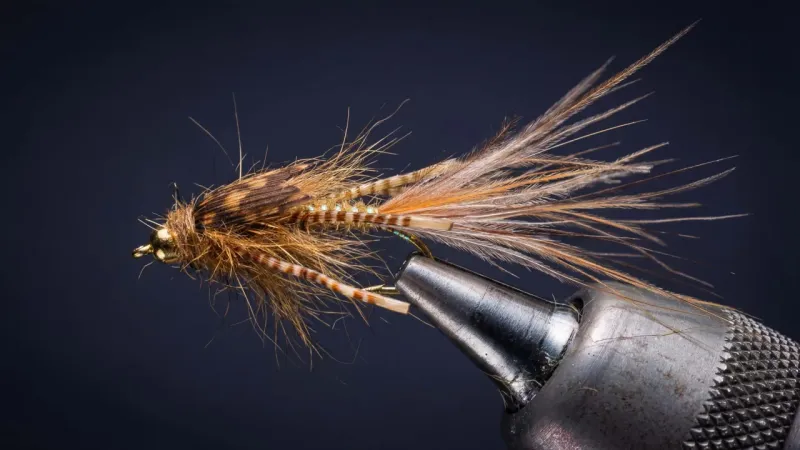
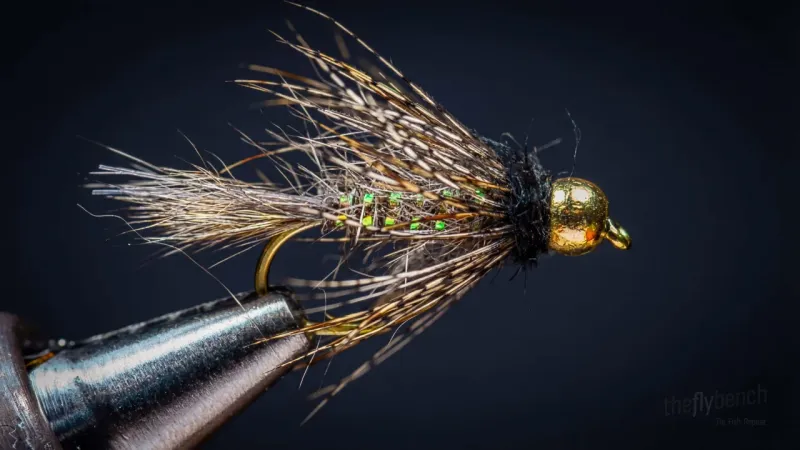
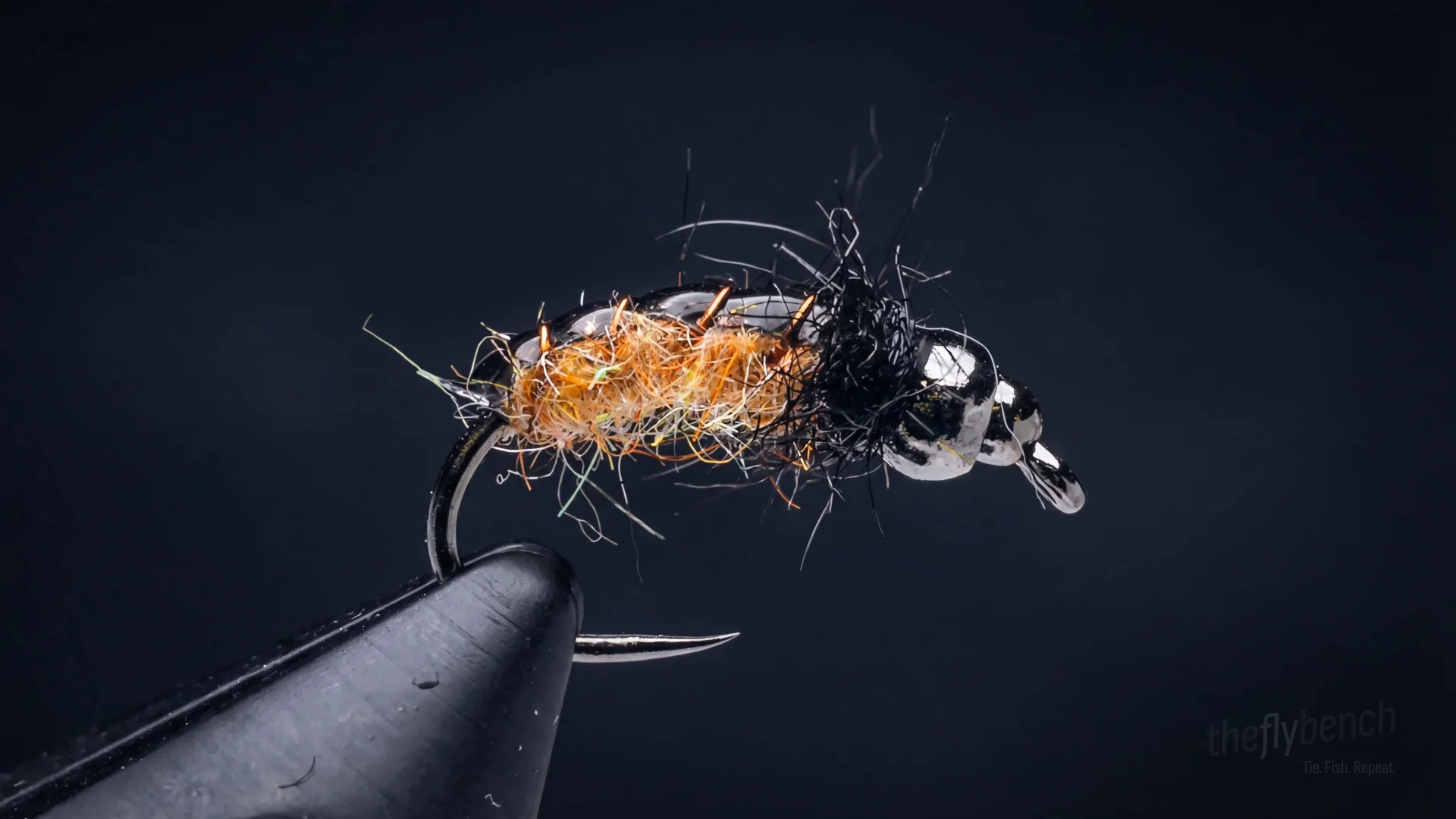
This pattern developed in the 2000s features double beads for extra weight and a realistic look. The combination of black opossum and gray scud dubbing creates a buggy, natural appearance that trout find appealing. The thin skin shell back adds durability and visual appeal. The lead wire wrapping provides additional weight to help the fly sink quickly into the strike zone. This is a heavy nymph designed specifically for Czech nymphing and tight-line presentations in fast water.
Materials
Hook: Size 8 Orientsun 7259 Hook
Bead: 4mm Black Nickel Bead
Bead (Secondary): 2mm Orange Nickel Bead
Thread: Black 6/0 Thread
Rib: Small Black Wire
Dubbing: Black Opossum Dubbing
Dubbing (Secondary): Gray Scud Dubbing
Shell Back: Thin Skin
Weight: Lead Wire 0.015
Behavior & Presentation
Natural Behavior: Large stonefly nymphs crawl deliberately along the streambed, using sprawling legs to navigate between rocks while foraging. Fish target these heavy-bodied nymphs when high water dislodges them, capitalizing on their substantial size and caloric value.
Where Trout Eat It: Trout feed near bottom in deep pockets and runs, holding in structure where dislodged nymphs tumble through.
How to Fish It: High-stick through deep runs using tight-line techniques, maintaining bottom contact as the fly drifts.
Best Water: Target pockets behind boulders and drop-offs in swift water, focusing on structure breaks that concentrate drifting nymphs.
Strike Type: Feel for subtle ticks and hesitations in the drift as fish intercept the tumbling nymph.
Fishing Strategy
Rigging Suggestions: Works well as a lead fly in a multi-fly nymphing rig, or fished solo on a tight-line setup. Use 3X-4X fluorocarbon tippet for strength.
Seasonal Timing: Most effective March-May, September-November, and December-February during spring, fall, and winter when trout are feeding deep. Water temperatures between 38-55°F push fish to deeper holding lies.
Pro Tips: Heavy sinking pattern designed to reach the bottom quickly in fast current. Fish it deep where trout are holding during cold water periods or high flows.
Entomology
Large stonefly nymphs crawl along the streambed in slow-moving currents, using their sprawling legs to navigate between rocks while searching for organic matter. Fish actively hunt these bottom-dwelling nymphs for their substantial size and protein content, particularly targeting individuals dislodged during high water events when drift rates increase.
- Order
- Plecoptera
- Common Name
- Stonefly
- Organism Type
- insect
- Life Stage
- nymph