Dry FliesKiller Bee
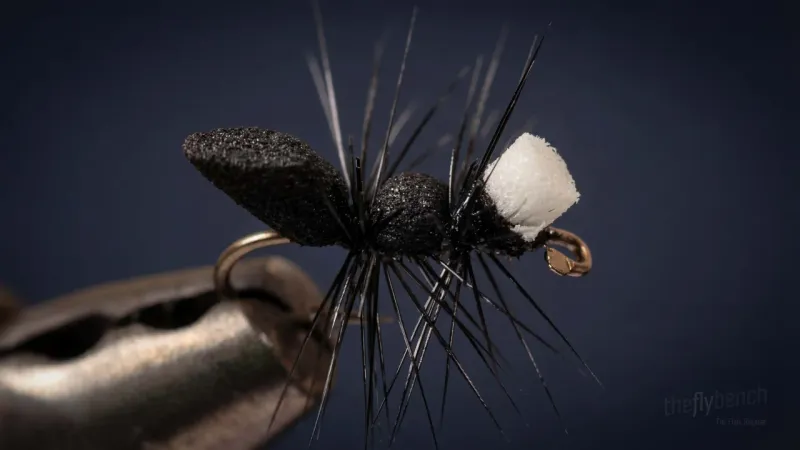
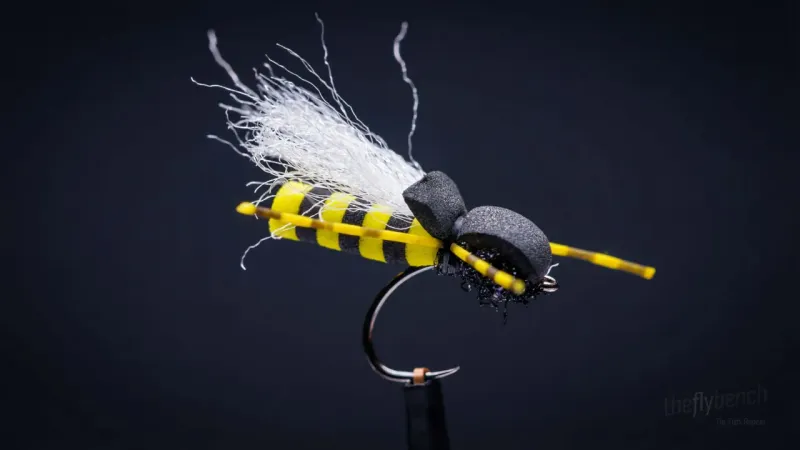
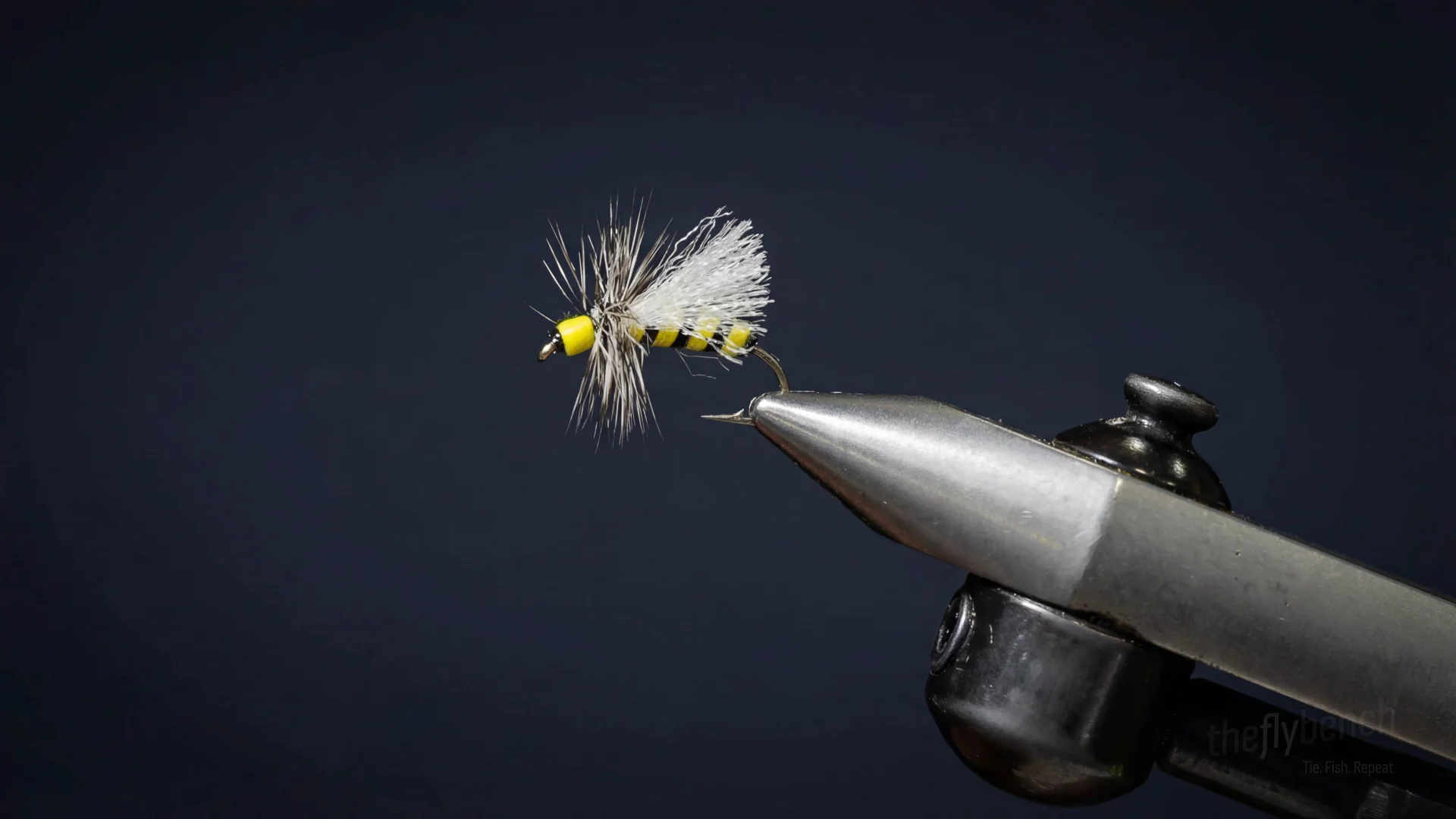
Foam bee pattern mimics bees and wasps that fall onto the water. Yellow foam body with black Lifeflex ribbing creates the distinctive banded appearance, while white EP wing and grizzly hackle provide floatation and excellent visibility for both angler and fish.
Summer, Fall
Intermediate
Trout
Dec 2025
Overview
Developed at Blue Ribbon Flies during the 1990s to match bees and wasps that become available to trout during summer and fall. While less common than ants or beetles, bees represent a high-calorie meal that trout readily take when available. The foam construction provides exceptional floatation for prospecting likely holding water and can support a small dropper nymph.
Materials
Hook: Umpqua U204, #12
Thread: Semperfli Classic Waxed Thread, 8/0, black
Body: Fly Foam, 2mm, yellow
Rib: Lifeflex, black
Wing: EP Sculpt-A-Fly Fibers, white
Hackle: Grizzly dry fly hackle
Behavior & Presentation
Natural Behavior: Bees visiting waterside flowers occasionally land on the surface to drink, becoming trapped when wings get wet. Unable to achieve liftoff, they struggle conspicuously on the surface. Despite infrequent availability, their exceptional nutrition makes them priority targets when present.
Where Trout Eat It: Fish take trapped bees at the surface along banks, near structure, and in foam lines where struggling insects drift.
How to Fish It: Subtle twitches mimic struggling movements that trigger strikes. Prospect likely water along meadow streams where wildflowers attract bees.
Best Water: Focus on seams, foam lines, banks, and structure near flowering vegetation in both streams and calm water.
Strike Type: Aggressive visible rises or explosive takes on struggling surface insects.
Fishing Strategy
Rigging Suggestions: Fish on 9-12 foot leader with 4X-5X tippet. The foam provides floatation and can support a small dropper nymph 18-24 inches below.
Seasonal Timing: Most effective June through October when bees are active near water, peaking during July and August. Water temperatures between 65-75°F trigger peak bee activity.
Pro Tips: Foam construction floats all day without waterlogging. Yellow and black coloration is highly visible to both fish and angler.
Entomology
Bees visit waterside flowers and sometimes land on the surface to drink, becoming trapped when their wings get wet and unable to achieve liftoff. Fish capitalize on these accidental terrestrial offerings because bees provide exceptional nutrition despite their infrequent availability.
- Order
- Hymenoptera
- Family
- Apidae
- Common Name
- Bee
- Organism Type
- terrestrial
- Life Stage
- adult