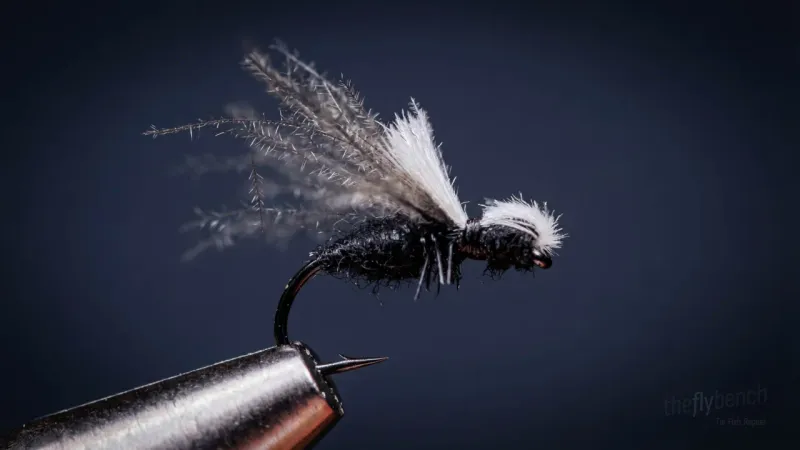
Dry FliesBumblebee Fly
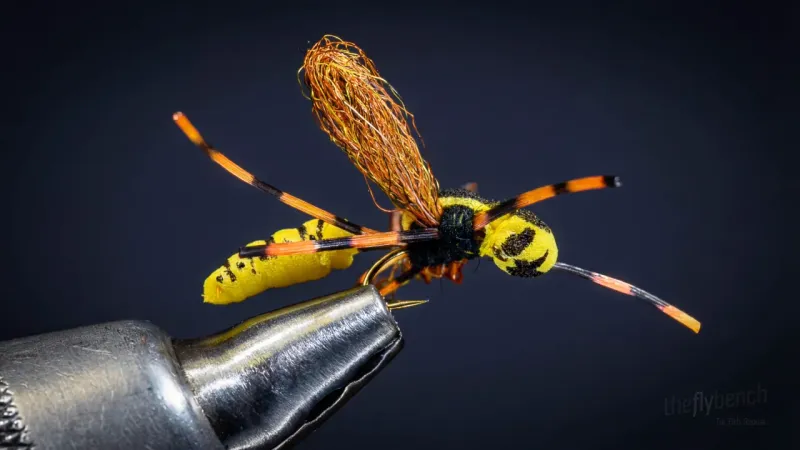
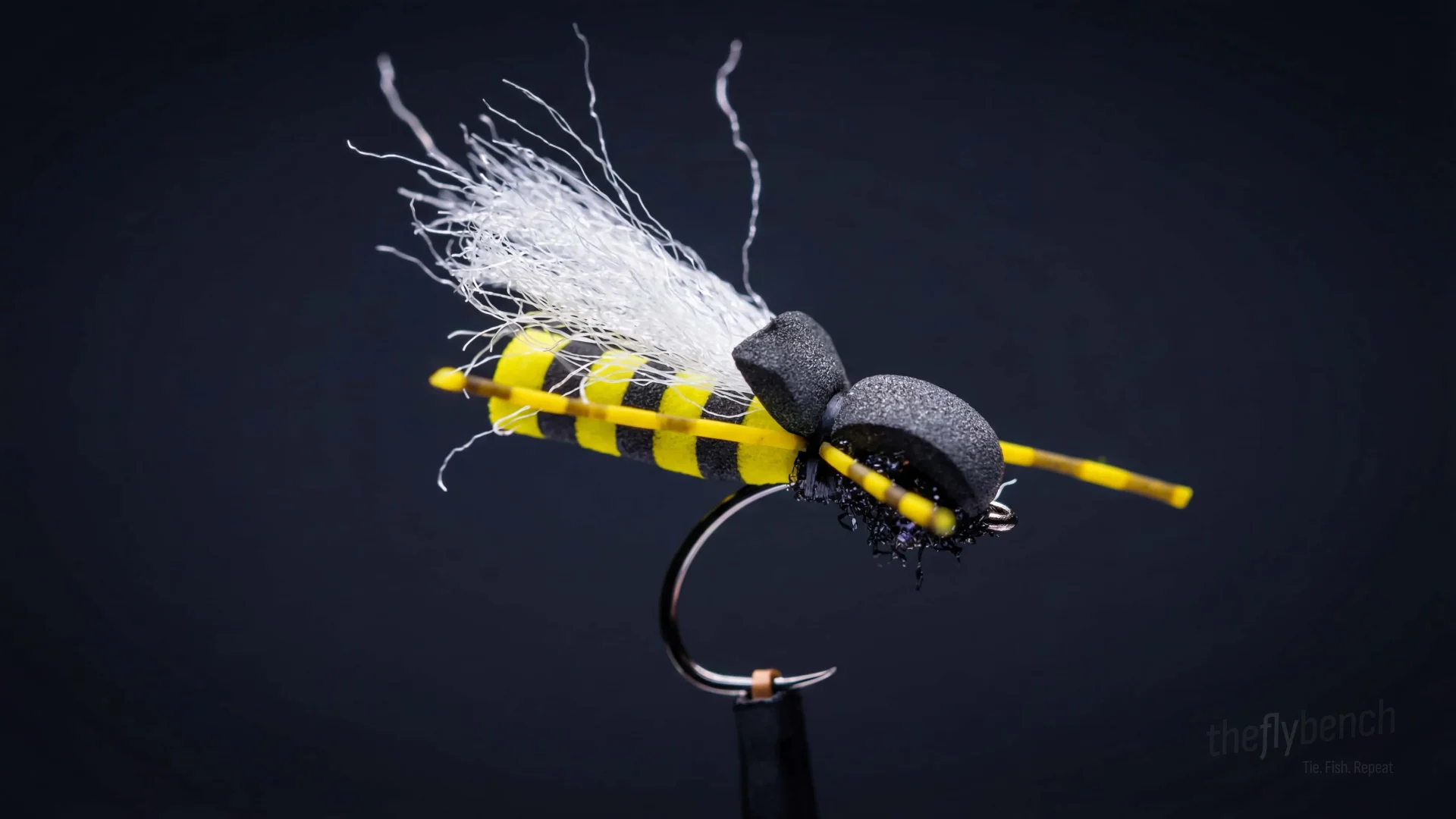
The Bumblebee Fly is a terrestrial pattern designed to imitate various species of bees. Built with durable floating foam, it rides high on the surface and makes an excellent choice for dry-dropper rigs. While bees may not have the popularity of ants, hoppers, and beetles among fly anglers, this pattern proves effective when fish are keyed in on these common terrestrials.
Spring, Summer, Fall
Intermediate
Trout, Panfish
Dec 2025
Overview
This pattern uses a pre-formed foam wasp body from Rainy's, which provides the classic yellow and black banding of a bumblebee while simplifying the tying process. The polypropylene yarn wing adds visibility for the angler while maintaining buoyancy. A versatile terrestrial that works on both trout streams and panfish ponds, particularly when bees are active near the water.
Materials
Hook: Kona BC4 Barbless Curved, #12
Thread: Black 6/0 or 140 denier
Body: Rainy's Bumble Bee Foam Wasp Body
Overbody: Hareline Fly Foam 3mm, black
Wing: Hareline Polypropylene Floating Yarn, orange
Thorax: Ice Dub, peacock or black
Legs: Black rubber legs
Behavior & Presentation
Natural Behavior: Terrestrial bees crash-land after being blown from streamside vegetation, creating substantial surface disturbances as they flail and buzz while trapped. Their large profile and frantic struggling trigger opportunistic feeding on this high-calorie windfall.
Where Trout Eat It: Fish intercept along grassy banks, foam lines, and seams during warm afternoons when flowers bloom near waterways and bees are active.
How to Fish It: Let the fly sit motionless or add occasional twitches to mimic struggling insects trapped in surface tension.
Best Water: Focus on seams, foam lines, and grassy banks near flowering plants where terrestrial insects naturally fall into feeding lanes.
Strike Type: Watch for visible surface disturbances, expanding rings, or aggressive takes as fish intercept struggling terrestrials.
Fishing Strategy
Rigging Suggestions: Fish on 9-12 foot leader with 4X-5X tippet. The high-floating design makes this pattern excellent as the top fly in a dry-dropper rig with a small nymph suspended 12-18 inches below.
Seasonal Timing: Most effective from late spring through early fall when bees are active, typically May through September. Peak activity occurs during warm afternoons when flowers are blooming near waterways.
Pro Tips: Rides high on the surface with a realistic profile.
Entomology
Terrestrial bees crash-land on water after being blown from streamside vegetation, creating substantial surface disturbances as they flail and buzz trapped in surface tension. The large profile and frantic struggling of these land-based insects trigger opportunistic feeding from trout who aggressively take advantage of this high-calorie windfall.
- Order
- Hymenoptera
- Family
- Apidae
- Common Name
- Bee
- Organism Type
- terrestrial
- Life Stage
- adult