


Overview
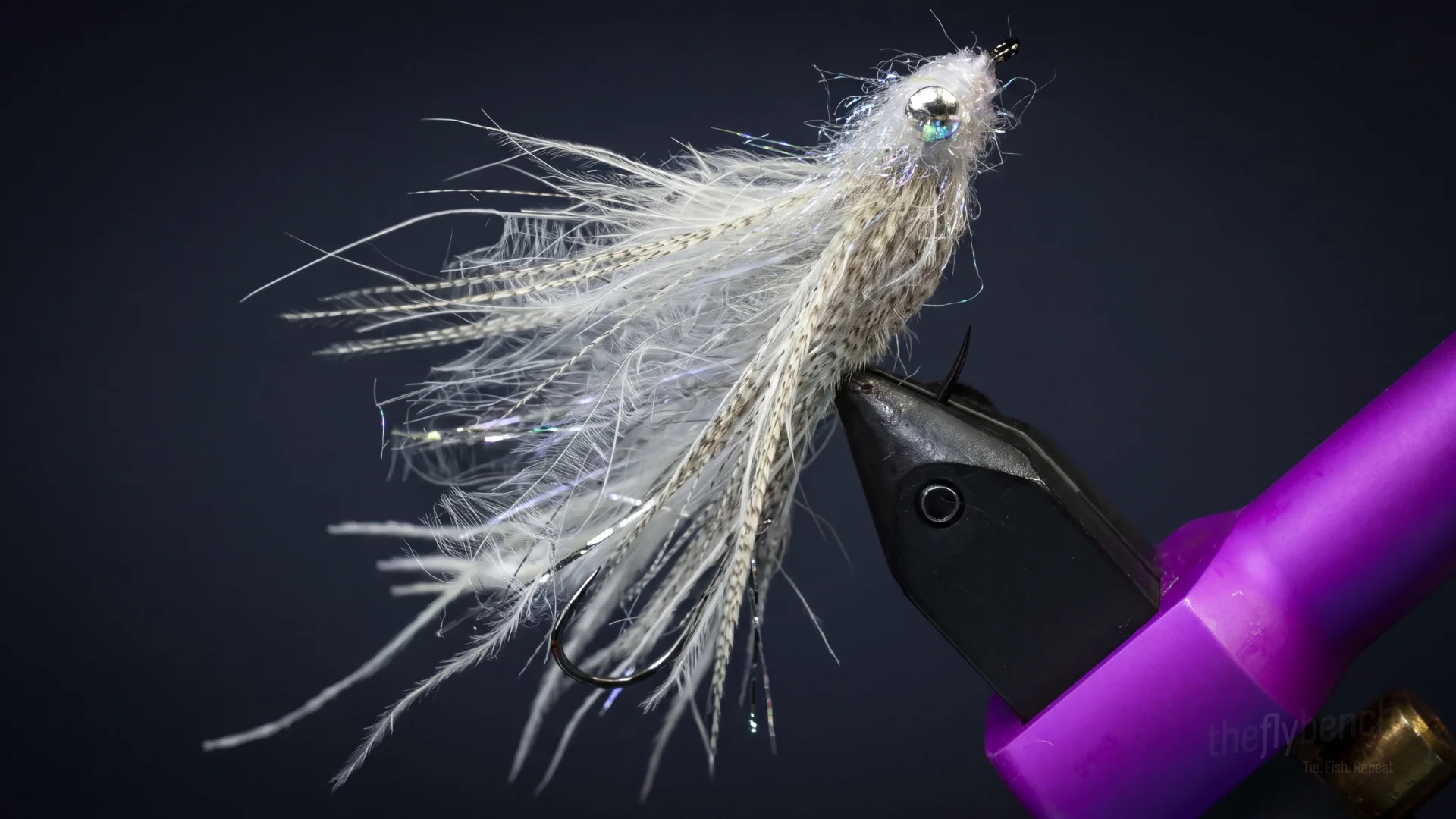
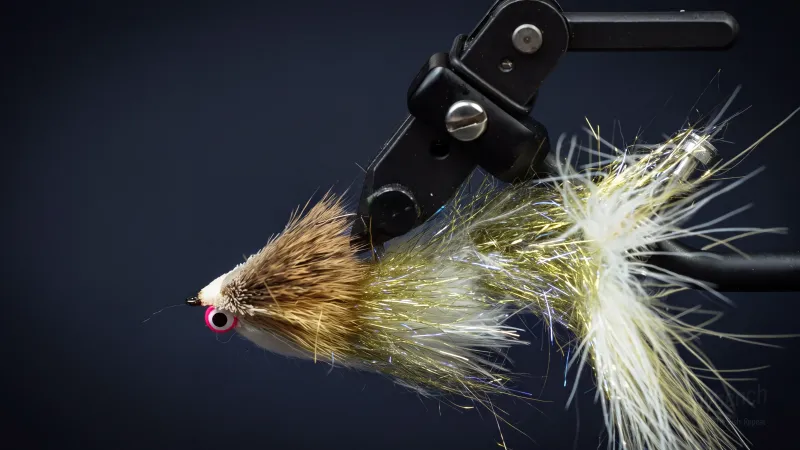
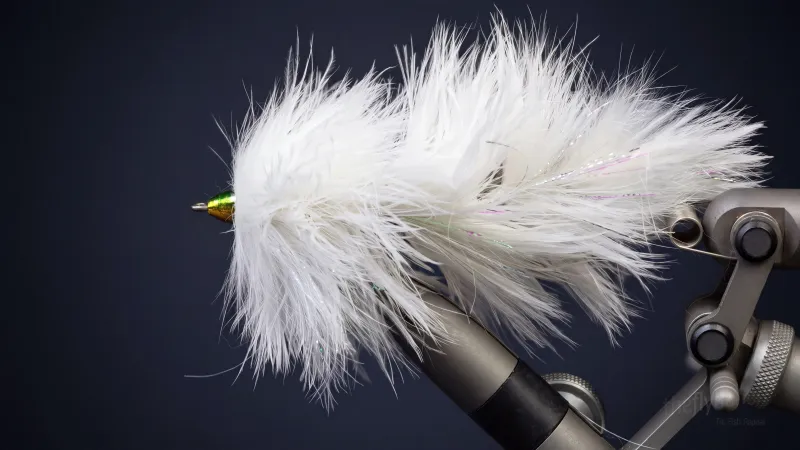
AJ Jorgensen tied this one for Fly Fish Food as a swing fly for trout, sized down from the intruder style with a size 6 Octopus stinger on Senyo trailer wire behind a size 4 shank. The ostrich wing does the work, breathing and flowing at the slightest tension. Brass dumbbell eyes set the depth, and the Ice Dub head and silver polar chenille tail add a touch of flash.
Related patterns
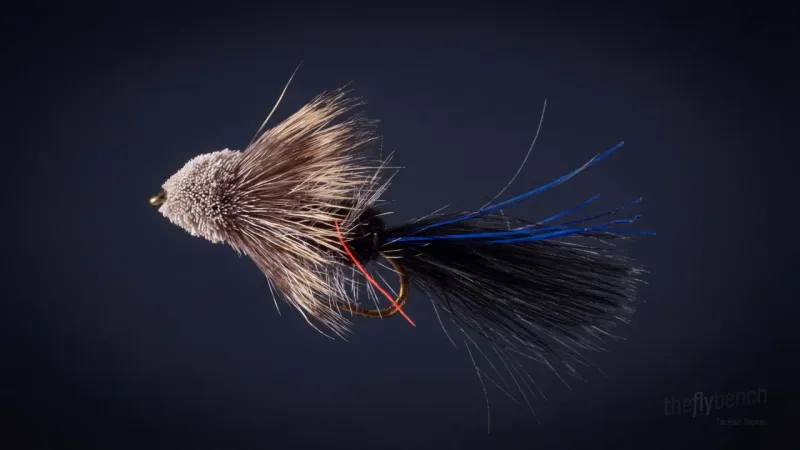
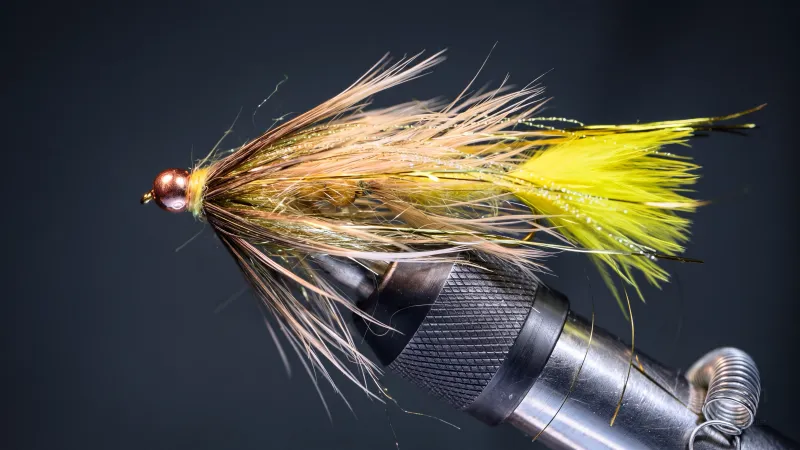

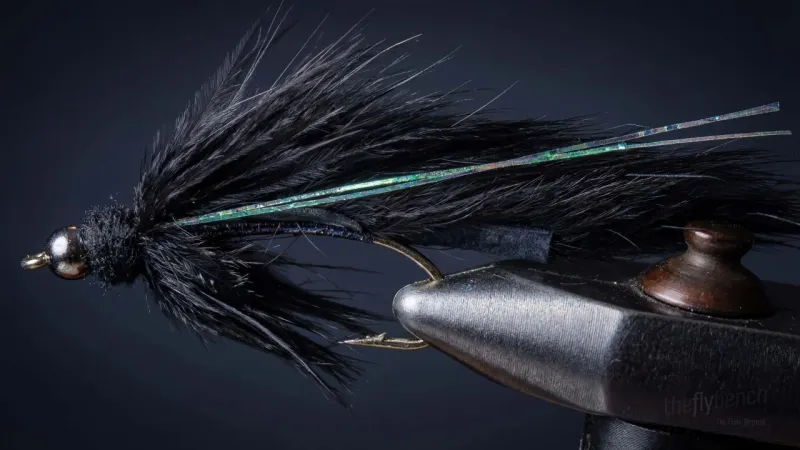
Behavior & presentation
- Natural Behavior
- Small baitfish and leeches that get swept off the bottom drift crosswise in the current, kicking and flaring as they try to get back to cover, and that struggle is what draws a predatory trout across the river.
- Where Trout Eat It
- Trout sit in the softer water below riffles and along current edges, waiting to chase prey that the flow carries across their lane.
- How to Fish It
- Cast quartering downstream, mend to set the depth, then let the line come tight and swing the fly across. Pulse or pump the rod tip once the fly is tight so the ostrich wing opens and closes.
- Best Water
- Riffle tail-outs, long seams, inside bends and the hang-down spot just above a drop-off or boulder.
- Strike Type
- A hard yank or a heavy, sudden weight on a tight line, often right as the fly slows and straightens below you.
Fishing strategy
- Rigging Suggestions
- Fish it on a trout spey rod with a Skagit or Scandi head and a light sink tip, or on a single-hand 5-7 weight with a sink-tip line. A short 2X-3X fluorocarbon leader keeps the fly near the sink tip's depth.
- Seasonal Timing
- Best in spring and fall when cooler water keeps trout willing to move to a swung fly, and during off-color flows when a big profile shows up well.
- Pro Tips
- Keep the pulses short and steady rather than stripping, so the fly stays in the swing path. The stinger rides at the back of the wing where short-striking fish grab, and white ostrich shows up well in low light or slightly stained water.
Entomology
Young baitfish and leeches spend most of their time tucked against the bottom, but rising flows, feeding forays and predator pressure push them into open current. Once dislodged they swim weakly across the flow, flaring and pulsing as they try to regain cover, which marks them as easy calories for trout holding on seams.
- Common name
- Baitfish
- Organism
- baitfish
- Life stage
- general
Pattern details
- Moving Water
- Rocky Mountain
- Pacific Northwest
- swing
- modern
- active-retrieve
- searching-pattern