StreamersHornberg
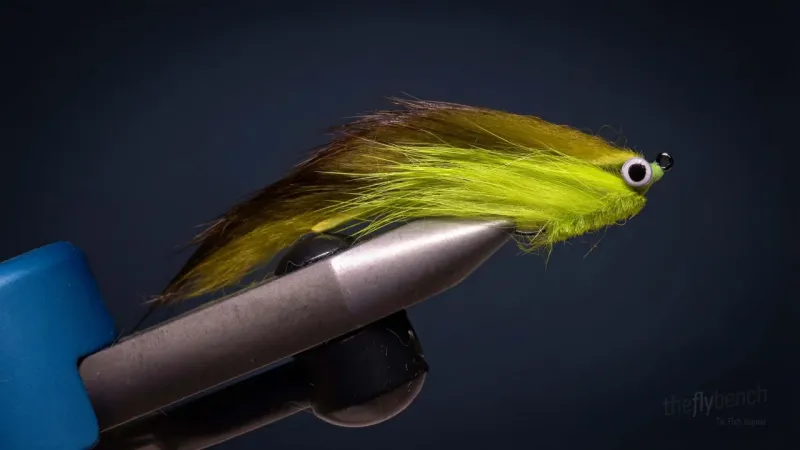
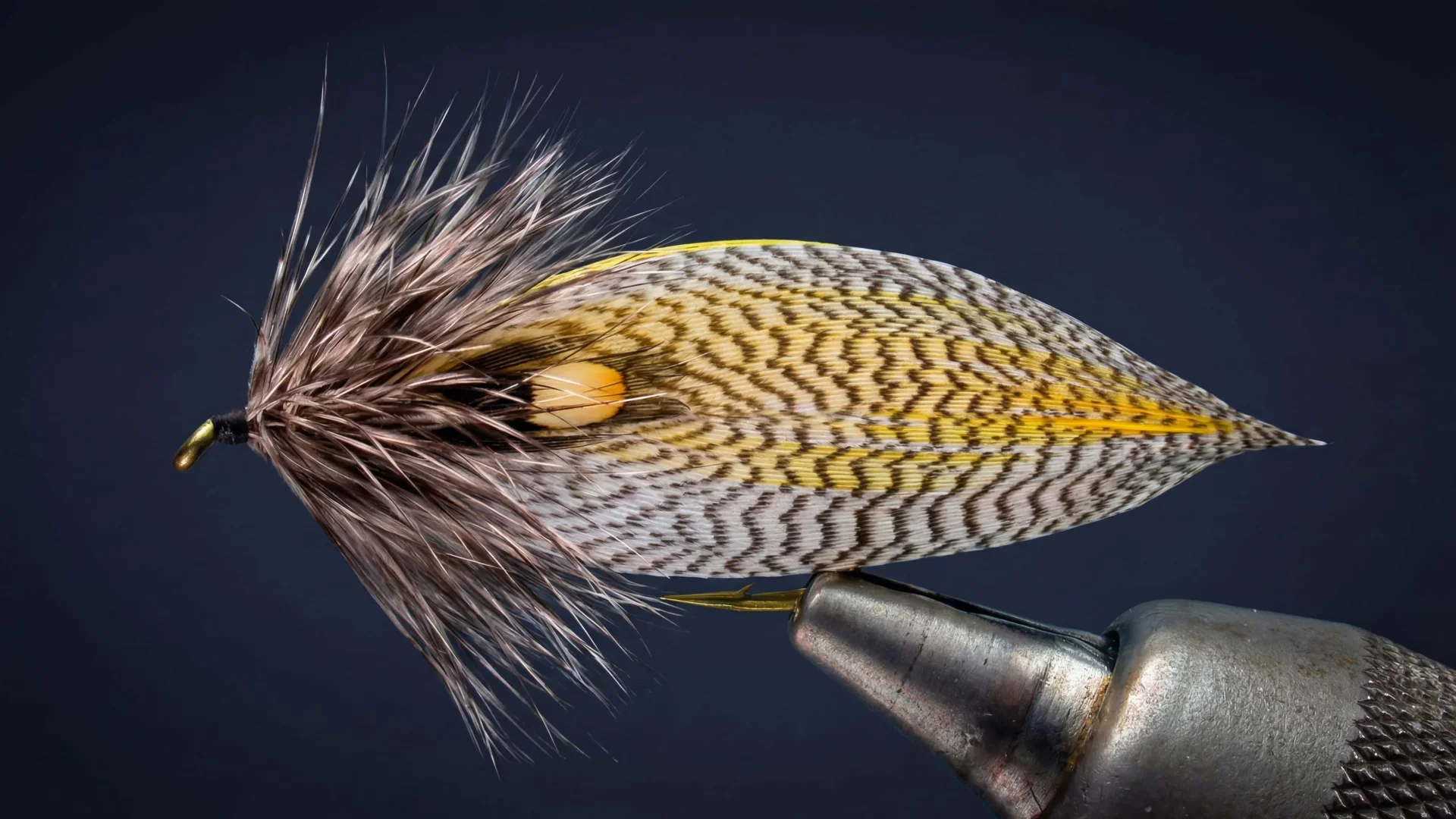
The Hornberg is a versatile, generations-old attractor tied with a mallard flank overwing, yellow calf tail underwing, and jungle cock eyes over a gold or silver Mylar tinsel body. Originally tied as a streamer-style fly to imitate baitfish, it's also fished swung as a wet or dressed to skate as a searching dry, making it effective for trout across a range of moving-water conditions.
Spring, Summer, Fall
Advanced
Trout
Apr 2025
Overview
Wound with large gold or silver Mylar tinsel over a Tiemco 5262 hook, the Hornberg gets its flash and shimmer from the body alone, then builds a wing from yellow calf tail underneath and natural mallard flank over the top, finished with a pair of jungle cock eyes for a baitfish-like head. Grizzly and brown hackle, tied in as a full collar, both waterproof the wing and let the fly be fished three ways: dressed and skated as a searching dry, greased and swung as a wet fly, or stripped and twitched like a small streamer. That flexibility, more than any single material, is why the pattern has stayed in rotation for decades.
Where to Buy This Fly
We only link to fly shops we trust. Some links are referral links, which may earn us a commission at no extra cost to you.
Materials
- Hook:
- Tiemco 5262, sizes #08-#12
- Thread:
- Black UNI 8/0 or Veevus 8/0
- Body:
- Large Gold/Silver Mylar Tinsel
- Underwing:
- Yellow Calf Tail
- Overwing:
- Natural Mallard Flank
- Eyes:
- Jungle Cock
- Hackle:
- Grizzly and Brown or 2 Dark Barred Ginger Whiting High and Dry Rooster Cape
Behavior & Presentation
Natural Behavior: This pattern imitates both baitfish and large aquatic insects depending on presentation, with the profile changing as it swings or strips. The dual nature makes it effective across feeding situations.
Where Trout Eat It: Subsurface to mid-column in pools, runs, and near structure where fish feed opportunistically.
How to Fish It: Fish wet-fly swing in current or strip actively in lake to match local forage behavior.
Best Water: Seams, drop-offs, undercut banks, weed edges, and tail-outs where fish hold while scanning for food.
Strike Type: Takes vary from subtle taps to aggressive grabs depending on whether fish mistake it for insects or baitfish.
Fishing Strategy
Rigging Suggestions: The Hornberg can be fished alone or as part of a tandem rig with a nymph or emerger trailing behind.
Seasonal Timing: Effective during peak feeding periods when water temperatures and conditions support active feeding behavior.
Pro Tips: The deer hair wing and hackle help this fly stay visible and afloat when fished on the surface. When fished as a streamer, the weight of the hook and the water-soaked materials allow it to sink and imitate a swimming baitfish.
Entomology
Adult stoneflies skitter and struggle on the water surface during emergence periods, while small baitfish dart near the surface film chasing insects. This dual presentation triggers surface and subsurface strikes from opportunistic feeders that recognize both the struggling insect silhouette and the fleeing minnow profile as vulnerable prey.
- Order
- Plecoptera
- Common Name
- Stonefly
- Organism Type
- baitfish
- Life Stage
- general