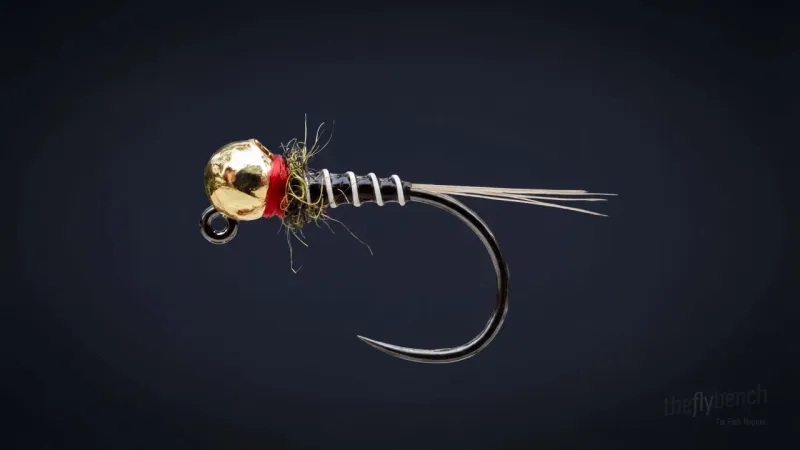
Euro NymphsHare Bomb Euro Nymph
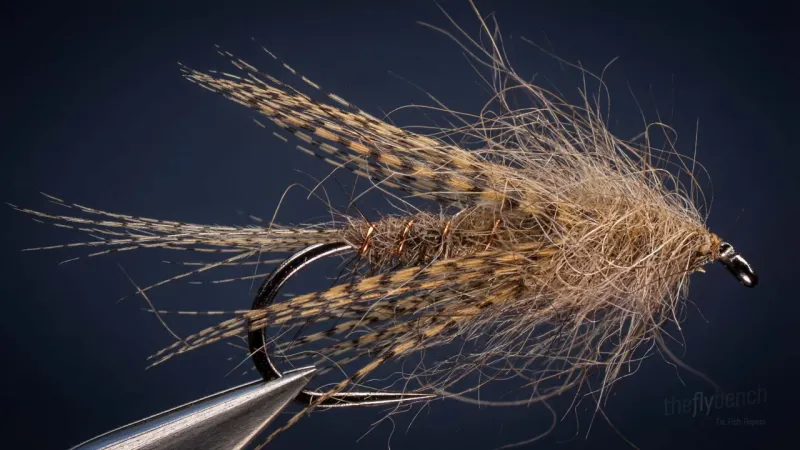
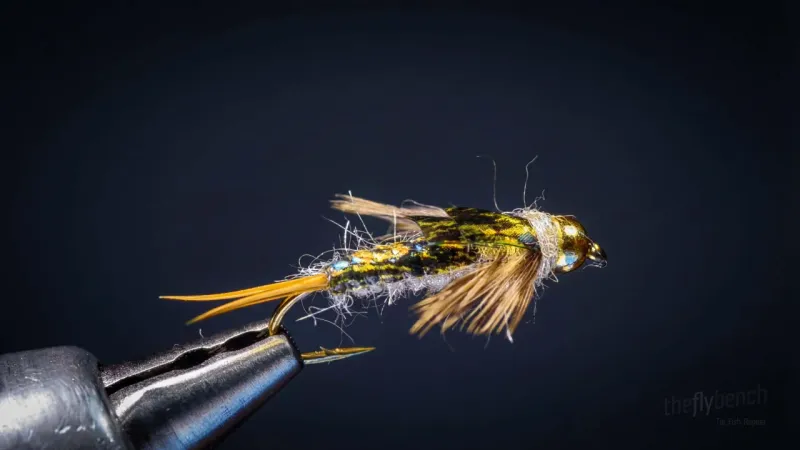
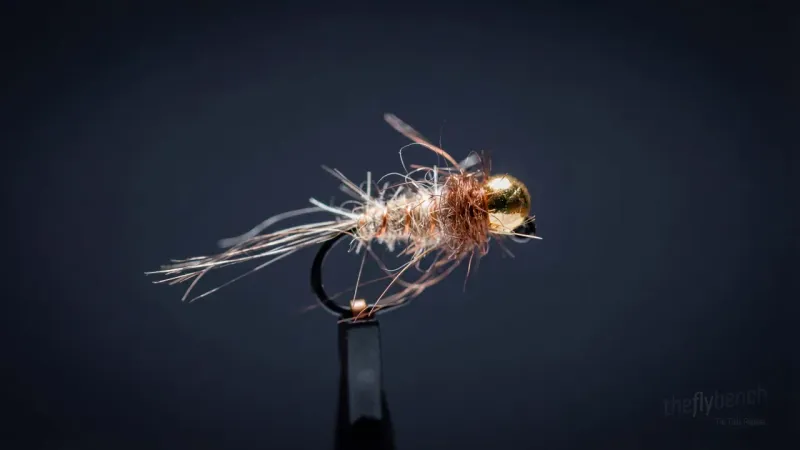
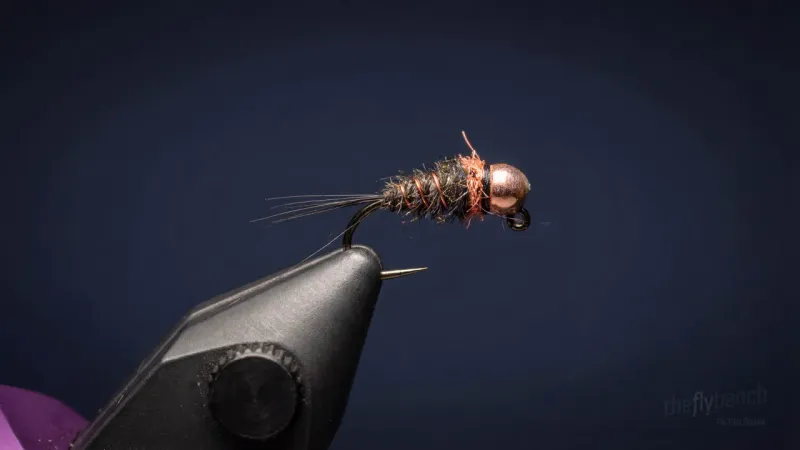
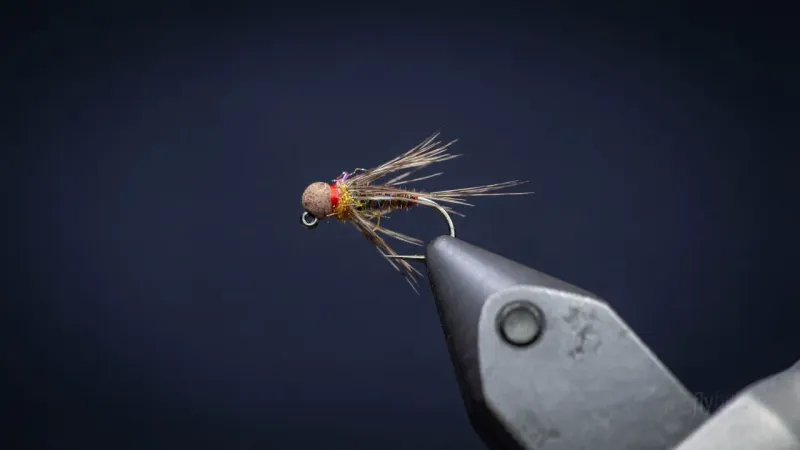
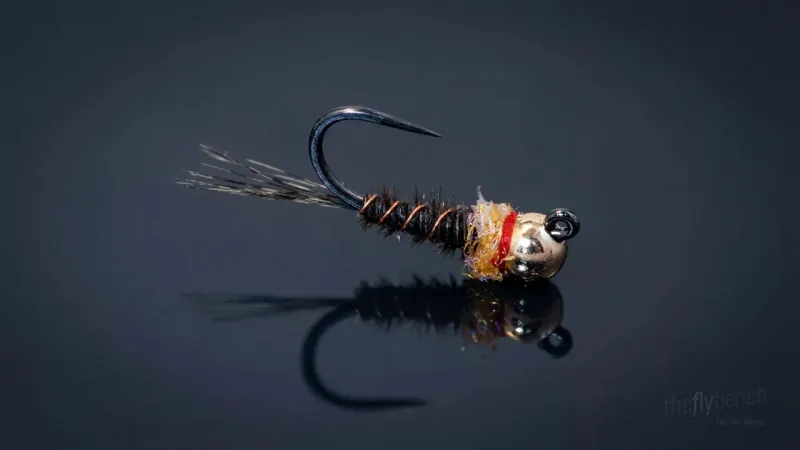
A heavily weighted euro nymph designed by Cheech that combines the classic hare's ear profile with modern competition techniques. The jig-back tungsten bead provides quick sink rates while the dubbed hare's ear body creates a buggy, natural silhouette. An excellent searching pattern for tight-line nymphing in faster currents.
Year Round
Beginner
Trout
Dec 2025
Overview
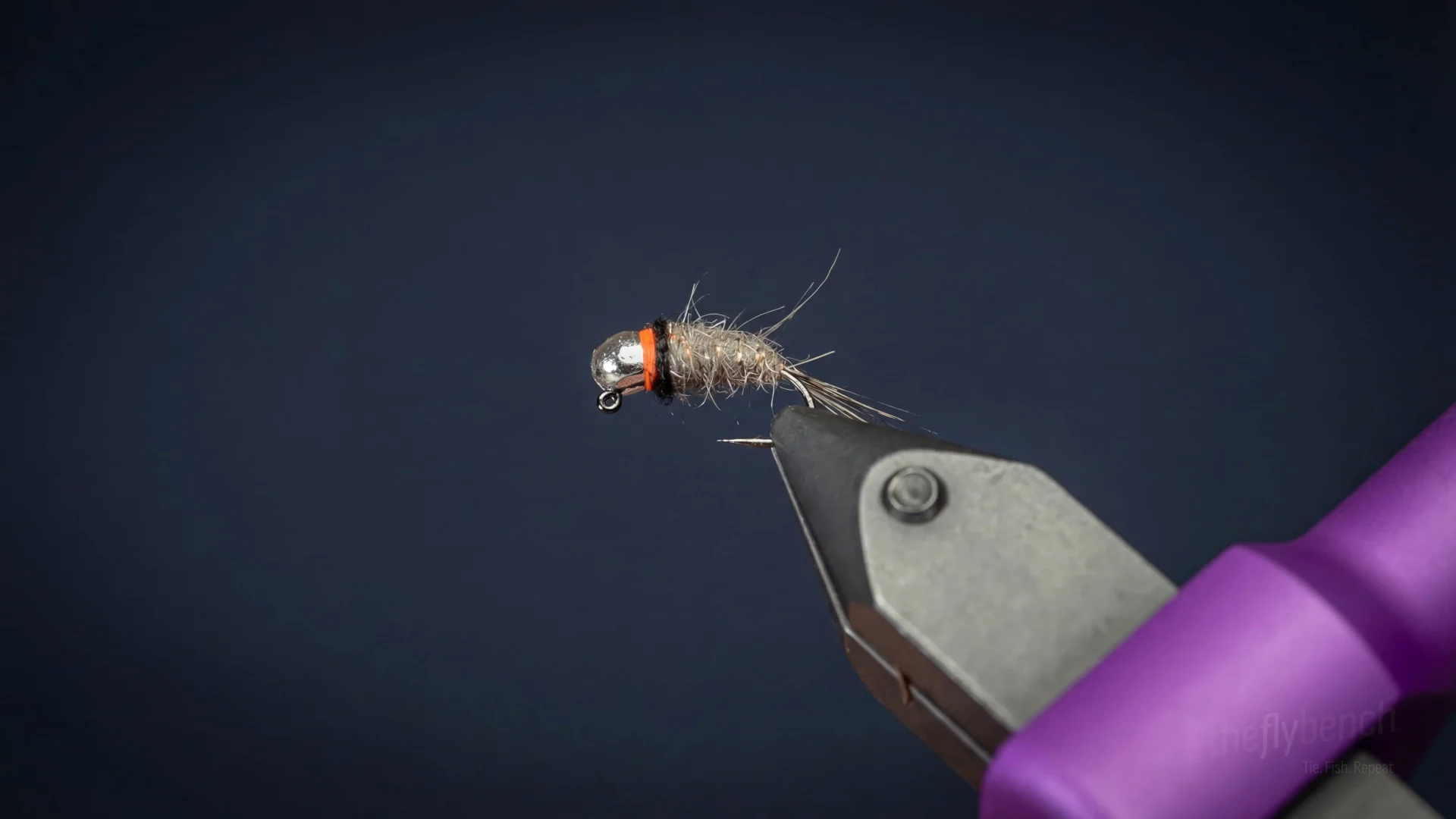
Developed by Cheech in 2021 as a modern take on the classic hare's ear nymph, optimized for European nymphing techniques. The heavy 4.0mm jig-back bead ensures the fly gets down quickly in fast water while the jig hook rides point-up to reduce snags. The fluorescent thread collar provides a subtle hot spot that can trigger strikes. Material substitutions include any natural hare's ear dubbing and standard coq de leon fibers.
Materials
Hook: Fulling Mill 5045 Jig Force Barbless Hook, #14
Thread: Semperfli Classic Waxed Thread, 12/0, Fluorescent Red
Bead: Fulling Mill Tungsten Jig Back, 4.0mm, Silver
Wire: Semperfli Tying Wire, 0.1, Copper
Tail: Whiting Coq De Leon Euro Nymph Tailing Pack, Dark Pardo
Body: Hareline Dubbin, Hare's Ear
Thorax: Hareline Dubbin, Dark Hare's Ear
Behavior & Presentation
Natural Behavior: Mayfly nymphs scrape algae from rocks creating feeding scars, with metabolic rates increasing as temperatures rise in spring and summer. Higher temperatures drive frequent feeding behavior and increased drift rates as nymphs become more active.
Where Trout Eat It: Trout hold in feeding positions along the streambed in deeper runs and pocket water, intercepting drifting nymphs.
How to Fish It: Use tight-line or euro nymphing with minimal indicator, maintaining direct contact throughout drift.
Best Water: Fish runs, riffles, and pocket water in freestone streams and tailwaters with moderate to fast currents.
Strike Type: Watch for sag in sighter, tick, or pause during drift indicating interception.
Fishing Strategy
Rigging Suggestions: Use a 9-12 foot leader with 4X or 5X tippet for euro nymphing. Fish as the point fly in a two-fly rig with a lighter pattern 18-24 inches above.
Seasonal Timing: in moving water, particularly productive during spring mayfly emergences from March through May and fall Baetis hatches in September and October. Works well in winter when trout are feeding deep on dislodged nymphs.
Pro Tips: The 4.0mm tungsten bead provides an aggressive sink rate, reaching depths of 3-4 feet quickly in moderate current. The jig hook design keeps the point riding up, reducing bottom snags while maintaining a natural drift orientation.
Entomology
Mayfly nymphs create microhabitat disturbances as they feed, scraping algae from rock surfaces and creating visible feeding scars that attract other invertebrates and subsequently fish. Their metabolic rates increase significantly as water temperatures rise in spring and summer, driving more frequent feeding behavior and higher drift rates. Trout actively search the water column for these calorie-dense invertebrates, particularly targeting the larger instars that provide the most energetic payoff per capture.
- Order
- Ephemeroptera
- Common Name
- Mayfly
- Organism Type
- insect
- Life Stage
- nymph