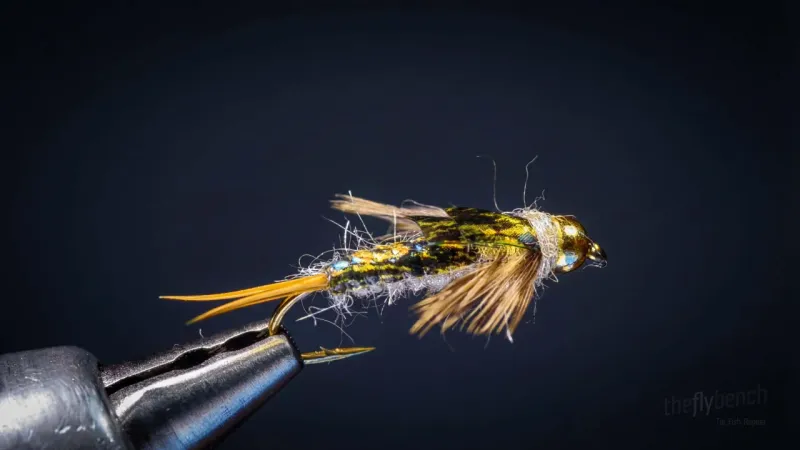
Euro NymphsPeaches and Cream Euro Nymph
A high-contrast attractor-style Euro nymph that pairs a hot spot collar with a soft, buggy body. This fly doesn't mimic one specific insect but excels as a general attractor, especially in pressured or off-colored water.
Year Round
Intermediate
Trout
Dec 2025
Overview
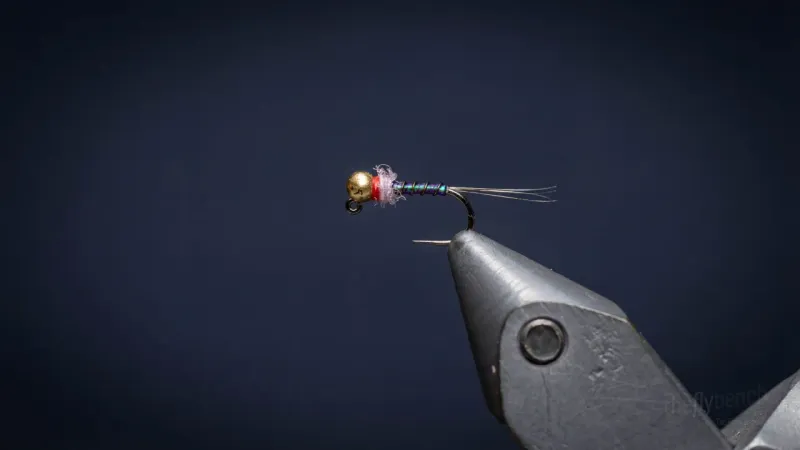
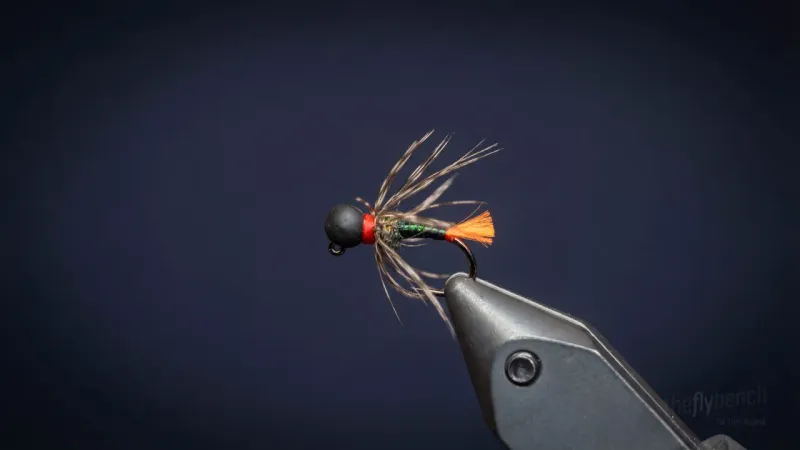
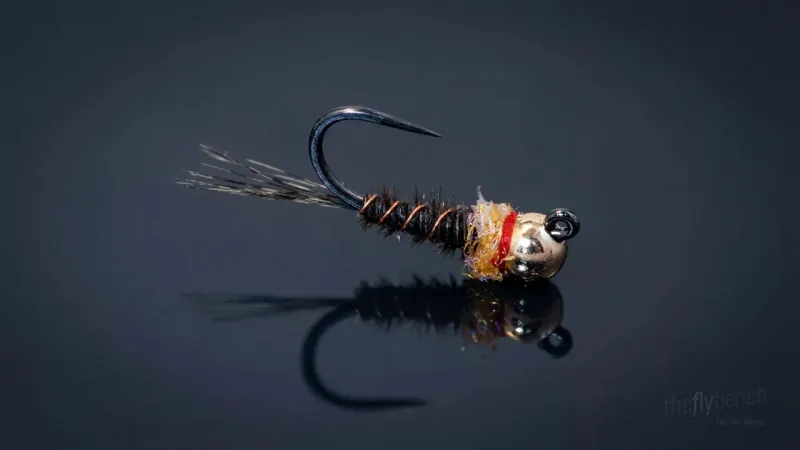
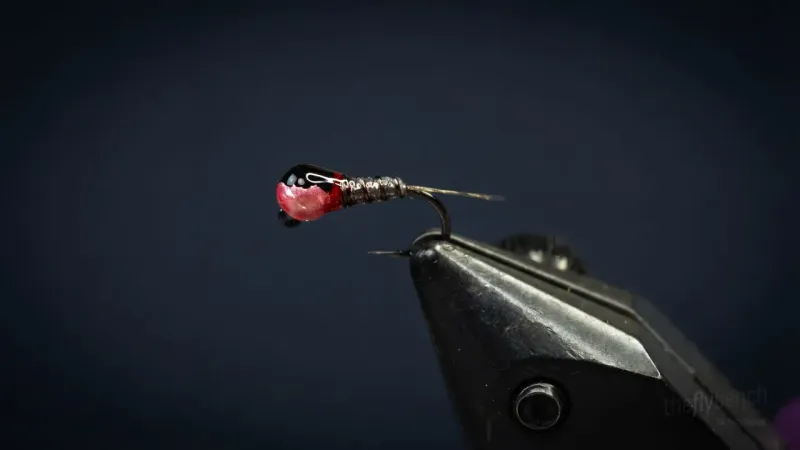
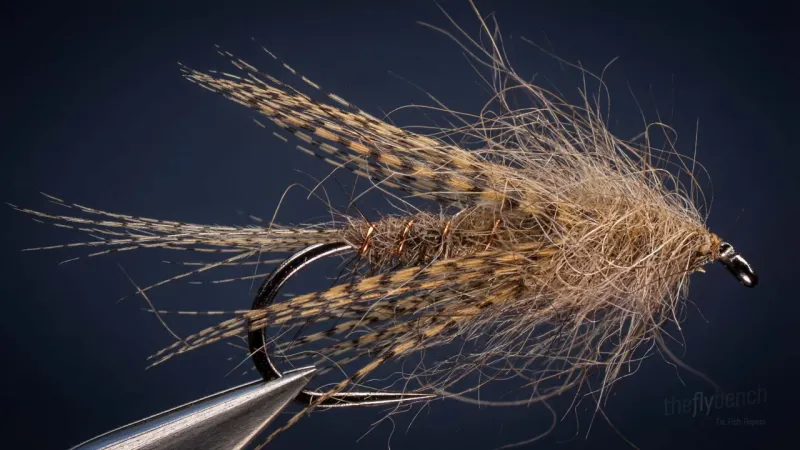
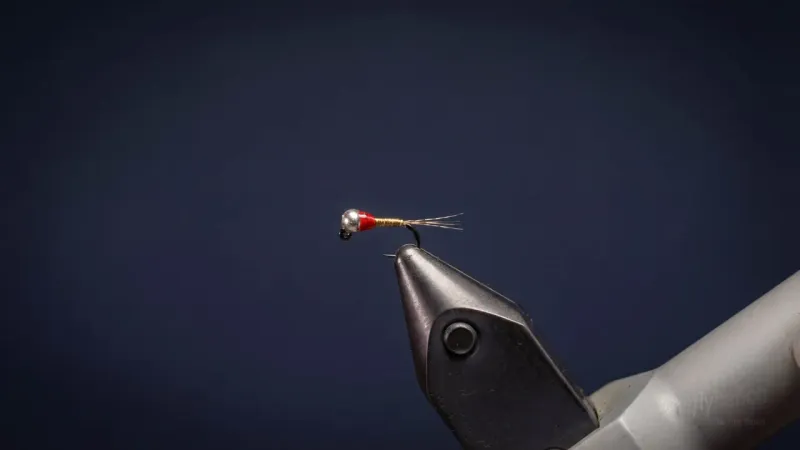
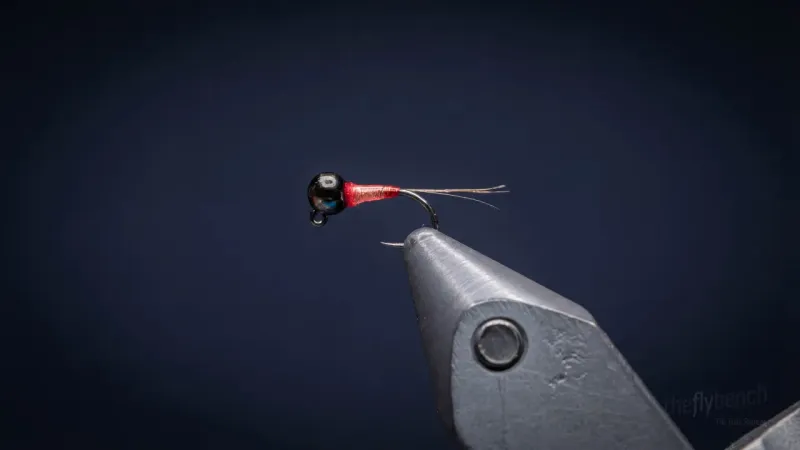
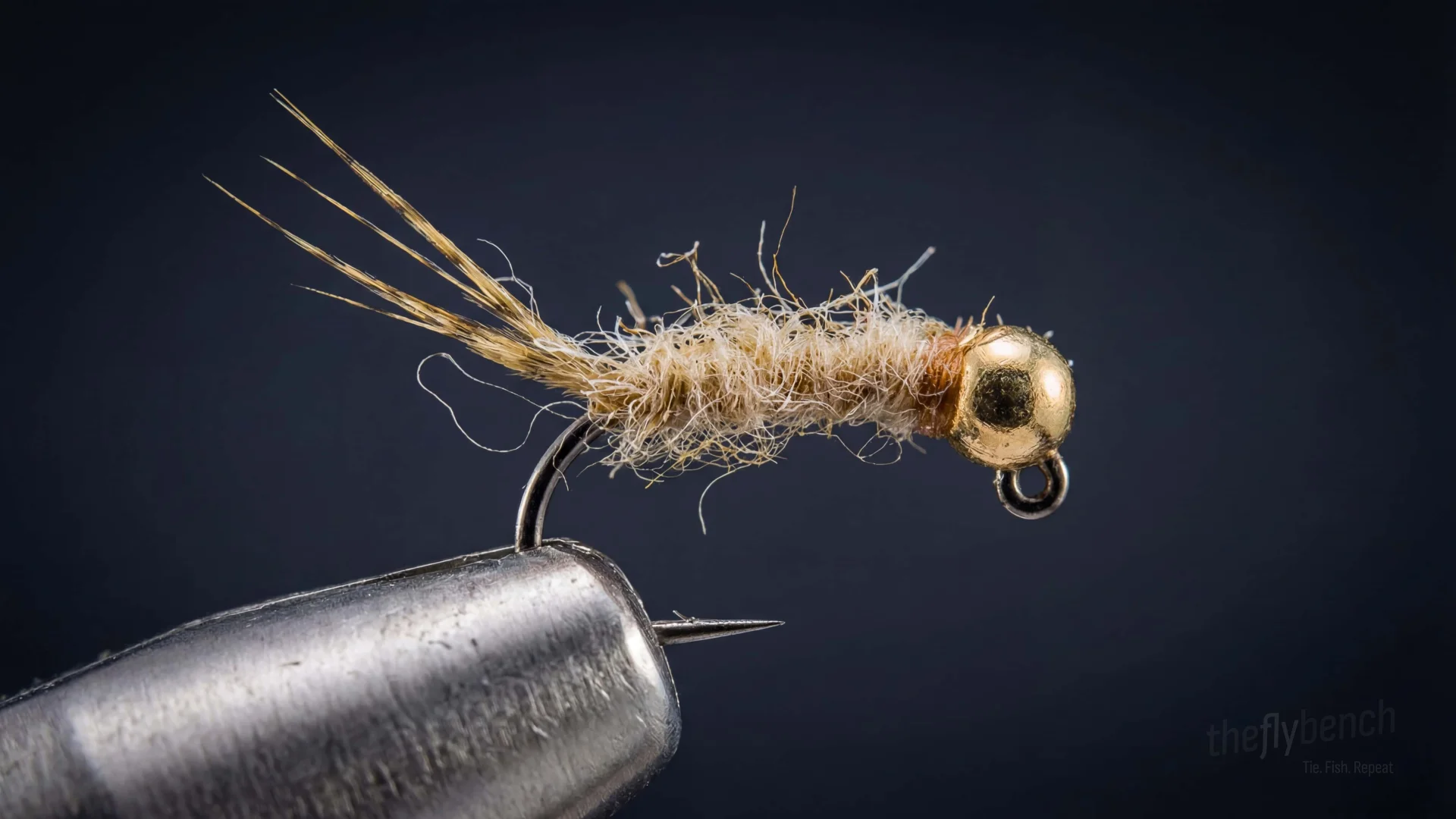
This high-contrast Euro-style nymph is tied on a barbless jig hook with a creamy dubbing body, peach or orange hotspot collar, and a slotted tungsten bead for fast sink rates. Its pale body and bright accent make it effective in both clear and stained water.
Where to Buy This Fly
We only link to fly shops we trust. Some links are referral links, which may earn us a commission at no extra cost to you.
Materials
- Hook:
- Jig hook, barbless, size 12 through 16
- Bead:
- Gold slotted tungsten
- Thread:
- Pale orange Danville 6/0 or 70 denier
- Tail:
- Lemon wood duck flank feather, 5 to 7 fibers, three-quarters of the length of the hook shank
- Rib:
- Gold wire, small diameter
- Body:
- Light Cahill Mercer's Buggy Nymph Dubbing, sparse, in a dubbing loop
Behavior & Presentation
Natural Behavior: Weighted euro nymphs plummet to bottom structure, their hot spot collars creating visual triggers as they tumble through current. The profile suggests emerging caddis or mayfly nymphs.
Where Trout Eat It: Fish hold tight to bottom in runs and pockets, watching for heavily weighted nymphs entering their zone.
How to Fish It: High-stick with short line, feeling for strikes as the fly bounces along bottom. Maintain constant contact.
Best Water: Focus on runs with depth, pockets where current concentrates food, and riffle edges.
Strike Type: Feel the fly stop or detect subtle weight as fish intercept the tumbling nymph.
Fishing Strategy
Rigging Suggestions: Fish on a 10-14 foot leader with a 5X or 6X tippet. Add a micro sighter 2-3 feet above the fly. The tungsten bead provides weight, so minimal split shot is needed.
Seasonal Timing: Effective year-round, but excels during mayfly emergences from March through May and September through November. Water temperatures from 45-60°F are ideal. Prime during pre-hatch periods when nymphs are active but not yet emerging.
Pro Tips: The light peach and cream coloration shows up well in gin-clear water. The slender profile gets down fast in pocket water. Watch for pauses or ticks in the sighter.
Entomology
Mayfly nymphs cling to rocks and vegetation in moderate to fast currents, periodically releasing their grip to drift downstream in the current. Trout actively feed on these drifting nymphs because they represent a consistent, high-protein food source that's vulnerable during drift phases, particularly during pre-hatch behavioral drift when nymphs become restless and enter the water column more frequently.
- Order
- Ephemeroptera
- Common Name
- Mayfly
- Organism Type
- insect
- Life Stage
- nymph