Dry FliesBivisible
The Bivisible is a classic dry fly that uses color contrast to create visibility for both the angler and fish. It's effective in various conditions and is a great searching pattern when fish aren't actively feeding on the surface.
Spring, Summer, Fall
Intermediate
Trout
Apr 2025
Overview
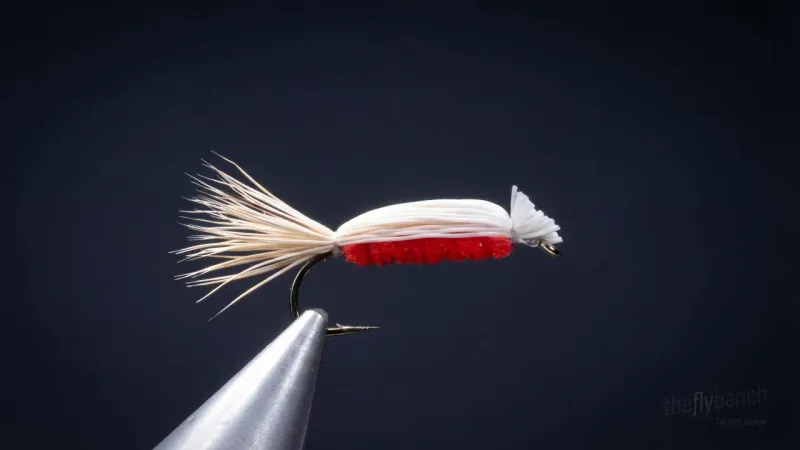
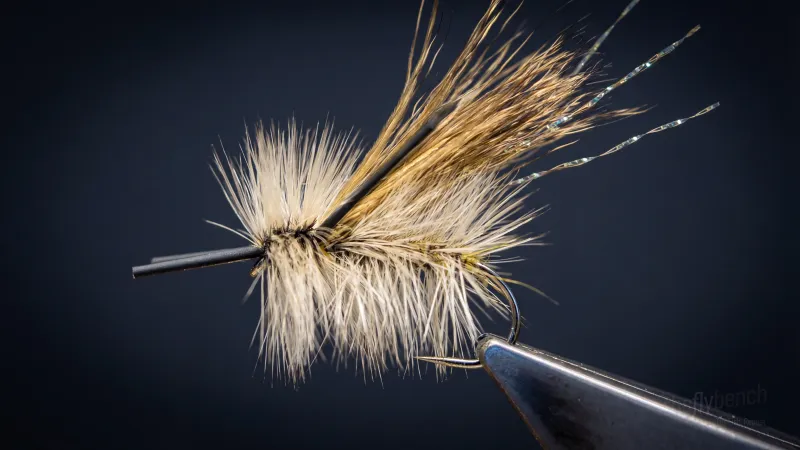
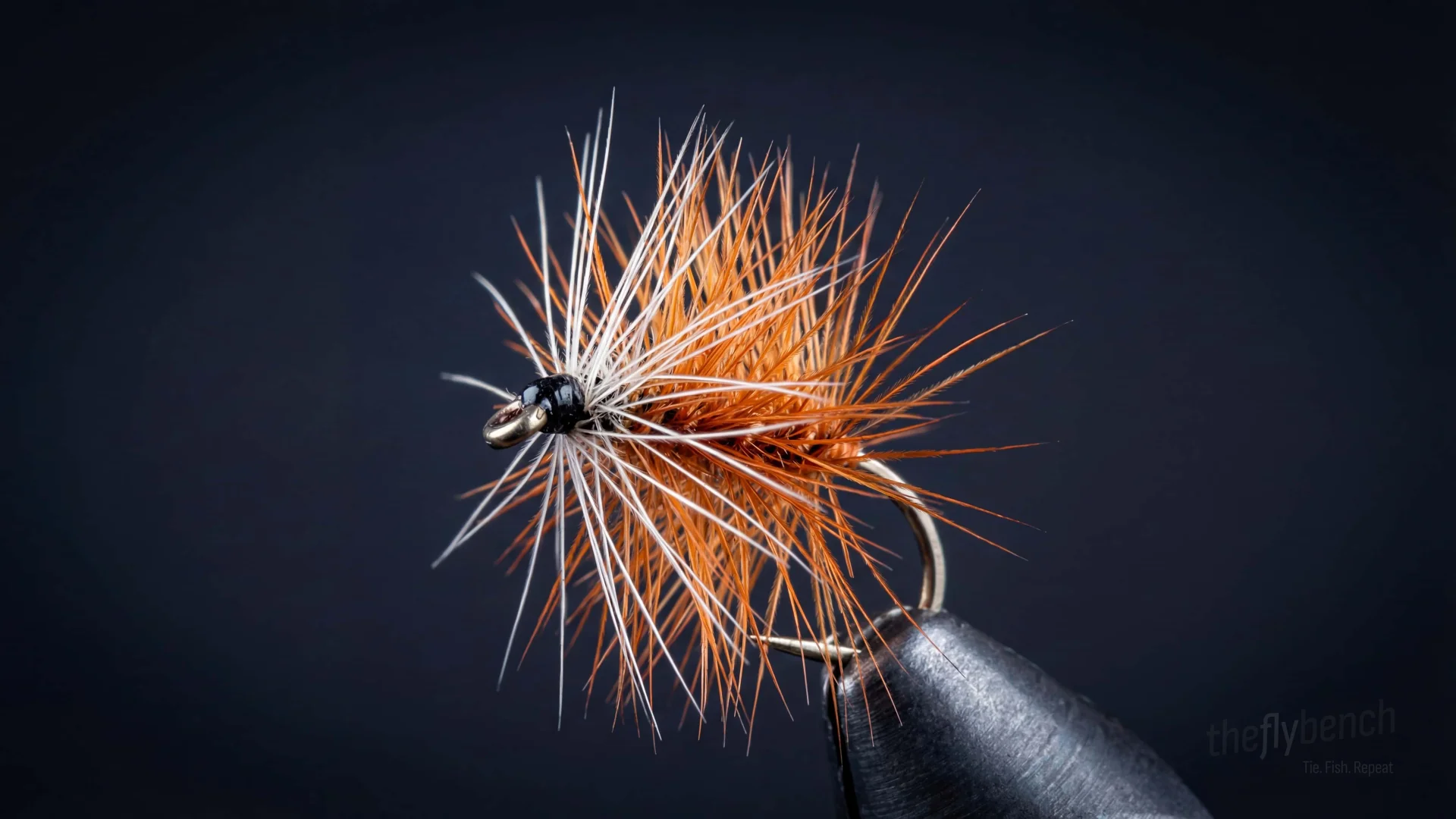
This dry fly uses two contrasting hackles—usually brown and white—wrapped together to increase visibility while maintaining a buggy appearance. Tied on a standard dry fly hook with a thread body and no wing, this pattern is simple but effective. Use high-quality dry fly hackle and avoid overcrowding the front with wraps to maintain a clean silhouette.
Materials
Hook: Daiichi 1180, size #12-#16
Thread: Black Veevus 14/0
Body: Peacock herl
Hackle: Grizzly and brown rooster hackle
Behavior & Presentation
Natural Behavior: Terrestrial insects fall or are blown from bankside vegetation onto the water, landing with varying degrees of splash. They struggle against surface tension, creating rings and vibrations that draw cruising fish near undercuts and overhanging cover.
Where Trout Eat It: Trout rise in smooth glides, seams, and along foam lines where surface insects accumulate and drift predictably in feeding lanes.
How to Fish It: Present with upstream casts and drag-free drifts, allowing the fly to float naturally on the surface. Mend as needed to maintain a dead drift through feeding lanes.
Best Water: Fish tight to banks, undercuts, and grass edges where terrestrials fall from vegetation. Target foam lines and eddies that collect surface insects.
Strike Type: Trout rise confidently to take terrestrials with splashy strikes or audible slurps as they grab the high-floating pattern.
Fishing Strategy
Rigging Suggestions: Use a standard dry fly setup with this fly. It can also be used as an indicator fly in a dry-dropper setup.
Seasonal Timing: The Bivisible is most effective from through when terrestrial insects are prevalent. This pattern is great to use when no specific hatch is happening and you're searching for feeding fish. It can also be effective during a terrestrial .
Pro Tips: The Bivisible is easy to spot due to its contrasting colors. The dense hackle helps it to float high on the water's surface.
Entomology
Terrestrial insects such as ants, beetles, grasshoppers, and caterpillars fall or are blown onto the water surface from overhanging vegetation, landing with varying degrees of disturbance. They struggle against surface tension, creating rings, dimples, and vibrations that attract cruising trout. Fish patrol near banks and undercut areas during warm summer months, actively seeking these high-protein terrestrial meals when aquatic hatches are sparse.
- Organism Type
- terrestrial
- Life Stage
- adult