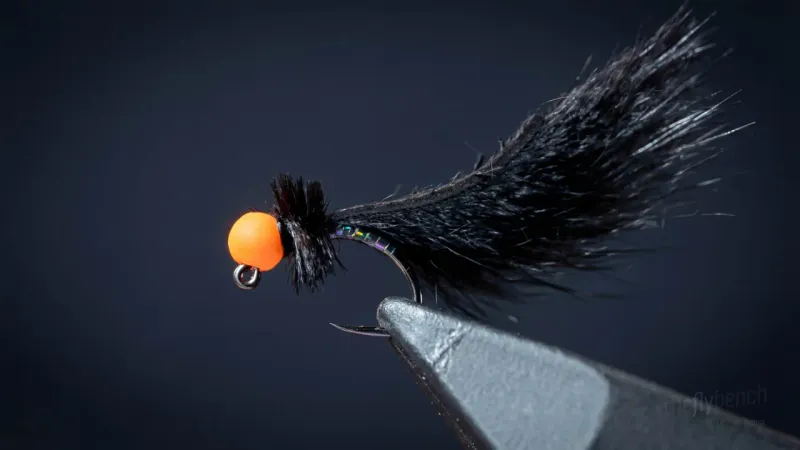
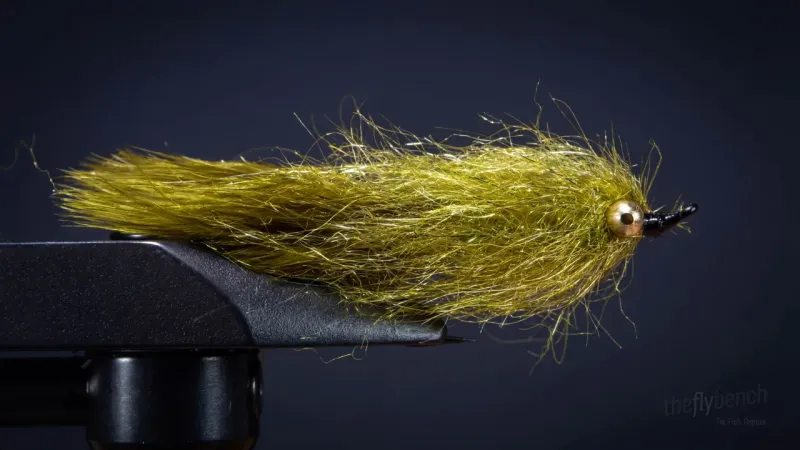
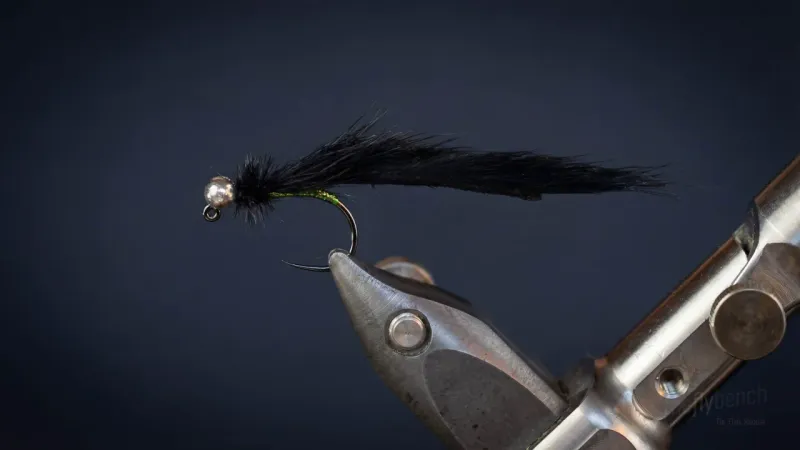
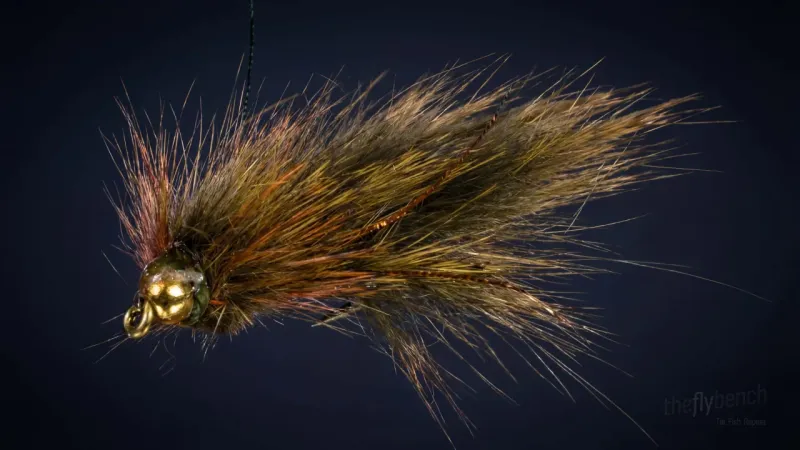
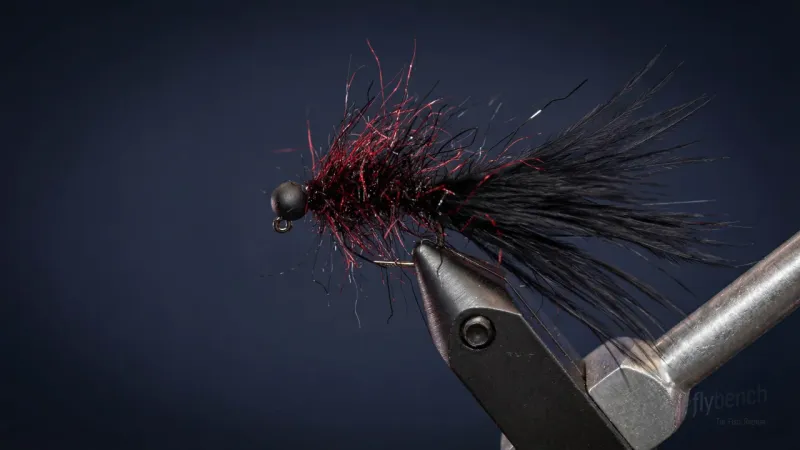
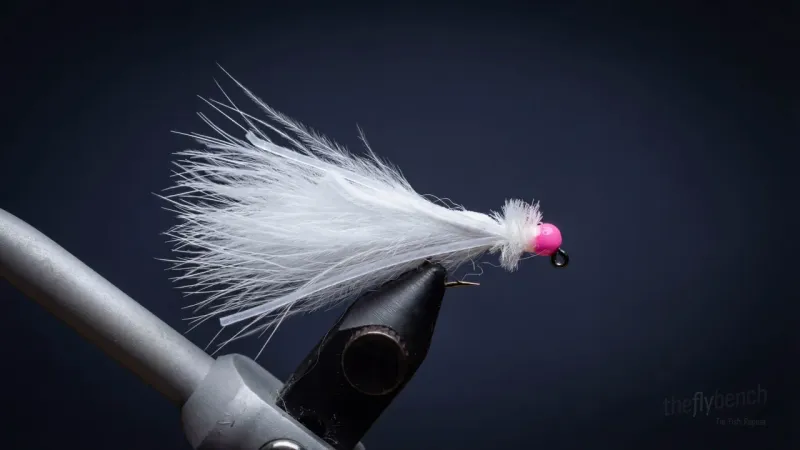
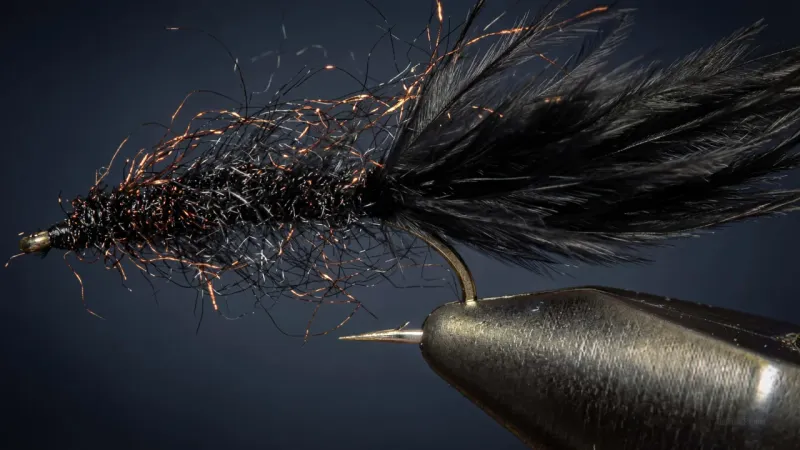
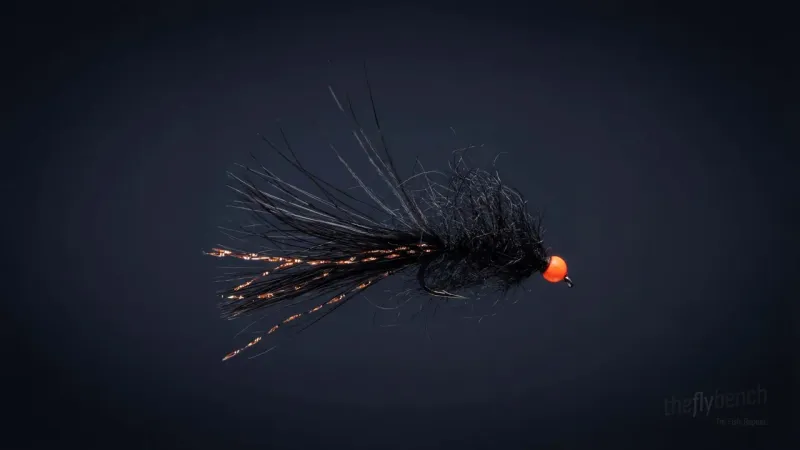
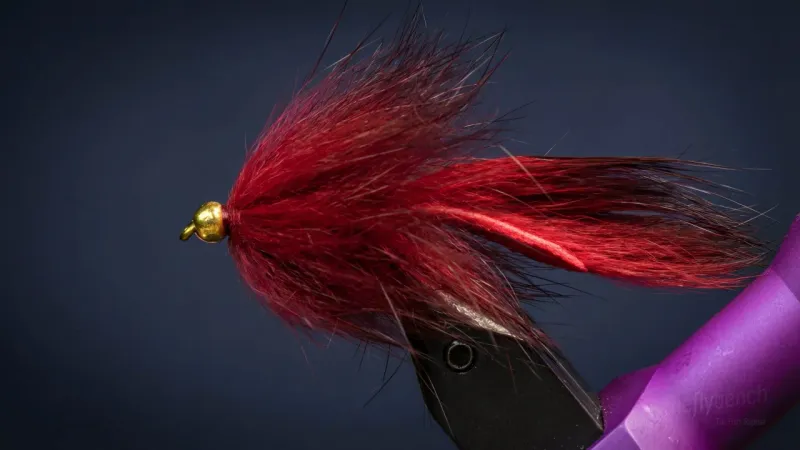
StreamersSparkle Leech Streamer
A large, flashy streamer that mimics the erratic movement of a swimming leech. Its sparkly materials reflect light, attracting the attention of predatory fish.
Year Round
Intermediate
Trout, Bass
Apr 2025
Overview
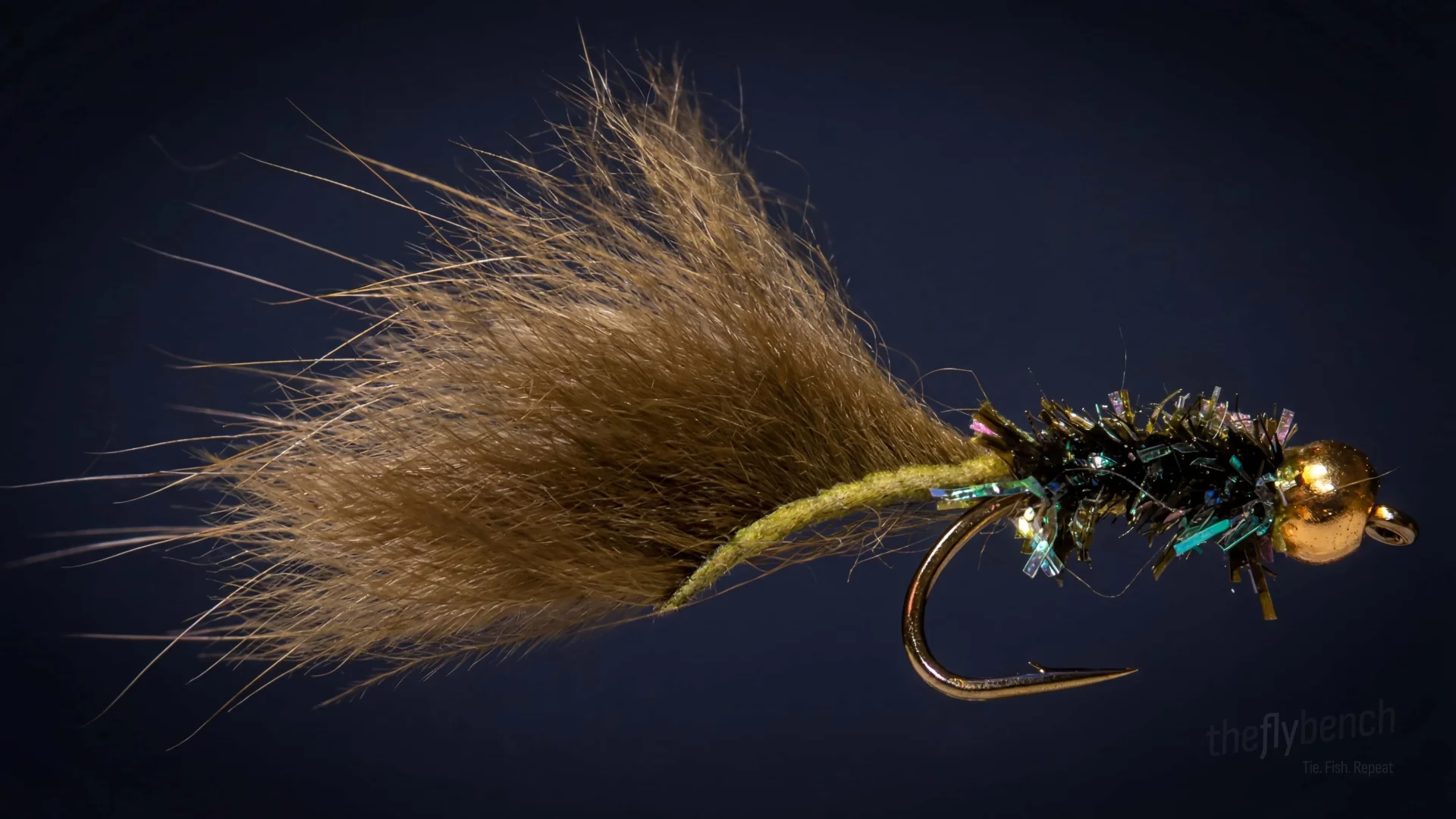
A simple leech pattern with a body of sparkly chenille or Ice Dub, a marabou tail, and sometimes a bead or conehead for weight. It's quick to tie, durable, and provides a pulsing action in stillwaters or slow rivers where leeches are active.
Where to Buy This Fly
We only link to fly shops we trust. Some links are referral links, which may earn us a commission at no extra cost to you.
Materials
- Hook:
- Straight shank streamer hook
- Weight:
- .020 non-toxic wire wrap
- Bead:
- Cyclops gold bead
- Tail:
- Sparkle leech dubbing
- Body:
- Sparkle leech dubbing
Behavior & Presentation
Natural Behavior: Leeches swim with erratic bursts of speed followed by glides, often moving toward structure or along current edges. Trout strike these baitfish aggressively because their fleeing behavior triggers predatory instincts.
Where Trout Eat It: Fish target this in stillwaters and slow rivers during dawn and dusk when leeches hunt through weed beds and along muddy bottoms.
How to Fish It: Use slow hand-twist retrieve or moderately slow stripping to imitate the sinuous, undulating motion of swimming leeches.
Best Water: Stillwater weed beds and shelf edges where leeches move between shoals and drop-offs during low-light conditions.
Strike Type: Stillwater takes feel like steady pressure building on the line during slow retrieves. Fish load the rod gradually rather than striking explosively, pulling steadily as they track the undulating leech.
Fishing Strategy
Rigging Suggestions: Use a sinking line or weighted leader to get this fly down quickly.
Seasonal Timing: especially in warmer months when leeches are most active. This fly is versatile and can be effective any time of day, but it's particularly good in low light conditions when leeches are most active.
Pro Tips: This fly sinks and is highly visible due to its size and sparkly materials.
Entomology
Leeches hunt actively during low-light periods, swimming through weed beds and along muddy bottoms with pronounced undulating movements before pausing to sense vibrations. Trout feed on leeches primarily during dawn and dusk because these nocturnal predators become most active and vulnerable during these transitions, and their substantial size provides significant caloric return for the energy invested in capture.
- Organism Type
- leech
- Life Stage
- general