

Overview
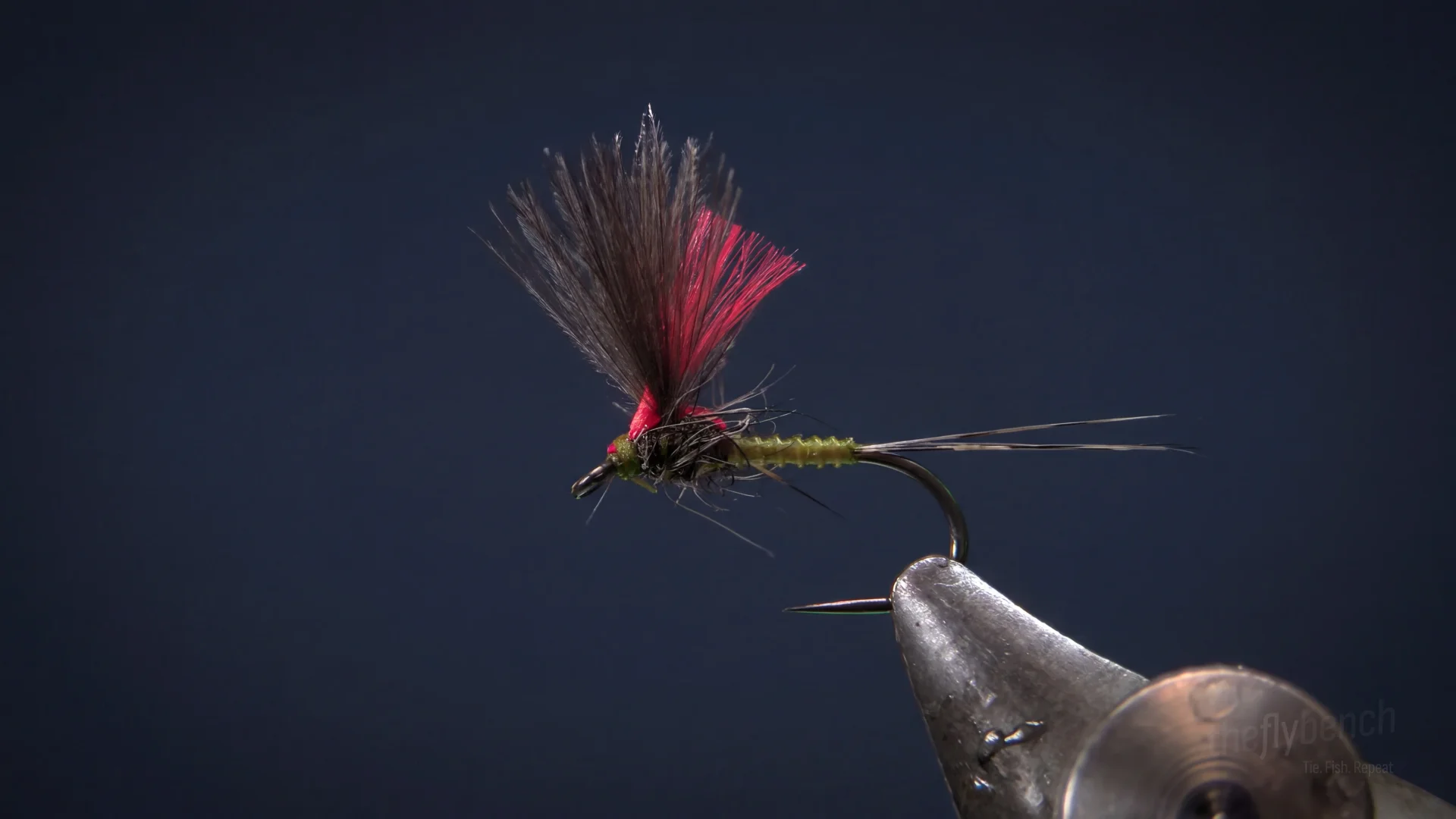
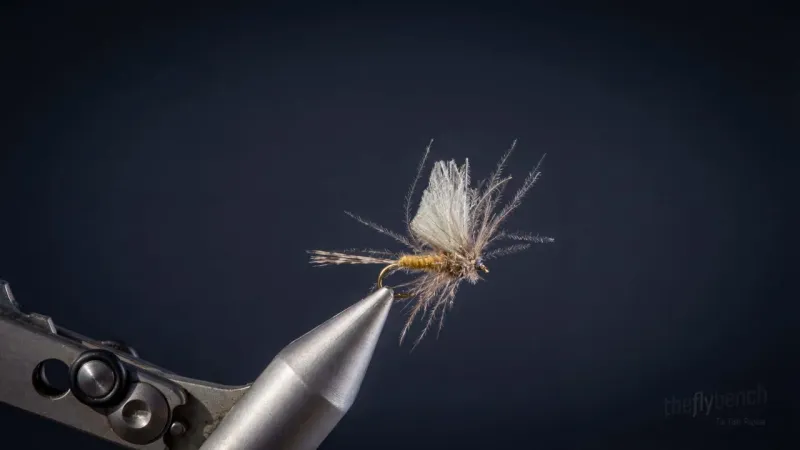
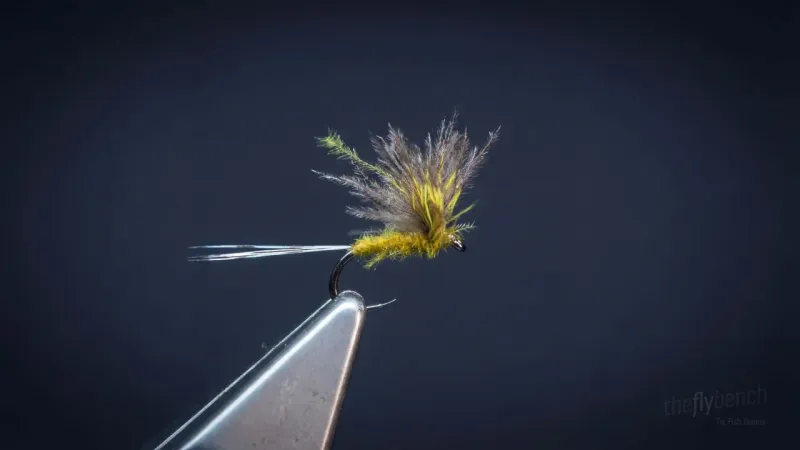
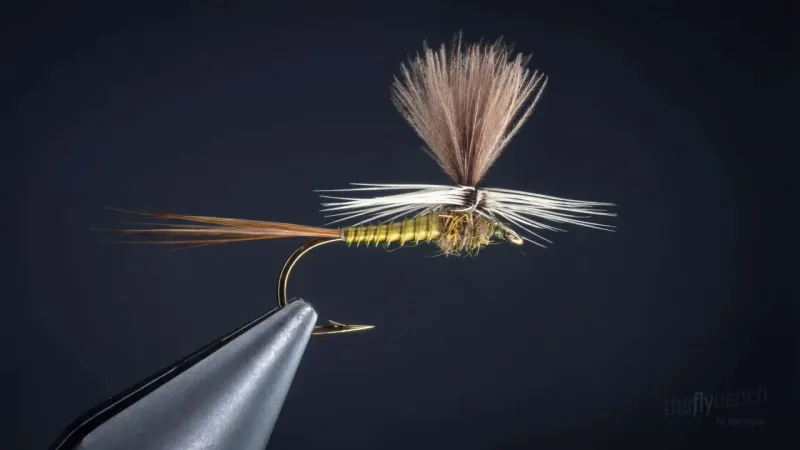
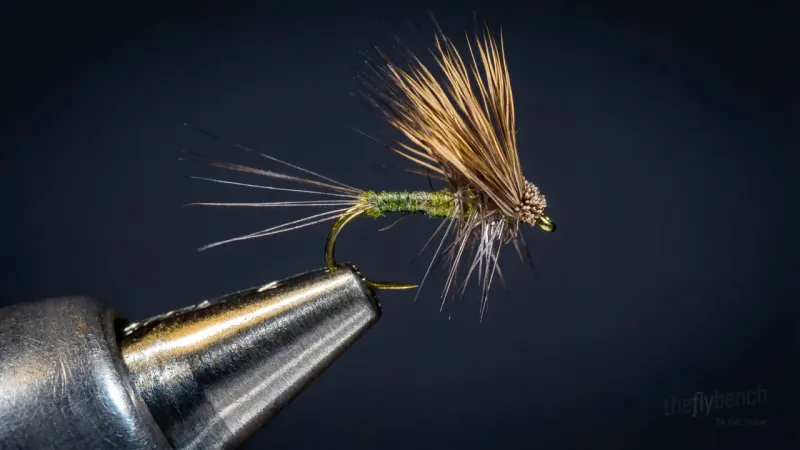
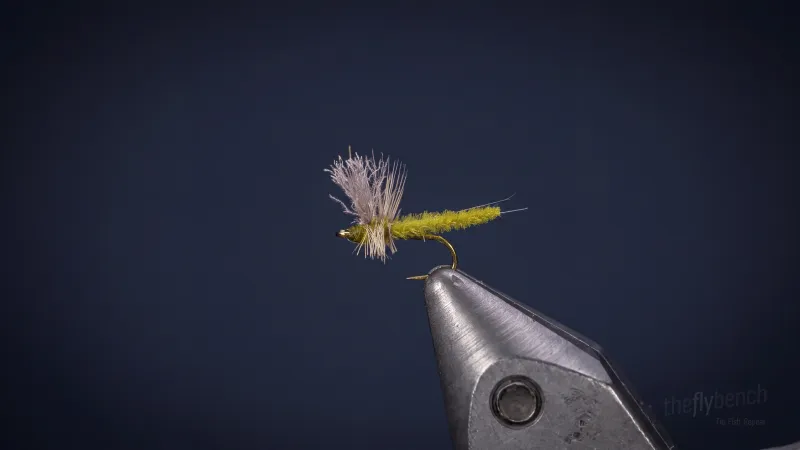
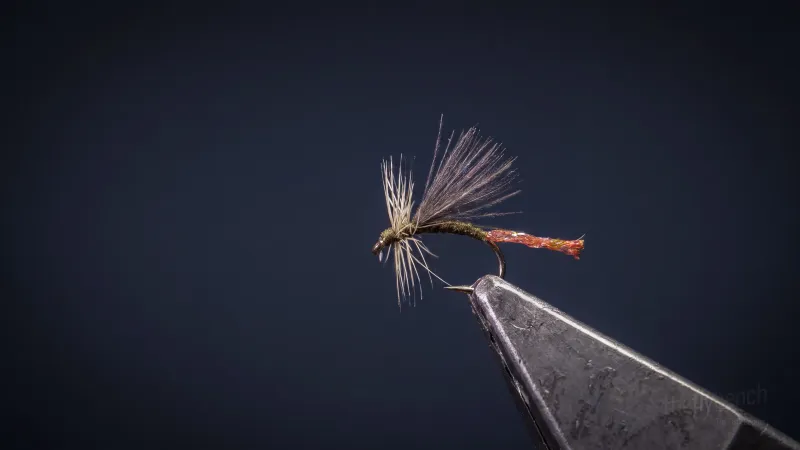
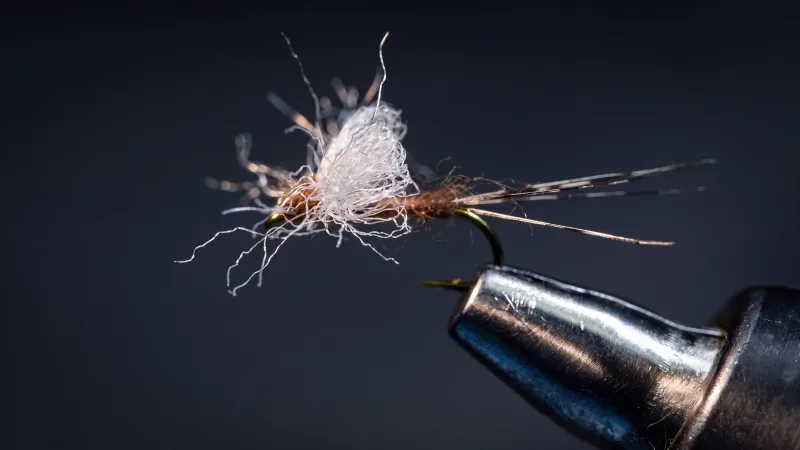
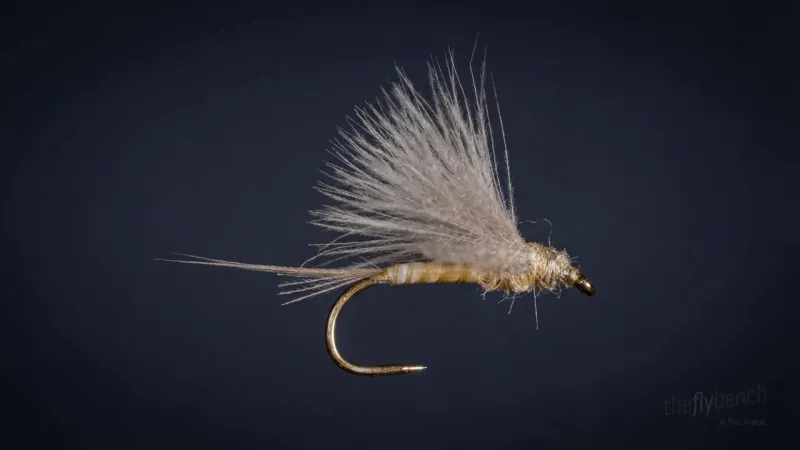
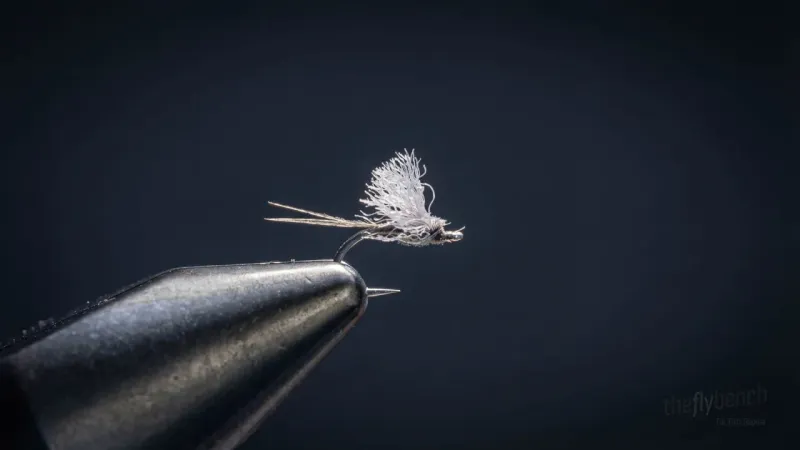
Dakota Angler & Outfitter based this tying on the silk-bodied mayflies used on Spain's technical freestone rivers. It pairs old-world materials, a Coq de Leon tail and a wrapped silk body, with a pink-red floss post that works as a sighter. Keep the silk wraps thin and flat for clean segments, and leave the CDC sparse so the fly sits in the film rather than on top of it.
Related patterns

Behavior & presentation
- Natural Behavior
- Freshly hatched Baetis duns ride the film with their small olive bodies flush to the surface, often drifting a long way on cool, overcast days before their wings dry enough to fly.
- Where Trout Eat It
- Trout hold just under the surface in slow, glassy lanes and pick off the tiny duns one at a time with steady, rhythmic rises.
- How to Fish It
- Cast slightly upstream of a rising fish on a long, fine leader and let the fly drift drag-free through its lane, watching the floss post instead of the low-riding body.
- Best Water
- Smooth tail-outs, soft seams beside riffles, foam lines along the bank and flat slicks below boulders where duns collect.
- Strike Type
- A quiet sip that makes the bright post vanish; lift the rod smoothly, since fine tippet and small hooks punish a hard set.
Fishing strategy
- Rigging Suggestions
- Fish it on a long leader, 12 feet or more, tapered to 6X or 7X so the small fly lands softly and drifts without drag. Treat the CDC with a powder floatant rather than a gel, which mats the fibers.
- Seasonal Timing
- Best during spring and fall Baetis hatches, roughly March to May and September to November, with the heaviest emergences on cool, cloudy afternoons.
- Pro Tips
- The floss post makes a size 18 or 20 dun easy to follow in glare or broken light. After each fish, rinse the fly, squeeze it dry and re-powder it to bring the CDC back.
Entomology
Baetis duns emerge in large numbers in spring and fall, often under gray skies, and drift on the surface while their wings harden. Their small size and slow drift in cool air make them easy, steady prey, so trout settle into feeding lanes and rise to them repeatedly.
- Order
- Ephemeroptera
- Family
- Baetidae
- Common name
- Blue-Winged Olive
- Organism
- insect
- Life stage
- dun
Pattern details
- Moving Water
- Europe
- dead-drift
- baetis-hatch
- low-clear-water
- freestone
- spring-creek