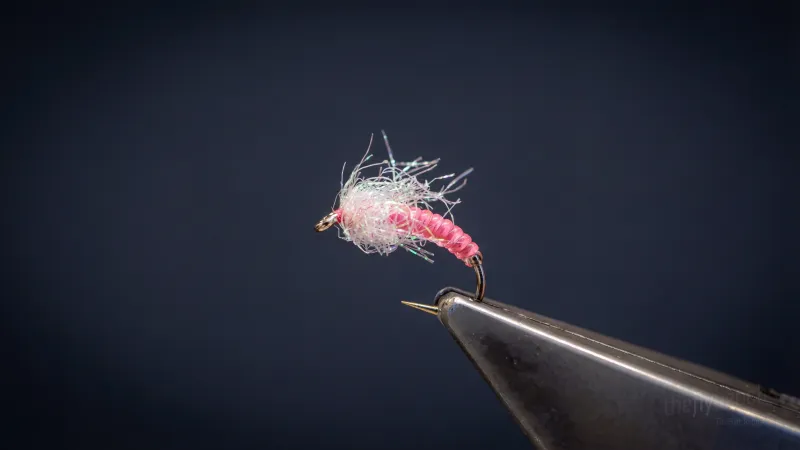
Dry FliesQuigley Cripple
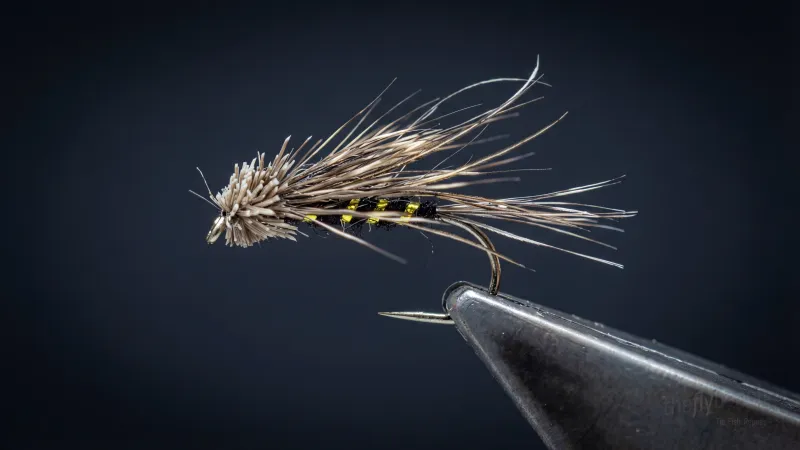
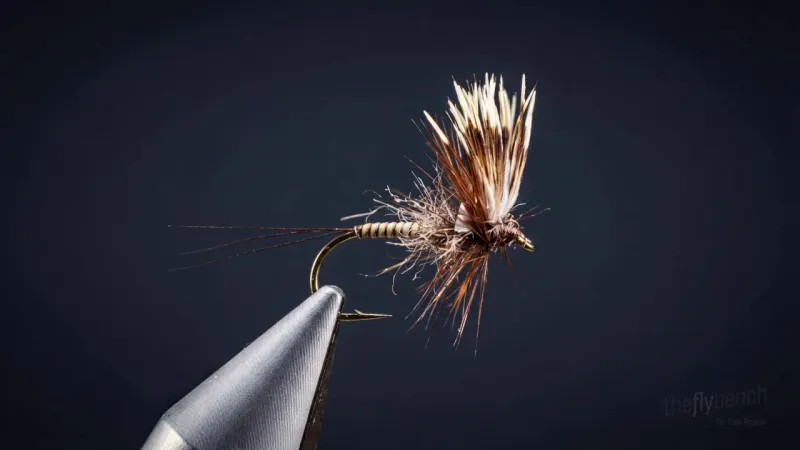
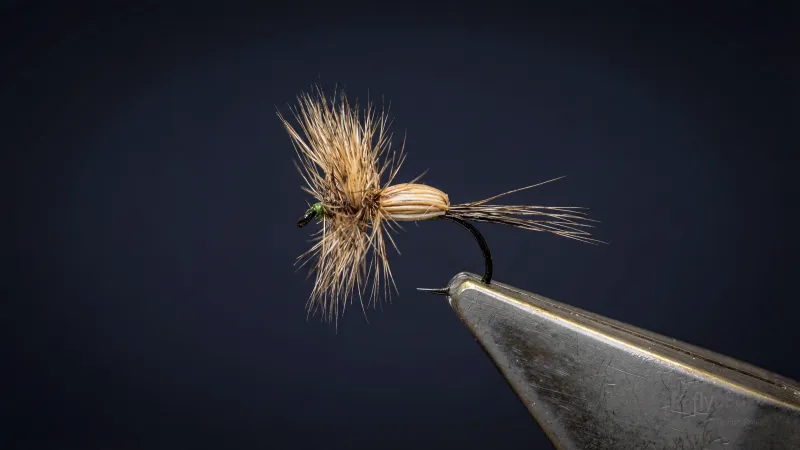
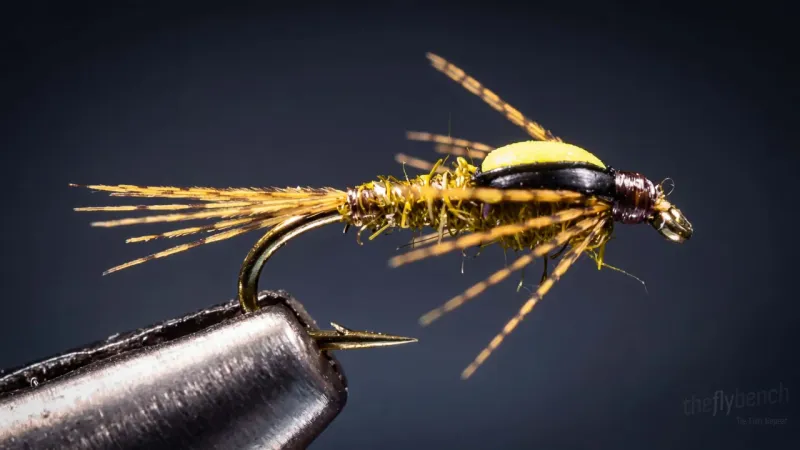
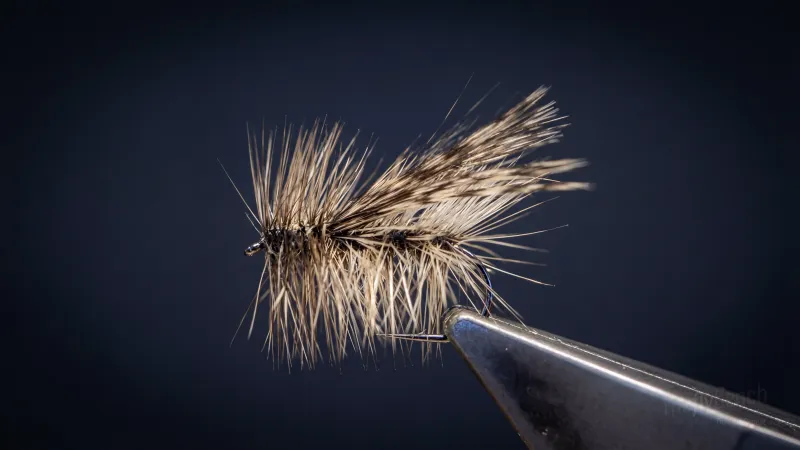
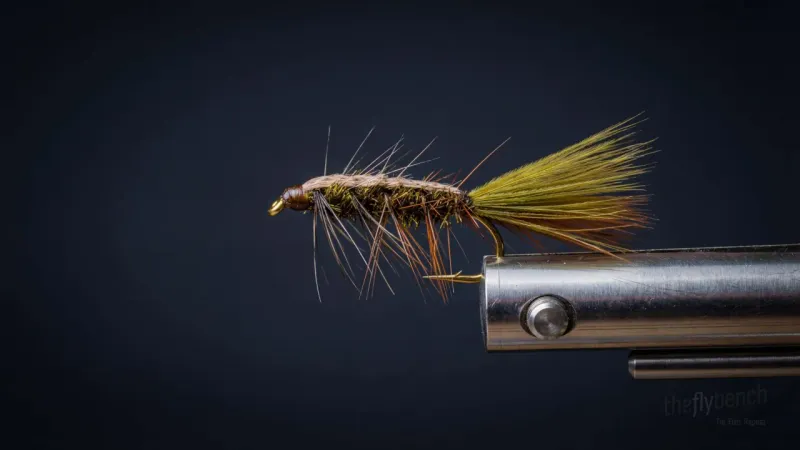
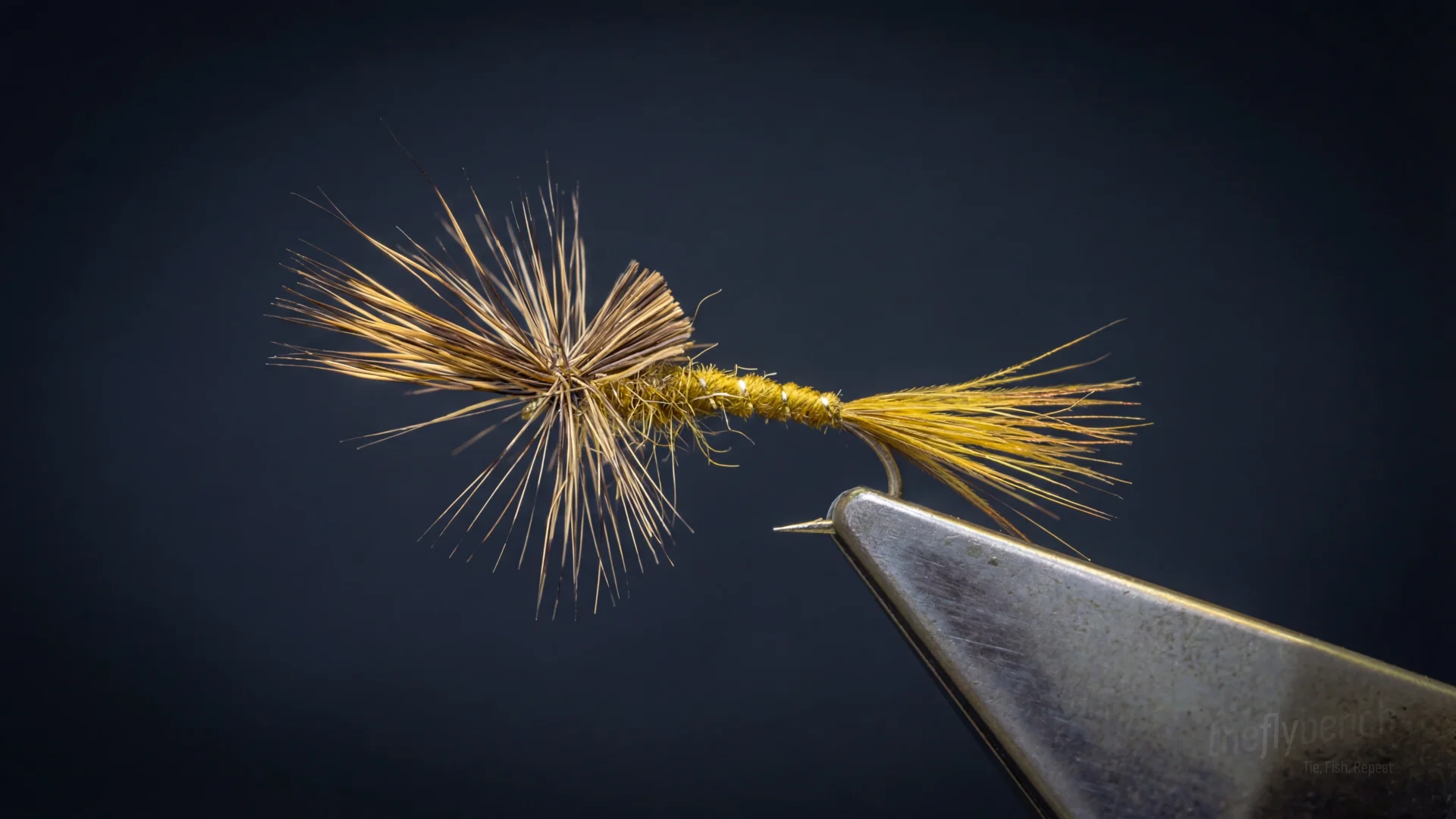
The Quigley Cripple imitates a mayfly or caddis stuck mid-emergence, its golden olive marabou shuck and abdomen trailing behind a deer hair wing that keeps the front end riding high while the rear sags into the film. Dark brown grizzly hackle and a dubbed squirrel thorax round out a fly built to look permanently, believably stuck.
Spring, Summer, Fall
Advanced
Trout
Feb 2026
Overview
This is a tribute pattern, first tied in memory of a well-known Western fly designer who died in 2012 and remains best known for this exact cripple style. The marabou shuck-and-abdomen combination gives the rear half a soft, translucent taper that mimics a nymphal skin still clinging to the emerging insect, while the deer hair wing holds the front of the fly up out of the water. It suits selective trout during a hatch when both clean duns and stuck emergers are on the water, since fish will often key on the easier, crippled insects first.
Where to Buy This Fly
We only link to fly shops we trust. Some links are referral links, which may earn us a commission at no extra cost to you.
Materials
- Hook:
- Umpqua U204 #14 (or equivalent)
- Thread:
- Benecchi 12/0, tan
- Rib:
- Wire, gold
- Shuck:
- Marabou barbs, dyed golden olive
- Abdomen:
- Marabou barbs, dyed golden olive (continuation of shuck)
- Thorax:
- Squirrel, dyed olive
- Wing/stubs:
- Deer hair
- Hackle:
- Grizzly, dyed dark brown
Behavior & Presentation
Natural Behavior: Malformed caddis struggle continuously in the film with twisted wings or incomplete emergence, unable to escape but creating persistent commotion. Their prolonged distress triggers feeding responses in cautious fish who typically avoid sudden movements but recognize truly helpless prey.
Where Trout Eat It: Productive in freestone streams with varied currents, consistent tailwaters, technical spring creeks, and lake near weed beds and drop-offs.
How to Fish It: Dead drift on the surface with an occasional subtle twitch to imitate a struggling emerger. Use a drag-free drift through feeding lanes, casting upstream and allowing the fly to drift naturally past rising fish.
Best Water: During mayfly and caddis hatches, particularly when fish are selectively feeding on emergers and cripples. Most effective in moderate to slow currents during hatch periods and as a searching pattern in riffles. Focus on drop-offs, weed edges, and shoals.
Strike Type: Trout typically rise with deliberate confidence to struggling cripples—look for steady, purposeful takes rather than tentative sips. The fly often disappears into a clean ring or head-and-tail rise as fish commit fully.
Fishing Strategy
Rigging Suggestions: Use a 9-12 foot leader tapered to 4X-5X tippet (5-6 pound test). Apply floatant to keep the fly riding in or just below the surface film.
Seasonal Timing: Most effective from April through October, with peak performance during mayfly and caddis emergences in May through September. Fish this pattern during morning and evening hatches when insects are most active.
Pro Tips: Match the size to the prevailing hatch, typically sizes 14-18 for mayflies and 14-16 for caddis. The low profile makes this pattern effective on pressured fish that refuse higher-riding dries.
Entomology
Malformed caddis struggle continuously in the film with twisted wings or incomplete emergence, unable to escape but creating persistent commotion. Their prolonged distress triggers feeding responses in cautious fish who typically avoid sudden movements but recognize truly helpless prey.
- Order
- Trichoptera
- Common Name
- Caddisfly
- Organism Type
- insect
- Life Stage
- adult