Overview
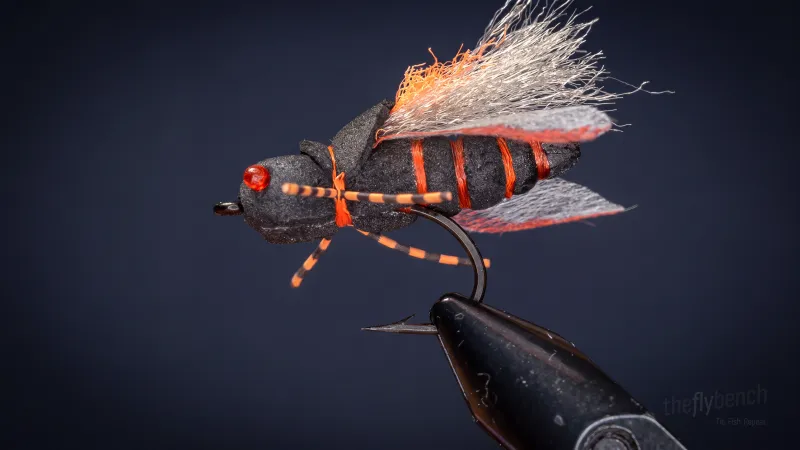
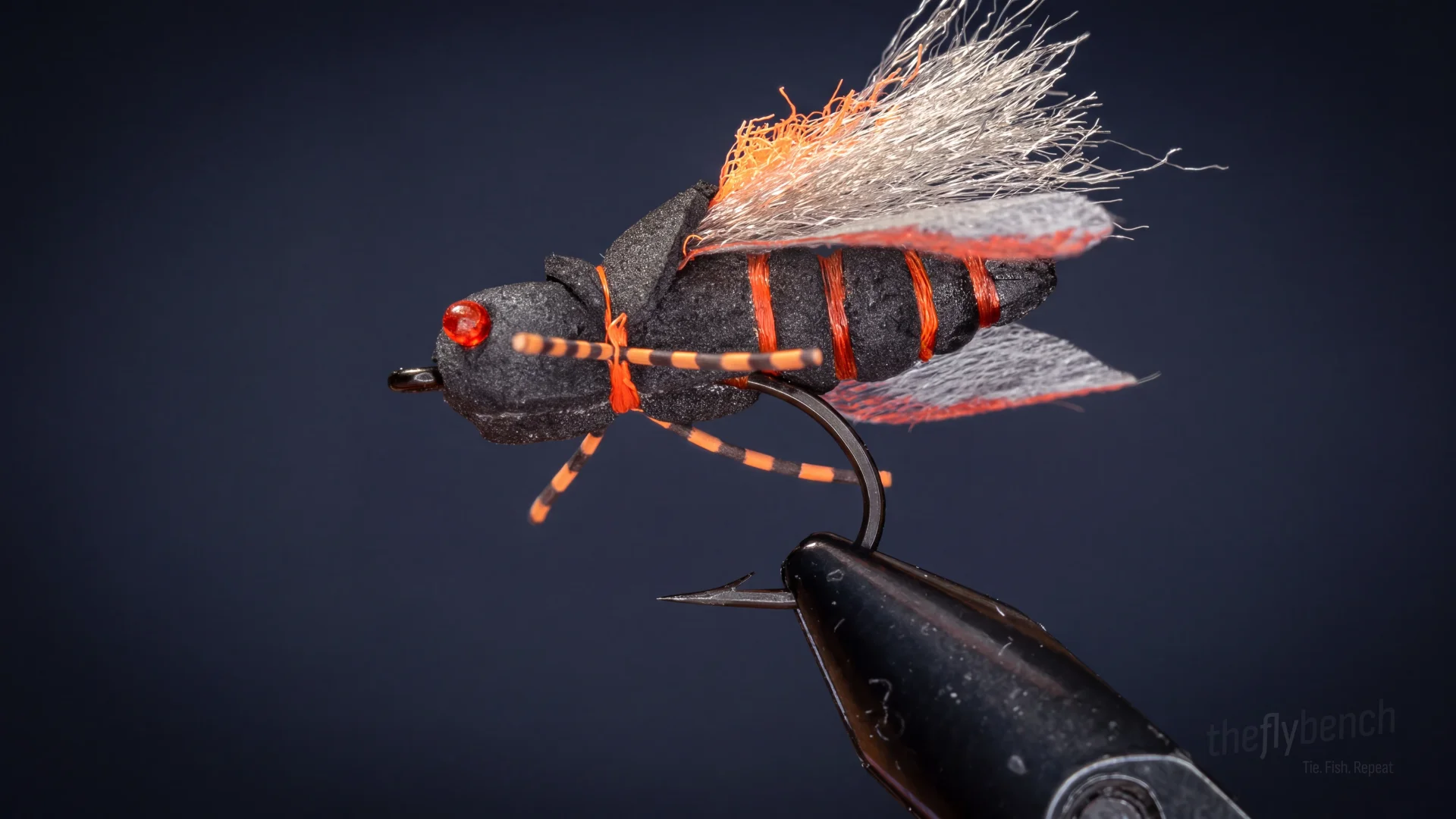
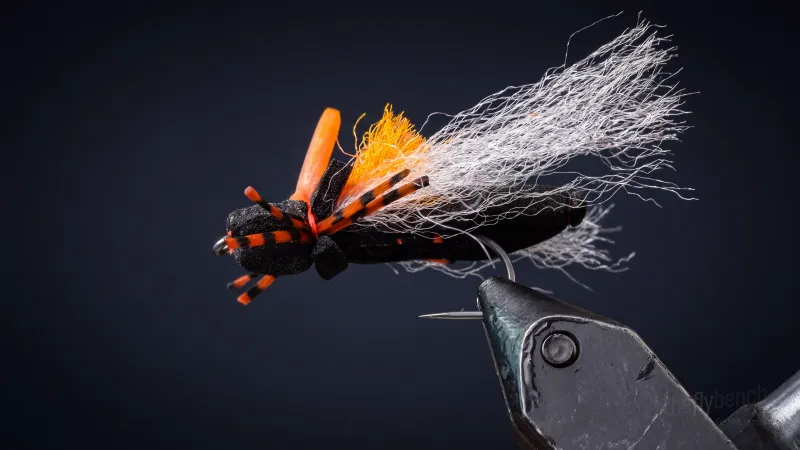
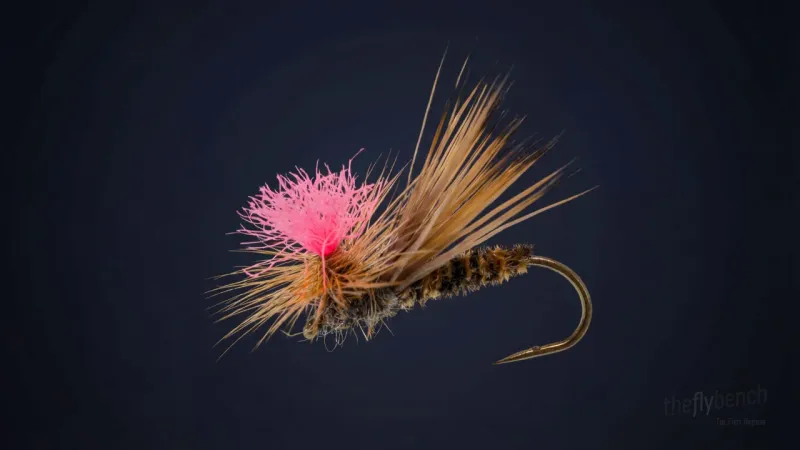
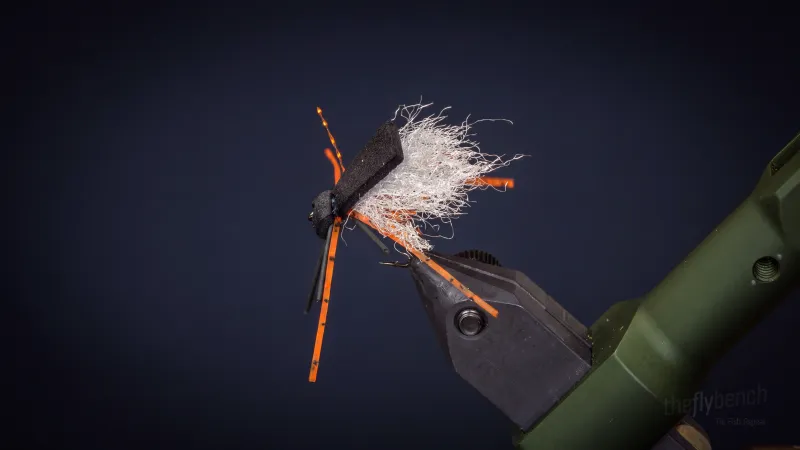
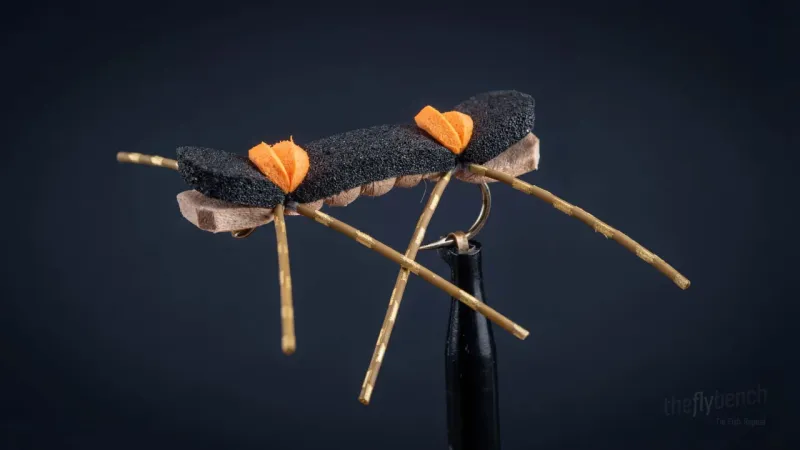
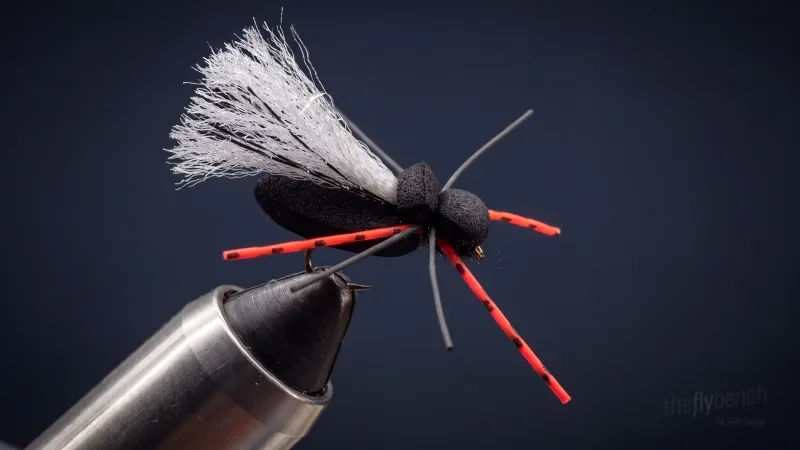
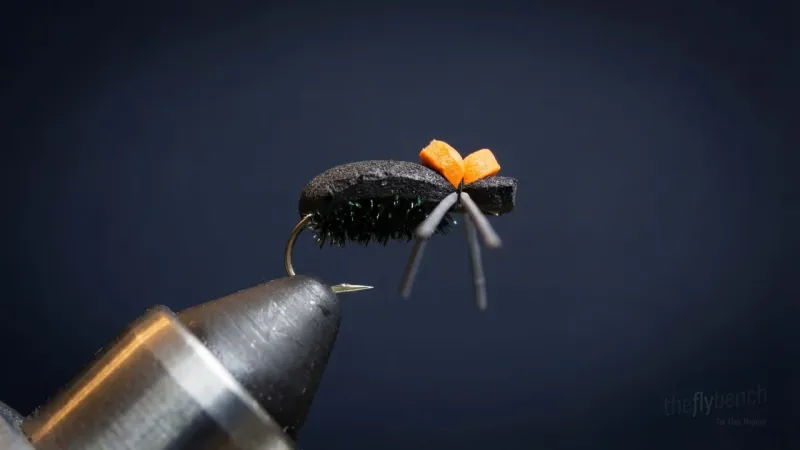
Curtis Fry built Project Cicada for Fly Fish Food from separately cut foam parts: a thick body segmented with orange thread and glued to the shank, a thin foam thorax cover, and melted 30 lb Maxima eyes. The weight is balanced so it lands upright, and the Para Post over-wing adds flotation. Fry found trout ignored a hopper but moved several feet to eat this fly, even with few naturals out. A Green River guide suggested toning down the orange.
Related patterns
Behavior & presentation
- Natural Behavior
- Adult cicadas are big, loud, poor fliers that crash onto the surface from riverside trees and brush, then sit low in the film buzzing their wings and kicking their legs.
- Where Trout Eat It
- Trout cruise canyon walls, grassy banks and lake shorelines under cottonwoods and juniper, watching for the heavy bugs that drop within a few feet of cover.
- How to Fish It
- Land the fly with a solid splat close to the bank, let the rings fade, then give one short twitch to kick the legs before letting it drift drag-free along the edge.
- Best Water
- Undercut banks, foam lines against cliff faces, eddies beneath overhanging limbs, and wind-blown points where fallen insects collect.
- Strike Type
- Trout often travel several feet to the fly and may swipe and miss before circling back; wait for a full, slow eat and let the fish turn down before you set.
Fishing strategy
- Rigging Suggestions
- A 7.5 to 9 foot leader to 2X or 3X tippet turns over the size 4 foam body and handles big fish near rocks and wood. The body floats well enough to carry a beadhead nymph 2 to 3 feet below.
- Seasonal Timing
- Summer, timed to local cicada activity, though the fly can still draw trout up when only a few naturals are around. Hot, breezy afternoons are best.
- Pro Tips
- If a fish misses, leave the fly on the water a few seconds, since trout often come back for a second try. Where fish are wary, swap the orange over-wing for gray or trim the legs down.
Entomology
Adult cicadas emerge in summer and fly clumsily between trees and shrubs, often dropping or being blown onto the water. On the surface they struggle and buzz but rarely lift off, giving trout a large, high-calorie meal.
- Order
- Hemiptera
- Family
- Cicadidae
- Common name
- Cicada
- Organism
- terrestrial
- Life stage
- adult
Pattern details
- Moving Water
- Stillwater
- Rocky Mountain
- dead-drift
- hopper-season
- modern
- dry-dropper