



Overview
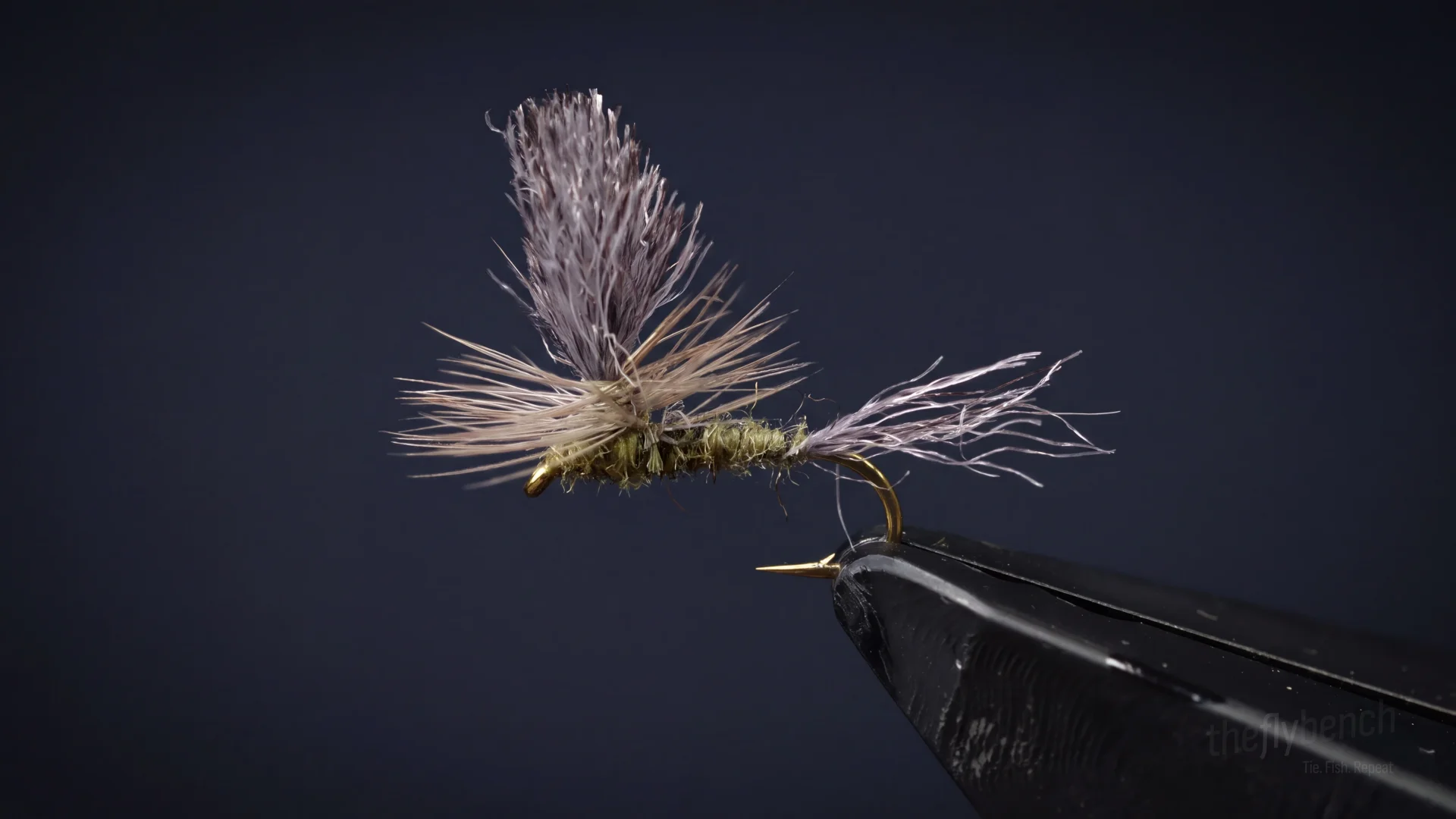
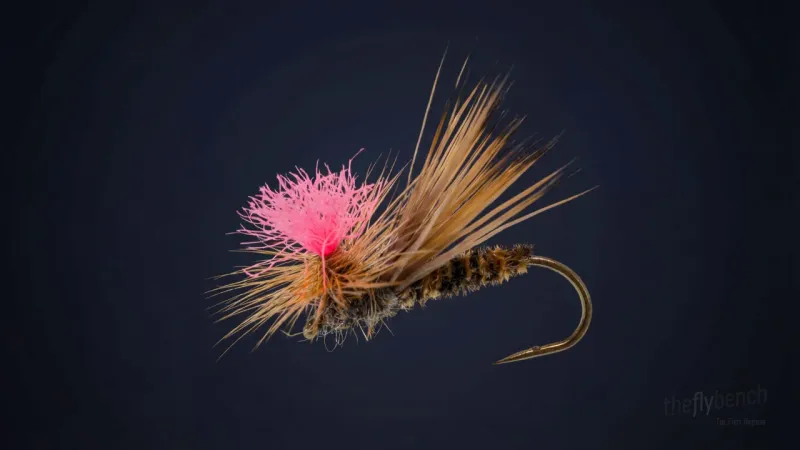
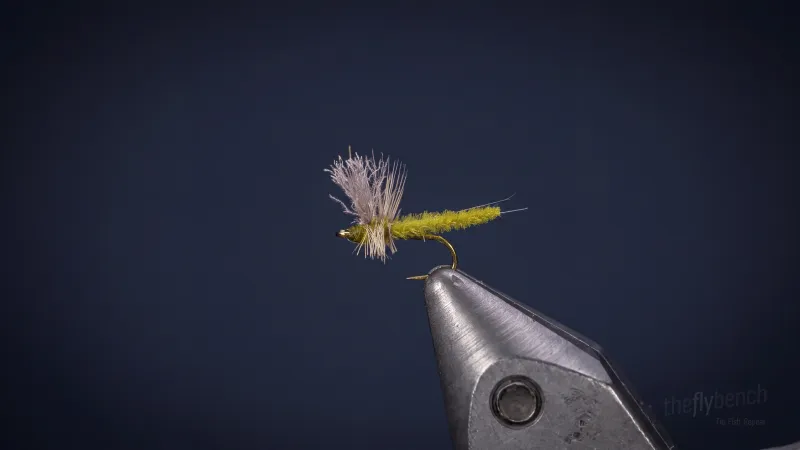
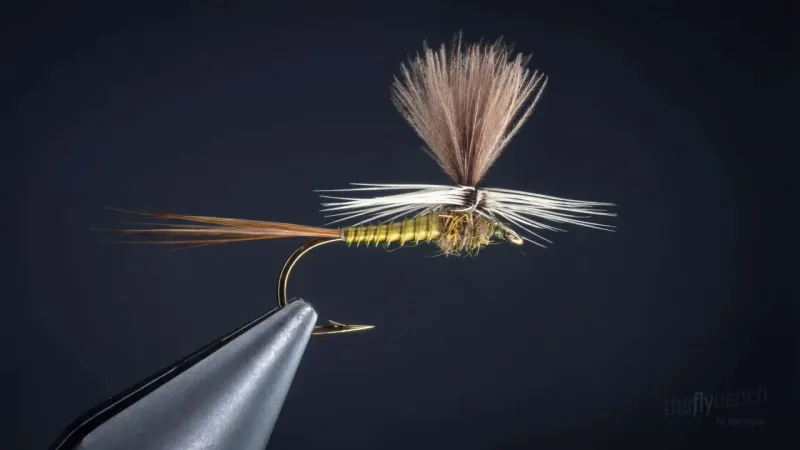
Cheech of Fly Fish Food published this pattern in 2026 as a next step for tiers ready to learn the parachute post. A single clump of EP Fibers covers both the tail and the post, so there are only three working materials. Keep the dubbing thin on the abdomen and build a slightly fuller thorax around the post before wrapping the hackle down.
Related patterns
Behavior & presentation
- Natural Behavior
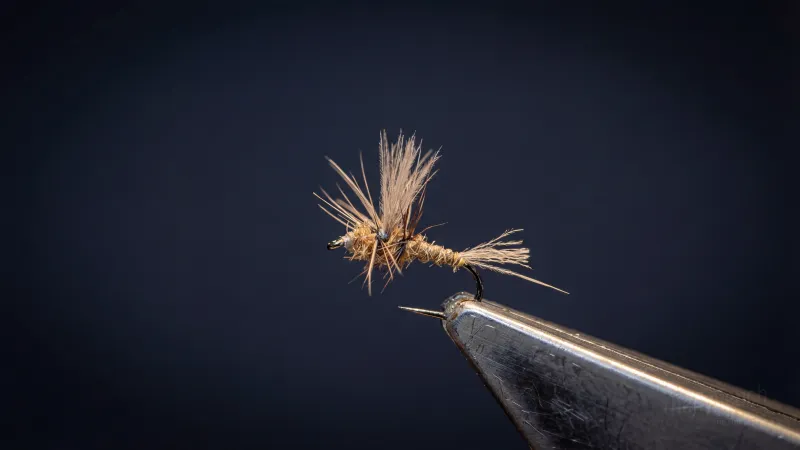
- Baetis duns ride the surface for a long stretch on cold, gray days, their small upright wings drying slowly while the current carries them downstream.
- Where Trout Eat It
- Fish hold just under the surface in slow, even currents and pick off duns one after another as the hatch builds through midday.
- How to Fish It
- Cast a short distance above a rising fish with a reach mend so the fly reaches it ahead of the leader, and keep the drift free of drag.
- Best Water
- Flat glides, soft seams beside faster current, foam lines along the bank and the slick water of a tail-out.
- Strike Type
- A quiet sip that leaves a small ring; wait for the head to go down before lifting, since a fast set pulls the size 18 hook away.
Fishing strategy
- Rigging Suggestions
- Fish it on a 9 to 12 foot leader tapered to 5X or 6X. Treat the post and hackle with floatant and leave the body untreated so it sits low in the film. It also works as the lead fly with a small Baetis nymph or emerger trailed 18 inches behind.
- Seasonal Timing
- Best from March through May and again from September through November, with the strongest hatches on overcast, drizzly afternoons. Tailwaters can produce olive hatches through the winter.
- Pro Tips
- The light EP Fibers post stays easy to see in glare, which helps with such a small fly. Carry a few in sizes 20 and 22 for late-season hatches when the naturals run smaller.
Entomology
Blue-Winged Olive duns emerge in large numbers on cool, overcast days in spring and fall, often when little else is hatching. Cold, damp air slows the drying of their wings, so they drift on the surface for a long time before flying off. Trout settle into steady feeding lanes and take them with small, regular rises.
- Order
- Ephemeroptera
- Family
- Baetidae
- Common name
- Blue-Winged Olive
- Organism
- insect
- Life stage
- dun
Pattern details
- Moving Water
- Rocky Mountain
- dead-drift
- baetis-hatch
- parachute-family
- beginner-friendly
- modern