

Overview
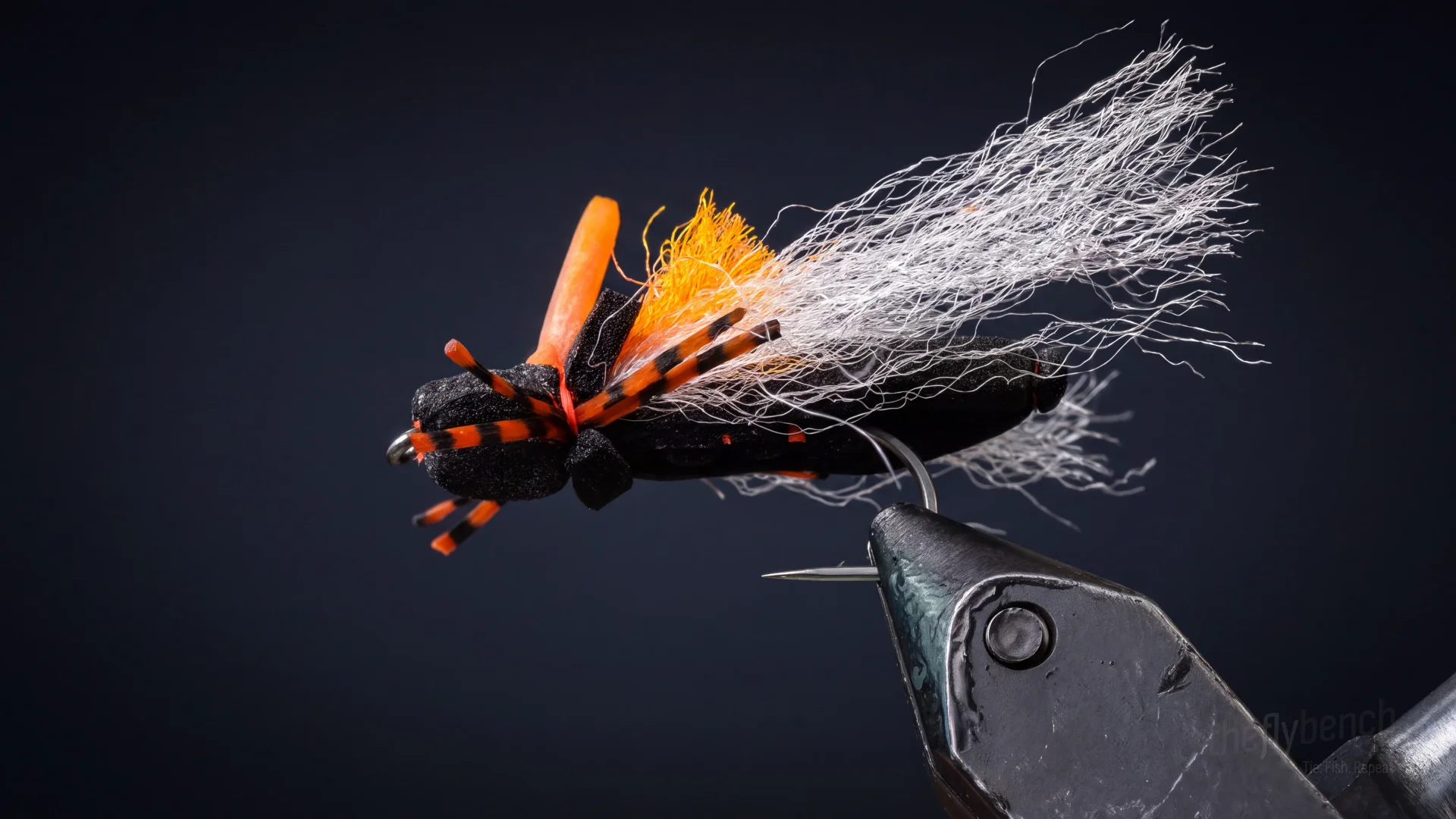
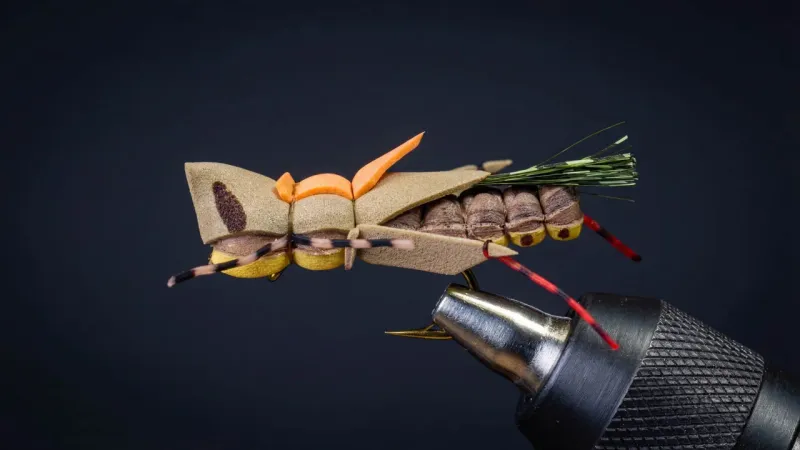
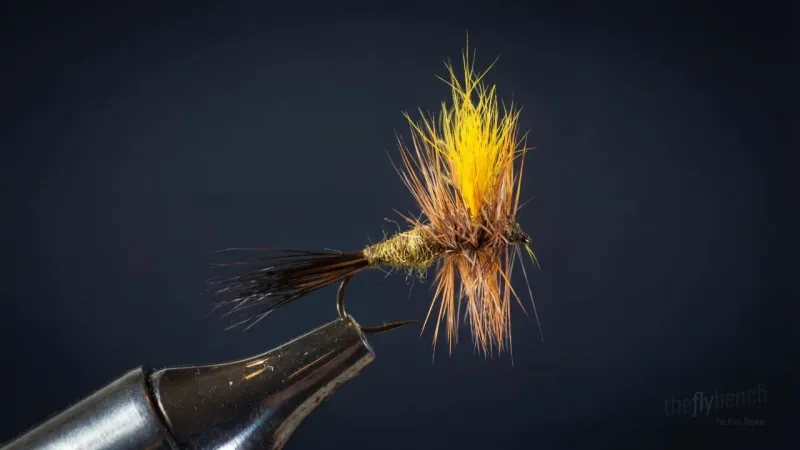
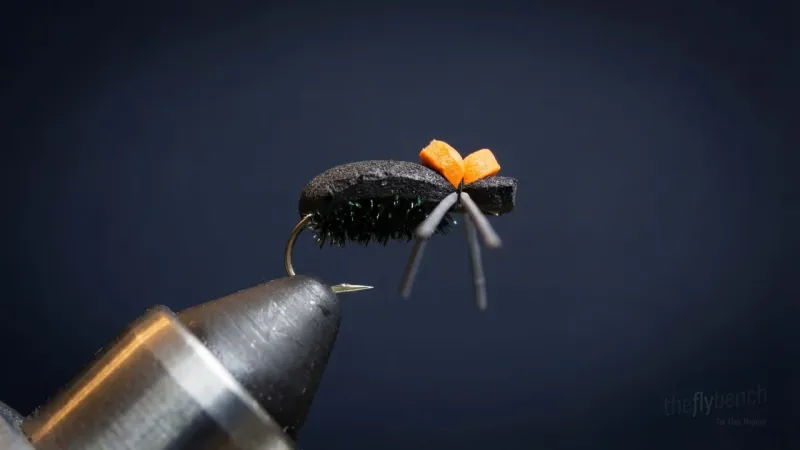
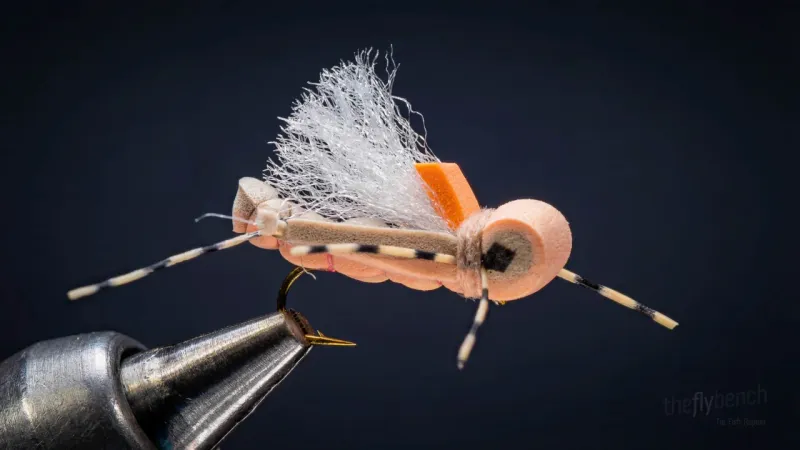
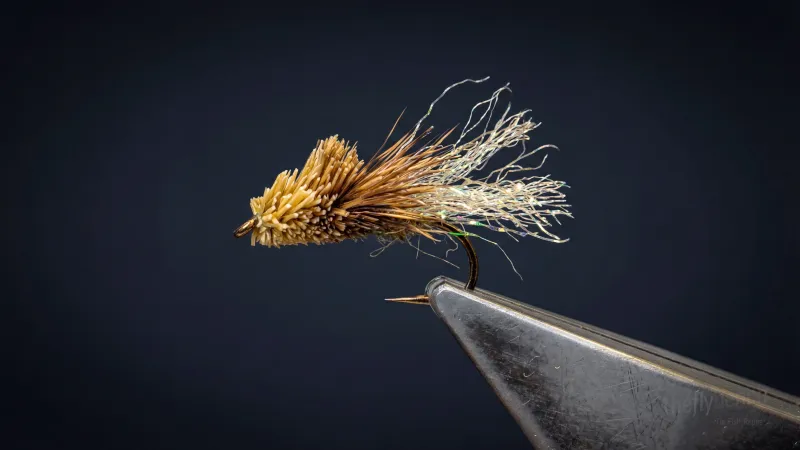
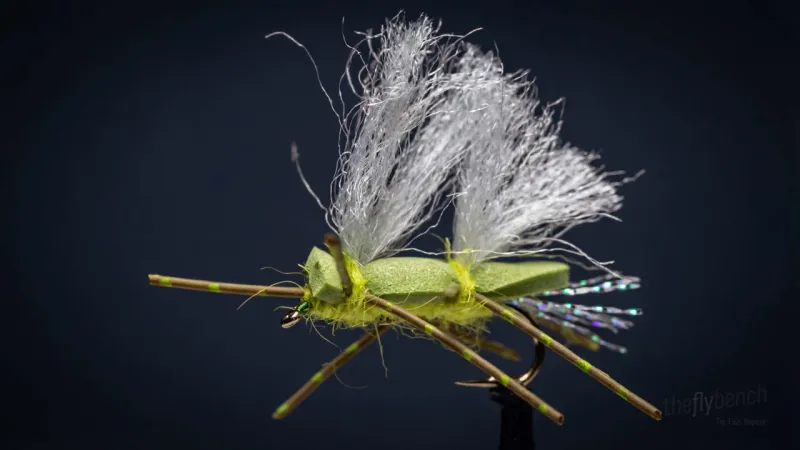
Cheech tied the F-22 for Fly Fish Food in 2024 using a two-layer foam method: a 3mm body over a 2mm underlayer adds profile without bulk on the hook and tapers to the short point of a real cicada's tail. The wings are splayed wide rather than laid flat, and an orange foam post keeps it visible. The same body method works on other large foam dries.
Related patterns
Behavior & presentation
- Natural Behavior
- Adult cicadas are heavy, clumsy fliers that crash onto the water from streamside trees and brush, then buzz on their backs or sides and cannot easily lift off.
- Where Trout Eat It
- Trout hold tight to banks lined with cottonwoods, willows and juniper, and to wind-blown lake shorelines, eating the big bugs that land close to cover.
- How to Fish It
- Slap the fly down hard near the bank, let it sit a beat, then give the rod tip a small twitch so the legs kick before letting it drift drag-free.
- Best Water
- Undercut banks, overhanging branches, submerged timber, grassy edges and foam lines along cliff walls where wind pushes fallen insects.
- Strike Type
- Slow, deliberate head-and-shoulders eats or a sudden gulp; let the fish close its mouth and turn down before setting.
Fishing strategy
- Rigging Suggestions
- A 7.5 to 9 foot leader to 2X-3X tippet turns the fly over and handles big fish near wood. The foam body will carry a beadhead nymph dropper 2 to 3 feet below.
- Seasonal Timing
- Summer, when annual cicadas are out and mayfly and caddis hatches slow; hot, windy afternoons are best.
- Pro Tips
- Pause before you set, since large flies get eaten slowly. If fish refuse a dead drift, a single twitch next to the bank often triggers a take.
Entomology
Adult cicadas fly poorly and often fall or are blown onto the water from trees along the bank. Once on the surface they struggle noisily, and trout take them as a large, easy meal.
- Order
- Hemiptera
- Family
- Cicadidae
- Common name
- Cicada
- Organism
- terrestrial
- Life stage
- adult
Pattern details
- Moving Water
- Stillwater
- Rocky Mountain
- dead-drift
- hopper-season
- modern
- dry-dropper