

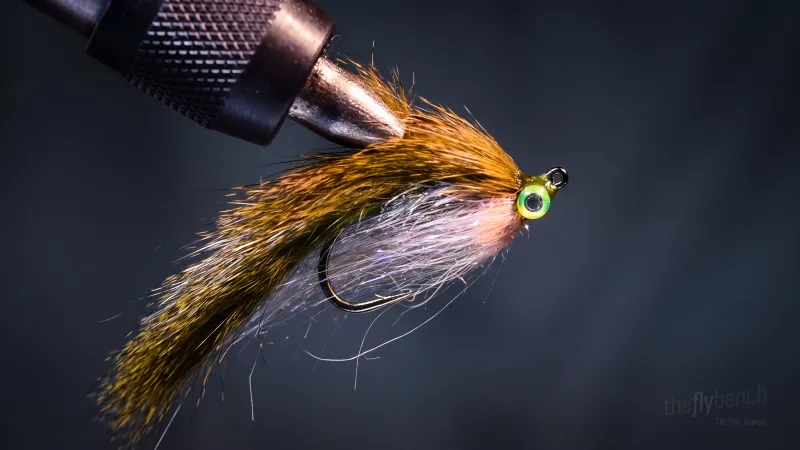
Overview
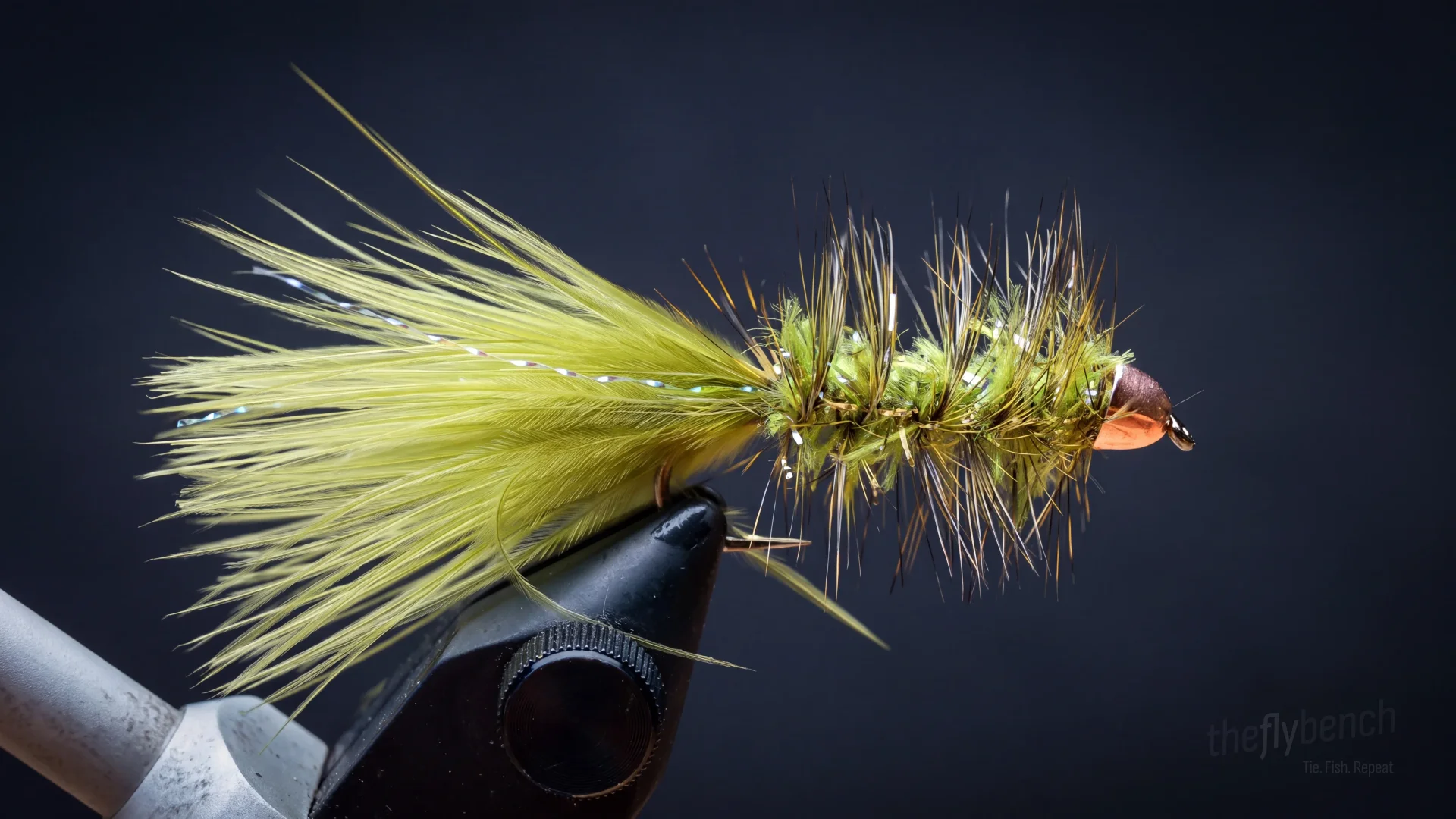
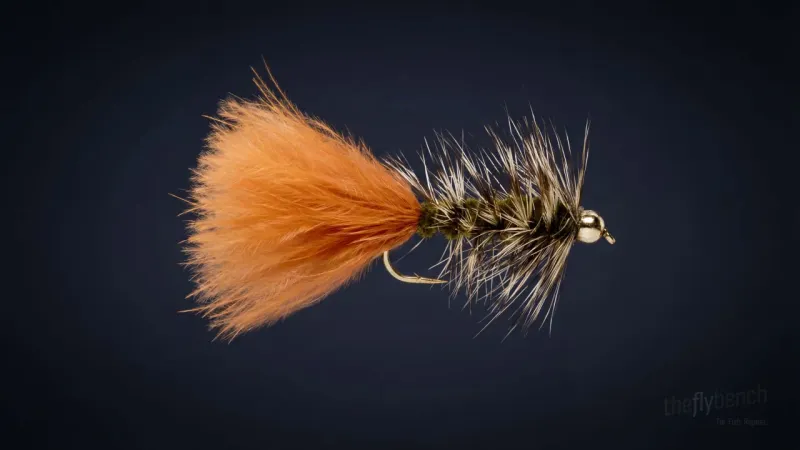
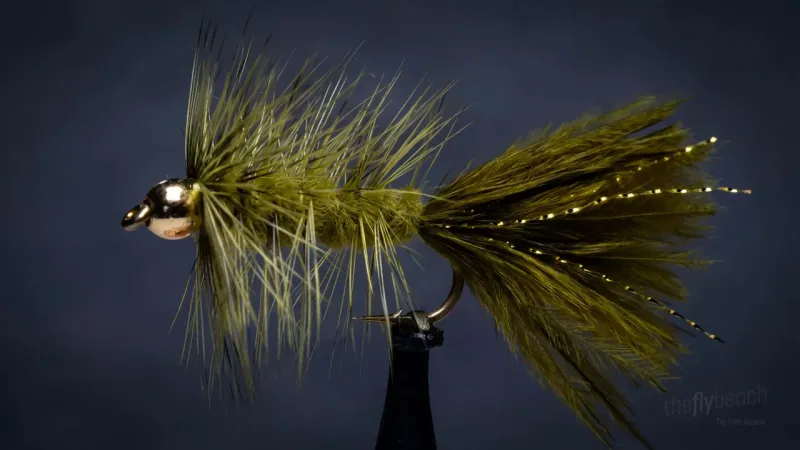
Russell Blessing's Woolly Bugger is the base. Smitty's Fly Box shrinks it to a size 8 and puts a brass cone up front so it sinks fast and dips on each pause. A straggle body gives it a buggy, sparkling core under the olive grizzly palmer. Smitty's suggests stripping it in lakes or swinging it in rivers, and trying other colors to match local water.
Related patterns
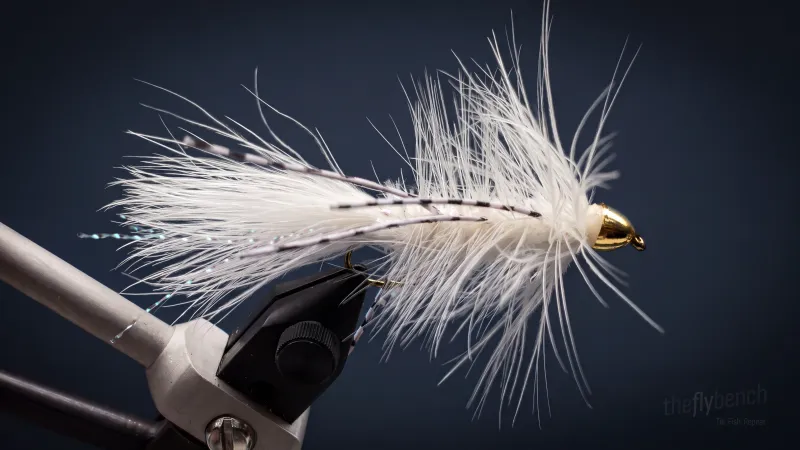
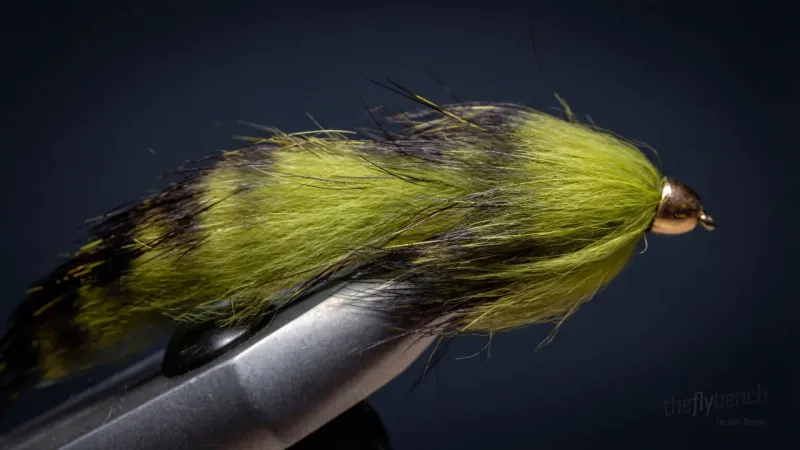
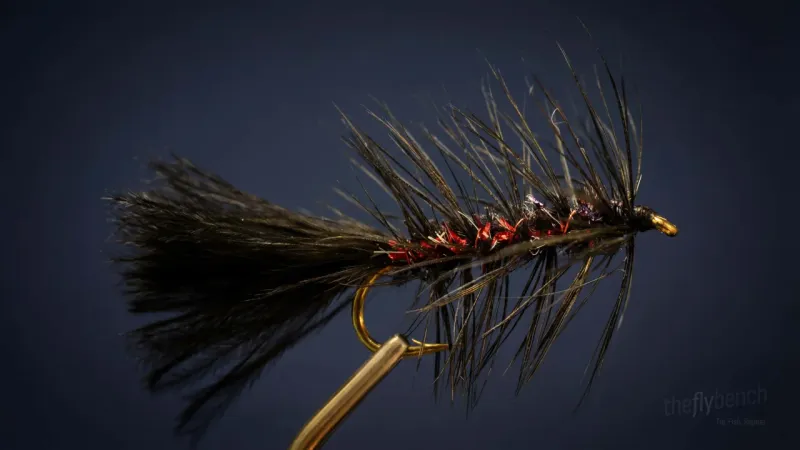
Behavior & presentation
- Natural Behavior
- Small leeches stretch and contract as they swim a few inches at a time, then go limp and settle toward weed or mud. Juvenile minnows hold near cover and dart short distances when spooked.
- Where Trout Eat It
- Trout cruise shallow lake margins at dawn and dusk looking for leeches on the move. In rivers they wait in slower water beside current to pick off small fish and leeches washed out of the weeds.
- How to Fish It
- Let the cone take the fly down, then retrieve with short, slow strips and a pause after every two or three so it nods forward and the marabou breathes. In rivers, cast across, mend once and let it swing, adding a few twitches as it hangs below.
- Best Water
- Weed edges and drop-offs in lakes, the slow side of a seam, tail-outs, undercut banks and the soft water behind boulders.
- Strike Type
- Often a slow, heavy weight on the pause in lakes, and a sharp grab at the end of the swing in rivers. Strip-set rather than lifting the rod.
Fishing strategy
- Rigging Suggestions
- A 9-foot leader to 3X or 4X tippet. Use a floating line along shallow edges and in small streams, and an intermediate or sink-tip line for lake drop-offs and deeper runs. A loop knot lets the cone dip freely.
- Seasonal Timing
- Fishes all year. Strongest in spring and fall when leeches and young-of-year baitfish are active in water from the high 40s to the low 60s. In winter, slow the retrieve and fish it deeper.
- Pro Tips
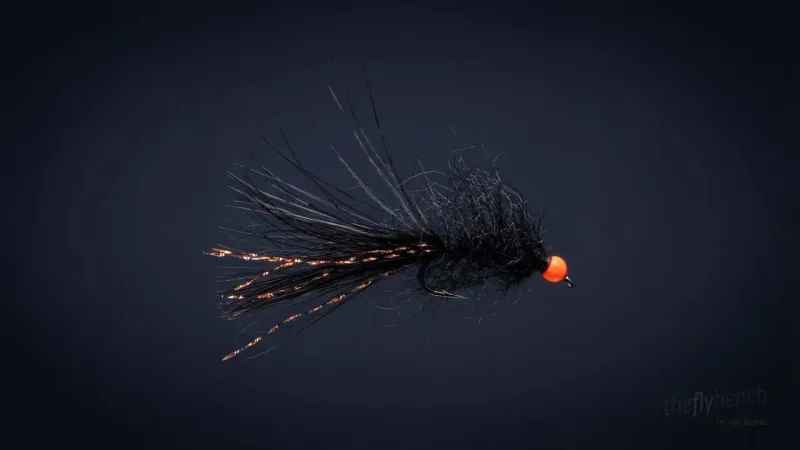
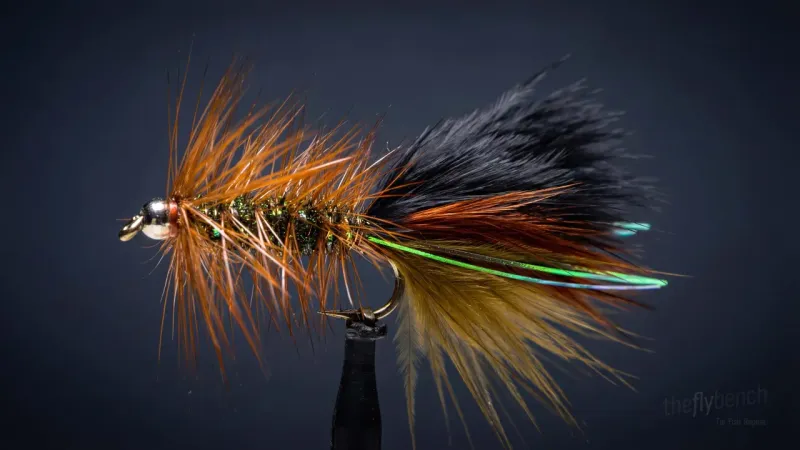
- The small size makes it a good choice on pressured water and in clear conditions where a full-size bugger draws follows but no takes. Tie a few in black and brown as well, and hang a small nymph off the bend when trout are keyed on bugs.
Entomology
Leeches live in weed beds, mud and under stones, swimming with an up-and-down ripple when they leave cover, usually in low light. Their soft, dark bodies and slow pace make them an easy, high-protein meal for trout in lakes and slow rivers.
- Order
- Arhynchobdellida
- Family
- Erpobdellidae
- Common name
- Leech
- Organism
- leech
- Life stage
- adult
Pattern details
- Moving Water
- Stillwater
- Worldwide
- woolly-bugger-family
- strip-retrieve
- active-retrieve
- searching-pattern
- swing
- beginner-friendly