Overview
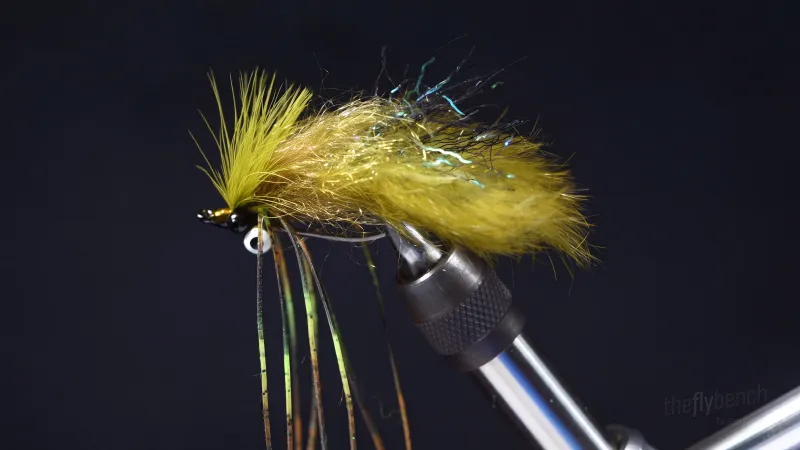
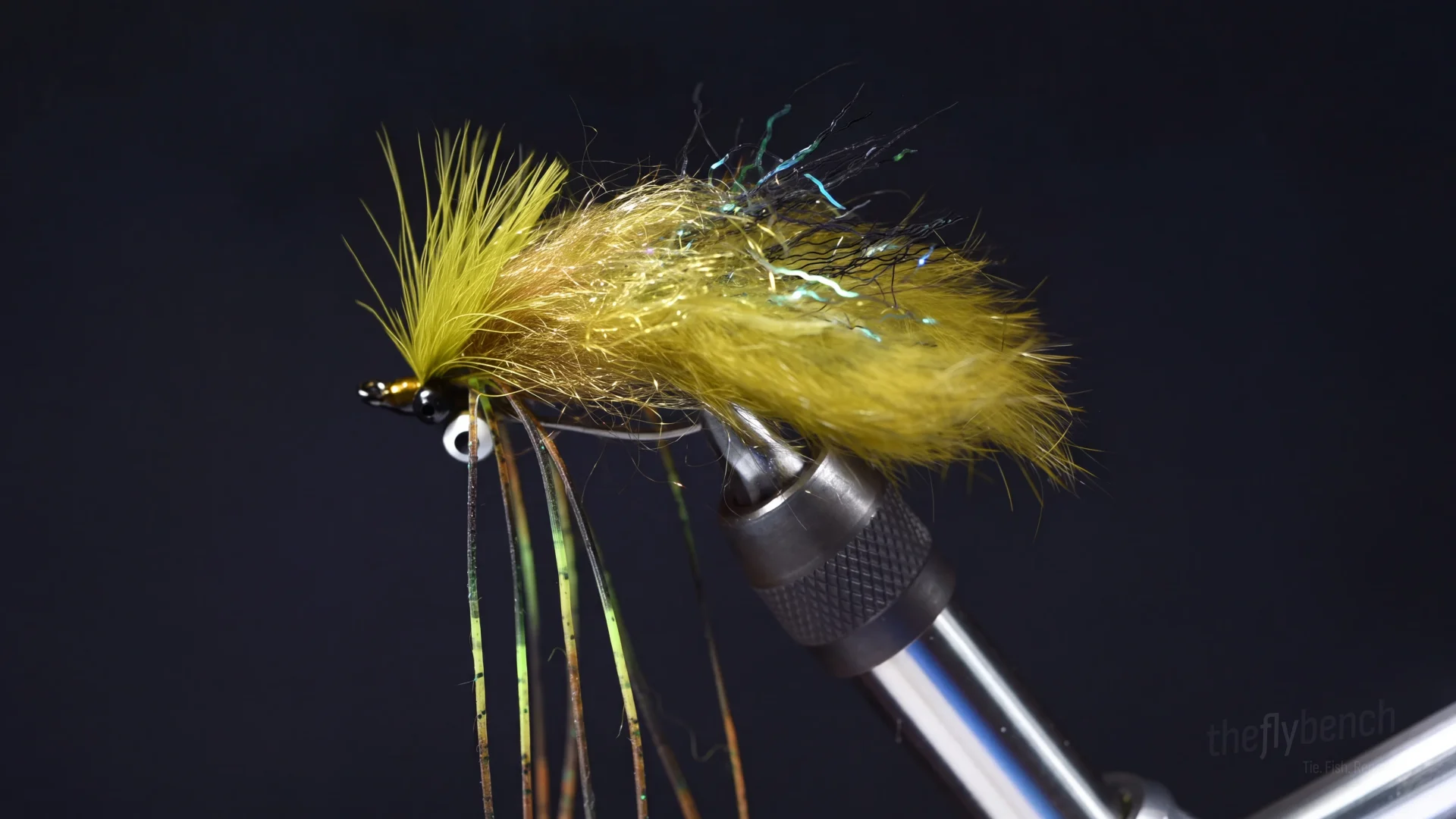
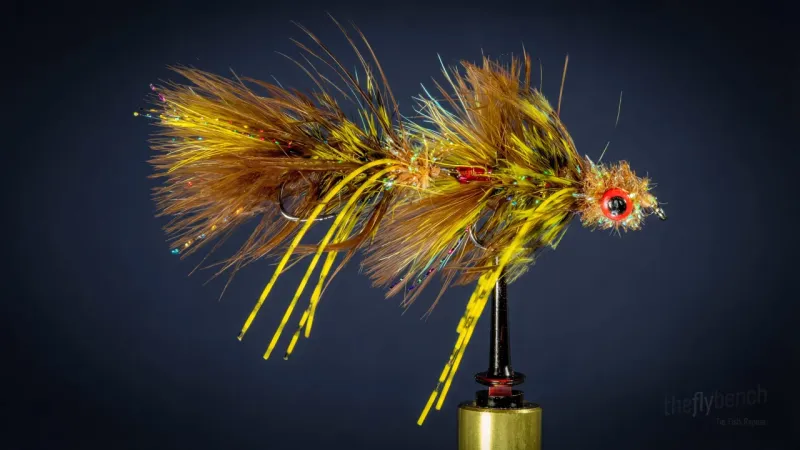
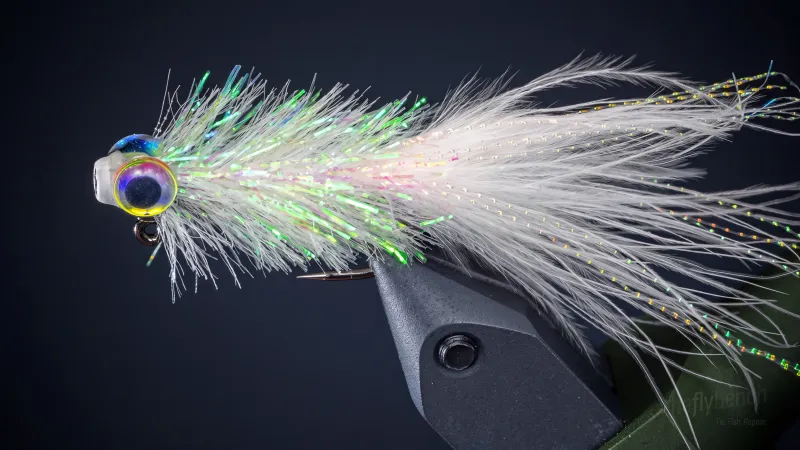
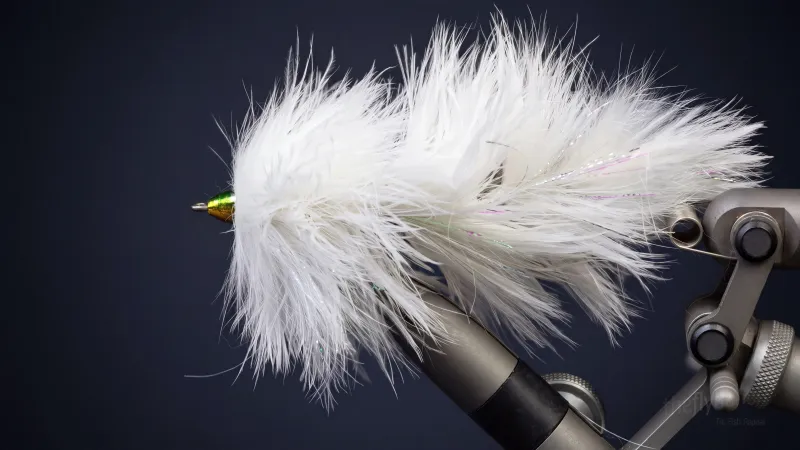
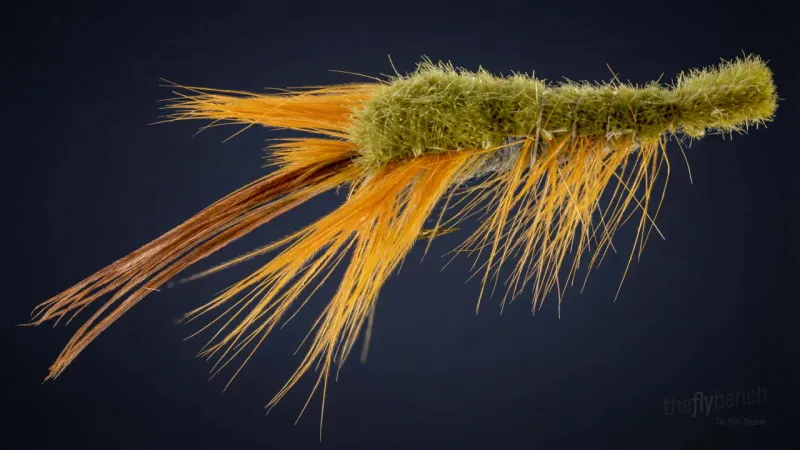
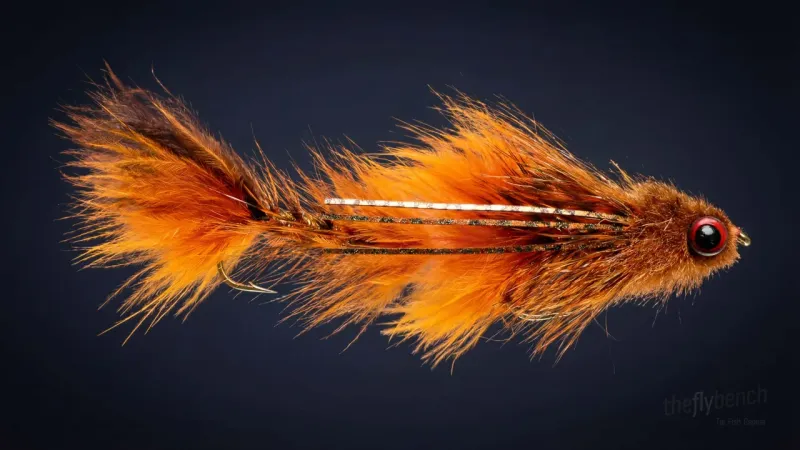
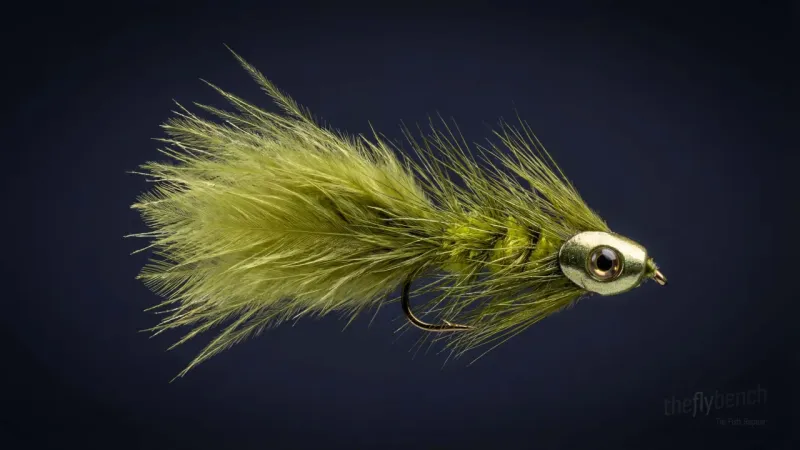
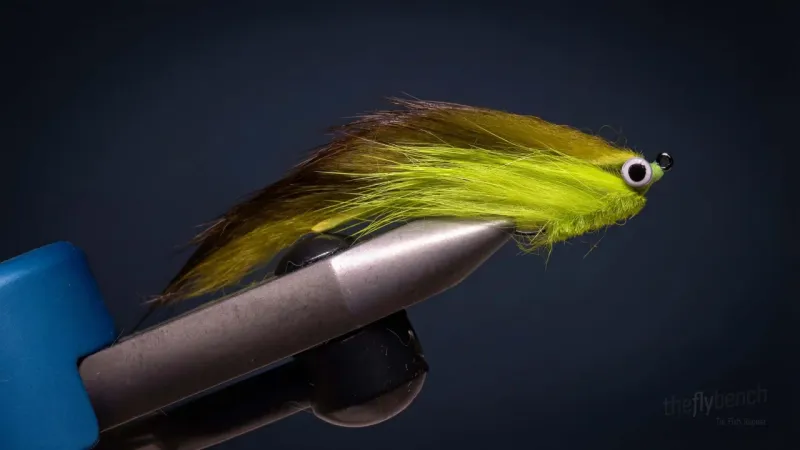
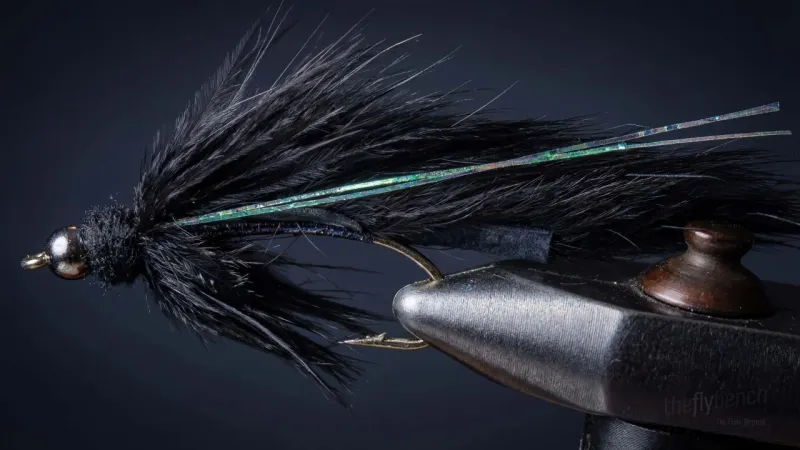
Jaren Hernandez tied this pattern for Charlie's Fly Box in October 2026. The shank section carries a pair of olive magnum rabbit strips as claws, black and olive Ripple Ice Fiber, a picked-out Simi Seal body wrapped with olive marabou, and three-tone Fly Enhancer legs. A #50 mono connection joins it to the hook, and medium lead eyes paired with large black bead chain put the weight at the head so the fly dives nose-first when the strip stops.
Related patterns
Behavior & presentation
- Natural Behavior
- Crayfish and bottom-dwelling baitfish hide against rock and wood by day, then bolt in short, low bursts when disturbed and settle back to the streambed after each dash.
- Where Trout Eat It
- Large browns and smallmouth pick these off along rocky banks and in the softer water behind boulders, usually within a foot or two of the bottom.
- How to Fish It
- Cast tight to cover, let the heavy eyes pull the fly down, then strip in short jerks with a pause so the head dips and the rabbit claws and marabou breathe on the drop.
- Best Water
- Rip-rap banks, undercut bends, boulder pockets, and the drop-off at the head of a deep run.
- Strike Type
- Most eats come on the fall after a strip; the line goes heavy or jumps sideways, so keep it tight and strip-set before lifting the rod.
Fishing strategy
- Rigging Suggestions
- Fish a 6- or 7-weight with a sink-tip or intermediate line and a short 3-5 foot leader of 0X-2X fluorocarbon, or 12-16 lb for bass. The weighted head does most of the sinking, so a floating line works in water under four feet.
- Seasonal Timing
- Best from spring through fall once fish are willing to chase. Off-color water after rain or on the tail of runoff suits the dark olive body and black flash.
- Pro Tips
- Use a loop knot so the fly swings freely on the pause. From a drift boat, pound the bank and vary strip length and pause time until the fish show what they want.
Entomology
Sculpins, darters and small crayfish live tight to the streambed, moving in short darts between rocks and freezing in place when threatened. When flushed into open water they become easy targets, and their size makes them worth a long chase for large trout and bass.
- Common name
- Baitfish
- Organism
- baitfish
- Life stage
- general
Pattern details
- Moving Water
- Stillwater
- Rocky Mountain
- active-retrieve
- strip-retrieve
- modern
- searching-pattern
- jigging
- high-water