

Overview
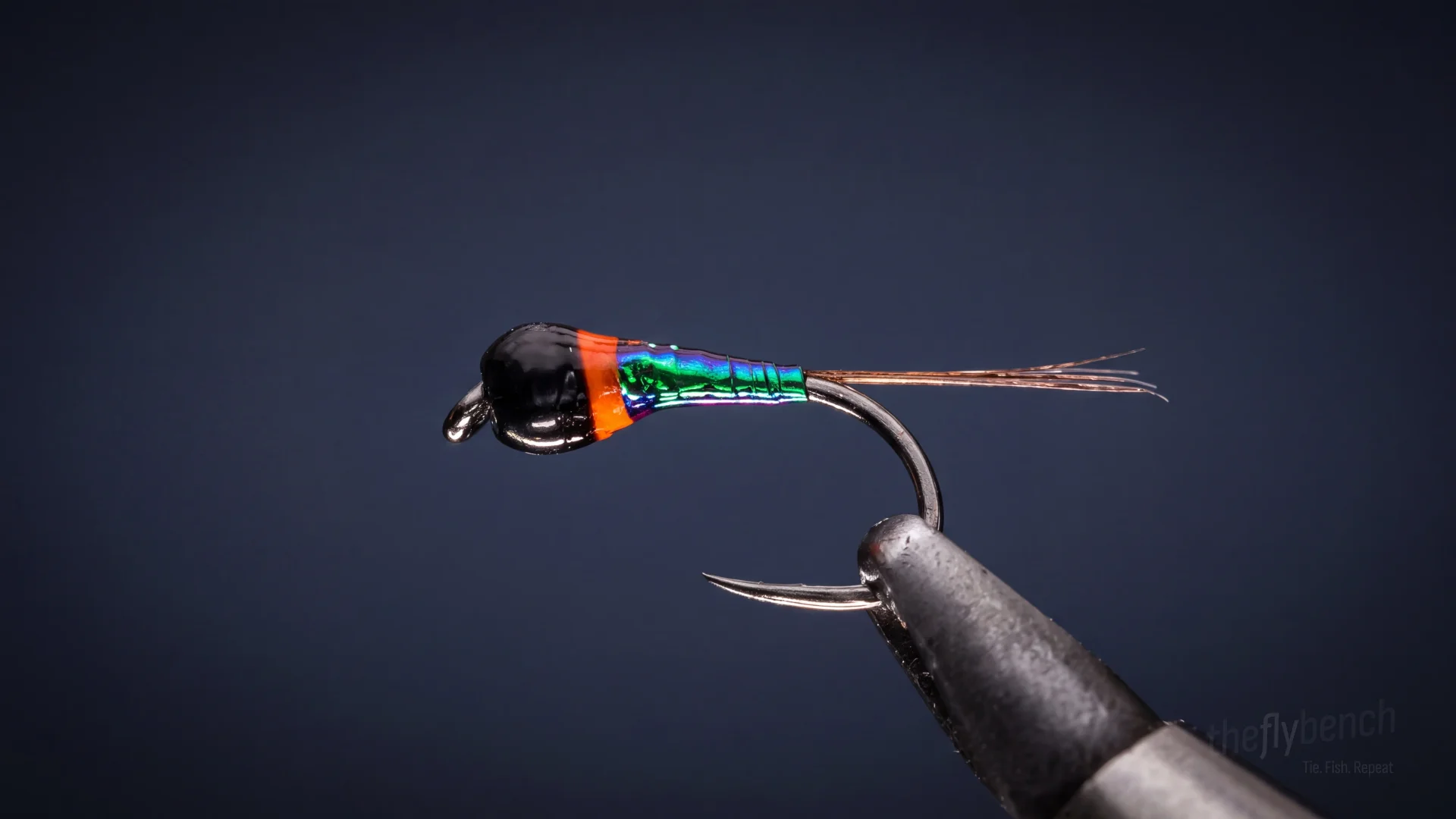
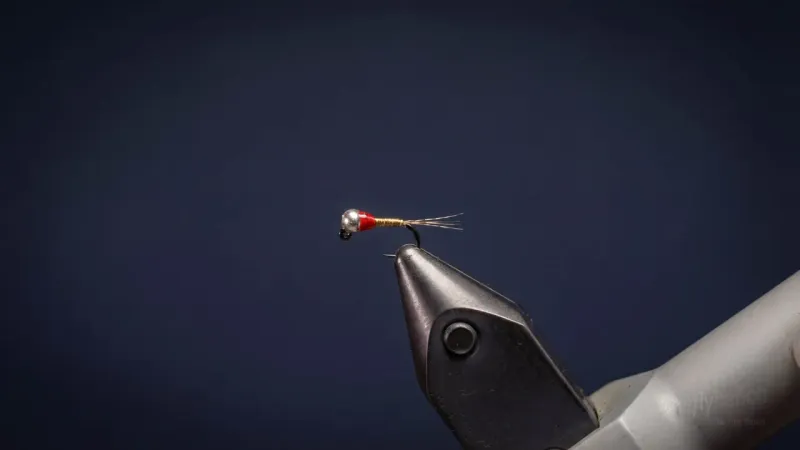
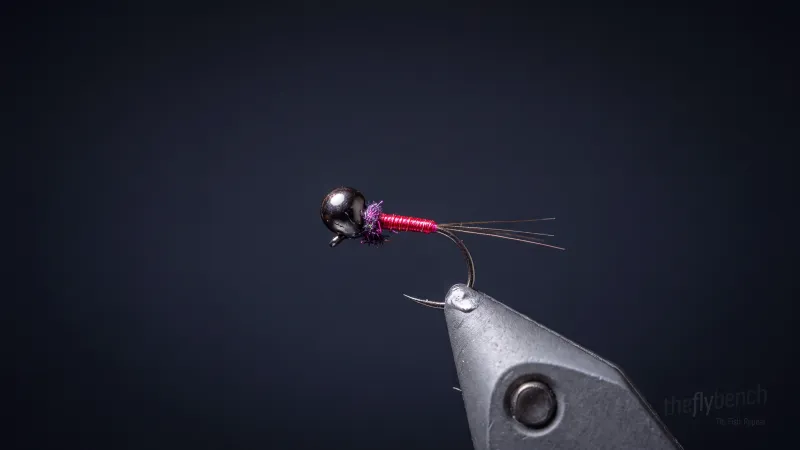
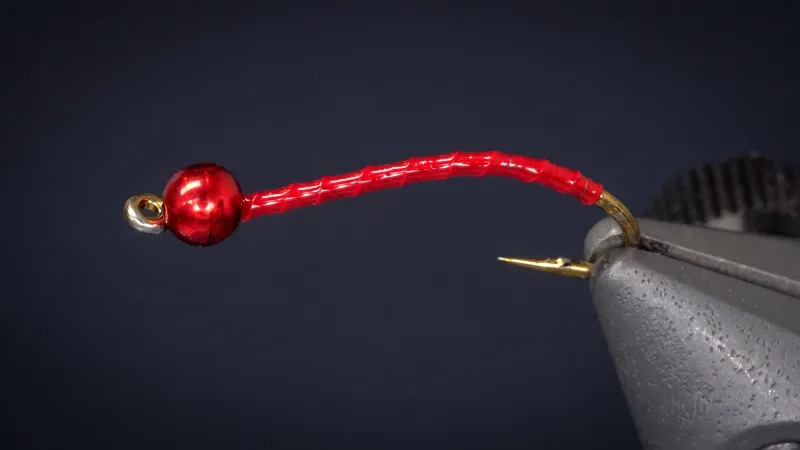
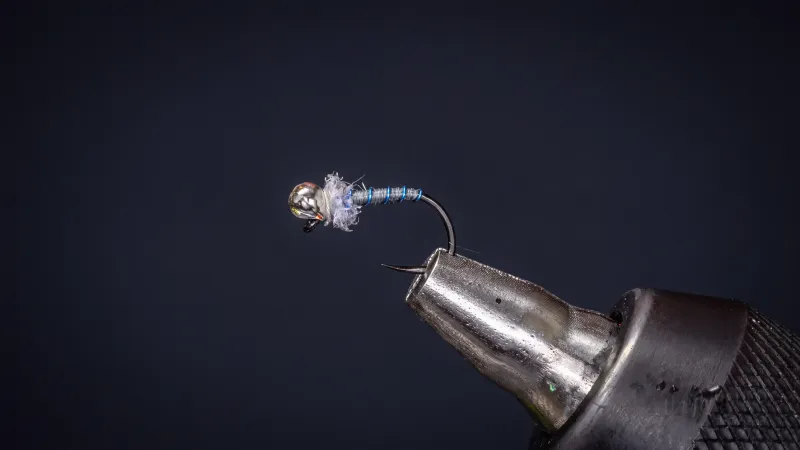
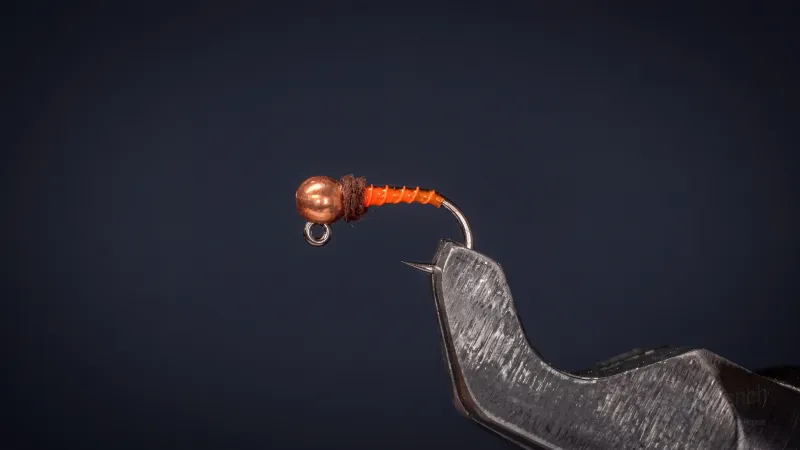
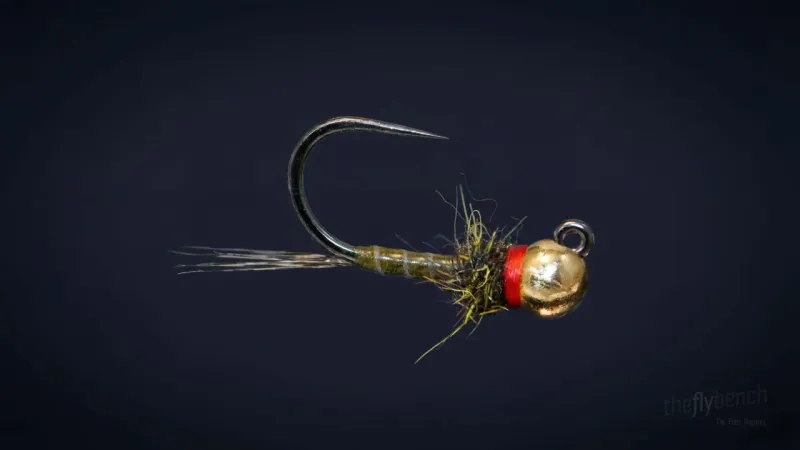
Lucian Vasies settled on this colorway while fishing rivers in Lapland, where the peacock green-blue body kept outfishing other perdigon colors. Wraps of tungsten wire under a 3mm tungsten bead add extra weight for deep water. Lay the perdigon skin in smooth, overlapping turns and finish with a thin coat of resin so the fly stays slim.
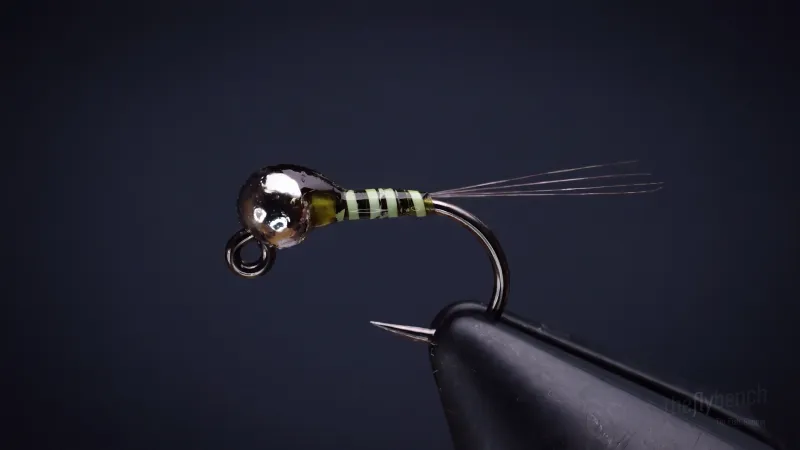
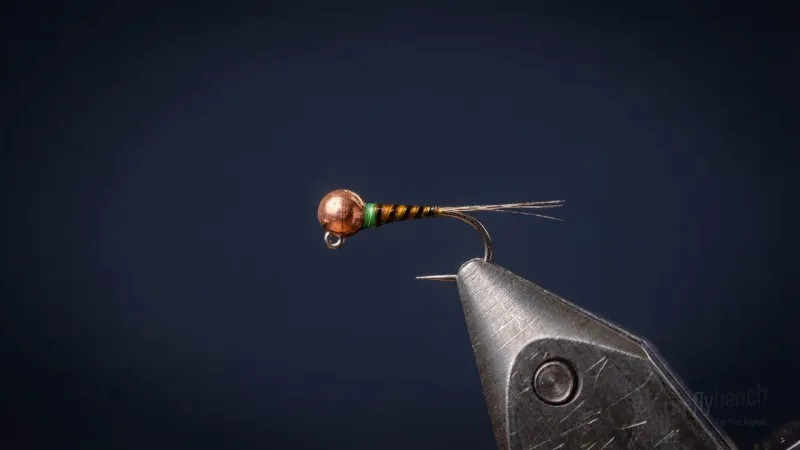
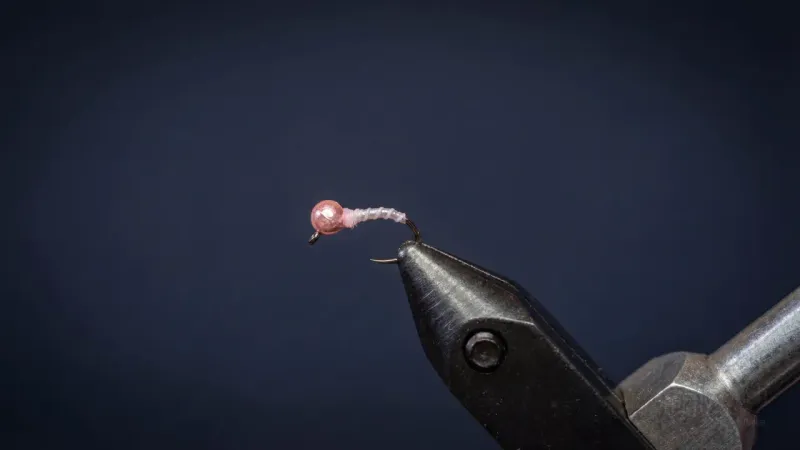
Related patterns

Behavior & presentation
- Natural Behavior
- Swimming mayfly nymphs knocked off the stones in heavy flow sink and spin near the bottom, flashing their darker, glossy backs as they go before they can grab hold again.
- Where Trout Eat It
- Trout and grayling sit low in deep, fast runs and pick off anything shiny that rolls past within a few inches of the stones, often in water too heavy for a light nymph to reach.
- How to Fish It
- Tight-line it upstream on a long, thin leader and lead the fly through the drift with the rod tip, letting the extra wire and tungsten pin it to the bottom fast.
- Best Water
- Deep slots between boulders, the inside seam of a heavy run, and the steep drop-off at the head of a pool where current digs out a channel.
- Strike Type
- A sharp stop or quick sideways twitch of the sighter; grayling often take with a tiny tap, so set on any change while the fly is ticking along the bottom.
Fishing strategy
- Rigging Suggestions
- Fish it as the point fly on a 10-14 foot euro leader with 5X-6X fluorocarbon tippet, with a lighter jig or perdigon on a tag 18-20 inches above to cover the water just off the bottom.
- Seasonal Timing
- Best from late spring through early fall, when northern rivers are running and fish hold deep in the main flow; it also earns a spot after rain, when higher water calls for a heavier fly.
- Pro Tips
- Save this one for the deepest, fastest water on the beat; in shallower runs, tie it without the tungsten wire underbody so it ticks bottom without constantly snagging.
Entomology
Mayfly nymphs living in fast, rocky rivers often lose their grip in strong current and drift close to the bottom until they can settle again. Trout and grayling holding deep in the flow feed heavily on these drifting nymphs.
- Order
- Ephemeroptera
- Common name
- Mayfly
- Organism
- insect
- Life stage
- nymph
Pattern details
- Moving Water
- Scandinavia
- Europe
- tight-line-nymph
- dead-drift
- competition
- attractor
- searching-pattern
- modern
- high-water
- freestone