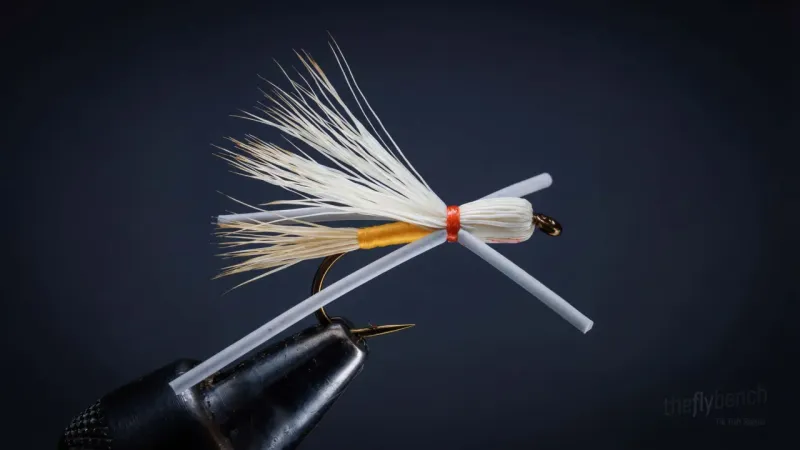
Dry FliesFoam Beetle
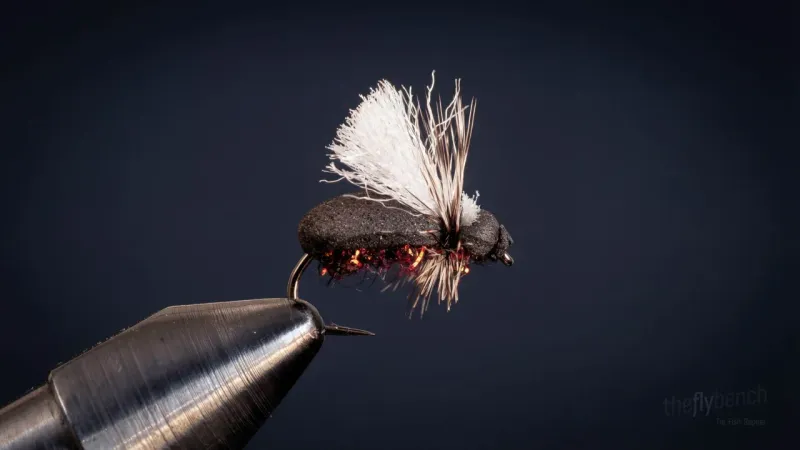
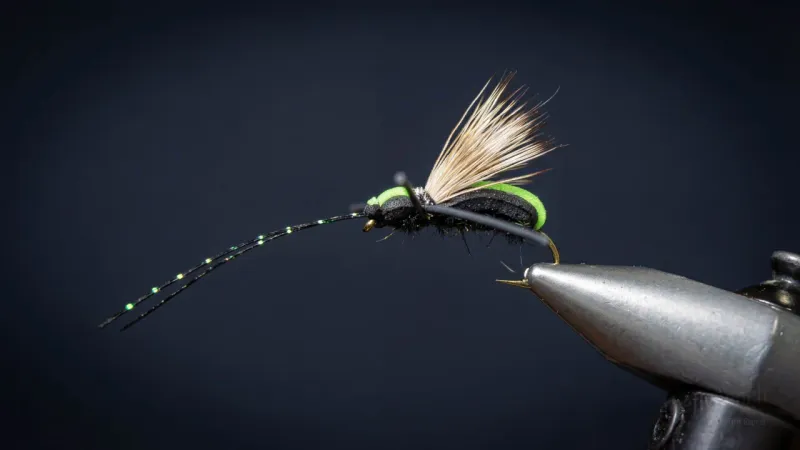
An easy-to-tie terrestrial pattern, the Foam Beetle imitates a variety of beetles and other crawling insects that can end up in the water. It floats well due to the foam body, making it a great choice for summer dry fly fishing.
Summer
Beginner
Trout
Apr 2025
Overview
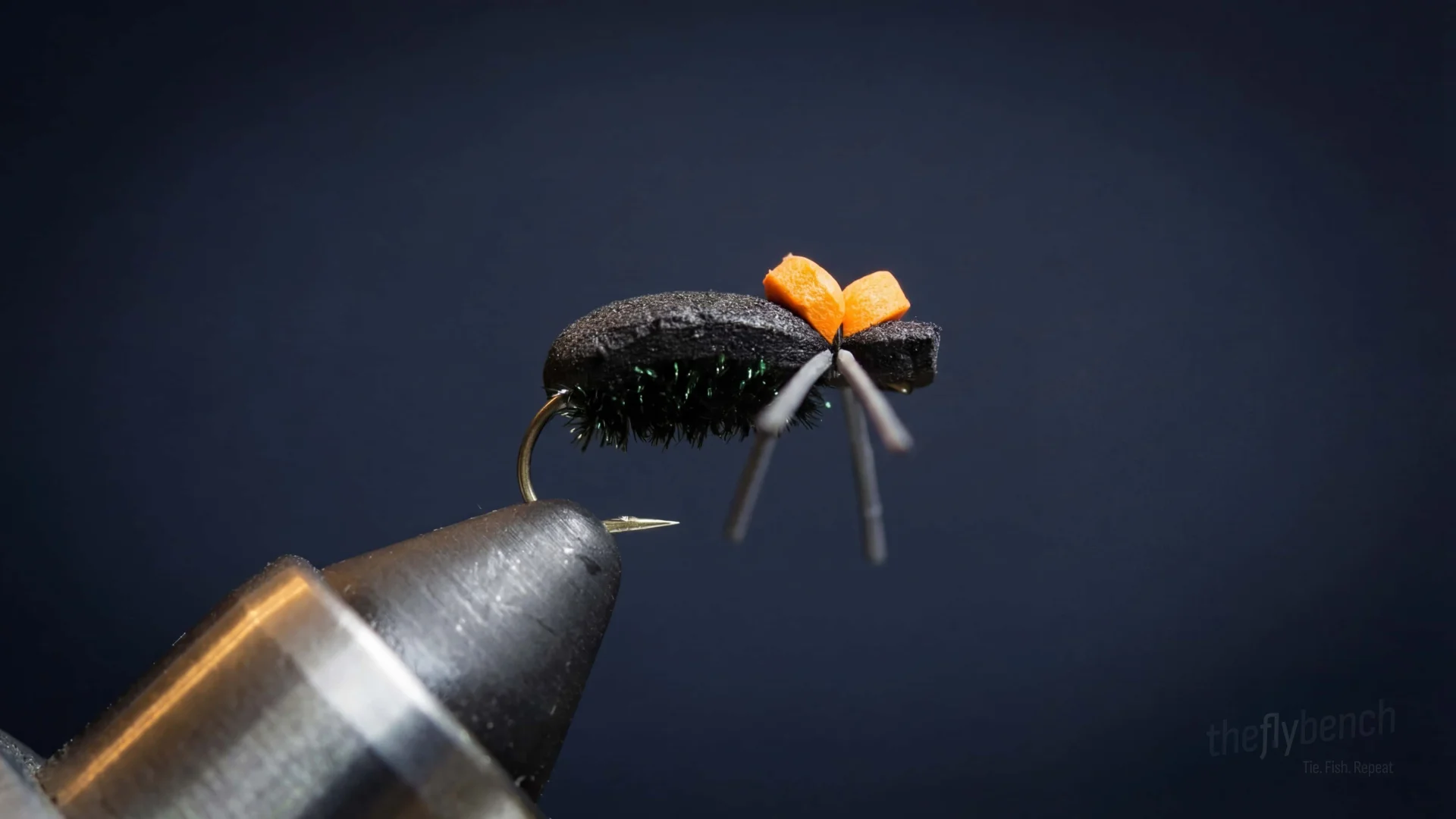
A classic terrestrial fly tied with a black foam body, peacock underbody, rubber legs, and often a Hi-Vis indicator on top. The foam floats well and mimics the shape of a beetle. It's a simple, durable pattern that works great near banks and overhanging vegetation.
Where to Buy This Fly
We only link to fly shops we trust. Some links are referral links, which may earn us a commission at no extra cost to you.
Materials
- Hook:
- 1X-long dry-fly hook (here, a Dai-Riki 300), size 14.
- Thread:
- 6/0 or 70 Denier, black.
- Rear Legs:
- Centipede Legs, size mini, black.
- Back/Head:
- Craft Foam, 1/4-inch wide, black.
- Underbody:
- Peacock herl.
- Indicator:
- Soft Foam Parachute Post, size medium.
- Front Legs:
- Centipede Legs, size mini, black.
Behavior & Presentation
Natural Behavior: Beetles fall or are blown from streamside vegetation onto the water surface, landing with audible plops that alert nearby trout. These terrestrial insects struggle on the surface with erratic kicking motions as they attempt to swim or fly, creating disturbances that trigger opportunistic feeding.
Where Trout Eat It: Trout cruise near banks and undercut areas, rising aggressively to beetles struggling in the surface film along vegetation edges and foam lines.
How to Fish It: Fish with dead-drift or skittering presentations near banks, adding occasional twitches to imitate struggling beetles attempting to escape the water.
Best Water: Target undercut banks and grass edges along slow to moderate flows, focusing on foam lines and current breaks near overhanging vegetation.
Strike Type: Expect aggressive, explosive rises as trout react to the disturbance of the struggling beetle.
Fishing Strategy
Rigging Suggestions: Use 9-foot leaders with 4X or 5X tippet. Can fish alone as single dry fly or use as indicator for small nymph dropper 18-24 inches below.
Seasonal Timing: Prime terrestrial season runs June through September, with peak effectiveness during hot July and August days when beetles are most active and falling into water from streamside vegetation.
Pro Tips: The foam body provides unsinkable flotation through dozens of drifts. Bright foam indicator aids visibility in broken water. Beetles are available food throughout summer, making this pattern reliable when no hatches are occurring.
Entomology
Terrestrial beetles tumble from streamside vegetation during wind or while feeding, landing heavily on the water with an audible plop and creating expanding ripple rings. Their armored bodies and frantic leg paddling as they attempt to swim toward shore make them highly visible targets that trigger explosive surface strikes from territorial fish.
- Order
- Coleoptera
- Common Name
- Beetle
- Organism Type
- terrestrial
- Life Stage
- adult