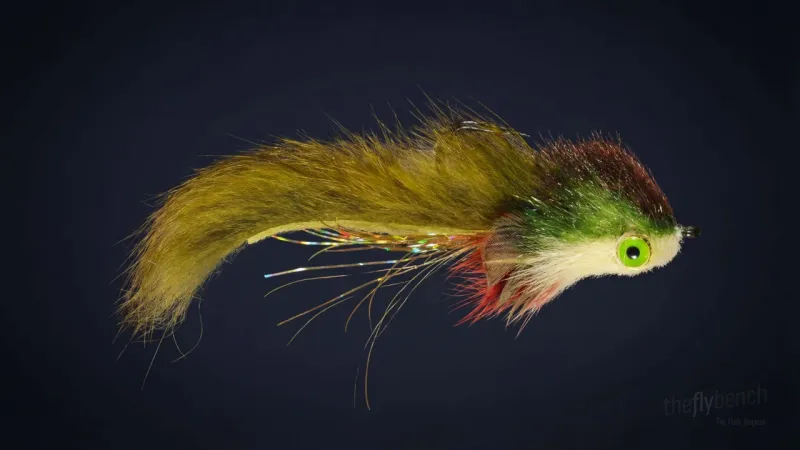
StreamersFoam Bass Popper
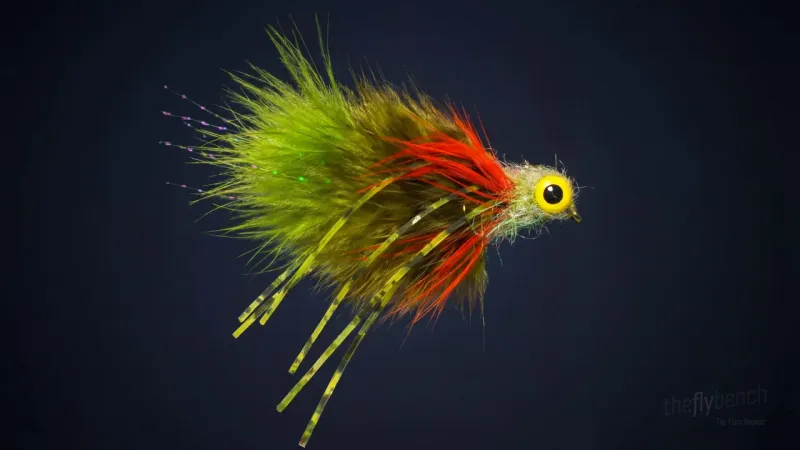
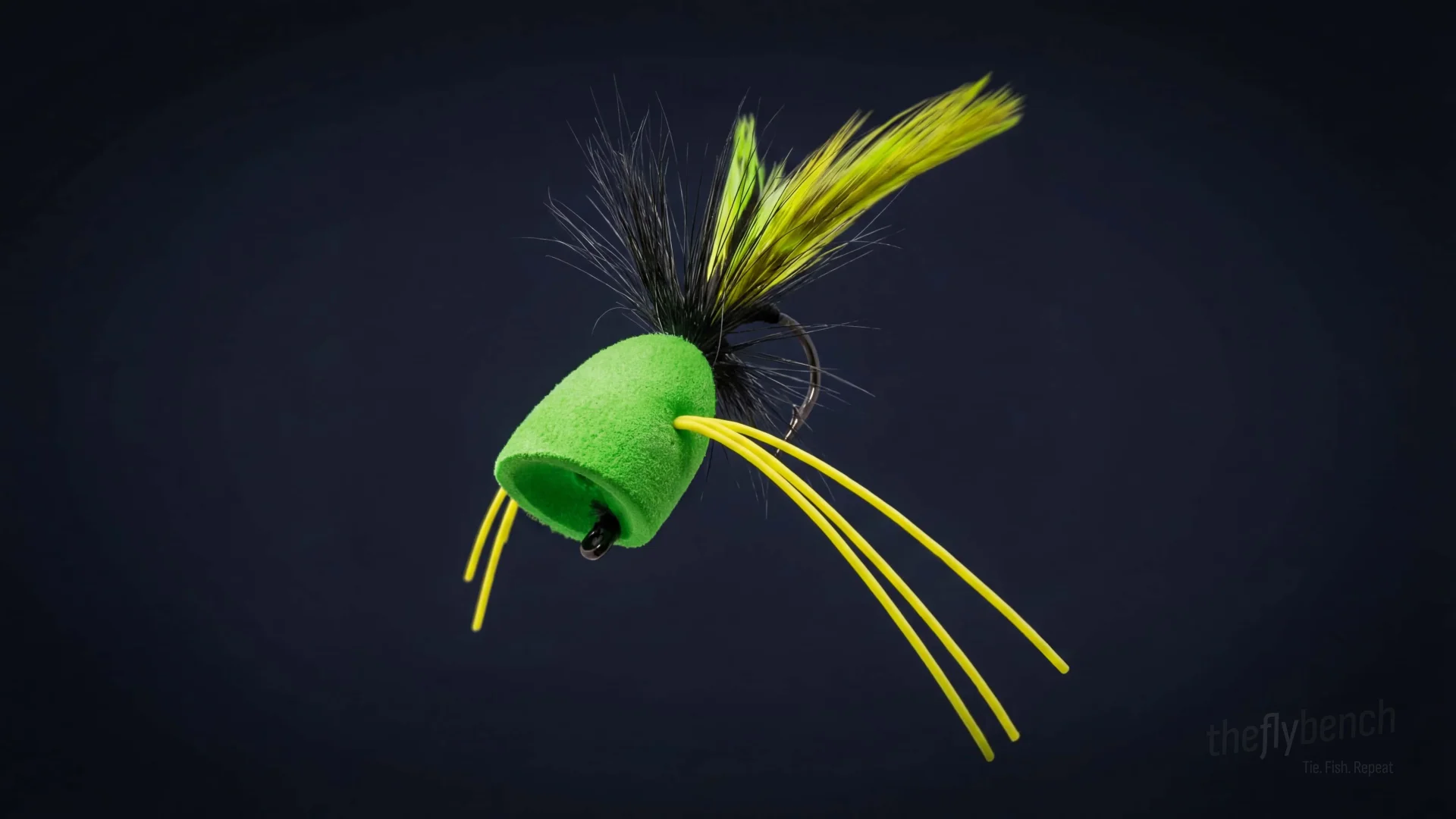
A loud, buoyant surface fly designed to draw explosive topwater takes from bass. The Foam Bass Popper displaces water with each strip, mimicking struggling baitfish, frogs, or large insects, and is ideal for low-light ambush conditions.
Spring, Summer, Fall
Intermediate
Bass
Apr 2025
Overview
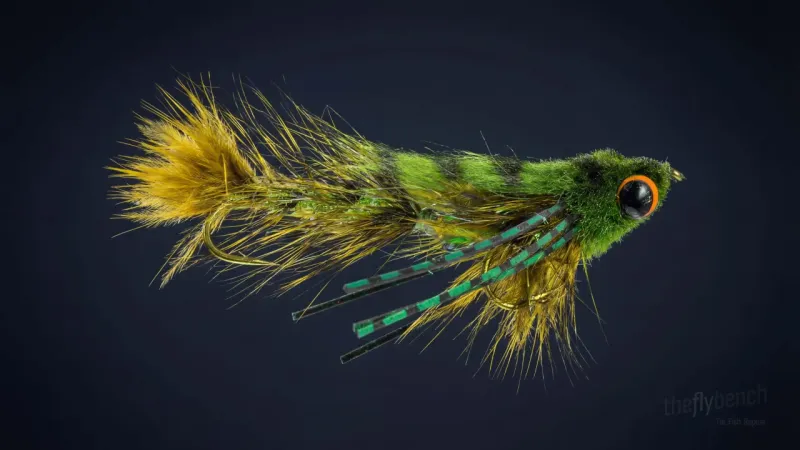
The Foam Bass Popper is a highly customizable surface fly known for its loud splashes and ability to provoke aggressive strikes. Tiers often vary the shape, size, and color of the foam head—ranging from classic cup-faced poppers to slider styles—and commonly add rubber legs, hackle, or flash to enhance movement and attraction.
Where to Buy This Fly
We only link to fly shops we trust. Some links are referral links, which may earn us a commission at no extra cost to you.
Materials
- Hook:
- Tiemco 5262, Saltwater hook #8-#12
- Thread:
- Black Veevus 14/0
- Body:
- Cactus chenille
- Ribbing:
- Fine gold wire for added flash (Optional)
- Tail:
- Chartreuse marabou
- Head:
- Yellow and light green 2mm foam, VA foam block, shaped for a pop effect
Behavior & Presentation
Natural Behavior: Frogs kick and struggle on surface when crossing open water or fleeing predators, creating splashing sounds and ripples that carry significant distances. Bass and pike hunt frogs opportunistically during low-light periods when amphibians are most active.
Where Trout Eat It: Floating on surface near lily pads, bank vegetation, and overhanging cover in shallow zones.
How to Fish It: Create erratic popping retrieves with 2-3 second pauses, varying cadence to trigger explosive strikes.
Best Water: Work grass edges, undercut banks, and structure where bass establish topwater ambush positions.
Strike Type: Watch explosive surface takes, waiting for weight before setting hook on aggressive strikes.
Fishing Strategy
Rigging Suggestions: Use a 7-9 foot leader with 1X or 2X tippet for turnover power. A weight-forward or bass-taper fly line helps turn over this wind-resistant fly.
Seasonal Timing: Most effective during warm weather from May through September when water temperatures exceed 65°F and bass are actively feeding on surface prey.
Pro Tips: The foam provides excellent buoyancy for aggressive pops. Cast beyond visible structure and work the fly back through the strike zone. Don't set the hook until you feel weight.
Entomology
Frogs kick and struggle on the water surface when crossing open water or attempting to escape predators, creating splashing sounds and ripples that carry significant distances in calm conditions. Bass and pike hunt frogs opportunistically during low-light periods when amphibians are most active, targeting them as high-energy meals worth the explosive surface strike despite their occasional escape into lily pads or shoreline vegetation. The frog's inability to dive deeply and its surface-bound movement pattern make it a reliable feeding opportunity during spring and summer months when frogs are abundant near warm shallow water.
- Organism Type
- amphibian
- Life Stage
- general