


Overview
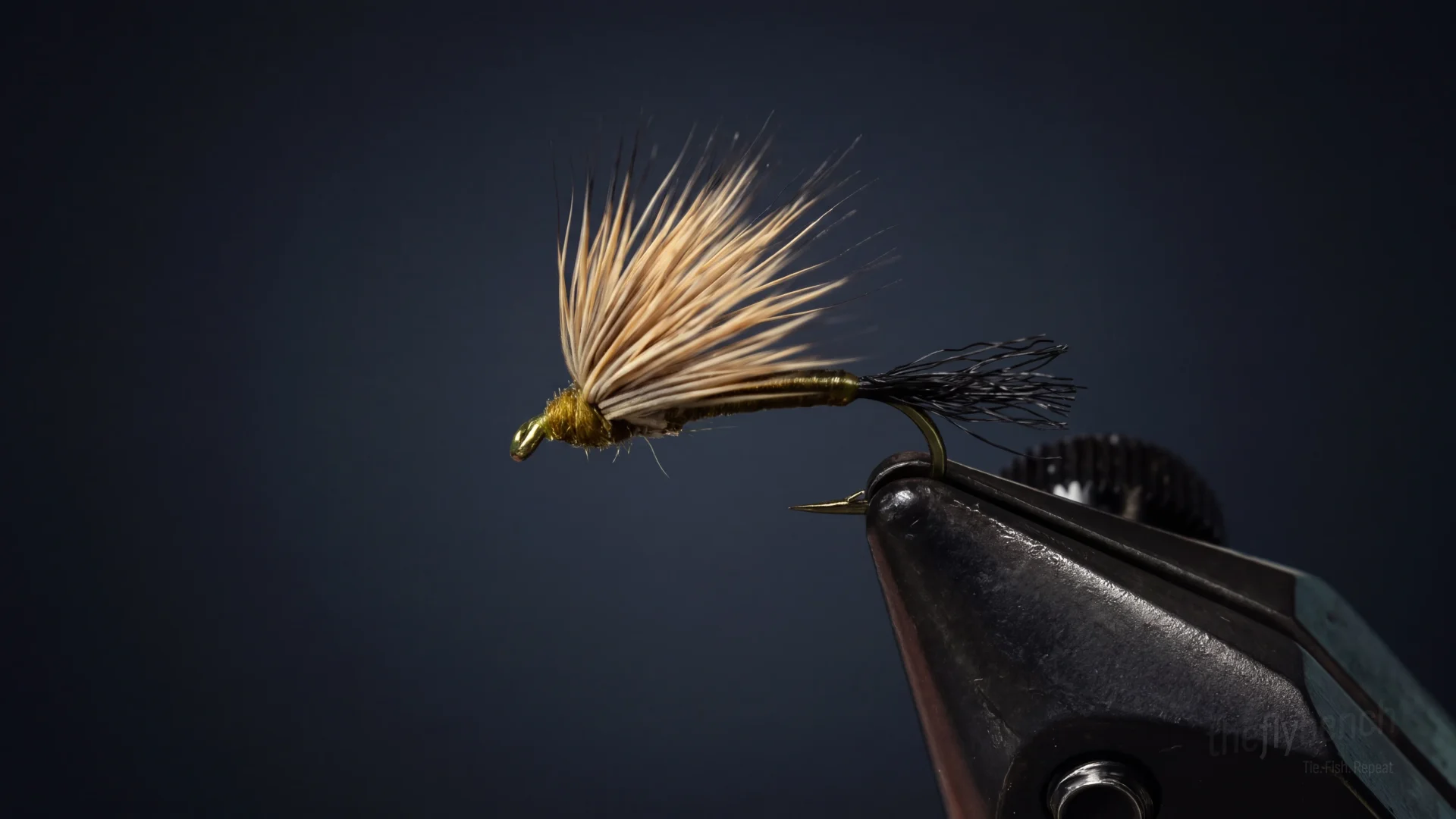
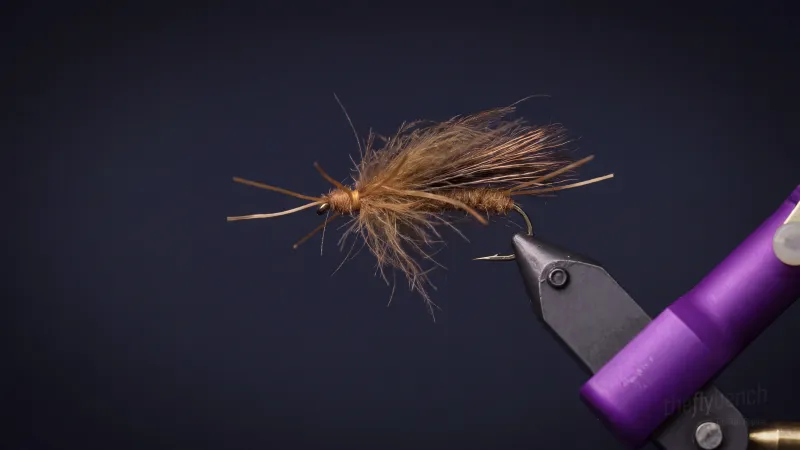
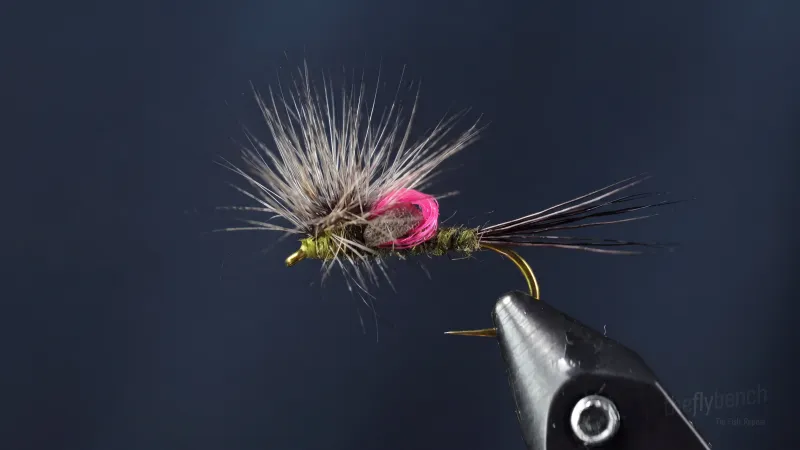
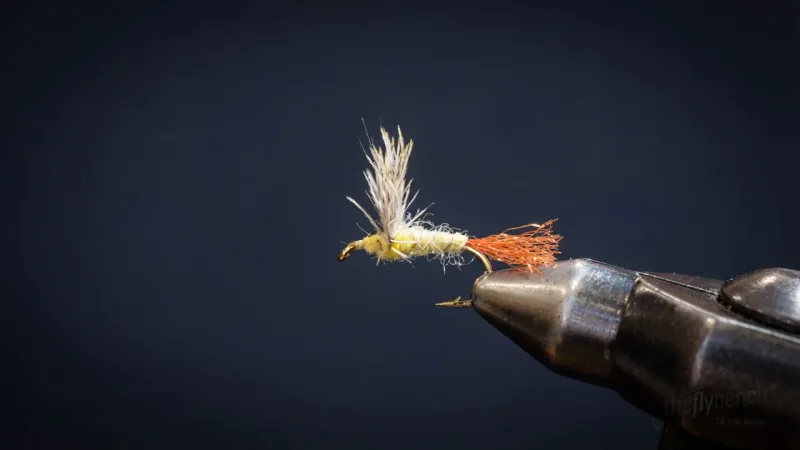
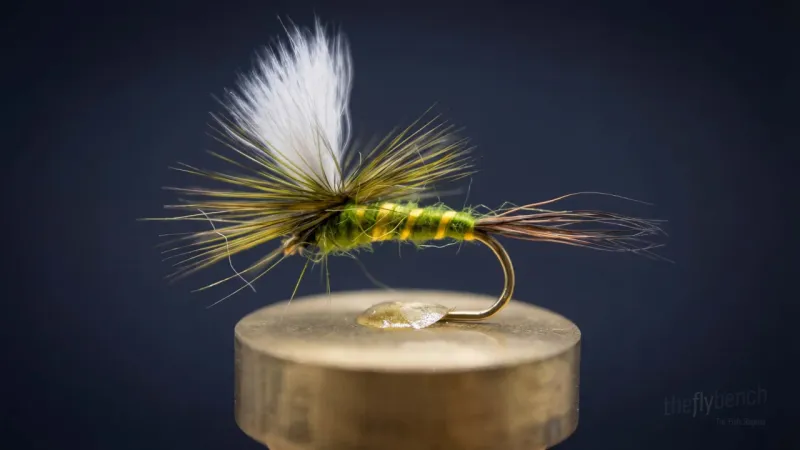
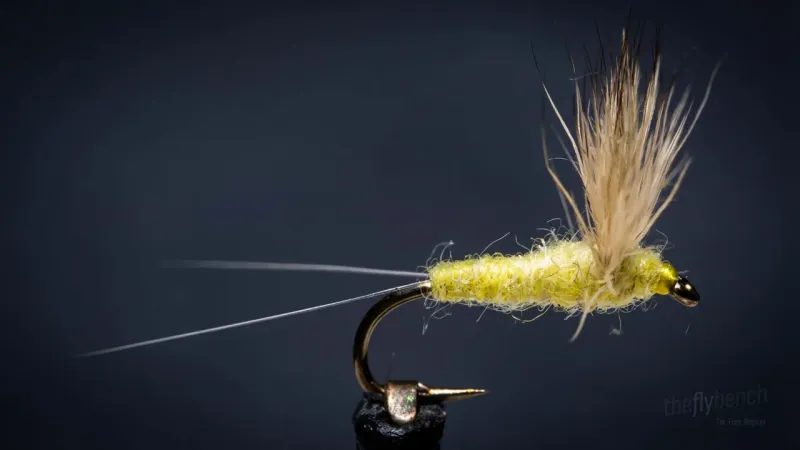
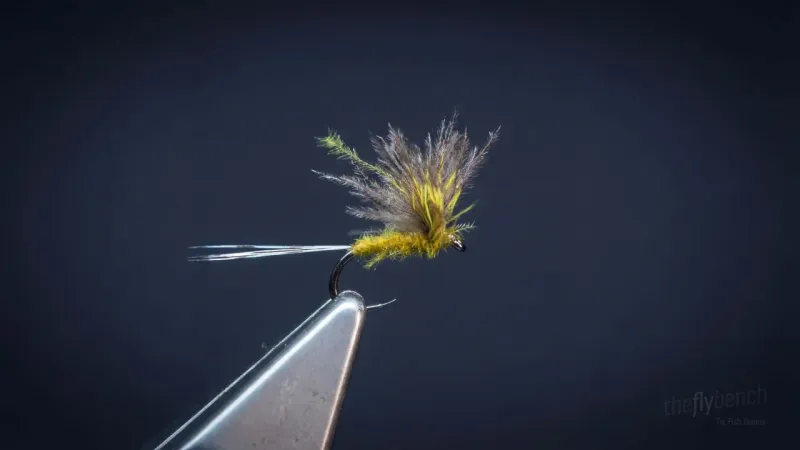
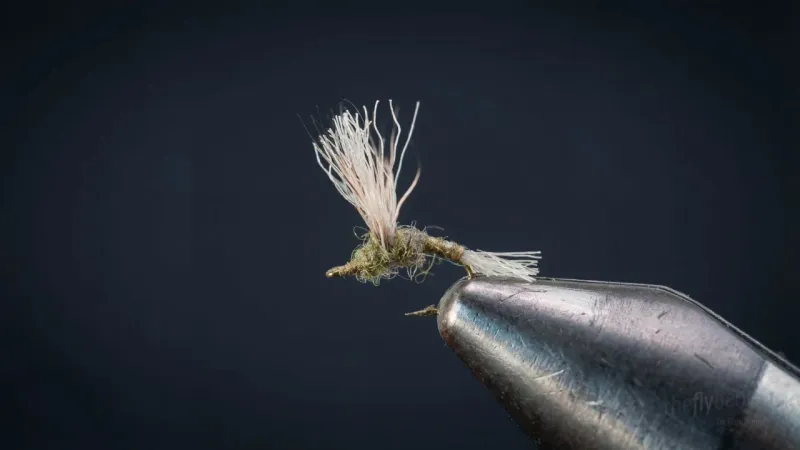
The Sparkle Dun came from Craig Mathews and John Juracek in the early 1980s, swapping the Comparadun's split tails for a trailing shuck. Fly Fish Food's Cheech ties this Flav version on a size 14 with a tapered Flex-Floss body and a grey olive dubbed thorax. Change the colors and size and the same steps cover PMD and BWO hatches.
Related patterns
Behavior & presentation
- Natural Behavior
- Flav nymphs swim up from the riffles and push their wings out while still half-trapped in the old skin. The olive duns are larger than most summer mayflies and drift a fair way before lifting off, often late in the day.
- Where Trout Eat It
- Trout slide up under the glides and seams below riffles and pick off duns and stuck emergers, often holding just under the surface and rising steadily during the evening hatch.
- How to Fish It
- Cast slightly upstream of a rising fish and let the fly drift drag-free through its lane. Grease only the wing so the shuck and body sit down in the film.
- Best Water
- Riffle tail-outs, slick glides on freestone rivers, foam lines along current seams and the soft edges of eddies where duns collect.
- Strike Type
- A deliberate head-and-tail rise or a heavy sip as the trout rolls on the low-riding fly; wait for the head to go down before lifting the rod.
Fishing strategy
- Rigging Suggestions
- Fish it on its own with a floating line and a 9-12 foot leader to 5X, dropping to 6X for flat water and picky fish.
- Seasonal Timing
- Summer across the Rocky Mountains, when Flavs come off in the afternoon and evening on freestone rivers. Keep a few in the box for PMD and BWO overlap in the same months.
- Pro Tips
- Trim the deer hair wing so it flares in a full half-circle; that keeps the fly upright and floating without hackle. A dark shuck shows up against an olive body and helps the fly read as a dun still breaking free.
Entomology
Flavilinea duns emerge in summer riffles and slow glides, often trailing their nymphal shuck as they work free of the surface film. Their size and the time they spend drifting while the wings dry make them an easy, high-value meal for trout.
- Order
- Ephemeroptera
- Family
- Ephemerellidae
- Common name
- Western Lesser Green Drake (Flavilinea)
- Organism
- insect
- Life stage
- dun
Pattern details
- Moving Water
- Rocky Mountain
- dead-drift
- drake-hatch
- comparadun-family
- freestone
- modern
- low-clear-water