

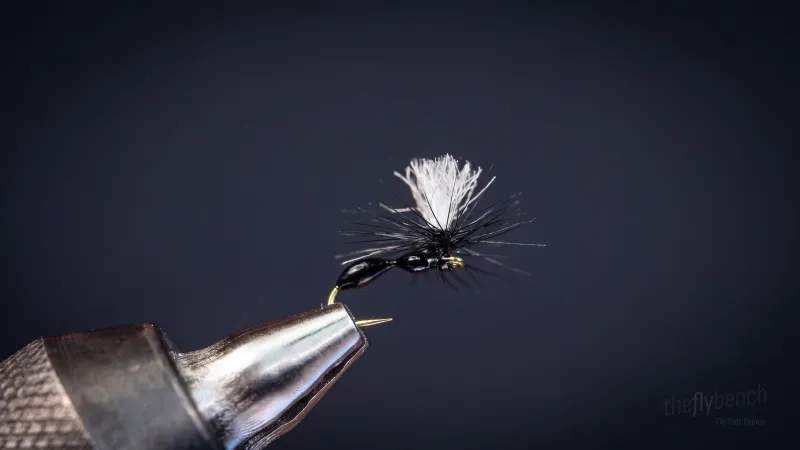
Overview
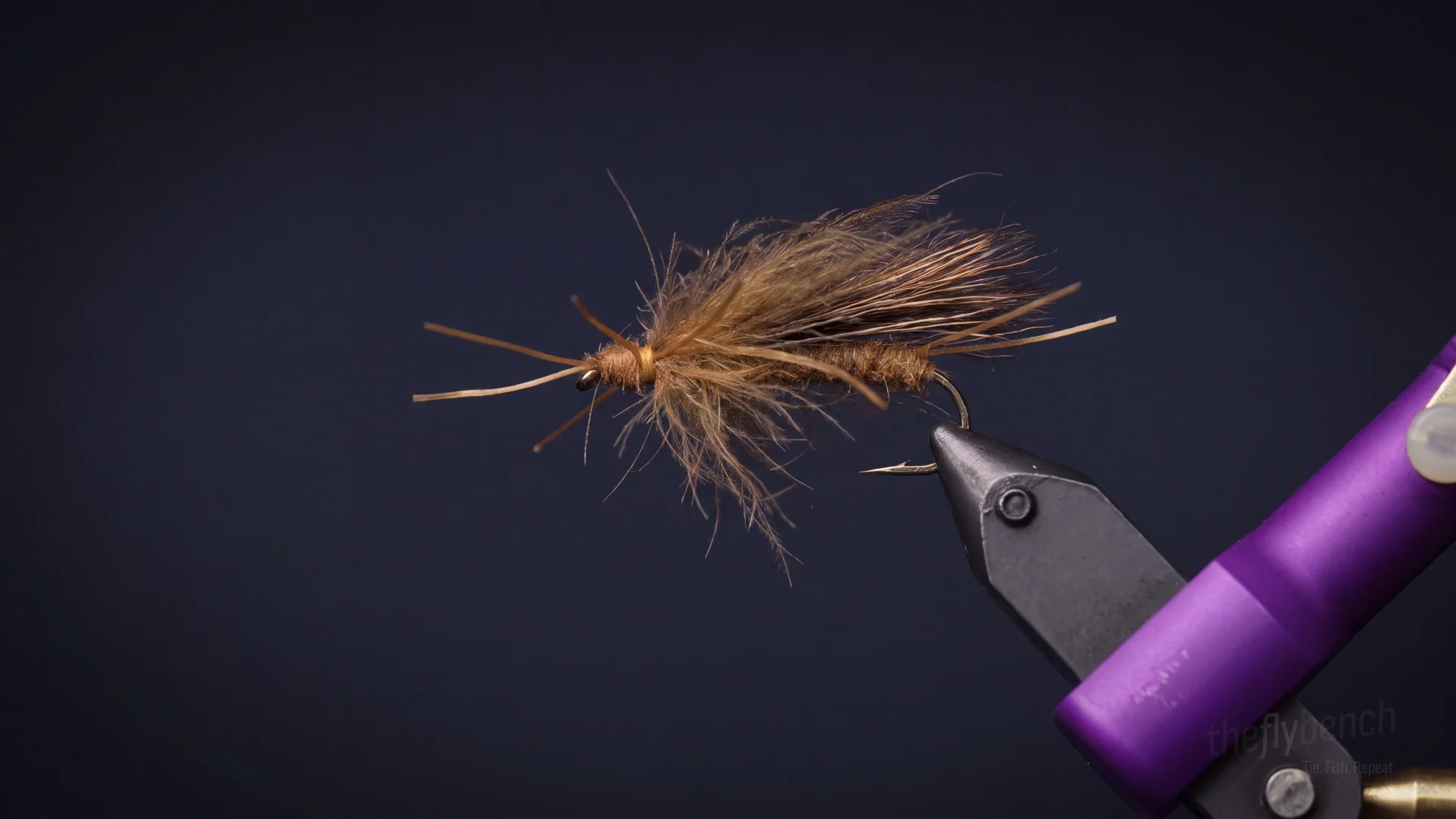
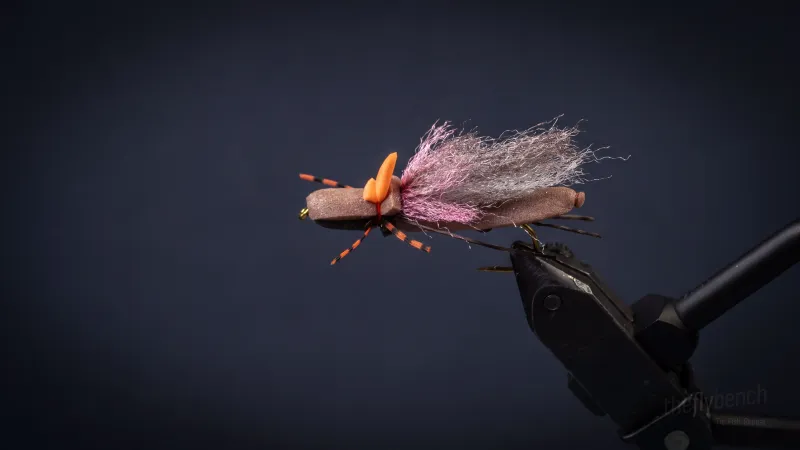
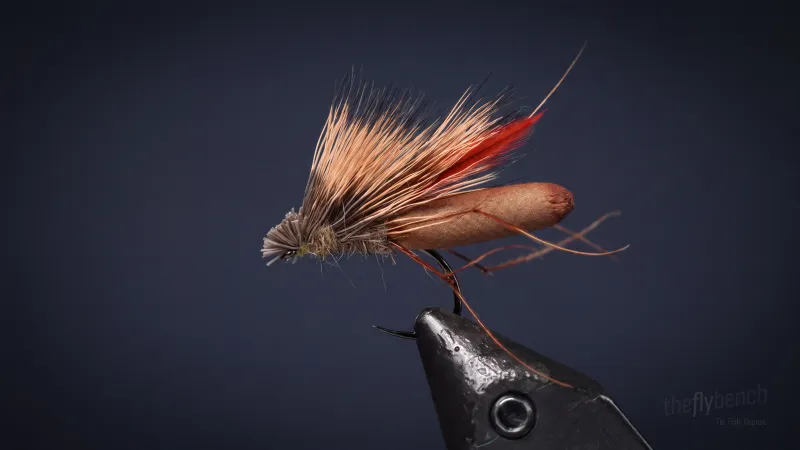
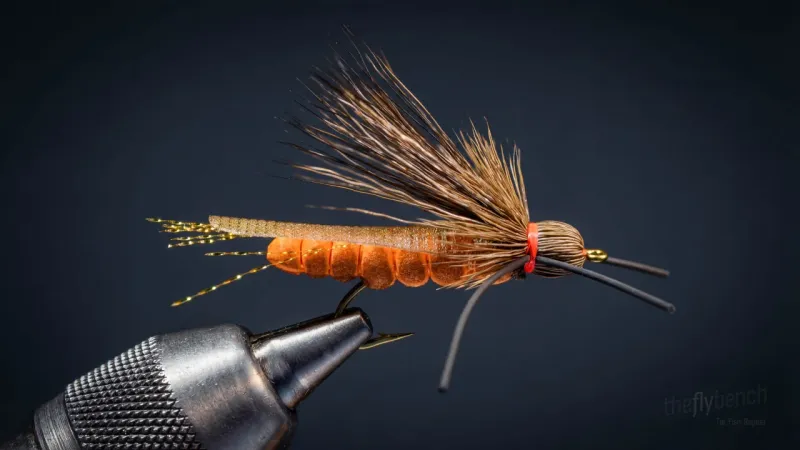
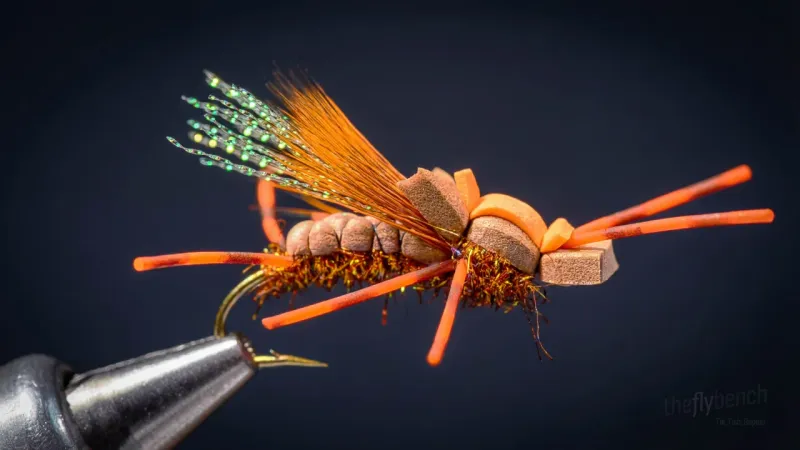
The fly began as a challenge from an angler named Jared, who asked Cheech for a salmonfly that skipped foam; it carries the name of Jared's daughter, Libby. Cheech built buoyancy from nine CDC feathers on a size 4 TMC 5263 rather than a stack of deer or elk hair, keeping the wing narrow and flat over a thick abdomen. This golden version swaps the dark salmonfly colors for ginger legs and golden olive yarn. The tie is long, with a bullet head, rubber legs and antennae, so budget time at the vise.
Related patterns
Behavior & presentation
- Natural Behavior
- Adult golden stones crawl out on streamside rocks and willows, then return to the river to lay eggs, landing heavily and kicking on the surface before the current carries them off.
- Where Trout Eat It
- Fish hold tight to grassy and willow-lined banks and in the soft water beside boulders, where egg-laying females and wind-blown adults end up drifting.
- How to Fish It
- Cast tight to the bank and dead drift, adding an occasional small twitch so the CDC and spandex legs pulse like a struggling adult.
- Best Water
- Undercut banks, current seams below riffles, pocket water behind boulders and eddies under overhanging willows.
- Strike Type
- Heavy, deliberate rises where a big head pushes up under the fly; wait for the fish to turn down before setting.
Fishing strategy
- Rigging Suggestions
- Use a 7.5 to 9-foot leader to 2X or 3X tippet to turn over the size 4 fly and handle big fish near cover. Keep any dropper light, since CDC carries less weight than foam.
- Seasonal Timing
- Fish it through the golden stone hatch, roughly late June through August on western freestone rivers, and keep it in play after the hatch peaks while fish still look up for big adults.
- Pro Tips
- Dry the CDC with a squeeze of an absorbent pad or a desiccant powder rather than a paste floatant, which mats the fibers. The optional UV orange indicator helps you track the low, natural-colored fly in broken water.
Entomology
Golden stonefly nymphs crawl to shore to emerge, and the adults live in bankside vegetation for several weeks. Females fly back over riffles to drop their eggs, often crashing onto the surface and struggling there. Their size makes them a meal trout rarely pass up.
- Order
- Plecoptera
- Family
- Perlidae
- Common name
- Golden Stonefly
- Organism
- insect
- Life stage
- adult
Pattern details
- Moving Water
- Rocky Mountain
- stonefly-hatch
- dead-drift
- freestone
- modern