Overview
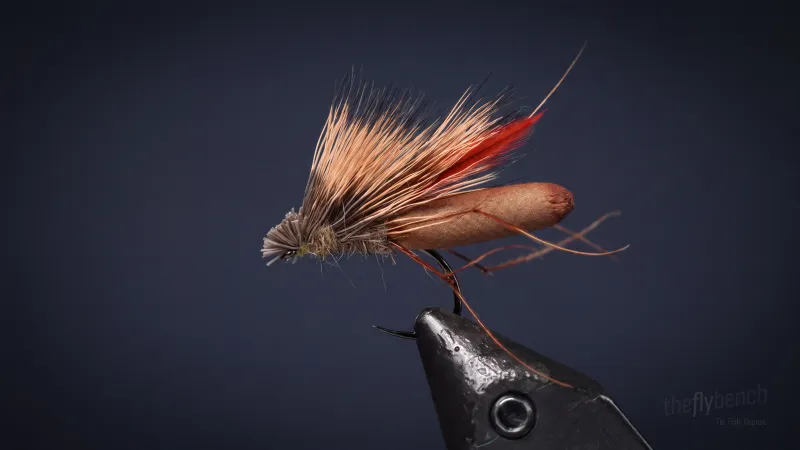
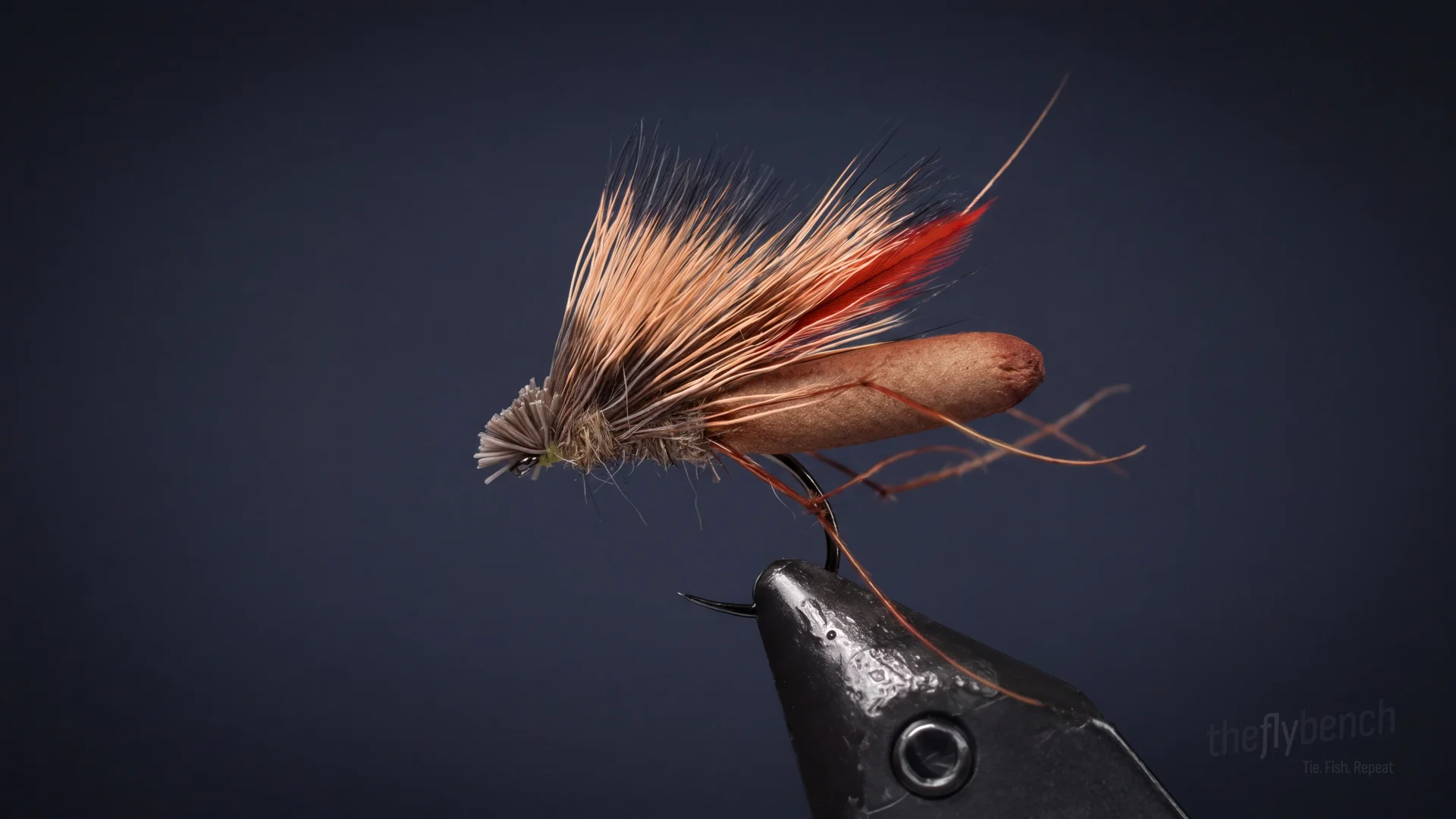
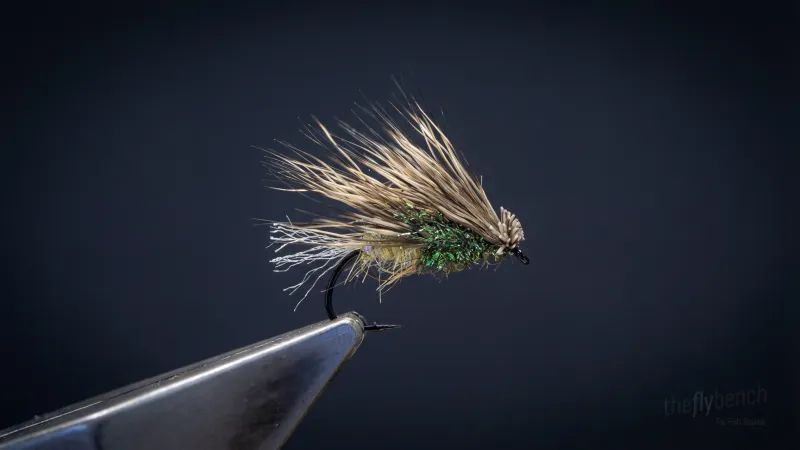
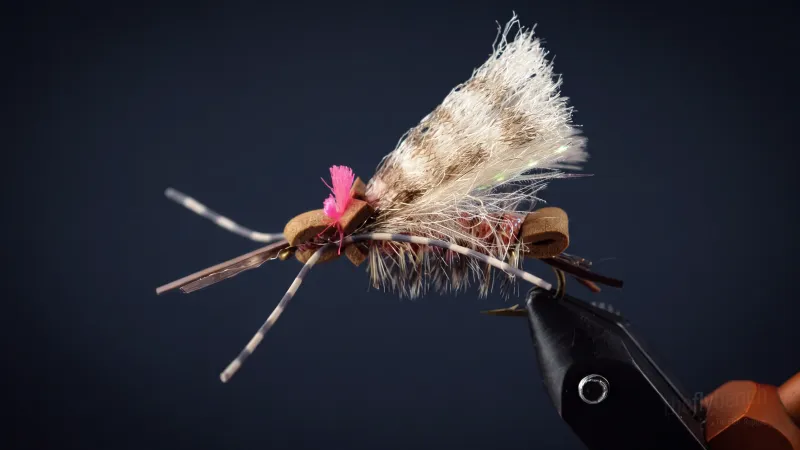
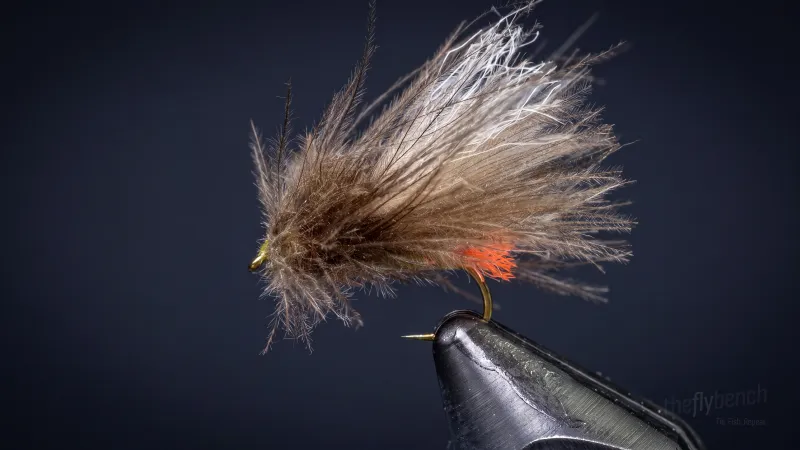
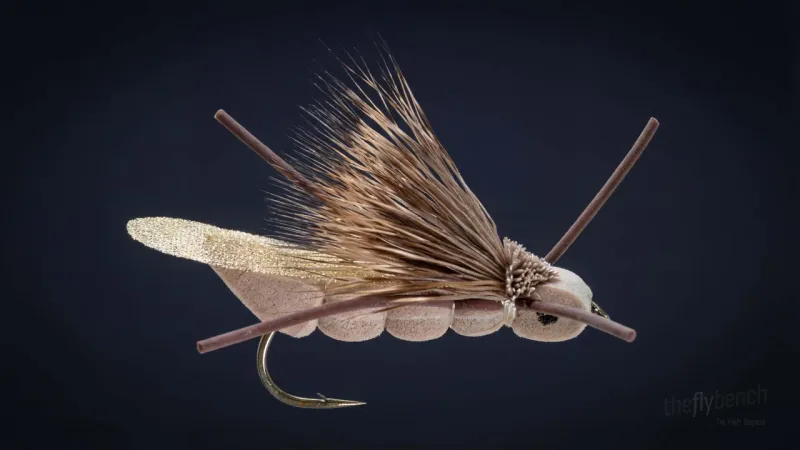
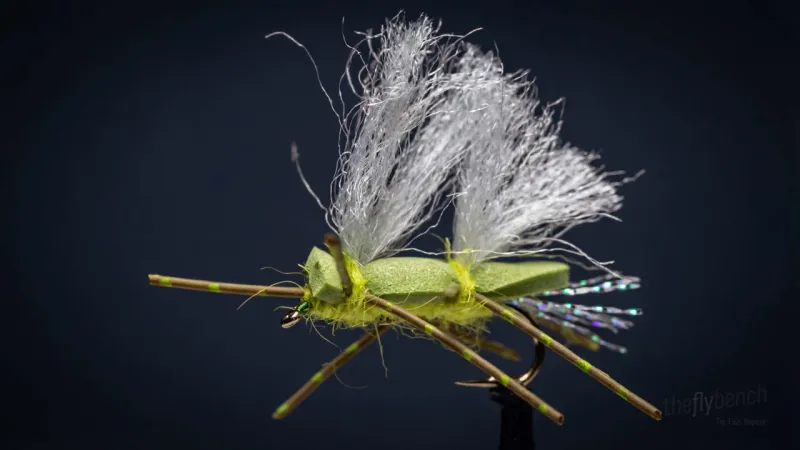
Cheech of Fly Fish Food tied this version after UK anglers Rob and Sam Edmunds brought the idea over and fished it hard through a summer. A tan foam cylinder forms the extended body, then hen hackle tips, knotted legs and a pinch of hare's ear dubbing go in before deer hair is spun and trimmed Sedgehog-style at the head. A curved size 12 Czech nymph or grub hook sets the body shape. The video also shows a yellow foam option.
Related patterns

Behavior & presentation
- Natural Behavior
- Adult crane flies are clumsy fliers that blow onto the water from bankside grass, then trail their long legs and kick feebly as they try to lift off again.
- Where Trout Eat It
- Trout pick them off near grassy margins and along wind lanes, where gusts drop the naturals and the current or ripple carries them out.
- How to Fish It
- Let it sit or drift dead for most of the cast, then add a short twitch now and then so the legs pulse and the fly skids an inch like a stranded insect.
- Best Water
- Grassy undercut banks, the downwind edge of a lake, foam lines along a weedy bank and slow glides below overhanging vegetation.
- Strike Type
- Often a solid head-and-shoulders take or a sudden swirl just after a twitch. Give the fish a beat to close its mouth on the bulky fly before tightening.
Fishing strategy
- Rigging Suggestions
- Fish it on a 9 foot leader to 3X or 4X; the size 12 body and long legs can twist finer tippet. It floats well enough to carry a small nymph on a short dropper.
- Seasonal Timing
- Daddy patterns earn their keep from about June into early October, with the best fishing in late summer and early autumn when crane flies are blown onto the water most often.
- Pro Tips
- Trim the deer hair head flat underneath so the fly sits low and upright. Carry the yellow foam version for flat light or choppy water where the tan body is hard to see.
Entomology
Adult crane flies hatch from damp soil and shallow margins and spend their short lives flying weakly through bankside vegetation. Wind regularly drops them onto rivers and lakes, where their long legs trap them in the surface film and make them an easy, large meal for trout in late summer.
- Order
- Diptera
- Family
- Tipulidae
- Common name
- Crane Fly
- Organism
- insect
- Life stage
- adult
Pattern details
- Moving Water
- Stillwater
- United Kingdom
- dead-drift
- hopper-season
- searching-pattern
- modern