StreamersD&D Drunk and Disorderly
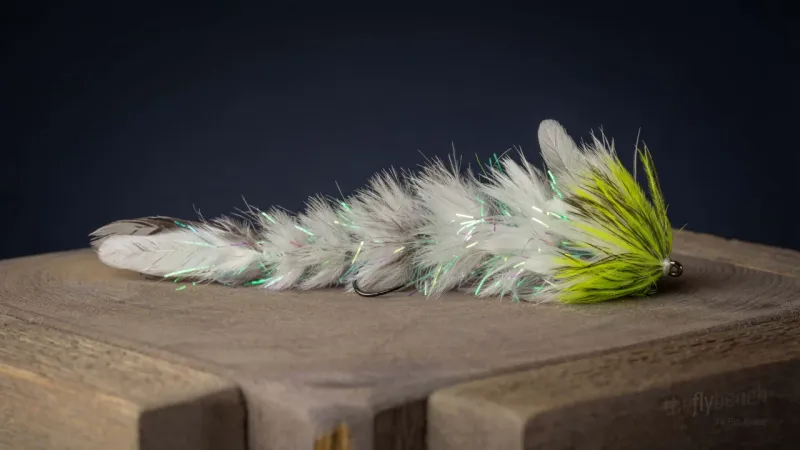
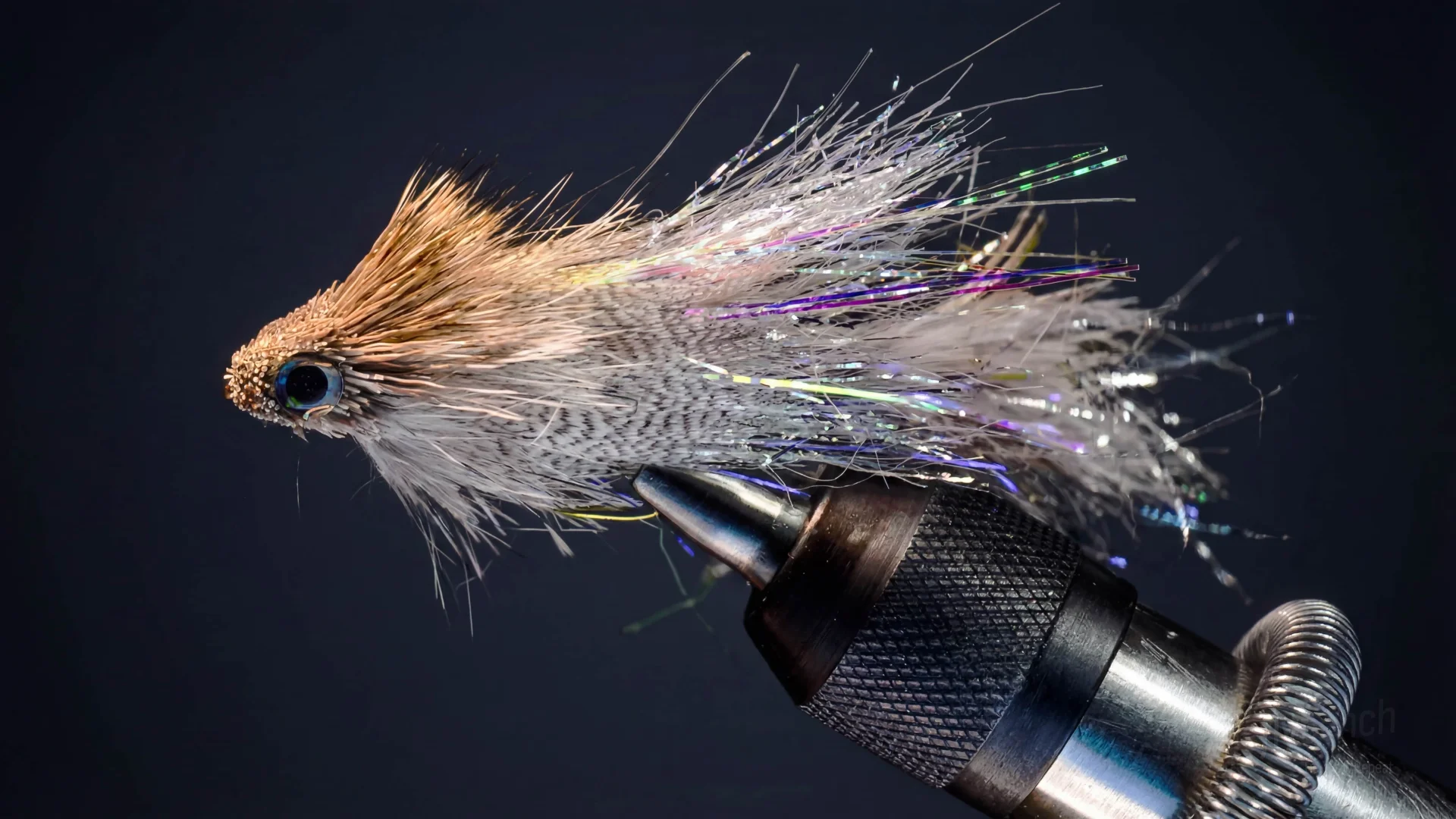
The D&D (Drunk and Disorderly) is an articulated streamer that combines flash, movement, and noise to trigger explosive strikes from predatory fish. This complex pattern features a UV Polar Chenille body with chinchilla rabbit collars, mallard flank back, and a sculpted deer hair head with holographic dome eyes. The addition of a fly rattle creates an auditory element that attracts fish from a distance, making this pattern effective even in stained water conditions.
Year Round
Advanced
Trout, Bass, Pike
Dec 2025
Overview
This Charlie Craven pattern from Charlie's Fly Box showcases the evolution of articulated streamer design for targeting large predatory fish. The "Drunk and Disorderly" name reflects the erratic, wobbling action created by the articulated connection and various materials working together. The chinchilla rabbit collars provide pulsating movement while the UV Polar Chenille body creates underwater flash. The sculpted deer hair head is trimmed with a double edge razor blade to achieve the distinctive baitfish profile, while the fly rattle adds an element that can trigger reaction strikes from territorial fish.
Materials
Hook (Rear): Tiemco 5262, #4
Hook (Front): Gamakatsu B10s, #6
Thread: Magpie 110D, white
Tail: UV Polar Chenille, silver
Collars: Magnum Rabbit Strips, chinchilla zonker
Body: UV Polar Chenille, silver
Back: Mallard Flank, natural
Connection: Senyo's Thin Intruder Trailer Hook Wire, black
Bead: Small 3-D Bead
Rattle: Fly Rattles
Flash Wing: Lateral Scale, mirage
Head: Varner Late Season Big Bug Deer Hair, natural
Eyes: Holographic Dome Eyes, pearl
Resin: Solarez Bone Dry Plus
Head Cement: Fly Head Cement, black
Adhesive: Zap-A-Gap
Behavior & Presentation
Natural Behavior: Compromised baitfish broadcast their vulnerability through erratic wobbling and failed attempts to hold depth or direction. Predators prioritize these disabled targets because they offer high-protein meals without the energy cost of pursuing healthy, fast-swimming prey.
Where Trout Eat It: Aggressive fish ambush baitfish from structure in transition zones, drop-offs, and deep pools where predators stage.
How to Fish It: Erratic strip-pause retrieve varying strip length and speed, creating injured baitfish movements that maximize the pattern's inherent action and rattle attraction.
Best Water: Target drop-offs, deep pools, channel swings, undercut banks, and structure where predators ambush wounded prey.
Strike Type: Predators crush this articulated streamer mid-strip, producing line-tearing acceleration that yanks the rod tip down violently. The fly rattle and erratic action trigger strikes that feel like hitting a wall—sudden deceleration followed by explosive runs as large fish turn away.
Fishing Strategy
Rigging Suggestions: Fish on a 6-8 weight rod with sink-tip or full sinking line depending on target depth. Use 15-20 lb fluorocarbon leader for abrasion resistance and shock absorption during aggressive strikes.
Seasonal Timing: effectiveness, with peak performance in and when large fish are actively feeding on baitfish. The rattle component makes this pattern particularly effective in low-visibility conditions.
Pro Tips: The silver UV Polar Chenille and mirage lateral scale create substantial flash that attracts fish from a distance. The pattern is designed to sink and is most effective when fished at or near the bottom where predators expect to find wounded baitfish.
Entomology
Injured or disoriented baitfish struggle to maintain equilibrium, wobbling erratically through the water column with movements that broadcast vulnerability to every nearby predator. Fish target these compromised baitfish because they represent easy meals requiring minimal energy expenditure compared to chasing healthy, fast-swimming prey.
- Organism Type
- baitfish
- Life Stage
- general