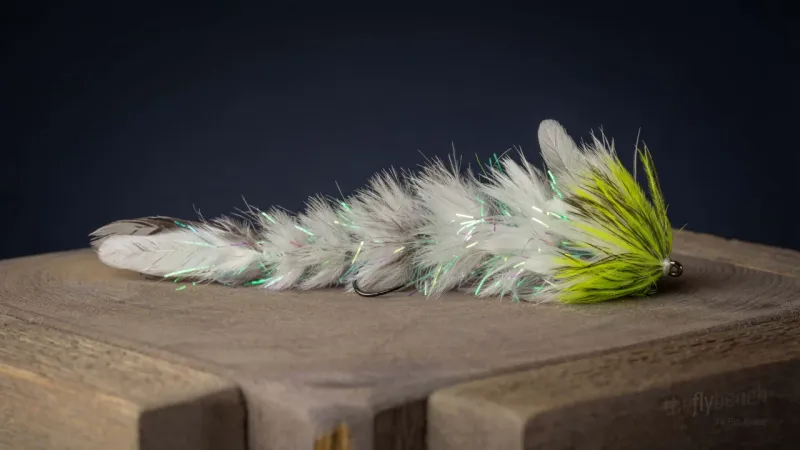
StreamersDouble Gonga
The Double Gonga is a large, articulated streamer pattern designed to imitate a variety of baitfish and attract predatory fish species. Its large profile and lifelike movement in the water make it a go-to choice for targeting trophy-sized trout and bass.
Spring, Summer, Fall
Advanced
Trout, Bass
Apr 2025
Overview
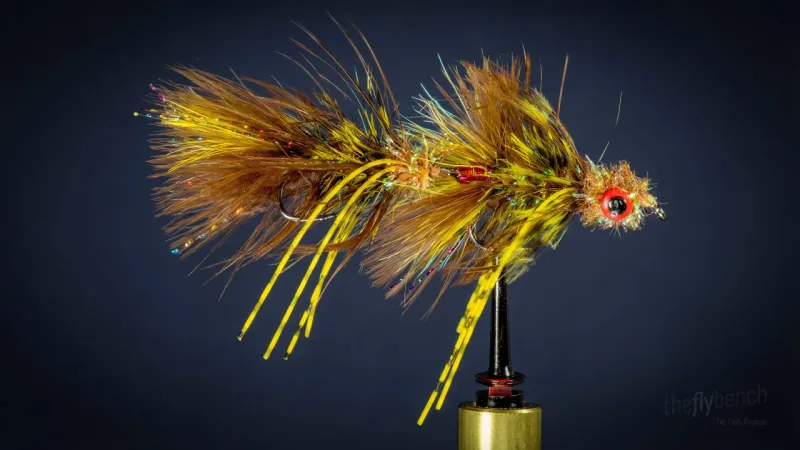
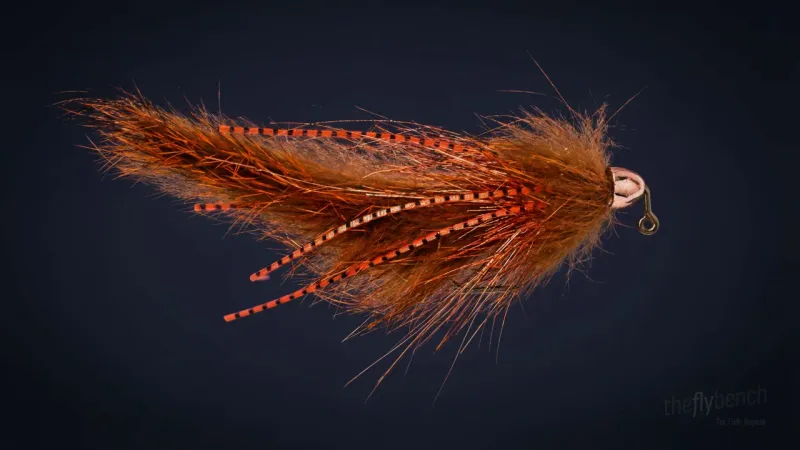
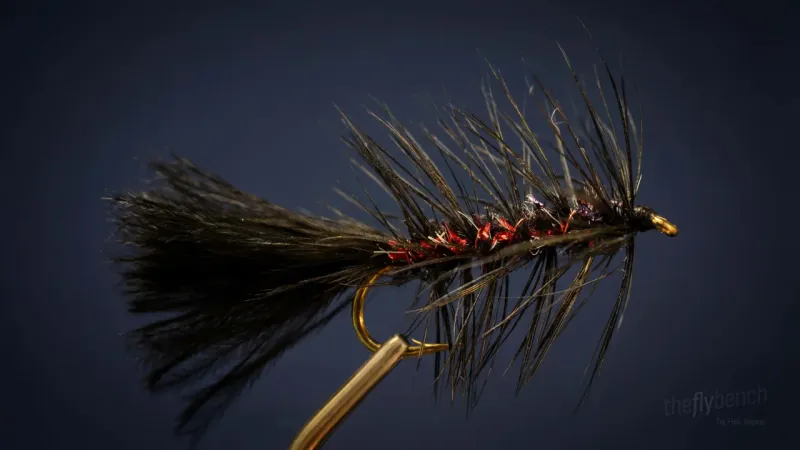
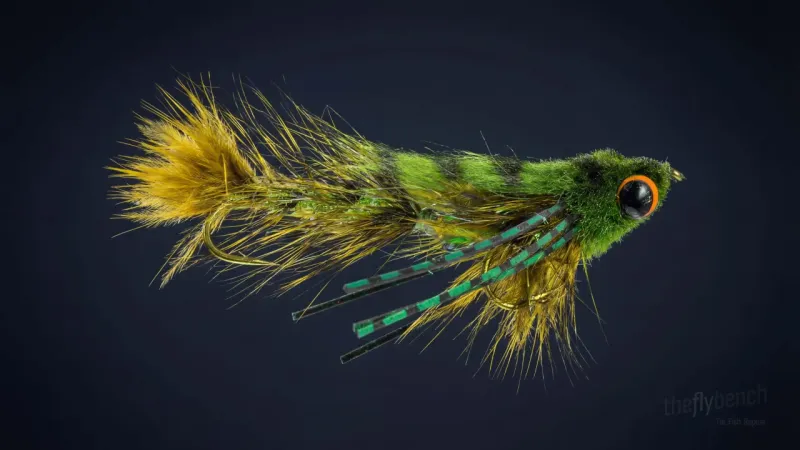
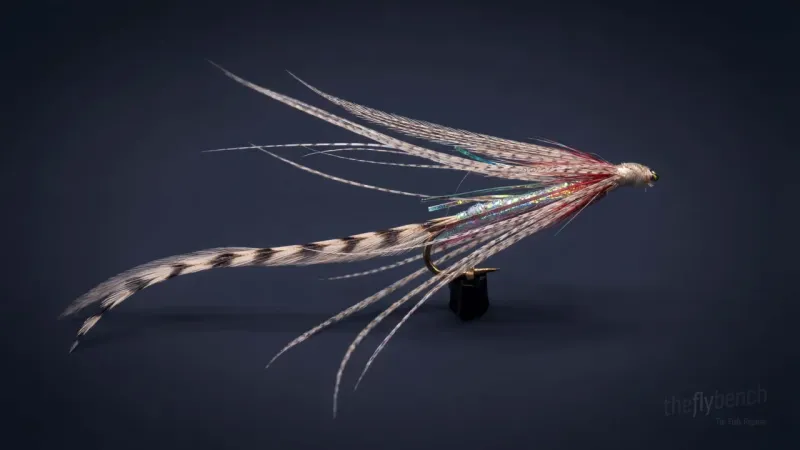
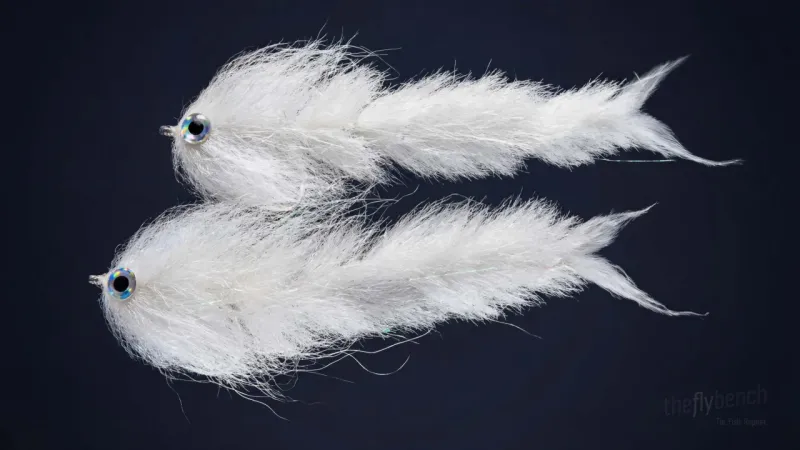
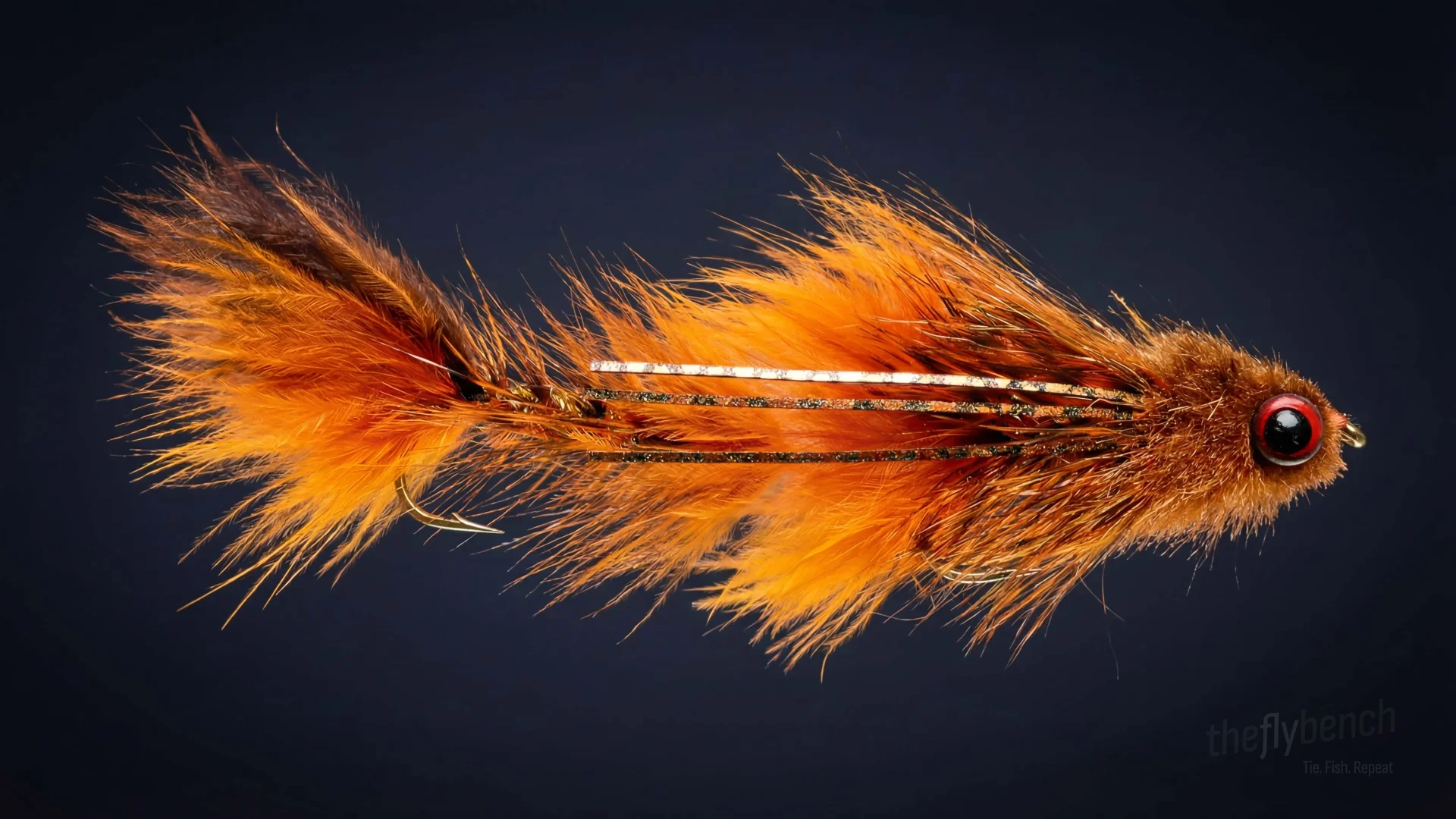
The Double Gonga is an articulated, dual-hook streamer pattern designed to trigger aggressive strikes from large trout and other predatory fish. Tied with a combination of marabou, flash, rubber legs, and a prominent conehead, it creates a lifelike swimming action with maximum movement. The front and rear sections are typically wrapped with a dense dubbed or chenille body, giving the fly bulk and a strong silhouette in the water. Its weight and articulation make it ideal for deep water retrieves and swinging through heavy current.
Where to Buy This Fly
We only link to fly shops we trust. Some links are referral links, which may earn us a commission at no extra cost to you.
Materials
- Hook (Rear):
- Streamer hook, size to match front hook
- Hook (Front):
- Streamer hook, same size as rear
- Thread:
- 6/0 or 140 Denier, color to match (white or tan used)
- Rear Tail:
- Brown and Burnt Orange Woolly Bugger Marabou
- Rear Hackle:
- Fiery Brown Schlappen Feather
- Rear Body:
- Golden Brown Dubbing (or Rusty/Brown Dubbing), applied with a dubbing loop
- Connection:
- Intruder Wire (Black used), 3 large red glass beads
- Eyes:
- Large Red Painted Lead Eyes
- Front Tail:
- Brown and Burnt Orange Woolly Bugger Marabou
- Front Hackle:
- Fiery Brown Schlappen Feather
- Top Wing:
- Tan Pseudo Hair, marked with brown (tied to extend to rear hook)
- Legs:
- Pumpkin Barred & Speckled Crazy Legs (3 tied on each side)
- Head Collar:
- Tan Pseudo Hair, trimmed to a cone shape, spun in a dubbing loop
- Optional:
- Marker barring on pseudo hair for sculpin effect
Behavior & Presentation
Natural Behavior: Sizeable prey items require constant swimming effort to hold position in heavy current, creating visual disturbances that advertise their location. When pursued, they generate powerful tail thrusts and pressure waves that trigger chase instincts.
Where Trout Eat It: Trophy fish position near drop-offs, undercut banks, weed edges, and pool depths where large forage holds.
How to Fish It: Vary retrieves from steady strips to aggressive jerks, imitating wounded or fleeing baitfish behavior.
Best Water: Work drop-offs, undercut banks, weed edges, deep pools, and eddies where predators stage.
Strike Type: Fish typically slam this articulated pattern with multiple follows, producing a heavy, throbbing sensation in the line before committing—maintain tension and set firmly when weight loads.
Fishing Strategy
Rigging Suggestions: Rig this pattern on a heavy tippet and use a fast-action rod to handle its large size and cast it effectively.
Seasonal Timing: Effective during peak feeding periods when water temperatures and conditions support active feeding behavior.
Pro Tips: The Gonga is designed to sink and move erratically in the water. Its flashy materials make it highly visible to fish, even in murkier water conditions.
Entomology
Large baitfish in heavy current and deep pools maintain position with constant swimming effort, their substantial bodies requiring significant energy to hold station near prime feeding lies. When predators charge, these sizeable prey items attempt to flee with powerful tail thrusts, creating pressure waves and visual disturbances that trigger pursuit instincts in trophy-class fish. The exceptional caloric value of landing one of these substantial forage items justifies the aggressive feeding behavior and territorial positioning observed in apex predators.
- Organism Type
- baitfish
- Life Stage
- general