Overview
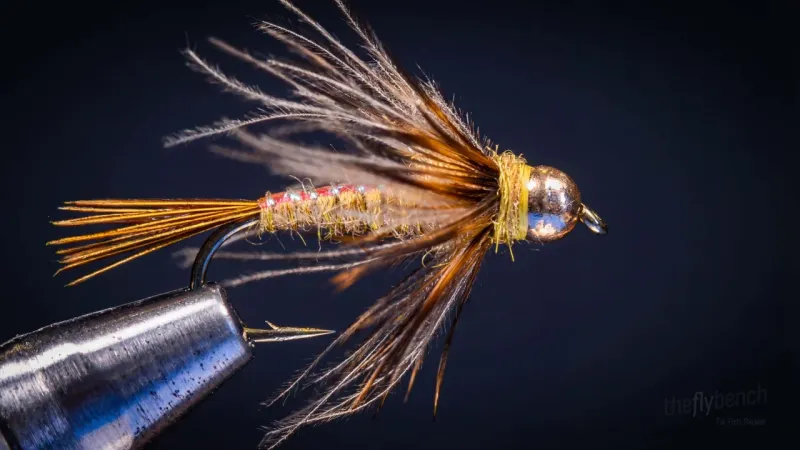
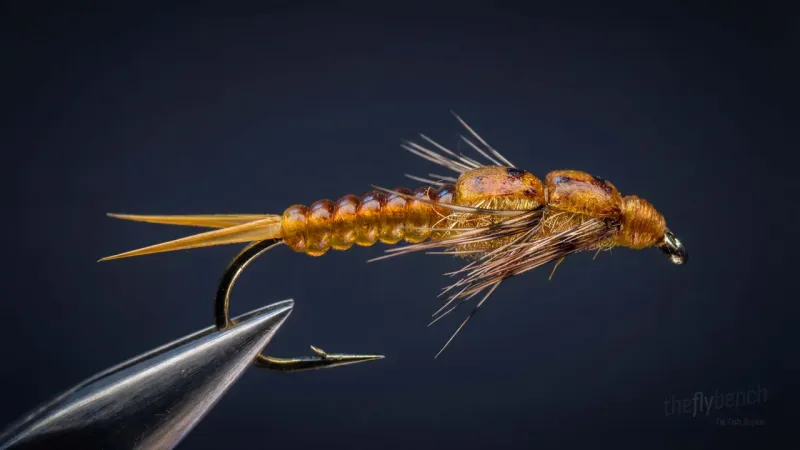
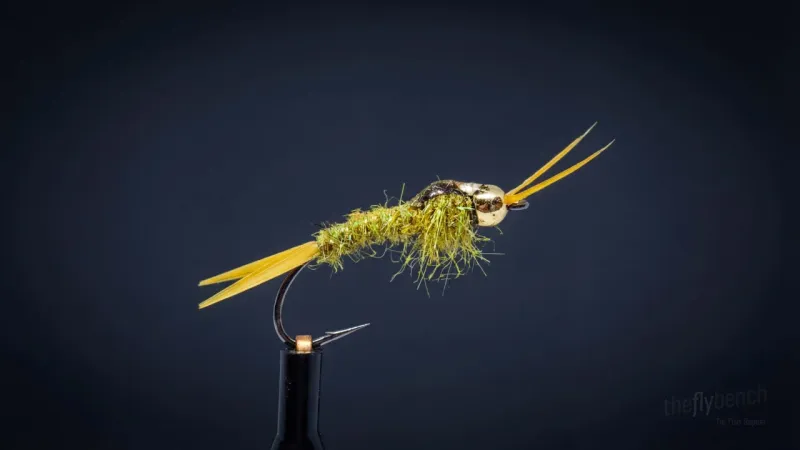
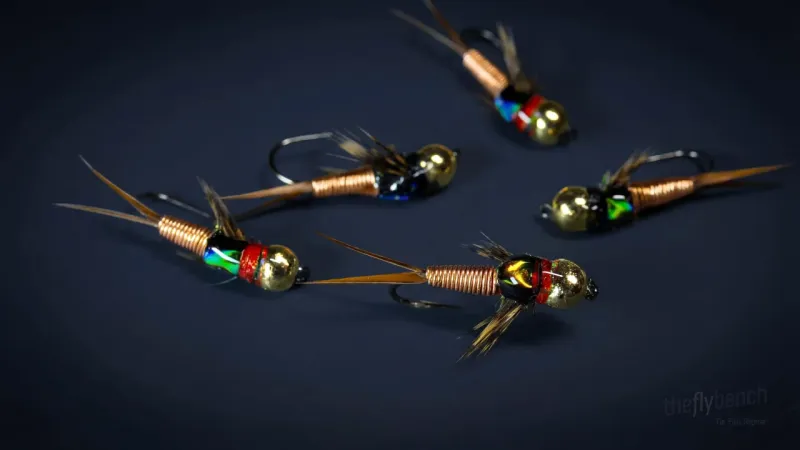
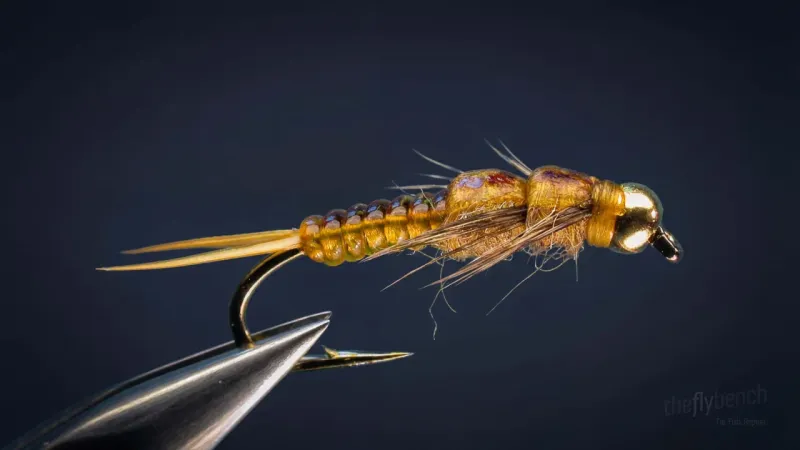
This modern golden stonefly nymph uses a slim, tapered dubbed body with natural tones like golden yellow or amber, ribbed with mono for segmentation. CDC is incorporated as a soft hackle or collar near the thorax, giving the fly added motion and a natural appearance in the water. Finished with a gold tungsten bead over lead wire for depth, it's a great blend of realism and fish-attracting movement.
Related patterns
Behavior & presentation
- Natural Behavior
- Large stonefly nymphs crawl along bottom structure, their robust bodies creating disturbance as they navigate between rocks. Dislodged nymphs tumble awkwardly through current, unable to resist the flow effectively.
- Where Trout Eat It
- Fish target bottom lanes in riffles and runs where stonefly nymphs tumble during dislodgement, especially near cobble structure.
- How to Fish It
- Bounce the fly along the bottom using weighted rigs, allowing the CDC to provide subtle movement during the drift.
- Best Water
- Work riffle edges with cobble substrate, pockets behind boulders, and current breaks near banks where nymphs concentrate.
- Strike Type
- Feel a solid thump or see the indicator dive as fish attack the large nymph profile.
Fishing strategy
- Rigging Suggestions
- This fly can be fished on its own or as part of a nymphing rig, with the CDC Golden Stone as the point fly and a smaller nymph as the dropper.
- Seasonal Timing
- Golden stone nymphs live in the river for two to three years, so this fly works year round. It is most productive in late spring and early summer when mature nymphs crawl toward the banks to hatch.
- Pro Tips
- The CDC Golden Stone has a realistic profile and the golden color makes it highly visible in the water. The fly sinks, imitating a naturally drifting or swimming stonefly nymph.
Entomology
Golden stonefly nymphs crawl actively across stream bottoms, clinging to cobble and boulder substrates in well-oxygenated riffles and runs, occasionally tumbling into the drift when disturbed. Their large size and year-round presence make them prime targets for aggressive feeding, as a single nymph provides substantial calories. Fish patrol the bottom structure where these nymphs live, opportunistically striking when current dislodges them during behavioral drift or migration toward shore for emergence.
- Order
- Plecoptera
- Family
- Perlidae
- Common name
- Golden Stonefly
- Organism
- insect
- Life stage
- nymph
Pattern details
- Moving Water
- Rocky Mountain
- Pacific Northwest
- dead-drift
- indicator-nymph
- stonefly-hatch
- modern
- attractor
- searching-pattern
- swing