Dry FliesBuzz
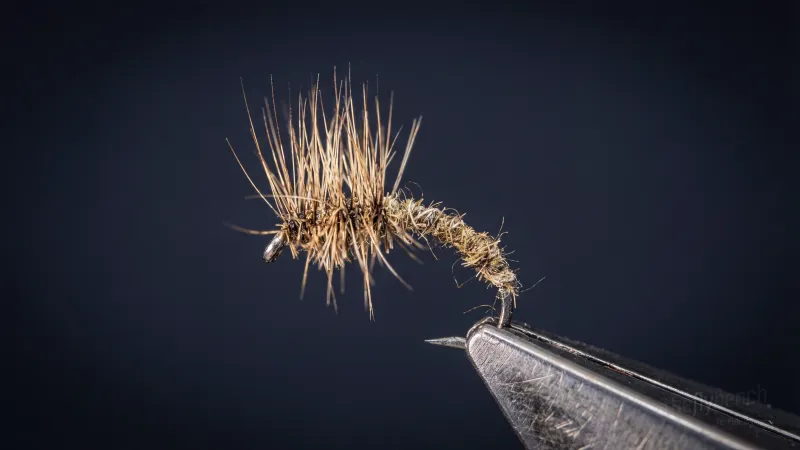
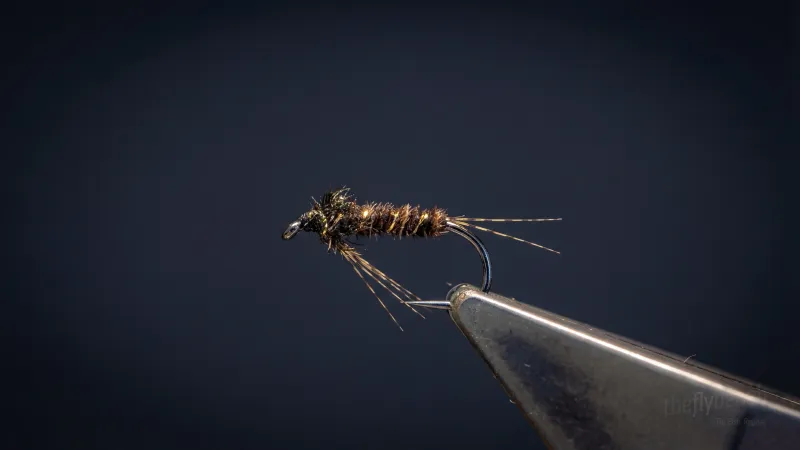
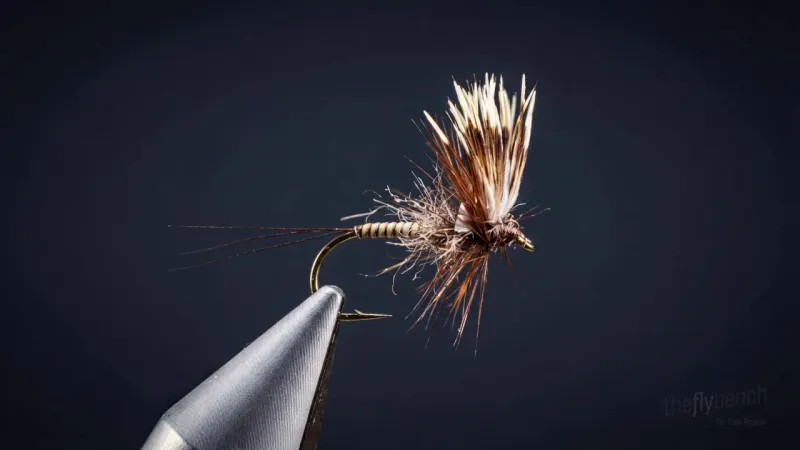
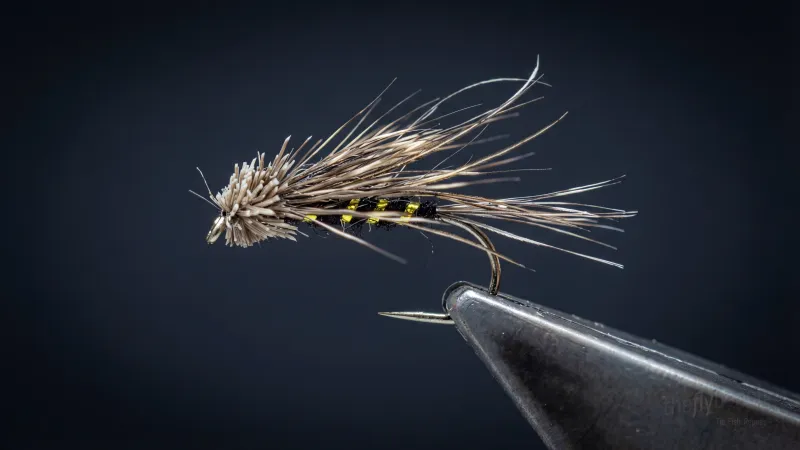
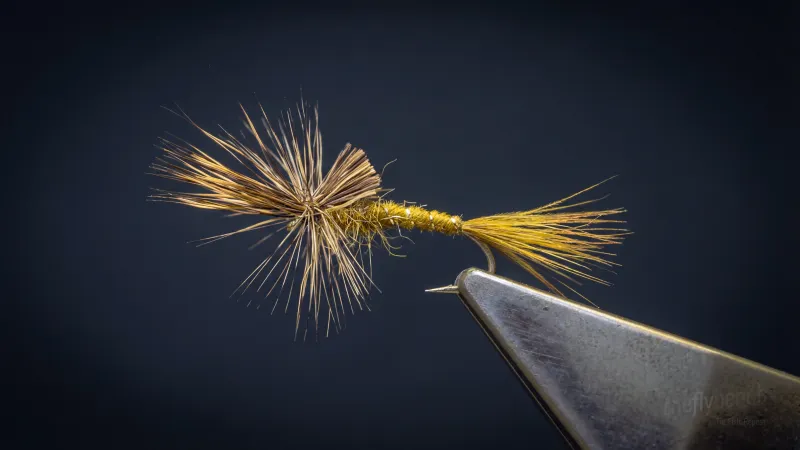
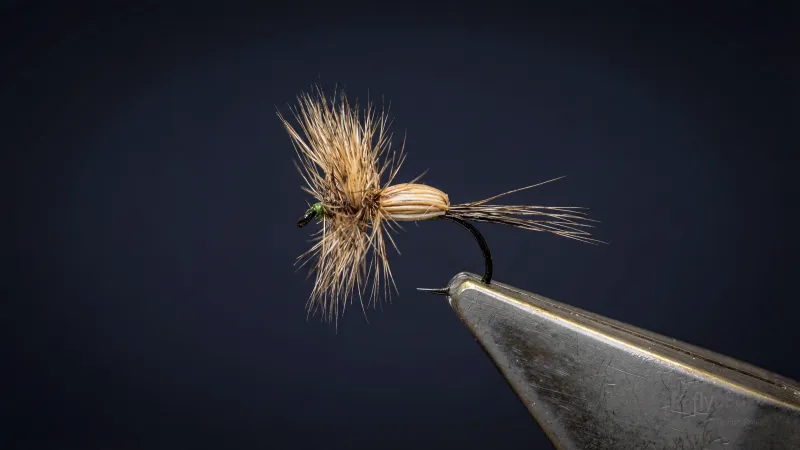
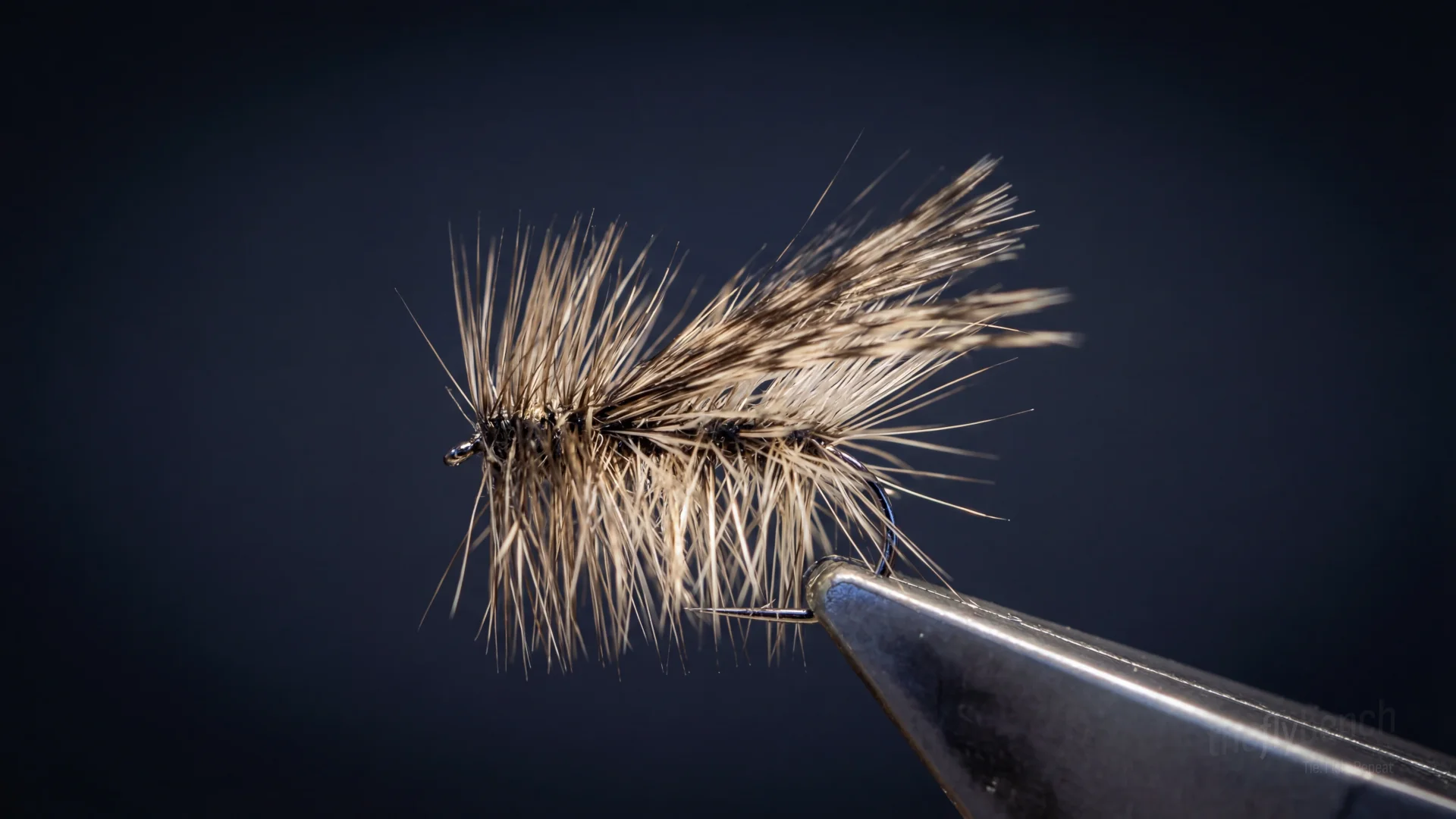
Hans Weilenmann's Buzz palmers a dirty badger saddle hackle the length of the body and again at the collar, framing a fox squirrel or hare's ear thorax and a dark pardo Coq de Leon wing. The doubled badger hackle keeps the size 10 fly buoyant and gives it a mottled, buggy outline suited to skittering caddis on moving water and stillwater.
Spring, Summer, Fall
Advanced
Trout
Feb 2026
Overview
Weilenmann palmered the mottled dirty badger hackle along the full body rather than just at the collar, adding both flotation and a broken, natural-looking silhouette that works well when the fly is twitched to imitate a fluttering caddis. A dark pardo Coq de Leon hen saddle forms the wing, and a thorax of fox squirrel or hare's ear, either substitutes for the other, adds a rougher, buggier touch behind the eye. Tied on a size 10 Partridge SUD hook, it holds up well to repeated skating and twitching retrieves during caddis egg-laying activity.
Where to Buy This Fly
We only link to fly shops we trust. Some links are referral links, which may earn us a commission at no extra cost to you.
Materials
- Hook:
- Partridge SUD #10 (or equivalent dry fly hook)
- Thread:
- Benecchi 12/0, tobacco
- Body Hackle:
- Whiting saddle hackle, dirty badger
- Wing:
- Whiting Coq de Leon hen saddle barbs, dark pardo
- Hackle:
- Whiting saddle hackle, dirty badger
- Thorax:
- Fox squirrel, or hare's ear
Behavior & Presentation
Natural Behavior: Caddis flutter and skitter across the surface with rapid wing movements during egg-laying, creating buzzing disturbances that trigger aggressive responses.
Where Trout Eat It: Fish attack skittering caddis in riffles, over runs, and along seams where egg-laying activity concentrates during warm afternoons.
How to Fish It: Dead drift or add skating twitches to mimic buzzing egg-laying behavior. Target visible surface activity during caddis flights.
Best Water: Work riffle edges with active caddis, seams collecting egg-layers, runs with moderate flow, and current breaks.
Strike Type: Expect aggressive strikes or splashy takes as fish react to the erratic surface movement.
Fishing Strategy
Rigging Suggestions: Use a 9-12 foot leader tapering to 5X tippet for delicate presentations. Apply floatant to the body and hackle.
Seasonal Timing: Most effective during peak feeding periods at dawn and dusk. Water temperatures between 45-65°F typically produce best results.
Pro Tips: The dubbed body and quality hackle provide excellent flotation in faster water where other patterns drown. Size down during selective feeding periods for better hookups.
Entomology
Adult caddisflies flutter and skitter across the water surface with rapid wing movements during egg-laying runs, creating a buzzing disturbance that triggers aggressive surface strikes. Fish key on the erratic motion and vulnerability of these insects when they repeatedly touch down to deposit eggs.
- Order
- Trichoptera
- Common Name
- Caddisfly
- Organism Type
- insect
- Life Stage
- adult